

Five veterans have been executed since Ron DeSantis became governor of Florida in 2019 with a sixth scheduled to die this month.
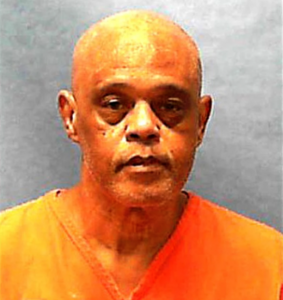
Kayle Bates
But a group of former service members wants the killing to stop and are pleading with the governor to begin by canceling the Aug. 19 lethal injection of Florida National Guard veteran Kayle Bates, 67.
“To execute a veteran who was broken by war and left without adequate care is not justice. It is a failure of duty. It is the final abandonment,” more than 130 veterans declared in a letter submitted to the governor’s office Aug. 13.
The group urged DeSantis to consider his own veteran status, his public comments declaring Florida “the most military- and veteran-friendly state in the nation,” and the military ethic that a fellow service member must never to be left behind. “That obligation does not end at the end of one’s duty. To a great degree that is where it begins for our mentally injured soldiers, Marines, sailors and airmen.”
The veterans also pleaded for clemency for up to 30 other counterparts currently sentenced to death in Florida. “We know what it means when no one comes for you after the fight. We know the discipline, the sacrifice, and the silent wounds that follow you home.”
The letter and the delegation that hand delivered it to DeSantis were organized by the Center for Veteran Criminal Advocacy.
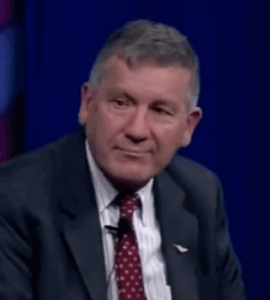 “Each of the veterans on Florida’s Death Row suffer from post-traumatic stress disorder, traumatic brain injuries or other disabilities related to their military service,” center Director Art Cody said during an Aug. 13 press conference livestreamed from Tallahassee.
It is widely accepted that veterans generally suffer graver physical and emotional trauma than their civilian counterparts, a fact also recognized by the U.S. Supreme Court and by the establishment of veterans treatment courts in some parts of the country, the retired U.S. Navy captain said.
“When we contemplate the fate of veterans who have been convicted of capital crimes, I would say it is essential to bear in mind that combat-related brain injuries and mental health illnesses are by no means unpredictable or unexpected. When we send our soldiers and our Marines to fight, we know for a fact that many of them will come back dramatically different.”
“Gov. DeSantis has set a gruesome record of executing more people in a single year than any other governor in Florida history.”
But those factors appear to be of no concern to Gov. DeSantis, Bates’ attorney Tom Dunn said during the livestream.

Tom Dunn
“Gov. DeSantis has set a gruesome record of executing more people in a single year than any other governor in Florida history. Absent intervention by the courts, Kayle will be the 10th person and the fourth veteran executed by Gov. DeSantis this year,” said Dunn, a retired U.S. Army officer.
Bates’ military service, including a deployment to quell race riots in Miami in 1980 and jungle training in Panama, had a significantly negative effect on his mental health, he added. “Essentially, his wife said after those two incidences that Kayle was different. He had nightmares. He would wake up screaming loudly, acting crazy.”
In 1983, Bates was convicted in the kidnapping, attempted sexual battery, armed robbery and stabbing death of a woman abducted from an insurance office in a coastal community located along the Florida Panhandle.
Bates, who is Black, was sentenced to death by an all-white jury after confessing to the crime in a five-hour confession without legal counsel. The psychological effects of military service also were omitted from consideration.
“When I took on Kayle’s case, we were able to prove that his trial was ineffective for failing to present a multitude of compelling mitigating evidence which showed that Kayle was not worthy of death,” Dunn said.
Yet he was re-sentenced to death in 1995 in a 9-3 vote by a jury that had not been instructed life without parole was an option in Bates’ case.
“They all said he was sentenced to death not because he deserved death, but because the jury did not have an alternative that was meaningful,” Dunn said.
The Florida Supreme Court on Aug. 12 denied Bates’ request to stop his execution, WUSF in Tallahassee reported. An appeal also was filed with the U.S. Supreme Court Aug. 8.
In the letter, the veterans lauded DeSantis, a Harvard Law School graduate, for serving as a Navy lawyer and for its deployment to Iraq in 2007.
“But we are writing now to offer this reminder: We can never be a veteran-friendly state when our leader is signing off on their deaths at the hands of the State. We urge you now to lead from a place of bravery, to return to the honor code from your service, and to stop setting the executions of our fellow soldiers.”