

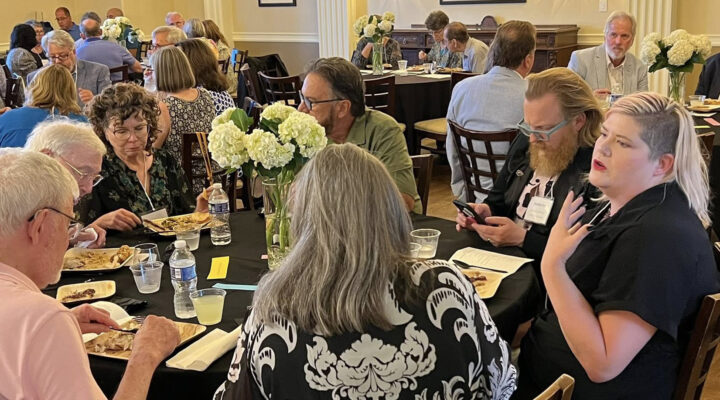
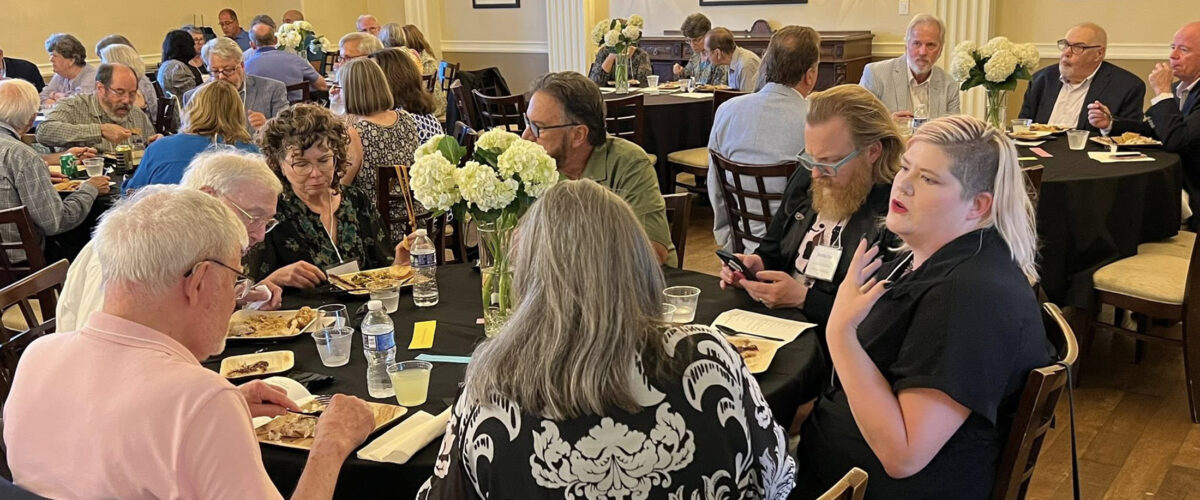
Alumni and faculty of pre-1993 Southern Baptist Theological Seminary in Louisville, Ky, gathered Aug. 15-16 for a reunion hosted by Wake Forest University School of Divinity in Winston Salem, N.C.
That pivotal year was when the “conservative resurgence” took full control of the historic seminary and installed Al Mohler as president, creating a dividing line for many alumni of “before” and “after.”
Two words frequently repeated by attendees and speakers at the reunion were “diaspora” and “scattering.” These terms draw to mind Jews experiencing the pain of exile to foreign lands away from Israel. In the case of Southern Seminary, attendees reflected on how decades of events in the Southern Baptist Convention led to ideological changes in which conservatives sought to purge SBC schools of faculty who didn’t toe the line of biblical inerrancy and strict adherence to traditional gender norms related to women serving in ministry. Upon Mohler’s arrival in 1993, many faculty left or were forced to resign. They scattered to other existing seminaries or start-ups.
The reunion began with a dinner provided by Wake Forest. At each table were discussion prompts such as, “What led you to SBTS?” and “What did you take away from your experience?” When the floor opened, storytellers shared humorous anecdotes and reflections on faculty who modeled profound care, academic rigor and commitment to Christian service.
That evening, on social media, a 1995 Ph.D. graduate reported: “As a participant, I anticipated negative feelings. … My perspective included joy, gratefulness and blessed reflection. The 100 or so people in the room last night have had global significance. Perhaps in ways which may not have been possible without the tumultuous and unfortunate events of those days!”
Saturday morning featured a panel discussion moderated by David Key, former director of Baptist studies at Emory University. Panelists were Bill Leonard, founding dean and professor of divinity emeritus at Wake Forest Divinity; Linda McKinnish Bridges, former president of Baptist Theological Seminary in Richmond (Va.); and Corey D. B. Walker, current dean at Wake Forest Divinity.
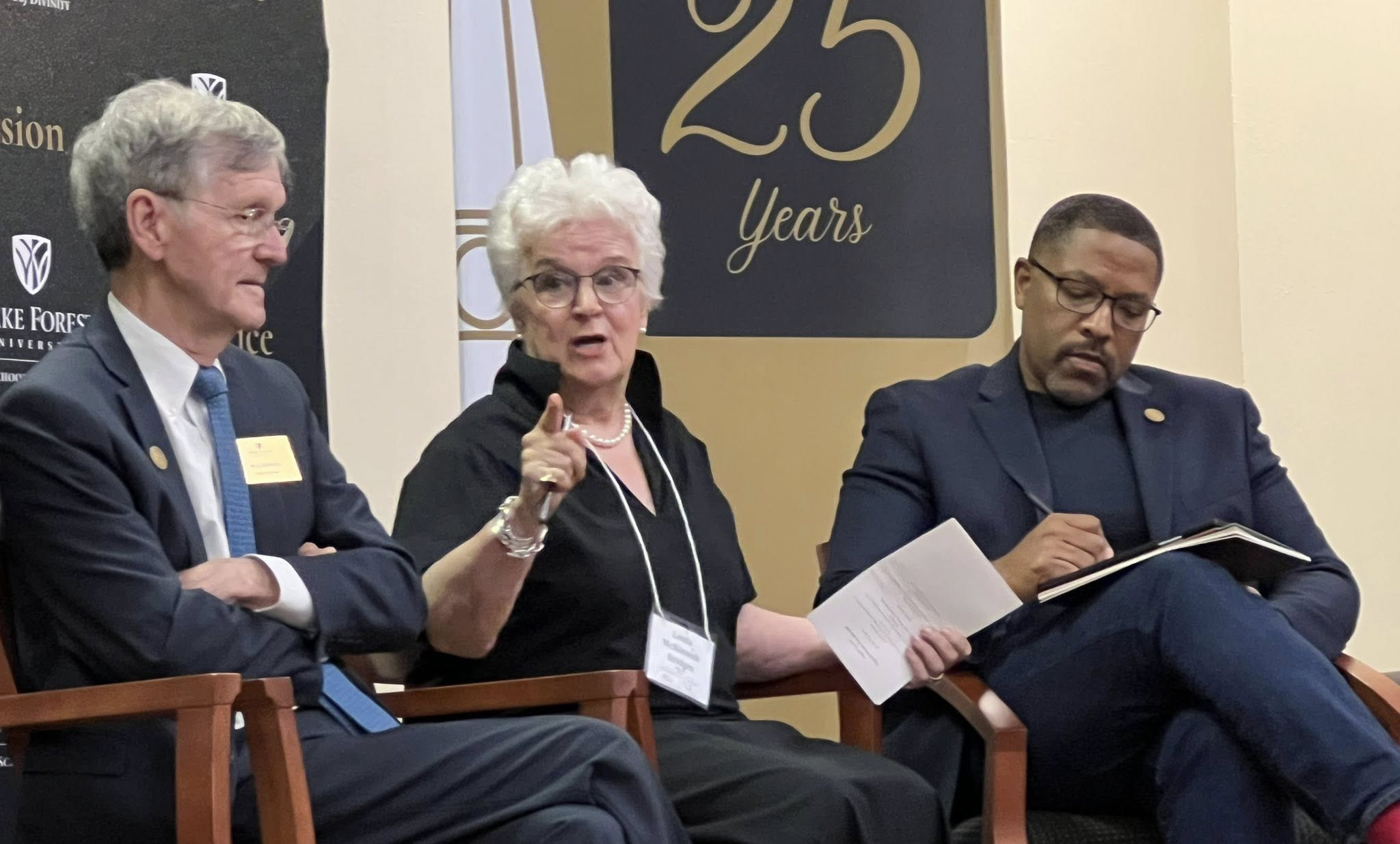
Linda McKinnish-Bridges speaks as Bill Leonard and Cory Walker listen.
McKinnish stated a key objective of the panel was to address parallels between “the dynamic equivalence of the takeover of our convention and the (current) takeover of our nation.” Addressing this theme, Walker identified two fundamental lies driving the toxic condition of church and government in the United States: biblical inerrancy on the church side and constitutional originalism on the government side. Walker sardonically criticized U.S. Supreme Court justice Amy Coney Barrett for calling for an originalist reading of the First Amendment since the original Constitution would not have allowed Barrett to be part of its formation.
Leonard asserted the current state of American politics has shown the hypocrisy of biblical inerrantists and Christian nationalists since they have said they want a Christian nation, but the recently passed “big beautiful bill” is the opposite of Christianity since it takes from those in need and gives to the rich.
Leonard said the takeover of the SBC was a big con carried out by conmen like Paige Patterson and Paul Pressler, who convinced Southern Baptists that without a conservative takeover, the thriving SBC would begin to decline like Mainline denominations. Leonard said we now see the SBC declining in membership anyway.
The silver lining of Christian nationalism, he said, will be the pain of its reality will provide an opportunity to share the true gospel of Jesus Christ. Repeatedly through the rest of the discussion, he smiled and said the solution is “the gospel.”
Walker stressed that pre-1993 Southern Seminary was dedicated to the ideals of justice, reconciliation and compassion. He cited examples of ways Wake Forest seeks to take up that baton today.
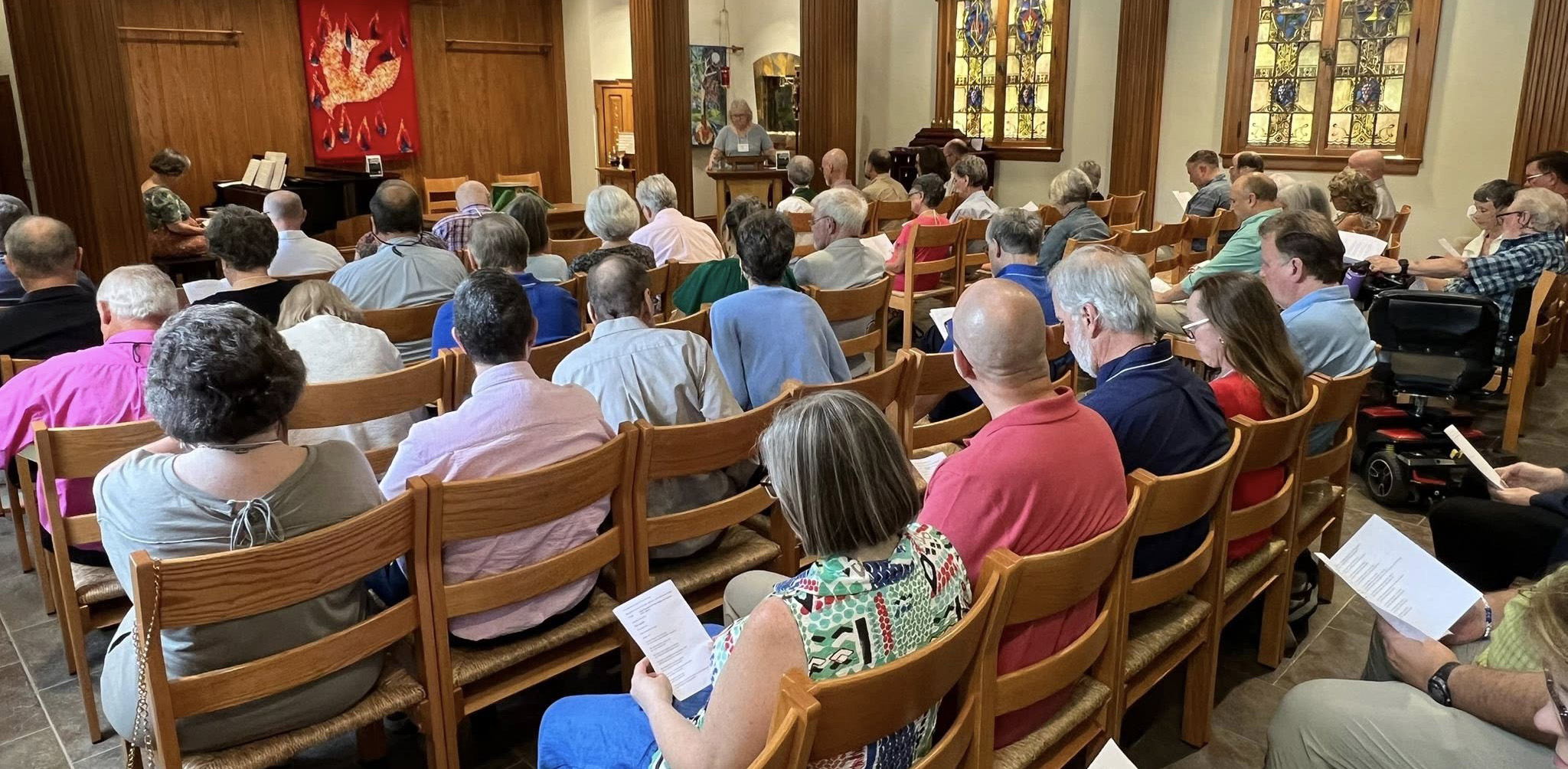
Worship service
In the subsequent Q&A with attendees, a common theme involved what could have been done differently to avoid schism in the SBC and the political power that came with it in national politics.
Another key issue was the future of theological education. Panelists and attendees described great challenges:
- Leonard pointed to a decline in Sunday school attendance and quality teaching for children, leading to young adults who know little about the Bible.
- Multiple speakers addressed culture shifts such as online learning and a drift away from brick-and-mortar classrooms.
- One attendee confessed he had stopped making donations to multiple alma maters because of their theological shifts.
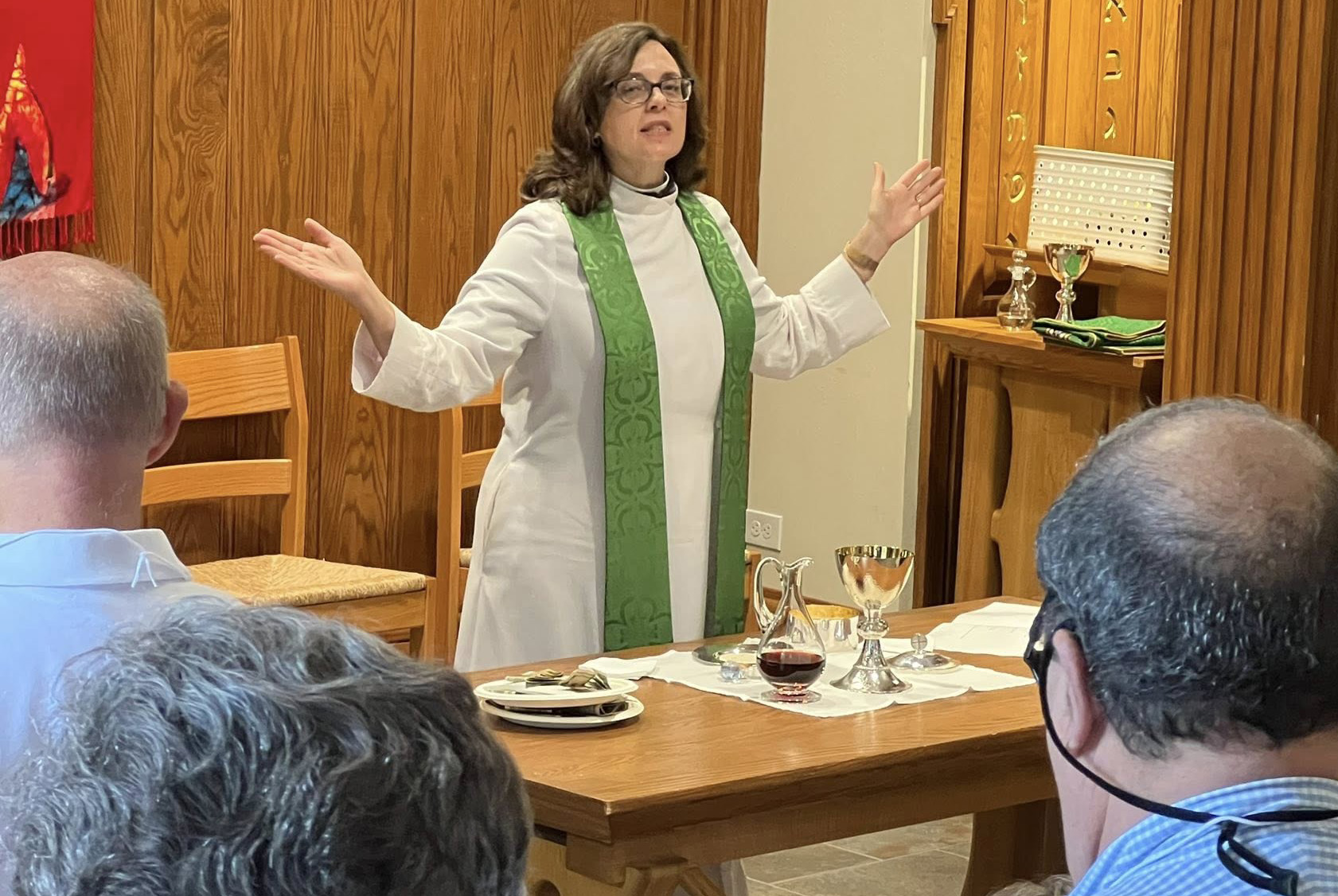
Grace Burton-Edwards leads in a celebration of Communion.
Following a luncheon provided by Wake Forest, attendees gathered for worship in the Davis Chapel. Multiple participants took part in leading the service, presided by Brian Cole, bishop of the Episcopal Diocese of East Tennessee. Grace Burton-Edwards, rector of St. Thomas Episcopal Church of Columbus, Ga., led Communion.
Leonard delivered the sermon based on Luke 12:49-56 — a text which reports Jesus saying, “Do you think that I have come to bring peace to the earth? No, I tell you, but rather division!” The passage concludes, “You know how to interpret the appearance of earth and sky, but why do you not know how to interpret the present time?” Leonard used these themes as the basis for redoubled efforts in dissenting against Christian nationalism.
He alluded to Reinhold Niebuhr saying, “Man’s capacity for justice makes democracy possible; but man’s inclination to injustice makes democracy necessary.” Leonard exhorted that suppressing dissent stops the tree of democracy from bearing fruit.
Having asserted that the takeover of Southern Seminary now is happening to American government, he said following Jesus in a manner consistent with Luke 12 requires reading the signs of the times and offering dissent to those forces that elevate political power over compassion and justice.
Brad Bull was president of the December 1992 graduating class of Southern Baptist Theological Seminary in Louisville, Ky. Today, he’s a therapist in private practice based in Tennessee.