


Joash Thomas is a descendant of the St. Thomas tradition of Christianity on the Indian subcontinent, a former Southern conservative political consultant and a theologian always pushing the church to listen to the voices of the marginalized, whether immigrants, indigenous people, people of color or the millions in the Global South who have been colonized by Western Christianity. His new book The Justice of Jesus pulls together his journey in a powerful and useful way for all of us. I’m so grateful for this conversation.
Greg Garrett: One of my central foci just now is on what the white church in America can learn from other traditions. I’m working mostly with Black theologians and pastors, but the point you make in The Justice of Jesus is that we all need other eyes and angles of vision to see, since we all have spiritual blind spots. Could you talk with my mostly white American audience about how listening to the Black church, the immigrant church and the indigenous church might open up new and healthier ways of following Jesus?
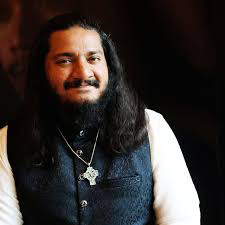
Joash Thomas
Joash Thomas: Absolutely! I think it’s important to start with this disclaimer: I’m not asking us to learn from the Black church, the immigrant church and the indigenous church because they are inherently better than the white church. I am asking us to learn from them because these siblings in Christ are often closer to the margins, and that’s where Jesus is to be found.
Many years ago, I worked in the Georgia Republican world as a political consultant and lobbyist. I thought back then I would find Jesus in the halls of power. It was only after leaving that world and stepping into international human rights work that I realized this: Jesus is found standing with people on the margins way more than he is found sitting with people in power, just as we see in the Gospels. But we’ll only see Jesus on the margins if we cultivate the eyes to see him there.
“We’ll only see Jesus on the margins if we cultivate the eyes to see him there.”
Because the gospel as defined by Jesus in Luke 4:18 is good news to the poor, freedom for the captive and liberation for the oppressed, our neighbors on the margins have a unique way of experiencing Jesus and his good news. And that doesn’t just include communities of color; it also includes other marginalized communities like women and survivors of violence.
In my book, I mention an encounter with a survivor of child sex trafficking in the Philippines. I’ve sat under some of the best Bible teachers and scholars, but I learned way more about Jesus through the eyes of this survivor than I did from anyone else. When the gospel is proclaimed to us from people who have indeed experienced it as “good news to the poor,” it just hits different.
GG: One of the painful points in the book is that the white church in the West has been complicit in colonialism at home and abroad. What is colonialism, and why is it dangerous? What is a better way forward for Christians in America and Canada?
JT: It’s important for Western Christians to understand that to Global South Christians, colonialism isn’t just an academic concept; it’s our lived experience. Being born and raised in India, you have no choice but to be exposed to the historic evils of colonialism in the Global South. You learn how many Western powers like the British, the Portuguese, the Dutch and the French (among others) systemically extracted wealth and resources (including human slaves) to economically enrich Western nations and economies.
And you learn how the Western church participated in the oppression of people who were colonized and enslaved through colonization. Not just the Roman Catholic Church, but also the Dutch Reformed Church, Church of England, Southern Baptist Convention and Southern Presbyterian Church.
But I argue in the book that colonialism wasn’t just bad for the Global South; it was also bad for the Western church that actively participated in the colonial project, because it shaped us to resist justice for our marginalized neighbors.
In my book, I share a few key tenets of the colonizer’s gospel. One of these is the deep belief that Jesus cares way more about the salvation of souls than the well-being of human bodies. It makes sense that many Western Christians have been conditioned to see the gospel in such a narrow way because this is what slaveholders and colonizers taught the people they subjugated in the name of Jesus: to keep them focused on a distant eternal freedom while living in physical shackles on earth.
“Deconstruction without decolonization is pointless and does nothing for our marginalized neighbors.”
There are many U.S. and Canadian Christians right now who are deconstructing the unhealthy elements of their Western Christian faith. But deconstruction without decolonization is pointless and does nothing for our marginalized neighbors.
A better way forward is for us to reimagine a Christian faith that is truly experienced as good news by people in poverty and oppression. For this, we must humble ourselves, sit at the feet of our marginalized siblings in Christ and learn from their perspectives of Jesus.
In the book, I write three chapters on ways the Western church can move forward — specifically, through prayer, giving and advocacy for the sake of our poor and oppressed neighbors. I am particularly excited about the chapter on advocacy as I bring my experiences in the political and international development advocacy work into that.
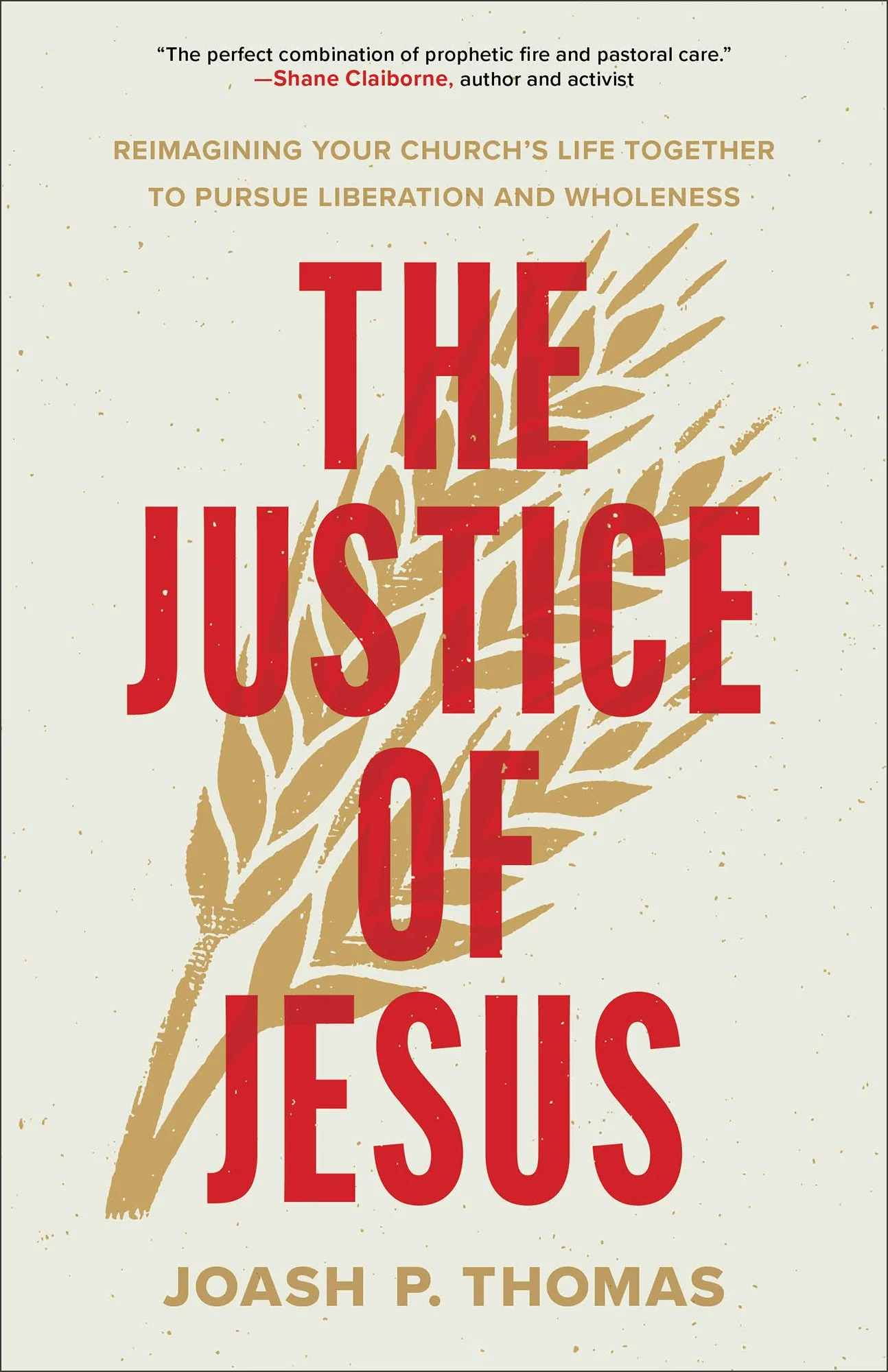 GG: Like you, I know a lot about mission trips, and Baylor students are among the many American Christians who launch themselves into other settings hoping to be of service. You advocate for a shift to what you call “vision trips” instead. Could you talk about the difference between the two ideas — and maybe a bit about how Western missiology might need to shift its focus?
JT: Yes, I think we absolutely should reimagine the future of mission trips. That is, if we truly want to prioritize the well-being of our marginalized neighbors in under-resourced communities (both globally and locally) over our own preferences. Much like a lot else inside Western Christianity, our approach to Christian mission also has been shaped by our participation in colonialism.
Christianity came to North America with the settler colonial posture of militant defensiveness. It took the posture of teachers instead of learners. But Jesus didn’t take the posture of a teacher when he came to earth. Even though Jesus was a teacher, he first humbled himself by making himself a poor, Jewish-Palestinian occupied man born into a refugee family fleeing violence who died as a state victim of unjust capital punishment. In the book, I encourage us to take the posture of humble, Christlike learners instead of self-centered teachers when visiting with our marginalized neighbors.
For mission trips, instead of “go and do,” this then becomes “come and see how God is already at work on the margins, and go back home prayerfully discerning how you can partner with Christ and his church on the margins.”
Many Christian international development organizations do donor exposure trips like this and call them “vision trips” instead of “mission trips,” and this is what I invite the Western church into. Pivoting to vision trips instead of mission trips does however require a ton of humility and curiosity.
“Instead of ‘go and do,’ this then becomes ‘come and see how God is already at work on the margins.'”
GG: One of the joys of your book is that it brings so many different theological voices into the mix. My friend Anthony Reddie told me some years back that white writers, preachers and theologians tend to think of theology strictly as white theology and any other voices as exotic and maybe peripheral. Who are some of the voices you think the white church needs to hear and why?
JT: I quote Reddie extensively in my sections on decolonizing Christian education. He and others like Eve Parker call this whitewashing of theology and other nonwhite sources of knowledge an “epistemicide,” a product of colonialism too. Reddie in particular calls us to counter this by infusing marginalized perspectives such as Black, indigenous, Global South, feminist and disabled perspectives into Christian theology.
Some of my most formative influences (whom I also cite in the book) are Gustavo Gutierrez, Munther Isaac, Sarah Bessey (also one of the endorsers of this book), James Cone and Lisa Sharon Harper, among several others.
GG: You are in Canada, so I trust safe from much of the political upheaval going on in America at this moment. But for my readers — and for me — could you tell us about what is bringing you peace, joy and courage at the moment?
JT: I wouldn’t say I’m completely removed from the current political upheaval in the United States, because the American Empire is one of the most powerful empires on earth right now, and because of our proximity to the American Empire, things feel very volatile in Canada right now, both politically and economically. Canadians live under constant fear of crippling tariffs and possible annexation.
As a U.S. citizen living in Canada, I have a certain amount of privilege when I travel to the States. But I still have family in America who feel very unsafe in the current political climate as immigrant people of color. In times like this, I draw inspiration from the Prophet Jeremiah’s exhortion to the Jewish people in Baylonian exile in Jeremiah 29:5 — “Build houses and live in them; plant gardens and eat what they produce.”
For me right now, this looks like cooking all kinds of Indian food after a long day or week. Doing this helps me connect with my unique Creator-given identity while also creating beauty that can then be enjoyed in community. I also make it a point to regularly retreat from the city so I can spend time recharging in contemplative ways in God’s good creation. These spiritual practices are luxuries, no doubt, but they give me the oxygen I need to keep persevering.

Greg Garrett
Greg Garrett is an award-winning professor at Baylor University, where he is the Carole McDaniel Hanks Professor of Literature and Culture. One of America’s leading voices on religion and culture, he is the author of 30 books, most recently the novel Bastille Day and The Gospel According to James Baldwin: What America’s Great Prophet Can Teach Us about Life, Love, and Identity. He is currently administering a major research grant on racism from the Eula Mae and John Baugh Foundation and finishing a book on racist mythologies for Oxford University Press. Greg is a seminary-trained lay preacher in the Episcopal Church and Honorary Canon Theologian at the American Cathedral of the Holy Trinity in Paris. He lives in Austin with his wife, Jeanie, and their two daughters.
Related articles:
Theologians push back on JD Vance’s view of ‘ordered love’
Desiring God is denying reality | Opinion by Rick Pidcock
Offense taken: Parsing the uproar over the Olympics opening ceremony | Opinion by Rick Pidcock