



As a Baptist and Faith and Freedom Fellow with Cooperative Baptist Fellowship Tennessee, I have observed how Christian nationalism is reshaping American churches, often blurring the lines between faith and political power. This poses a significant risk to our values of religious liberty and gospel faithfulness.
What makes Christian nationalism dangerous is not just its overt political agenda for dominance, but the religious idolatry that fuels it. At its core, this is a political ideology masked by Christian language, tempting the privileged toward comfort and control. In my efforts to raise awareness about these dangers, this summer I turned inward — toward the church itself.

Daniel Holcomb
Throughout June and July, I attended CBF General Assembly and listened to local Middle Tennessee pastors wrestling with how to resist Christian nationalism while remaining faithful to the gospel. The following reflections offer a range of insights on Christian responsibility beyond the church wall as well as how we might engage Christian nationalism within our own communities.
Kings Cross Church Tullahoma: Renewing faithfulness in youth
When I asked Youth Pastor Tyler Waddell of Kings Cross Church how he engages with his youth on the dangers of Christian nationalism, his response was both measured and articulate.
For him, talking politics within the church tended to stray away from the heart of the Christian faith. “I do my best not to share my political stance in the church.”
Especially as a youth pastor, he felt his top priority was being a mentor for spiritual formation. He told me it was rare that anyone would come up to him with questions on faith and politics. But if someone did approach him with such questions, he would respond with care and thoughtfulness. Still, Waddell made it clear his calling isn’t to be a political diplomat but a teacher of the gospel.
I asked him, “What about justice?” implying that the gospel was/is intrinsically political. Furthermore, Jesus’ ministry is for “the least of these,” embodying a justice that is both divine and disruptive. “Where and how does this awareness take place in your church?” I asked. Is there some sort of witness to the neighbor outside the church walls of King’s Cross? I was pushing a bit, admittedly, but I sensed Waddell had more insight to share.
He first asked me what I meant by “Christian nationalism” and hoped I would provide him a definition. I realized I had been vague so far during our lunch. I said Christian nationalism advocates within our government a preference toward those who identify as Christian. It attempts to merge Christian identities with American identities as a means for power and influence. Mostly tied to the Religious Right, it focuses on asserting Christian dominance in civic life. I then gave an example of the push for displaying the Ten Commandments in public school classrooms. I suggested a political system that forces faith on citizens creates a faithless society.
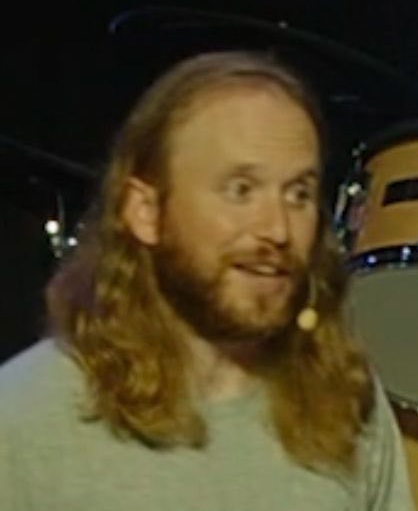
Tyler Waddell
After hearing this, Waddell agreed and said it is very important to stay away from religious indoctrination. From his own experience, he had seen this within churches. Part of his mission as a youth pastor, he said, is to steer clear from that indoctrination by keeping faith welcoming, open and full of questions. He believes if he could teach that faith is full of questions, doubts and all the in-between, it would guide youth to important questions about the world around them.
This would first reveal to them the dangers of religious indoctrination and, in turn, reveal the nature of God’s divine justice. This is how he engages with his youth. Not an overt political talk but cultivating an open and faithful community actively seeking Christ in the world.
Most important, Waddell stressed relationality within his work as a youth pastor. He believes community is needed first and is crucial, especially for youth. And sometimes that means simply showing up to one of his youth’s sports games and school events.
Waddell ultimately summed up his thoughts with these words, “Particularly for youth, wherever they land politically is not my interest; rather, it is forming them spiritually through the message and life of Christ.”
My talk with him provided an insightful perspective, making me think more deeply about how to approach younger audiences on the issue of Christian nationalism. How are we to articulate the balance between our Baptist values of freedom and responsibility? In what ways can we challenge the faith of our youth without overbearing it? For Waddell, striking that crucial balance must first be through trust and being present.
May pastor Waddell’s faithful work instill in his youth a sensitivity to injustice. May it nurture an awareness to Christian nationalism and its hazardous implications for religious liberty. And by doing so, may his work preserve the gospel as good news for all people.
Franklin Community Church: Street-level resistance
Although very vocal about the dangers of Christian nationalism in America, Pastor Kevin Riggs of Franklin Community Church informs me his efforts are not about addressing that particular challenge. His church is not necessarily engaging with Christian nationalism directly because their mission is focused on ministry locally in the Franklin community.
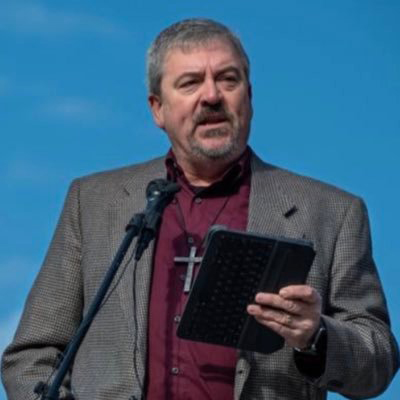
Kevin Riggs
“We are just trying to get people clothed and housed,” he explained.
Franklin Community Church is not the traditional institutional body like most churches. It is best represented by what Pastor Riggs calls “a ministry with a church rather than a church with a ministry.” The congregation meets and serves through several smaller buildings spread across Franklin, and their main office functions almost interchangeably as a shelter for the unhoused.
Even though their witness is not an explicit engagement with Christian nationalism, imitating the ministry of Jesus reflects a direct opposition to it in practice. In my time conversing with the leadership team at FCC, it became clear their guiding principle is simple yet profound: to care for all God’s people. Christ’s ministry showed no special consideration for identity or social status, and FCC understands that deeply.
Outreach Pastor Luis Sura told me, “People don’t like our church but like what we do.”
“Seeking justice and caring for others on the ground is admired, yet naming injustice behind the pulpit is met with pushback.”
I believe this underscores a central yet nuanced tension in addressing Christian nationalism. Seeking justice and caring for others on the ground is admired, yet naming injustice behind the pulpit is met with pushback. Pastor Sura is speaking to FCC’s consistency.
FCC is concerned for the least of these and they will continue to push against any political or religious force that hinders the call for those in need. Whether that is behind the pulpit or street-level ministry, FCC continues to reveal how radical the love of Jesus is.
Pastor Riggs emphasizes social justice as a true tenet of the Christian faith. FCC does not have a preferential option for an exclusive Christian community but rather embraces a preferential option for the excluded. This is represented clearly in FCC’s mission: To build an authentic community and authentic relationships as God’s people.
This authenticity requires a faithful heart to engage in the well-being of all people. This kind of approach, rooted in authenticity and solidarity with the marginalized, naturally reveals how deeply Christian nationalism threatens the heart of faithful ministry.
General Assembly: Instruction on Christian nationalism
Unlike the local churches I visited, where resistance to Christian nationalism was mostly embodied, the CBF General Assembly provided a different posture that named it plainly and provided tools to confront it.
A few weeks after my visits in Middle Tennessee, I flew to St. Louis to attend sessions that taught ways for Christians to respond at a policy level.

Brian Kaylor testifying at a Missouri House hearing.
I walked into Brain Kaylor’s session, “Can I Get a Witness?” as he gave advice about how to testify to my state legislature against Christian nationalism. Kaylor insisted that using conservative language can be effective, representing opposition to this ideology as a bipartisan issue.
Hoping to initiate cognitive dissonance, Kaylor provided examples like, “The government should not pick winners and losers regarding religion” or “I don’t trust the government to tell my kid how to pray.”
“Christians have a particularly important role,” Kaylor said. Especially in red states, informing lawmakers themselves that Christian nationalist policy is not an atheist vs. Christian issue.
Throughout his talk, Kaylor shared his own personal stories, describing the power of pastors testifying beside him. It is an attempt to showing lawmakers that opposing Christian nationalism is not anti-Christian but rather about preserving religious freedom for all.
“We must use our Christian privilege in this country,” he said, “to advocate for the least of these.”
Later, I attend Amanda Tyler’s session. Tyler is the lead organizer for the Christians Against Christian Nationalism movement. Her words were concise and informative but also prophetic.
Tyler seemed deliberate in framing Christian nationalism not as a partisan issue, but a danger to Christian theology and democracy. She expressed this by stating how it is just a particular form of religious nationalism seen around the world. She even challenged us that Christian nationalism does not only exist in conservative congregations. Providing theological perspective in her presentation, she was speaking to a broader issue past culture wars, toward the gospel’s message.
Tyler helped us identify Christian nationalism not just in policy but also in public discourse. she encouraged us to ask questions like, “Is my sense of patriotism causing me to overlook my Christian commitments?” and “How can our witness represent our faith and also respect the faith of others?”
Like Kaylor, Tyler invited an open dialogue — revealing how Christian nationalism often harms those outside the Christian faith the most. In this way, she reflected her movement’s mission — a witness that sees the value and dignity in all people, no matter the faith they practice.
Both Kaylor’s and Tyler’s approaches to Christian nationalism were theological. They both revealed to me that our faithfulness as Christians is not about trying to save America for Christianity but witnessing to the kingdom — in, against and beyond America.
A Baptist Witness
Toward the beginning of my summer internship, I struggled with the abstract questions: Does Christian nationalism mean something to different people? Can it really be defined? What does opposing Christian nationalism mean in practice? And in what ways can we engage with those across the political spectrum without offending or excluding them?
These questions became clearer as I viewed Christian nationalism through a Baptist lens. Leaving General Assembly and reflecting on my summer, I found myself holding two visions of resistance: the prophetic witness that speaks truth to power, and the pastoral witness grounded in presence, love and faithfulness.
Both are necessary to challenge the false gospel of Christian nationalism. As a young Baptist, I am learning our theology is antithetical to Christian nationalism.
It is a resistance rooted in faithfulness to the cross rather than the throne.
A resistance that reminds me of the many Baptists who came before — insisting that a faith not chosen is no faith at all.
And ultimately, a Baptist witness builds no kingdom through politics, but through a persistent resistance to empire rooted in a commitment to soul freedom.
Daniel Holcomb is a senior at Belmont University majoring in faith and social justice. He writes from the perspective of a young Baptist navigating the intersection of faith and politics in America.