



A centerpiece of the “big beautiful bill,” as the recently passed tax and spending act was dubbed by President Donald Trump, is a massive funding appropriation for Immigration and Customs Enforcement, an agency of the Department of Homeland Security.
The law increases the total allocation for ICE from about $8 billion a year to almost $30 billion. This means ICE now surpasses the FBI as the largest and highest-funded federal law enforcement agency.
The biggest element of this huge allocation of money is an intense effort to recruit 10,000 new ICE agents to be stationed primarily in America’s largest cities, like New York and Los Angeles. Tom Homan, Trump’s border czar, told reporters: “You’re going to see immigration enforcement on a level you’ve never seen it before.”
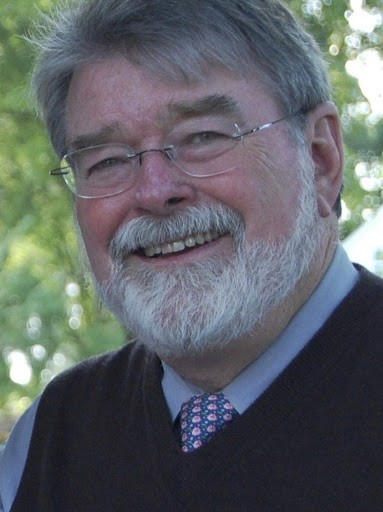
Patrick Anderson
Mass deportation of migrants and asylum seekers has been Trump’s most vociferous and repeated rallying cry for MAGA’s base. The result is masked men claiming to be government agents seizing people off the street, and in some cases sending them to overseas gulags, without adherence to America’s constitutional due process and legal precedent.
All this is being justified with claims that Americans are being terrorized by immigrant criminals. As Trump infamously said: “You can’t walk across the street to get a loaf of bread. You get shot, you get mugged, you get raped, you get whatever it may be.”
The fact of the matter is that crime has plunged dramatically during the past decade and the rate of crime among immigrants is significantly lower than that of the population at large.
Not a new tactic
Rapidly expanding the number of federal law enforcement officers is not new. After 9-11, the FBI experienced an influx of new applicants that resulted in a dramatic increase in the number of agents, but that increase was nonetheless a much smaller bump in agency size than what we are now seeing with ICE.
In the case of the FBI, the role of agent was well-defined and therefore the new FBI agents tended to be lawyers, accountants, linguists and Ph.D.s, often with some foreign language specialty. The motivation for that FBI cohort, in addition to the urgency of combatting terrorism, was in part that the job was held in high regard; the American public generally looked favorably on FBI agents’ professionalism, effectiveness and commitment to “The American Way.”
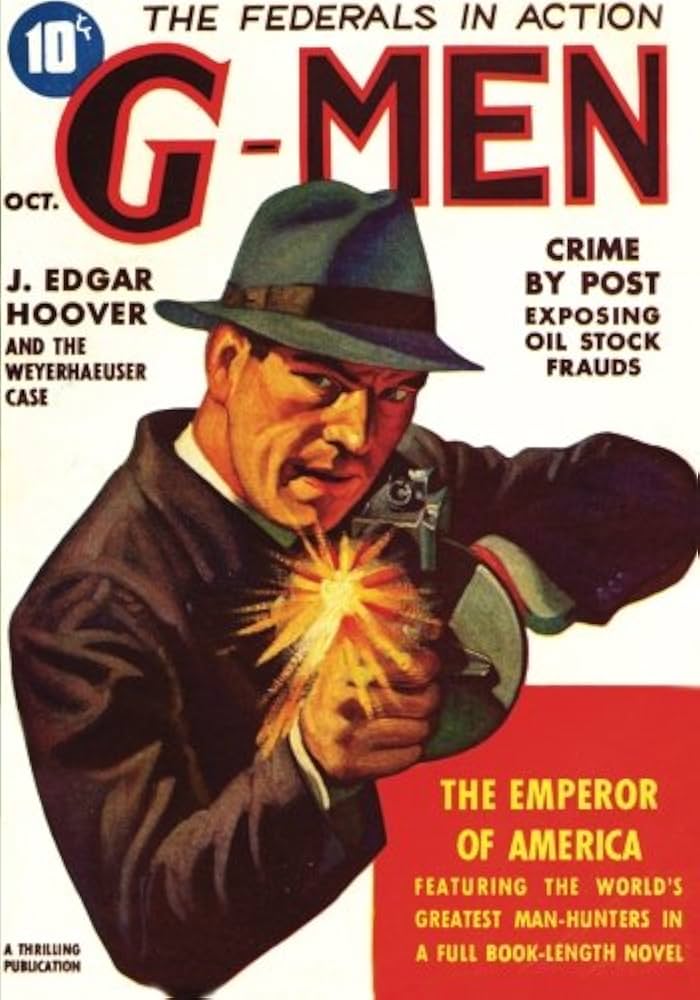 That view of the FBI was no doubt influenced by movie and television depictions of incorruptible crime-fighting agents like the Prohibition-era agent Eliot Ness, who was commonly referred to as a G-man, short for “government man.” The well-known malignancy of the agency’s racism and bigotry, especially under the despotic J. Edgar Hoover, was brushed aside in favor of the perceived glamor of working for the FBI. Applicants were rigorously investigated before hiring and thoroughly trained and supervised during their careers. Senior agents served as mentors and role models. Accounts of FBI heroism and crime-fighting prowess were heavily promoted and reported in the news. Newspapers carried pictures of G-men wearing business suits and fedora-style hats, often brandishing weapons and captured contraband.
Short history of ICE
ICE, on the other hand, does not have a long and storied past. Established by Congress in 2003, ICE is a newcomer on the American law enforcement scene. As part of the frenetic reaction to 9-11, ICE’s intended function was to address the threat of terrorism. During recent years, especially under Trump’s administrations, the intended functions of the agency have been largely forgotten. In many ways, ICE is now operating as a rogue agency.
Many Americans are horrified and outraged by the images of unanswerable, independent agents exercising government power, in many cases outside the law and in violation of the U.S. Constitution, against some of the most vulnerable, frightened, powerless human beings in America — people who in many cases have nowhere to turn for assistance.
“The image they paint is one of unfettered power and domination.”
Instead of well-dressed FBI G-men hailed as heroes and identified proudly, ICE agents appear as masked ruffians wearing threatening, warrior-like SWAT police gear and are seen roughly arresting terrorized migrants, including children and elderly people. The image they paint is one of unfettered power and domination.
Help wanted
Who are those agents? Why are they not publicly identified? What kind of people will be attracted to the use of that kind of power? Who is inspired by the idea of a “law enforcement” job in which unidentified police with no legal oversight or boundaries, no documentation, no communication and no cause offer zero due process and wear masks signaling their lack of accountability and secret, anonymous, unlimited power?
Who will be these new agents’ trainers, role models and supervisors? What policies will inform and direct their decisions? We must recognize that a good number of Americans will look on those same images and say, “Yeah! I want some of that! Sign me up!”
 This massive infusion of funds for the purpose of attracting and hiring thousands of new ICE agents is of great concern to police scholars and criminologists, including me. We learned some important lessons in the 1970s when a similar nationwide effort was made to hire more and better-trained police, especially in urban areas. The effort arose in the wake of highly visible civil unrest by civil rights activists and anti-Vietnam War protesters, along with lawlessness by both protesters and law enforcers alike. The poor quality of police agencies at the time was easily documented and recognized.
What we learned before
Congress appropriated a lot of money at first to improve the existing police departments and to train and educate existing law enforcement personnel. Later, the emphasis shifted to recruiting, hiring and training a new cadre of police personnel. Community colleges, police academies and law enforcement agencies were awash in federal dollars to make all that happen.
Here’s what transpired: First, a great disagreement emerged between social scientists, who argued the criminal justice system needed to be “reformed,” and criminal justice leaders, such as police chiefs and sheriffs, who maintained it only needed to be “improved.”
Reform implied a total re-imagining and restructuring of criminal justice. Many entrenched police leaders wanted the federal money, but only to improve existing practices — a position summed up as, “We know what we’re doing; just leave us alone and give us more money so we can do it better.”
The struggle between those two factions has persisted.
A large proportion of police at that time had no more than a high school education and a good many did not even have that. The prevailing view among members of Congress and their staffs was that a more educated workforce would improve the police image and perhaps even foster professionalism. Large sums of money were allocated to educate police officers and, later, jail and prison personnel. Incentives were offered to entice officers to go to college, and many thousands did. I taught and trained a great number of them.
Many were eager to have the credential of having completed some collegiate study, mostly in criminal justice courses that often were taught by retired FBI agents who reinforced J. Edgar Hoover’s discredited ideas of justice. These officer-students tended to be uninterested in either their own education or any change in existing police practices. A smaller number of in-service students were genuinely interested in having a true college experience — one that would widen their knowledge and understanding of society through courses taught by faculty with PhDs in the arts and sciences.
“The wrong person educated and trained is still the wrong person.”
Many of my cohort of criminal justice professors quickly learned that a trained and educated police force does not guarantee better decision-making by police or a more just criminal justice system. College degrees or certificates from training academies do not automatically lead to more and better peacekeeping, protection and service by police in society. Based on my own experience, I contend the quality of policing depends on the quality of the people doing the policing. In other words, the wrong person educated and trained is still the wrong person. The opposite also holds true.
Fortunately, most police officers and criminal justice personnel approach their profession with a high sense of purpose, as well as a deep desire to help others, to uphold the values expressed in the U.S. Constitution, and to serve the causes of justice and propriety. Nonetheless, it remains true that some people are drawn to careers in criminal justice because they believe such careers will offer opportunities to live out their own bad values and desires.
Some people also are enticed by the possibility of holding a position of power and authority. The uniform, weapons, badge and other symbols of the job give an aura of domination that can lead to excessive force, discrimination and bullying of vulnerable individuals. Others even join police ranks to engage in criminal behavior while using the badge as a shield.
Further exacerbating the problem, stubborn and entrenched police leaders, having gained their status through a system they know and understand, are sometimes loath to embrace new methods and technologies.
When nefarious reasons for entering law enforcement are combined with a lack of respect by the executive branch and criminal justice apparatus for the law and the courts, we can expect to see more use of force, a punitive focus and an increase in the unjust exercise of power and control.
What ICE wants
A law enforcement agency seeking to hire personnel should first ask the question: “What kind of people do we want to work in this agency?”
 ICE has implicitly stated who they want: People with total fealty to Donald Trump and his administration. Trump has said he wants ICE to be ruthless, overly aggressive and forceful in their jobs. He empowers them to respond to any interference or criticism with overwhelming force.
ICE, along with many pockets of Trump’s administration of justice apparatus, has defied court rulings, ignored the Bill of Rights and misled the public about what they are doing, all in an effort to find and deport as many migrants as they can, without regard to criminal records, legal status, documentation or anything else. This fulfills a deliberate intention to exploit governmental power for immoral or unethical purposes.
Immigration advocates are bracing for more masked agents to descend upon local communities with heavy-handed tactics.
“There’s an incredible sense of dread, frankly,” said Chris Newman, legal director and general counsel for the National Day Laborer Organizing Network, which represents day laborer groups across the country. So far, he said, Trump has tried to expand his power over immigration through executive actions, some of which have been blocked by the lower federal courts. “But this (big beautiful bill) is legislation, signed into law, and gives people an impression of a sense of permanence, which is ominous.”
America’s criminal justice network, already seen by many as in great need of reform, faces a comprehensive effort to establish the type of police system favored by police states in fascist regimes such as Russia and North Korea. This is the conclusion I reach when I see the images of ICE agents and other police officers rousting and hauling away peaceful workers, students and individuals attending court hearings, all while anguished family members and neighbors futilely ask for explanations and plea for restraint by the masked strangers posing as agents of our country.
These are not the G-men of days past. America is not living up to its promise of liberty and justice for all. Sadly, the outlook is bleak.
Patrick Anderson and his wife, Carolyn, were students at Southwestern Baptist Seminary in Fort Worth, Texas, when they were burglarized and had virtually everything they owned stolen. Police officers told them the thieves must be juveniles because the fingerprints were small. That experience began a life-long interest in and fascination with crime and justice for Pat. At the beginning of his third year in the master of divinity program, he secured a job as a juvenile probation officer in Fort Worth and worked there four years. That led to a long career as a criminologist with a Ph.D. in criminology. He is a scholar, professor, trainer and expert on criminal justice custom and practice. In retirement, he’s the editor of Christian Ethics Today.