

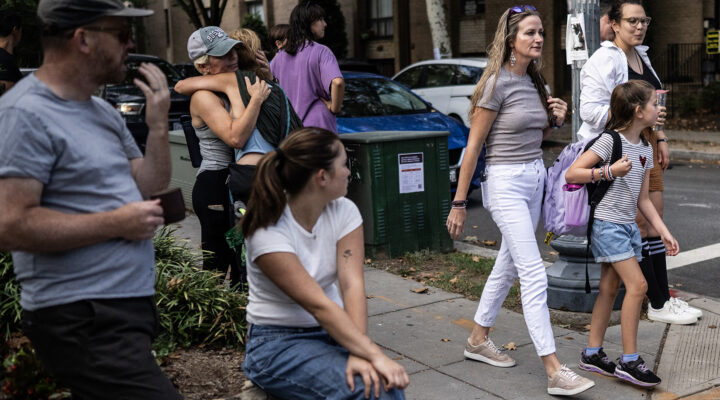
The Trump administration’s mass deportation campaign is striking terror in the lives of children worried their parents could be detained at school drop-off or while they are in classes during the day, education and immigration advocates say.
The stress also extends to educators concerned Immigration and Customs Enforcement agents could appear on their campuses while classes are in session.

Vanessa Cardenas
“The first-day jitters of back to school this year have been replaced by fear kids are missing school afraid to leave their homes, parents are having to make plans in case they’re disappeared and teachers are having to be trained in safety protocols should they encounter ICE while schools are navigating,” said Vanessa Cárdenas, executive director of America’s Voice.
“This is the hidden cost of Trump’s mass deportation agenda — not just economic devastation, but educational chaos and psychological scarring.”
Researchers already are reporting a wave of increased student absences due to parents’ fears of being separated from their children.
A Stanford University study reports a connection between increased immigration raids and rises in student absenteeism.
“This is the hidden cost of Trump’s mass deportation agenda … educational chaos and psychological scarring.”
“The results indicate that recent raids coincided with a 22% increase in daily student absences with particularly large increases among the youngest students,” according to the June study focused on schools in California’s Central Valley. “These increased absences underscore the broader policy relevance of this immigration enforcement in terms of their impact on schools, childhood stress and opportunities to learn.”
The trend is attributed to the “unusually broad and sharp increase in immigration raids and arrests” at the beginning of Trump’s term and to the president’s revoking of the traditional ban on enforcement actions in sensitive locations such as churches, hospitals and schools.
The continuing effects of immigration actions on school attendance and student development are likely to extend beyond educational settings, the study warns. “The increased absences can also be understood as a leading indicator of broad and developmentally harmful stress these raids create for students and their families.”
The fear is not limited to students who are undocumented immigrants but also affects the estimated 6 million children under 18 living with at least one parent or other family member who are undocumented, according to the American Immigration Council. “Consequently, immigration enforcement actions — and the ever-present threat of enforcement action — have significant physical, emotional, developmental and economic repercussions for millions of children across the country.”
The damage then extends to entire communities as affected children experience higher rates of anxiety and other mental health challenges resulting from the arrest or deportation of a loved one, the council explained. “They are also at greater risk of developing chronic mental health conditions that include depression and post-traumatic stress disorder as well as physical conditions such as cancer, stroke, diabetes and heart disease.”
A December 2023 UCLA survey found 60% of California teachers reported declining academic performance in students worried about the safety of a parent or other loved one. Often, the decline resulted in children having to repeat grades.
“She came home from prom to find her mom deported and never had a chance to say goodbye or anything.”
“I had one student who came back the day after prom and would not eat or talk to anyone,” a California high school teacher relayed in the study. “I finally found out from one of her friends that she came home from prom to find her mom deported and never had a chance to say goodbye or anything.”
Meanwhile, some school districts have implemented new policies and procedures designed to make schools safe places amid ongoing immigration actions.
The Los Angeles Unified School District vowed to do “everything in its power to protect and defend students, families and staff” regardless of immigration status. It has rerouted school buses, augmented online education and created “safe zones” around schools to help students avoid ICE agents.
New York City Public Schools adopted a resolution this year committing to work with staff, union partners and immigration advocates “to offer coaching and support for students and their families on immigrant rights, potential avenues for immigration relief and the overall health and well-being of those affected.”
Fedrick Ingram
The resolution also forbids staff from inquiring about student and family immigration status and from sharing their student personal information with immigration authorities. “NYCPS does not consent to granting non-local law enforcement agencies, including the U.S. Immigration and Customs Enforcement, access to school facilities, students or student records for immigration enforcement purposes absent confirmation from NYCPS legal counsel that there exist exigent circumstances, a judicial warrant, a court order, or validly issued subpoena.”
It’s a shame families, schools and districts have to focus on these issues as classes resume, said Fedrick Ingram, secretary-treasurer of the American Federation of Teachers.
“At the beginning of school, our students should be thinking about the curriculum, how they learn, and how they’re going to navigate the year. Unfortunately, too many are traumatized — seeing police, masked assailants, kidnappings and people disappeared on the street — and then asked to go to school and do work on top of that.”