

My friend David Dark often posts on social media that there are lots of ways to love God. I have seen some of those forms of love recently, as have you.
Since President Donald Trump unleashed masked ICE officers on American towns and cities, clergy and laypeople have shown up to try and shield people at their visa hearings, and good citizens have questioned masked law enforcement and interposed their bodies to try and protect their neighbors. Volunteers in food banks have shown up to try and mitigate the tremendous harms of the federal government’s cancelling of benefits for the poor and hungry.
My friends at the Eula Mae and John Baugh Foundation are among those directing financial resources toward the marginalized and seeking greater justice and accountability. My friend Skye Perryman and her colleagues at Democracy Forward are among those people of faith trying to hold this administration to account in the courts, for as long as we still have a justice system.
Greg Garrett
I don’t have a lot of money. I don’t have a legal degree. I don’t have a mammoth platform. Sometimes it doesn’t feel like I can be as heroic as other Americans pushing back against the mistreatment of our neighbors and against this cancerous iteration of white American Christianity. But I can tell you what I do have: Feet that walk, hands that can hold a posterboard, and a voice to chant or sing or pray.
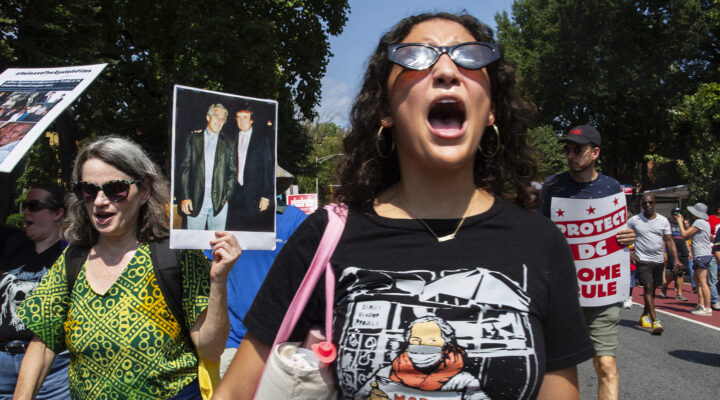
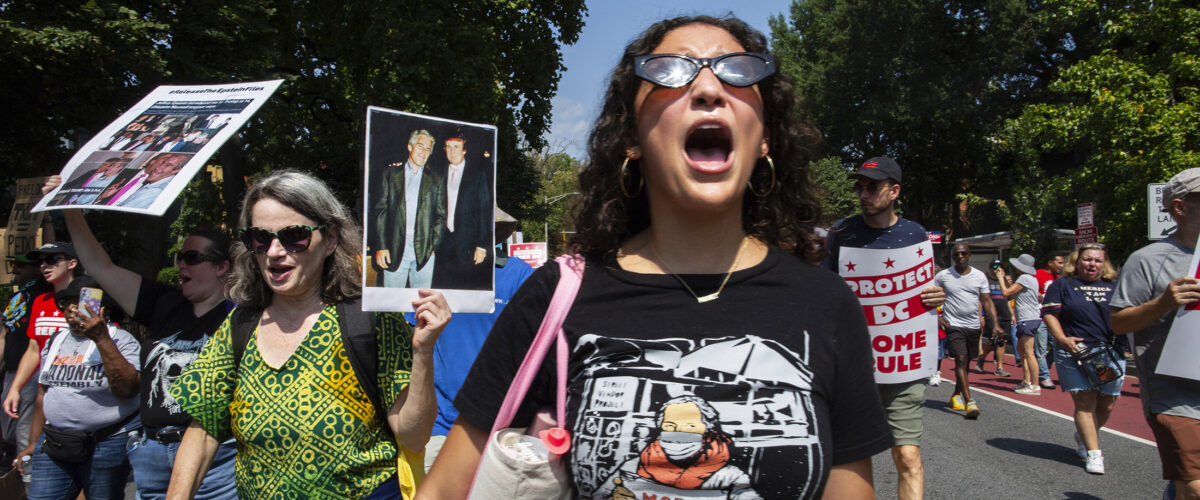
So far this year, I have been out on marches and picket lines and rallies against Tesla, and No Kings in America, and ICE kidnappings of God’s children off the streets, out of their homes or from their schools. It’s not a comfortable thing for me. As I posted on social media months ago, I’m an aging white guy who writes and teaches, and it feels unfair that at this moment of my life when I want to be sipping drinks on my back porch I’m being called to march against injustice.
But I will tell you: It is also one of the most important, most tangible forms of Christian resistance I can offer, both strategically and tactically, and the same may be true for you as well.
So I have been thinking often lately about the elderly Black woman who during the Montgomery bus boycott told Martin Luther King, “My feets is tired, but my soul is rested.”
Vice President JD Vance and unofficial immigration czar Stephen Miller recently made fun of what they described as aging hippies and crazy communists who turned out to protest the administration’s unwarranted show of military force in Washington, D.C. And well they might, for it is “aging hippies” and other white protesters who bear the most power and the most protection as they seek to push back against the Trump administration’s fascistic tendencies.
“Authoritarians may act as though they can’t be stopped, but it is the people who still hold the power.”
Donald Trump may honestly believe he won a landslide electoral victory and has a compelling mandate from the American people for his deeply unpopular policies. (I can’t say what goes on in his head, and honestly, I’d rather not try.) But here is a truth about fascism: Authoritarians may act as though they can’t be stopped, but it is the people who still hold the power, whether they realize it or not.
Trump is under water on almost every issue of his presidency, and rather than holding a popular mandate that might make his ascendance inevitable, the administration bluffs and blusters, because whether or not this president knows the truth, his enablers are certainly aware the Project 2025 policies they pursue are hated by a majority of Americans.
White Christians can and should voice their indignation, write and speak and preach and teach against hatred and terror. White Christians with financial resources or particular skills can and should offer those to protect their neighbors and seek justice. But any and every one of us can protest, put our bodies into the streets to be counted and stand up for our brothers and sisters who are directly and daily harmed by the policies of this administration.
I’ve been to rallies where folks who look like me lamented the mostly white makeup of the crowds. But what I’ve come to understand over years of study and relationship is that marginalized people have had to carry the weight of public protest for many years now, and in this current political climate, it is much more dangerous for them to march than it is for white protesters.
If you’re a brown person, you face the possibility of ICE arrest or other reprisals based not on your actions but on the color of your skin or your country of origin. We all have seen stories about people who have committed no crimes in this country torn from their families and sent to hellholes in Louisiana or Venezuela. The people who build, clean and landscape our homes, who pick our food or cook our meals are daily swept up by ICE officers and their lives disrupted, perhaps forever. It is frightening to stand up in public under such conditions.
My own work has been built around friendships and partnerships with Black churches, pastors and theologians, and I know how fiercely and eloquently they have fought for freedom. But I also know the current political reality is that Trump and MAGA are stoking fear among their supporters of Black “mobs” and “rioters,” a continuation of centuries of worn but lethal racist myths employed to approve segregation and racial violence.
“If National Guard troops open fire on a group of aging white hippies, white pastors and priests in clerical collars, peaceful white protesters singing, chanting and praying?”
In his first term, Trump asked military advisers why he couldn’t direct the military to fire on Black Lives Matter protesters in American streets. His second-term deployment of federal resources to cities with Black mayors and Black populations seems designed to invite a scenario where he can order troops to fire on a “Black mob” and then move to declare martial law.
White MAGA supporters might approve that use of force.
But if National Guard troops open fire on a group of aging white hippies, white pastors and priests in clerical collars, peaceful white protesters singing, chanting and praying?
First, please God, I don’t believe it ever would happen.
But if it did, even the most fervent MAGA supporters would have a difficult time condoning violence against people who look like themselves.
There are so many ways to love God and our neighbor. But right now, one of the most potent also is the most pedestrian: Let’s put our prayers on the pavement, let’s show up for those we profess to love and serve, let’s stand up and be counted.
Is there some risk in this? Maybe.
But there is so much more risk for those who already are facing risk every minute of every day in Donald Trump’s America.
Find a protest. Start a protest. Wear your collar. Carry a sign. Sing “We Shall Overcome.” Chant “No justice, no peace.” Hold hands. Pray for our neighbors and our nation. Love hard.
If we truly believe Jesus loves all the children of the world, let’s stand up for all of them, publicly, now and until this terrible moment passes.
I’ll see you in the streets.
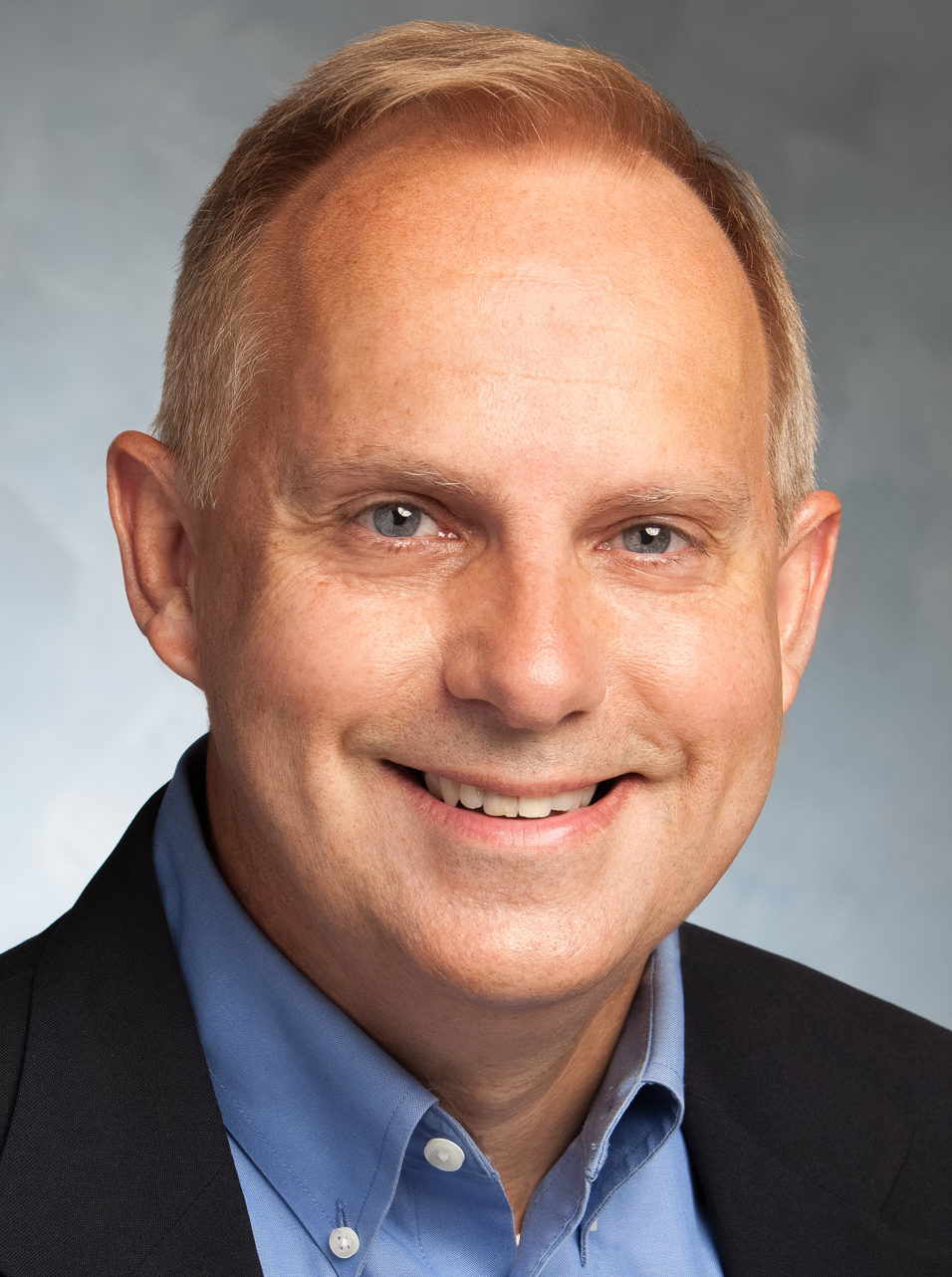
Greg Garrett is an award-winning professor at Baylor University, where he is the Carole McDaniel Hanks Professor of Literature and Culture. One of America’s leading voices on religion and culture, he is the author of 30 books, most recently the novel Bastille Day and The Gospel According to James Baldwin: What America’s Great Prophet Can Teach Us about Life, Love, and Identity. He is currently administering a major research grant on racism from the Eula Mae and John Baugh Foundation and finishing a book on racist mythologies for Oxford University Press. Greg is a seminary-trained lay preacher in the Episcopal Church and Honorary Canon Theologian at the American Cathedral of the Holy Trinity in Paris. He lives in Austin with his wife, Jeanie, and their two daughters.
Related articles:
The lunatics are now in charge | Opinion by Mark Wingfield
This is what we should be doing, now | Opinion by Wendell Griffen
Why we cannot disengage from local politics | Opinion by Brittini Palmer