

Whatever a real American family was supposed to look and act like, I couldn’t have told you. I was raised on 1980s comedy television.
Each evening, I watched the whole slate of sitcoms, most of which were about families, and most of those had at least one parent missing. Tony Danza’s character in Who’s The Boss (1984-1992) was raising his daughter after the death of his wife, which of course happened off-screen. Bob Saget’s character, Danny, in Full House was left to raise three kids. These kids fared better than Punky Bruster and Arnold and Willis Jackson, who lost both parents, although Arnold and Willis were adopted by a millionaire.
While there still was a healthy variety of “traditional” television families, Family Matters, Growing Pains, and Family Ties, to name a few, shows like Rosanne and Married with Children were the first among evening sarcastic sitcoms to give on-screen voice to the difficult realities of trying to keep a family together.

Ryan Clark
Entering the 1980s, popular culture showed American society clearly experimenting with what it meant to be a family. And while Hollywood saw great fun and money to be made in telling and selling 26-minute stories of kids with two dads, adoptive dads, military dads and, honestly, mostly dumb dads, there weren’t many shows about single moms.
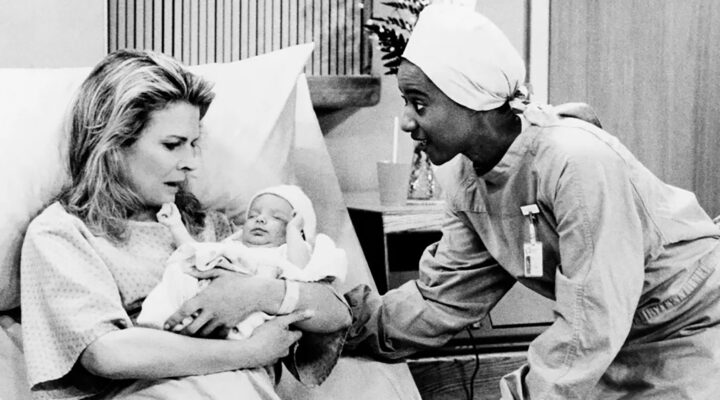
Angela Bower, in Who’s the Boss, was divorced, but it was Tony’s awkward employment that made their family “whole.” The first direct attempt to depict single motherhood I can recall was on Murphy Brown, which pissed off Vice President Dan Quayle. That’s when I first heard of James Dobson.
While Dobson wielded much more power over how my church viewed divorced and single moms than I could possibly know, I found myself in a discussion with our youth group and leaders about the family God had intended for each of us.
I wasn’t the only person in the youth group with divorced parents. My mom had actually fixed that the year before by marrying my stepdad. But the lesson was clear: God preferred one man, one woman and a gaggle of obedient kids.
I didn’t grow up in church. I admired the idea of the wholesome Christian family, even if it wasn’t how I’d been raised or what I adored on TV. For sure, I wish my parents had stayed together. I idealized my life as a Seaver or Keaton, or preferably Doogie Houser, since I most certainly wanted to be discovered as a secret genius able to perform complex surgeries.
I remember someone at church saying divorcees are not supposed to remarry, but it was better than sleeping around. The perfect Christian family was too late for my parents, but I could make it right with my own family. As long as we waited to have sex until marriage, and my wife and I had sex every couple of days producing plenty of kids, we could live in the center of God’s will. The center being the only place a real Christian should be.
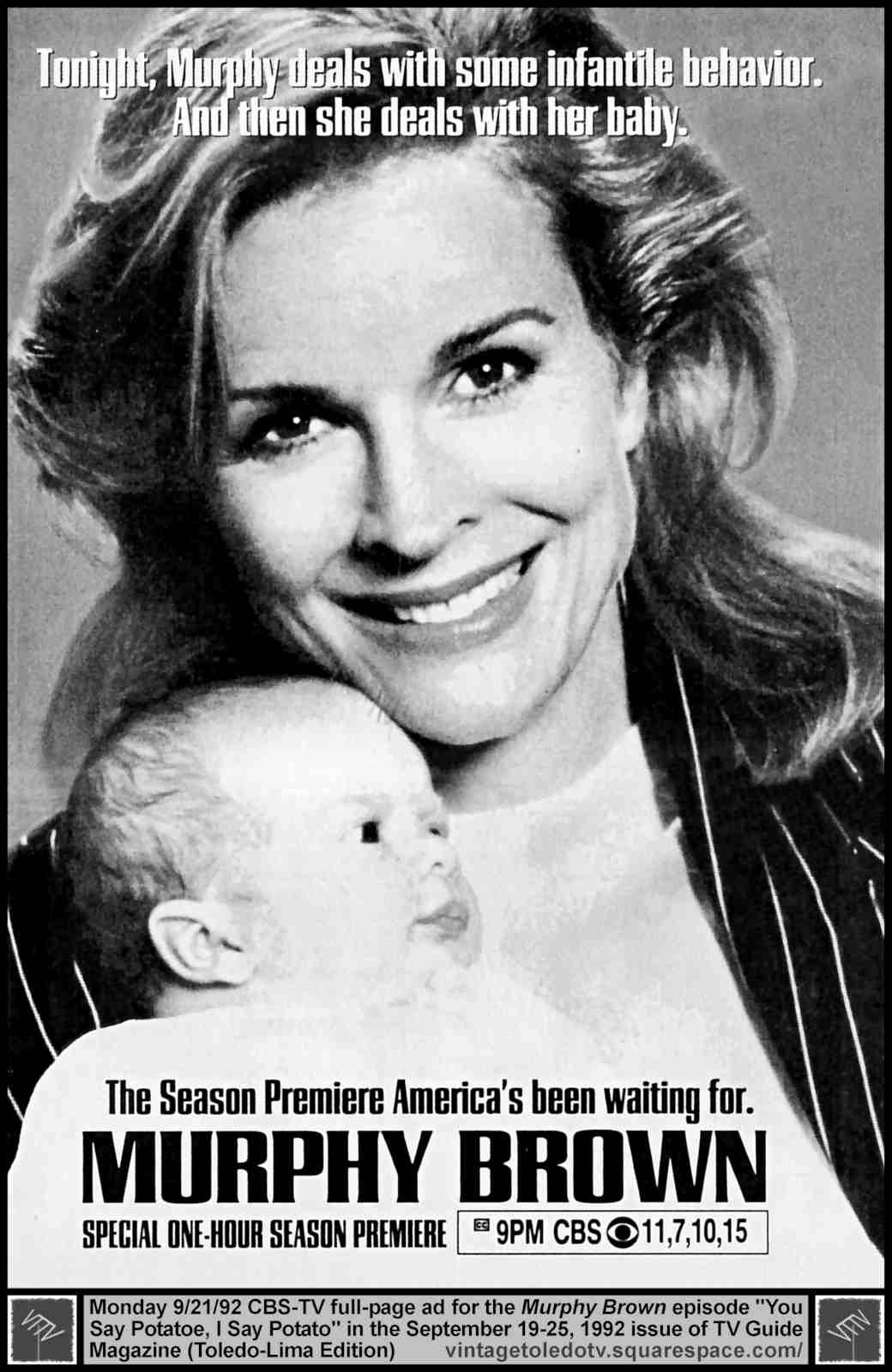 We reached a consensus in our youth group debate. Murphy Brown was committing a sin by having a baby out of wedlock and raising it herself.
That’s because the vast majority of evangelicals and Southern Baptists believed if you got the structure right, God would reward you with the perfect, loving family. Men could train their wives and children to obey and keep order. Practicing the traditional family would have its rewards. Submissive wives ultimately would be grateful for the security, and obedient children would one day thank their fathers for whipping them into shape.
I remember hearing in a sermon that obedience is like lima beans. “You might not like them at first, but you do get used to them, and eventually you’ll start craving them.” It’s a fantasy of a harmonious life where everyone believes and behaves the same. But humans are too miraculously gifted to crave being the same, especially when someone is telling you it has to be so.
“We see the smelly fruit of Dobson’s unholy theocratic fantasy.”
Now, an entire generation of control-hungry rightwing Christians is in power. We see the smelly fruit of Dobson’s unholy theocratic fantasy, which unsurprisingly has turned out to be cruel. A purity culture fever dream, Project 2025 hasn’t even finished blooming, and its fruit already has started to rot on the vine.
The sitcoms of the 1980s, and even ’90s, offered hope to families: No matter the structure, a kid could find love and if the people loved hard enough, they could be a family. It’s ironic that people playing the part of a family on TV could be better examples than people playing the part of a family at church.
Comedy, although my favorite, is only one genre in television and film. There’s another where unhealed dominant men violently overthrow weaker people. They sexualize uninterested partners and hit children. Eventually society turns to chaos, and only the humans with guns survive. This genre is called Dystopian. And it’s very popular these days.
Ryan Clark is author of the upcoming book about purity culture in the 1990s. He earned the doctor of ministry degree from Columbia Theological Seminary and has more than 20 years of experience helping religious organizations and individuals solve problems. He is developing a limited series with Original Productions titled “Purityland.” He also co-hosts a popular podcast, “Touch: Conversations of Spirit and Body.” View his storytelling here. Ryan currently serves as director of partner engagement at Atlanta Habitat for Humanity and lives in Decatur, Ga.
Related articles:
James Dobson, high priest of ‘family values,’ dead at 89
This is how unhinged Focus on the Family has become | Opinion by Mark Wingfield
When ‘family values’ matter more than family