

The joint administrators of Spurgeon’s College are liquidating the school’s assets, including several of historical significance.
BNG previously reported on the sudden closure of the historic Baptist school in Great Britain. Now, administrators of the defunct school’s assets and debts have announced a great sell-off.
Presumably the Victorian mansion and grounds of the college now belong to The Dacre Foundation, which had loaned the school £5.4 million. However, Spurgeon’s still owns the contents of the buildings and must now auction off everything that isn’t nailed down, and quite a few things that are, to satisfy the remainder of its loans and reimburse students their fees. Final bids are due online by Sept. 18.
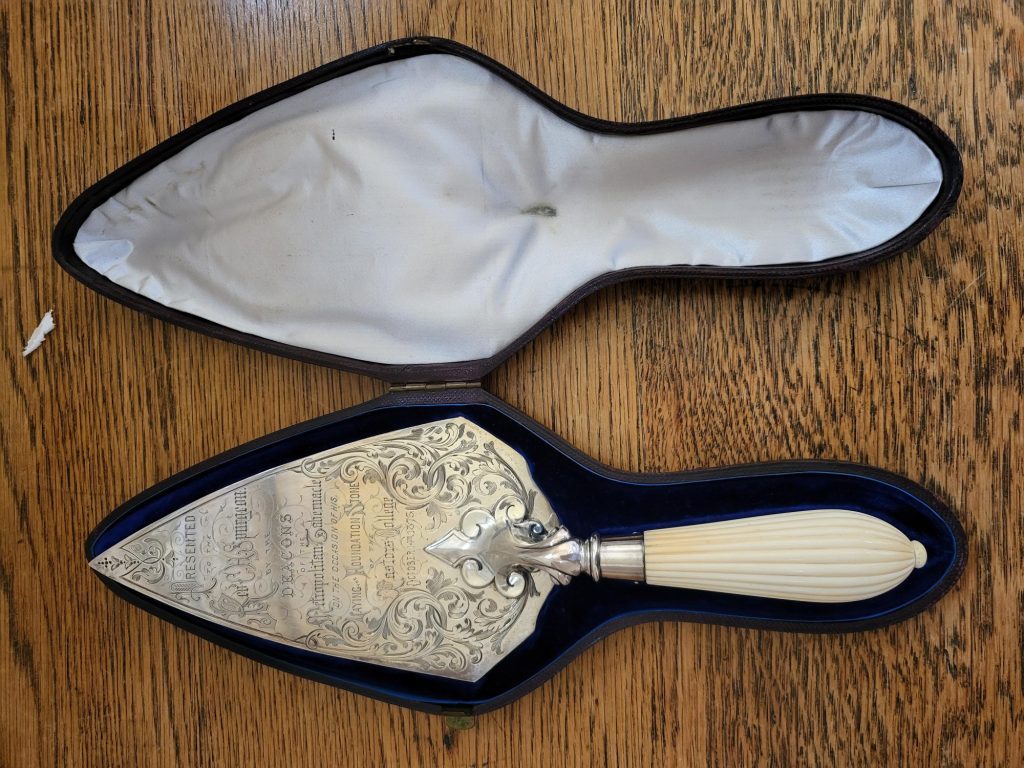
Interested parties may bid on several artifacts from the school’s 169-year history, including the trowel Charles Spurgeon used to lay the foundation stone for the original Pastor’s College in 1873, a ceremonial sword (Charles Spurgeon’s magazine begun in 1865 was called The Sword and the Trowel) and a vice chancellor’s gown with gold thread.
Glass display cabinets that housed the historic artifacts also are for sale, along with two large oil paintings of Spurgeon, a marble Spurgeon bust and a full-sized bronze statue of the man by well-known British sculptor Francis Derwent Wood, which will require “craneage” to move. The sculpture once stood outside the former Baptist Union of Great Britain headquarters in London, the city where Spurgeon served as pastor of what once was the largest church in the world.
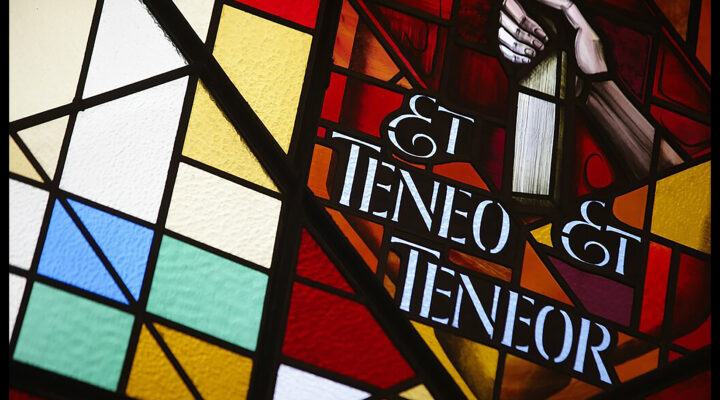
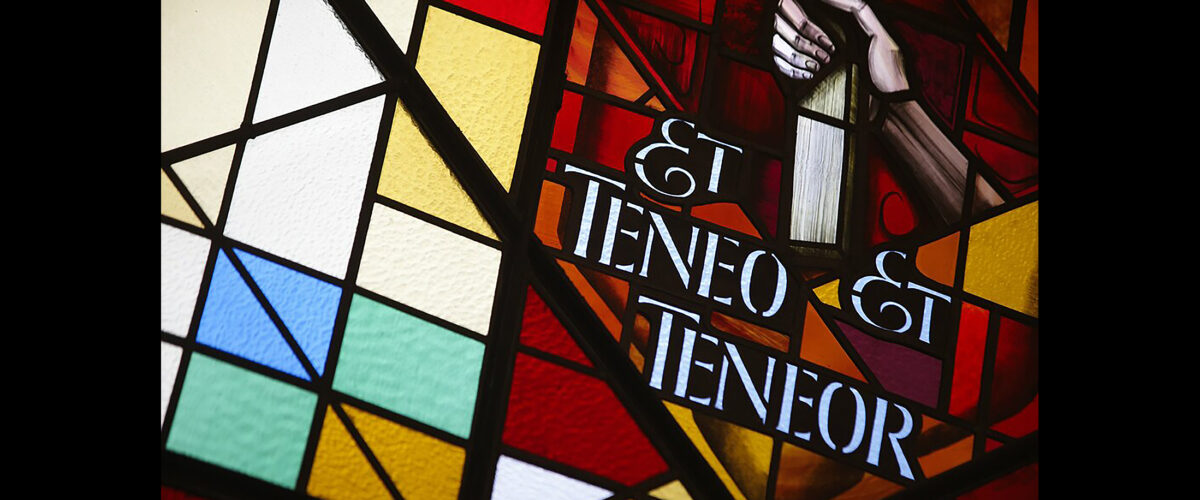
 Evidence of the college’s impact around the globe also is for sale. When bombing from the London Blitz blew out a large stained-glass window in the college during World War II, First Baptist Church of Tulsa, Okla., donated a new one. Bidders on this impressive arched fanlight window must supply statements explaining how they will remove it. The same is true for various commemorative plaques such as the one celebrating the Southern Baptist Convention’s donation of funds for the cloister studies in 1951. Buyers also may purchase plaques memorializing the martyrdom of alumnus Silvester Frank Whitehouse in 1900 in Shan-Si, China, and the deaths of Spurgeon’s graduates who served as chaplains for the United Kingdom in both world wars.
The Spurgeon’s College library (all 60,000 books) is available to purchase as a unit. The administrators say it is the “best collection of theological textbooks in the UK.”
Learning modules and courses developed by the college on subjects such as the Bible, skills for ministry and Baptist history also are for sale. So is the name “Spurgeon’s College” and the school’s online domain name. A second auction of antiquarian texts (lots 42-46) on Sept. 25 will feature a Coverdale New Testament from 1539 and a book by Puritan minister Increase Mather.
As interesting as the artifacts and antique books are, it is in the lists of objects associated with daily life at Spurgeon’s College that one feels the loss of the school. The keyboard, drum set and lectern from the chapel where students and faculty gathered to worship and the sofas, television and lockers from the student lounge where they relaxed between classes are all up for auction. White boards, flip charts, ceiling projectors and tables from the now empty classrooms along with beds, desks and wash basins from student bedrooms are for sale. The filing cabinets and computer monitors, coffee makers and refrigerators, even a stainless-steel kitchen sink — the everyday items that helped facilitate work and fellowship at the school — are now just itemized entries on the administrators’ auction block.
Related article:
What happened to Spurgeon’s College? | Analysis by Kristen Thomason