

Recent days have once again seen a flurry of speculations regarding the return of Christ in what is commonly referred to as the “rapture” or the parousia. A message has been rapidly spreading through social media suggesting the rapture is to take place this September, during the Jewish holiday Rosh Hashanah, also known as the Feast of Trumpets.
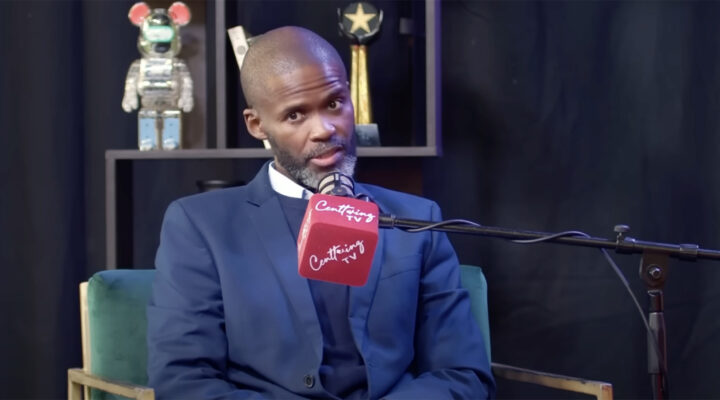
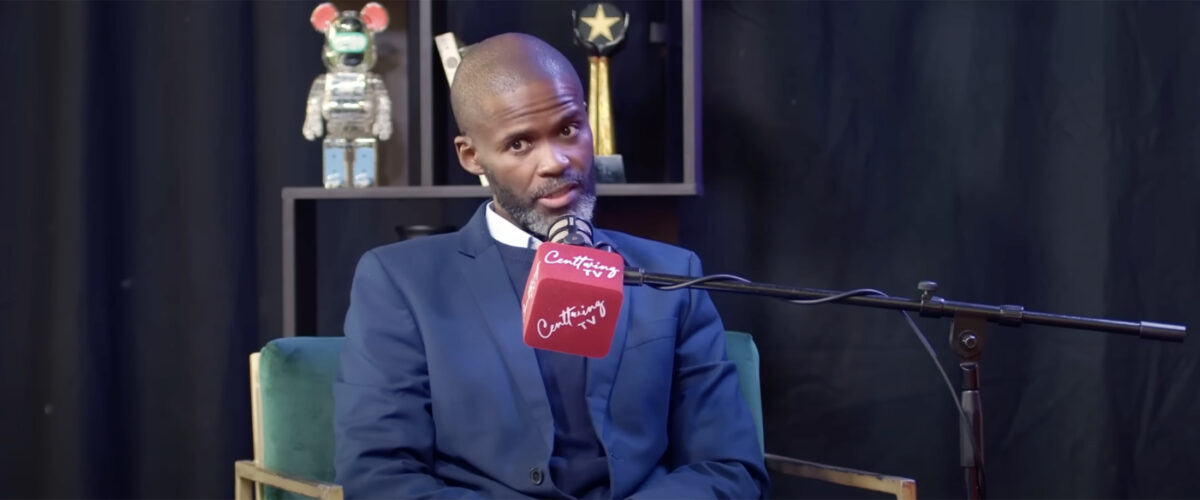
South African Pastor Joshua Mhlakela publicly described a divine vision apparently given to him in which he heard Jesus speak directly stating his return to earth would take place on the 23rd and 24th of September. According to Mhlakela, it takes place over two days because the Feast of Trumpets itself takes place over two days.

Ken Young
Personally, I believe Christ will come again as Scripture states (Acts 1:11), but I have deep concerns with us collectively as Christians refusing to learn from our own storied past. My angst centers around the unnecessary loss of credibility of the Christian witness when such things are embraced and promoted, only to later be adjusted, altered or just entirely swept neatly under the proverbial carpet.
When Sept. 25 arrives, will a public apology be forthcoming accompanied with genuine repentance from Mhlakela for falsely speaking for Christ? Based on past experiences, I’m not going to hold my breath.
“I cannot help but ponder how believers themselves may be culpable for a lot of the scoffing of the world.”
Throughout the centuries, we have witnessed many attempts to interpret not only Scripture, but all manner of current events through skewed epistemological lenses. At times this can be beneficial so long as one has good hermeneutical discipline while also being prayerfully cautious of being overly dogmatic in the connection of current events to the biblical text.
When I read the Apostle Peter’s caution that “scoffers will come in the last days, … saying, ‘Where is the promise of his coming?’” (2 Peter 3:3-4), I cannot help but ponder how believers themselves may be culpable for a lot of the scoffing of the world.
Consider some of the scoff-worthy events of recent decades.
Scoff-worthy events

Chuck Smith (Photo: Calvary Chapel)
Pastor Chuck Smith of Calvary Chapel in California had his congregants convinced they would not be returning home after a New Year’s watch-night service in 1981. He had presented numerous sermons and wrote multiple books regarding his prediction, but when the midnight cheering and celebrations began to fade, and the realization sunk in that they would all have to face the year 1982 still earthbound, many were left disillusioned and confused.
Pastor Mike Winger, himself a Calvary Chapel pastor, recently acknowledged this head-on and confronted Calvary Chapel for essentially ignoring Smith’s failed predictions. “We’ve got to learn from it,” Winger stated in 2021. “We have been reckless with prophecy; we inherited this recklessness from Pastor Chuck.”
Many may recall Pentecostal televangelist Pat Robertson running for presidential office in 1988. Fewer may recall how Robertson, host of the 700 Club, made a bold prediction himself of the Lord’s return and subsequent rapture of the church which was to transpire sometime in 1984.
In December of the same year, at a seminar in Dallas, Robertson boldly declared God had told him, “I have called you to usher in the coming of my Son.” Again, no retraction, no apology, no repentance was forthcoming in 1985.
Once more, the credibility of Christians is called into question and the scoffers do their thing.

A stack of Hal Lindsey books for sale online.
Well-known apocalyptic writer Hal Lindsey reasoned in The Late Great Planet Earth, through allegedly discovered secrets from Matthew 24:32-33, that Christ would come sometime in 1988. Cue the scoffers.
Harold Camping predicted the end of the world would come precisely on May 21, 2011. Come October, he and his wife retreated to a nearby motel confessing, “We humbly acknowledge we were wrong about the timing.” Damage to credibility was unnecessarily done.
Shortly after, a novel fascination with “blood moons” ignited evangelical imaginations. A blood moon simply describes the dramatic appearance of the moon during a total lunar eclipse. In his 2013 book Four Blood Moons: Something Is About to Change, John Hagee predicted that after the fourth consecutive blood moon, sometimes referred to as a “tetrad,” in 2015, the prophetic events of Revelation would be initiated.
These are just a minute handful of examples.
Insufficient pushback
It’s not that there has been no pushback to such speculation, but there ought to be a lot more. We need to do a better job teaching our brothers and sisters to be biblically skeptical of such things. We must do so for the sake of the gospel.
“We need to do a better job teaching our brothers and sisters to be biblically skeptical of such things.”
Responding to Hagee’s blood moon speculations at the time, Sam Storms of Bridgeway Church in Oklahoma City publicly cautioned: “We need to stop giving in to some of these sensationalist speculations. Maybe some Christians are more gullible. One has to twist the data to make it appear as if these are the fulfilment of some biblical prophecy.”
Indeed, NASA confirms a tetrad of blood moons is not uncommon, with eight more expected before 2100.
However, this did not stop Hagee’s book from reaching No. 10 on The New York Times bestseller list. Indeed, it appears the apocalypse sells.
Russell Moore of Christianity Today laments: “When these prophecies were not fulfilled, these teachers never retreated in shame. They waited to claim a new word of God and sold more products, whether books or emergency preparation kits for the Y2K global shutdown and the resulting dark age the Bible clearly told us would happen.”
What’s the harm?
There is truly something that drives our end-times curiosity; many are quick to leave behind the old disproven speculations as yesterday’s news and jump to the newest, more promising, ideas. There have been suspicions of bar code scanners, Visa cards, microchips, tattoos, vaccines as being viable contenders for the “mark of the beast” mentioned in Revelation 19:20.
There have been endless speculations as to who the actual Antichrist will be. Joe Carter of The Gospel Coalition lists the historic top seven contenders: The pope (any of them), Nicolae Jetty Carpathia (the fictional character in the Left Behind series), Nero, Hitler, a tie between Henry Kissinger and Mikhail Gorbachev, Napoleon, and every American president since Washington.
I haven’t even touched on the many times we have endured natural disasters, global conflicts, pandemics and other world events.
What’s the harm? While it may be tantalizing to some to speculate endlessly, it continues to erode and chip away at the credibility of believers everywhere. This stuff can become the theological equivalent of The Boy Who Cried Wolf. “They got this, this and this wrong. Why should I believe them when they speak about other things?”
“This stuff can become the theological equivalent of The Boy Who Cried Wolf.”
When it comes to eternal matters like salvation, many will tune out, just hearing more evangelical white noise.
Until he comes
What is a viable alternative? Stay on mission; make disciples of all nations (Matthew 28:19-20). Focus on the revelation God already has given us in the Bible, and leave the speculation of the unknown alone, no matter how alluring it may be.
Many of us evangelicals consider Christ’s return as “imminent.” However, believers always have believed it to be imminent. The writer of Hebrews clearly stated that God “has in these last days spoken unto us by his Son.” He fully believed Christians were living in the “last days” even then. In other words, Christians always have lived in the last days.
This should be the message of believers today: Christ could come imminently, not because of the newest crack-pot speculating on the back of another catastrophic or seemingly unique event. Not because someone finally unlocked the hidden prophecies or codes long overlooked in the Bible, for Christians understand no one has been told, not even Jesus, when the Father will decide it’s time (See Mark 13:32).
Christ could come at any time, but not because someone has revealed what the latest mark of the beast is, or who the real Antichrist is.
It is imperative to realize our responsibility is to be about the work of God as God gently reminds us, “The secret things belong to the LORD our God: but those things which are revealed belong to us” (Deuteronomy 29:29).
We must be far more discerning, being cognizant of our reputation with those outside the walls of the church.
Should the message of Christ be ridiculed, may it not be because of our endless speculations that are later found blatantly false or, at best, misleading. Nor may it be because the church is largely silent in the face of said speculations.
The world doesn’t need any more ammunition handed to them as they fire cynical-laced shots at believers. If the gospel message must be mocked, may it not be because of the foolishness of believers themselves, but because of the foolishness of the preaching of the cross (1 Corinthians 1:18).
Let us humbly seek to be credible witnesses of the glorious gospel of Christ, uncompromisingly focused on the mission left to us, the church. Leave the things intentionally not revealed in the hands of God.
Ken Young has served as pastor at International Baptist Church, Auckland, New Zealand, since 1993. He, his wife, Jennifer, and four children all live in the Auckland area. He earned a Ph.D. in Bible and theology from Louisiana Baptist Theological Seminary, where he studied the epistemological trends of evangelicals in recent decades.