

In a world that is increasingly polarizing along religious, racial and ethnic lines, the solidarity that happens when we set aside the political categories meant to keep us apart and talk to each other is becoming critical to our survival.
Reading groups or book clubs have a long history of exploring new ideas. Indeed, the power of this kind of collective reading is such that during the years of chattel slavery, Black people were not allowed to read at all. Reading groups proliferated in the 1970s as consciousness raising, and they continue to be sources of grassroots education across a range of racial and political categories.

Patty Krawec
There is a reason, after all, why more and more people seek to ban the books that point us toward collective liberation.
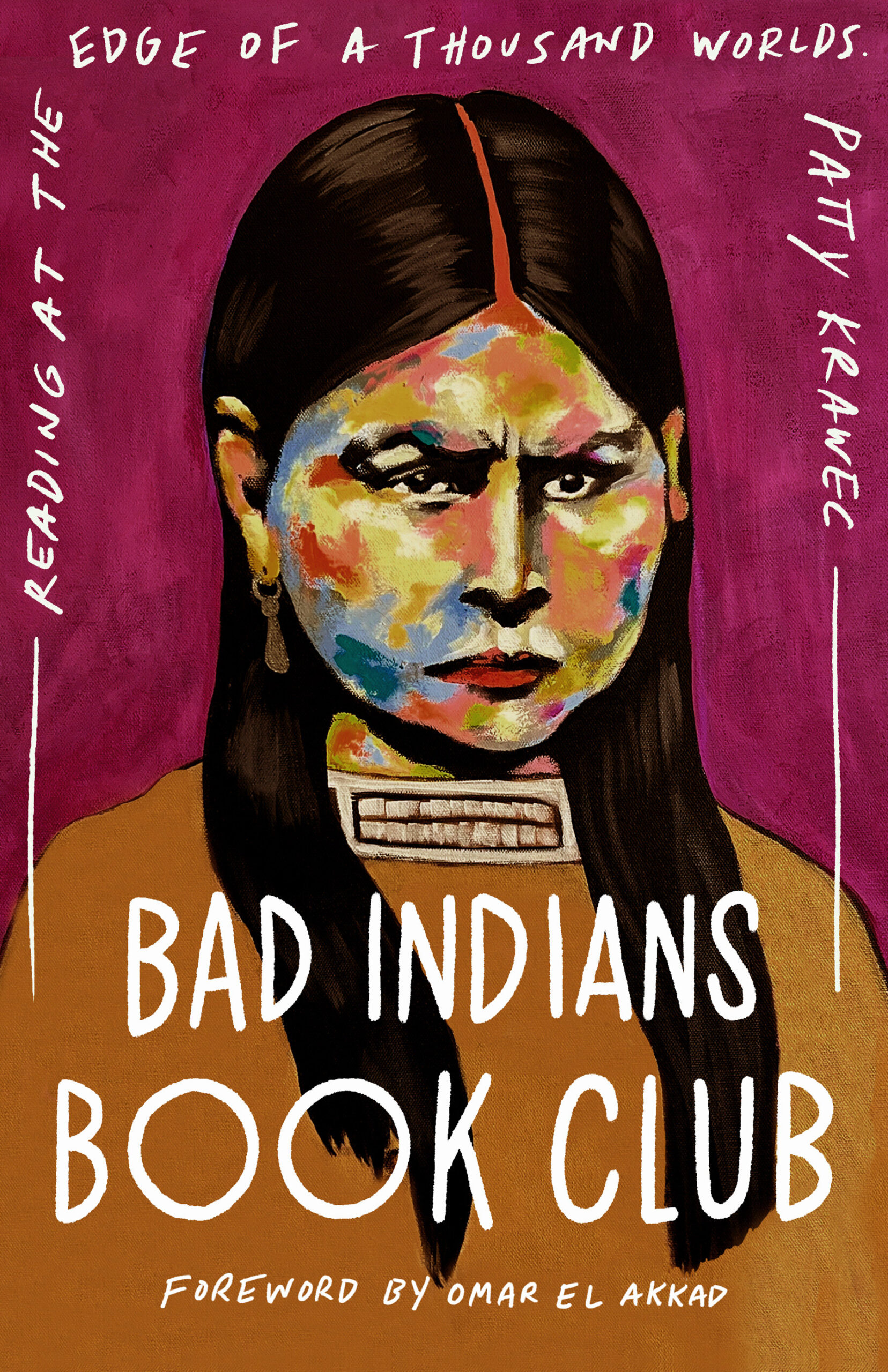
Bad Indians Book Club emerged from a series of conversations I had with friends and authors, some of which became podcasts, about books read and written. Like happens in any good book club, ideas about how we could live differently emerged from the connections between us: readers and writers from a variety of backgrounds who are no longer seeking inclusion into a house that is on fire.
“There is a reason why more and more people seek to ban the books that point us toward collective liberation.
I write this as the world is awash in protest, people raising hell, as Wente puts it, all of which is being done wrong according to Good Citizens. We’re too loud, too inconvenient, too demanding, too everything. Demanding something other than genocide, violence and extreme inequity, we’re the bad ones.
I’m OK with that — with being one of many Bad Indians who challenge the stories we tell about the society in which we live, because the things we believe have consequences that often are borne by others, consequences we may not see.
My first book, Becoming Kin, challenged the myths and stories Canada and the United States tell about their history. But history isn’t the only story we tell about our encounters with the worlds around us. This book is an invitation to join me in challenging all the stories. I hope you can begin challenging the stories you encounter — stories that, like the colonialism in which they are rooted, serve to displace and erase other ways of knowing.
We live in a culture that romanticizes certain kinds of outlaws, and I don’t want to do that, but we should pay attention to how subaltern people are spoken of when we refuse to take our place.
 To remind us of what’s at stake, of how we are seen and spoken of when we refuse to behave, memoirist Deborah Miranda writes a “Novena to Bad Indians,” a novena being an urgent nine-day prayer petitioning for grace or favor. She offers gratitude and intention to those who are called names and painted as violent. She petitions those who refused to accept their position in social and gendered hierarchies. She asks for grace from women whose sexual agency and reproductive choices were and are seen as threatening. She honors those who refused to convert to a Christianity that arrived hand in glove with empire and those who later recanted.
“Illuminate the dark civilization we endure,” she implores, “teach us to love the untamed, inspire us to break rules.” And remember, she says: “Even dead Indians are never good enough.”
Bad Indians Book Club is a novena, of sorts: Nine chapters of public prayer to Bad Indians and those like them who refused to be left in their special interest section. Bad Indians know you learn best when you push aside the dust and detritus you have become accustomed to and make room for new ideas and new ways of thinking about things. Bad Indians take the life around us seriously, even when it is life we don’t understand. Bad Indians return to themselves through histories told by those who have a different stake in those stories. We are experts at refusal and creating hostile spaces, and we tell our own stories, even when they aren’t pretty. Bad Indians wield stories like weapons in the war against imagination. We pick medicine with the things that go bump in the night, and we know we have a future despite everything that has been stolen, buried and burned.
There is something defiant about being a Bad Indian, about leaning into these negative stereotypes. Something adolescent and feral. If I’m going to get into trouble anyway, I might as well deserve it.
This book is, ultimately, a book about refusal: refusing political categories and the borders and violence that comes with them, refusing to assimilate by becoming the kind of person the state cannot assimilate. It’s written by a Bad Indian who doesn’t just want to survive this current apocalypse. I want to join with others — Bad Indians and more — to midwife new worlds into being.
Patty Krawec is an Anishinaabe writer whose latest book is Bad Indians Book Club. Her previous book is Becoming Kin. The content of the book began as a list of book recommendations Krawec offered to a friend who wanted to better understand Indigenous lives. That list became a book club, then a podcast, and now a literary project. The book examines works across history, science, gender and fiction, all written by Indigenous and marginalized authors who challenge dominant narratives. This excerpt from the book is used here with permission of the author and the publisher, Broadleaf Books. Content © 2025.