


The decision by Utah prosecutors to seek the death penalty against Tyler Robinson, accused of assassinating conservative activist Charlie Kirk, has transformed a tragic act into something more than a criminal case. It has become a litmus test for politics, faith and justice in America.
Prosecutors argue the crime not only was premeditated but ideologically motivated, taking place at a public event in front of students, which elevates it into the realm of political violence. In this framing, the death penalty becomes more than punishment; it becomes a symbolic message that the state will not tolerate attacks designed to fracture the civic order.
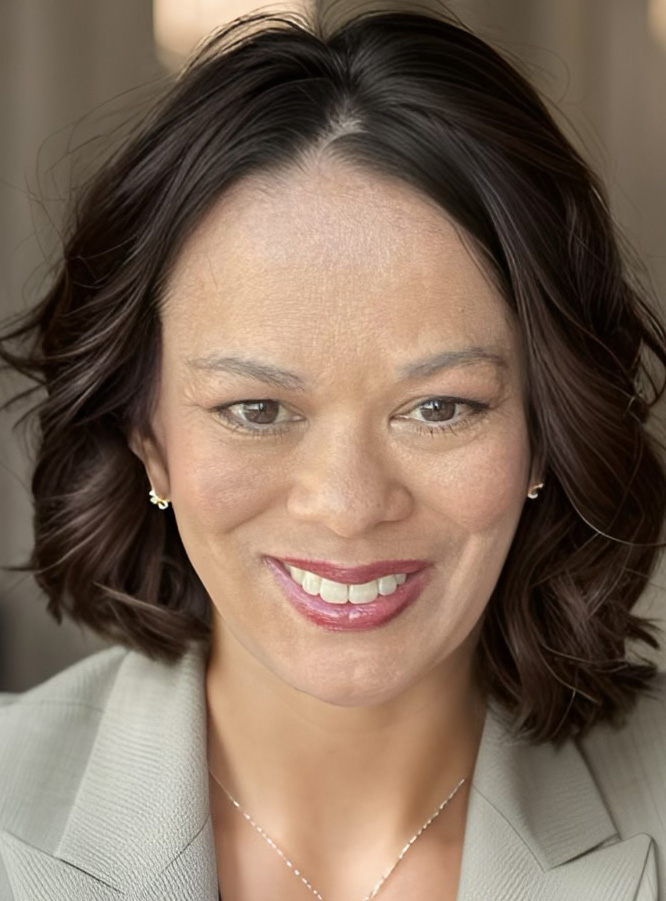
Nicole Wiesen
The symbolic stakes are enormous. Seeking death in this case sends a strong message that political assassination will be met with the severest sanction. Yet it also risks exacerbating the deep partisan polarization in America.
If capital punishment is viewed by conservatives as justice for the silencing of one of their own, while progressives see it as selective enforcement, the decision could further entrench distrust in institutions. The risk is not only that justice will be politicized, but that the precedent will be set for prosecutorial discretion to align with ideology rather than principle.
“The symbolic stakes are enormous.”
The broader context includes a little-known but highly influential religious-political network: The Fellowship, also known as “The Family.” Founded in the 1930s, the organization has cultivated a quiet but enduring presence among political and business elites in Washington, D.C., emphasizing personal spiritual discipline, prayer and networking rather than overt political activism.
Scholars and journalists have documented the group’s global ambitions, including connections to international legislation aligned with conservative Christian values.
While there is no evidence of direct involvement in this case, the worldview fostered by The Family illustrates how political identity and religious conviction often are fused, creating an interpretive lens through which events like Kirk’s assassination are seen not just as crimes, but as spiritual warfare against a moral order.
This intersection of political violence, capital punishment and religious influence reveals deeper currents shaping today’s America. Political violence is no longer seen as an aberration but increasingly as part of the national narrative. Religious conservatism has moved from private conviction into public identity politics, where attacks on figures like Kirk are read as symbolic assaults on entire communities.
The law, in turn, risks being transformed into a moral instrument, with the death penalty framed as a form of sacred justice rather than simply a deterrent or retribution.
The potential consequences for the country’s fabric are profound.
On one hand, pursuing the death penalty could affirm that politically motivated violence will not be normalized and might deter similar acts in the future. It could even rally Americans across the spectrum in rejecting violence and reaffirming the rule of law.
On the other hand, it could just as easily deepen polarization, with conservatives claiming moral vindication and progressives questioning the fairness of applying capital punishment only when the victim is ideologically aligned with the powerful. If justice appears selective, it will weaken institutional legitimacy at precisely the moment when trust is most fragile.
“The entanglement of religious zeal with state power also raises alarms.”
The entanglement of religious zeal with state power also raises alarms. The Family and other networks long have blurred the line between private faith and public authority, shaping narratives of moral mission and spiritual siege that resonate deeply in conservative politics. If capital punishment becomes part of that narrative — an expression of divine justice rather than civic law — the danger is that mercy, rehabilitation and procedural fairness will be pushed aside in favor of retributive zeal.
To preserve democratic integrity, the legal system must apply its processes with the utmost fairness, transparency and independence, resisting the pull of partisanship and ideology. Religious and political leaders, including those in influential networks like The Fellowship, should consistently denounce political violence, regardless of which “side” is affected. Because capital punishment is irrevocable, safeguards must be airtight, ensuring the ultimate penalty is not misused in the service of political grievance.
Finally, restoring norms of tolerance for dissenting speech — even when it is provocative or offensive — is crucial. Only by defending a culture of political disagreement without violence can the nation resist a descent into cycles of retribution.
The assassination of Charlie Kirk is both a tragedy and a crossroads. It will test whether America responds to political violence with law, fairness and moral courage, or whether it falls deeper into cycles of vengeance. The prosecutors’ decision to pursue the death penalty will resonate far beyond one case, shaping not just the fate of the accused, but the trajectory of justice, faith and democracy itself.
Nicole Wiesen serves as director of communications for Georgians for Alternatives to the Death Penalty and is a Public Voices Fellow on racial justice in early childhood with the OpEd Project in partnership with the National Black Child Development Institute. She advocates for advancing mental health resources for previously incarcerated individuals.