

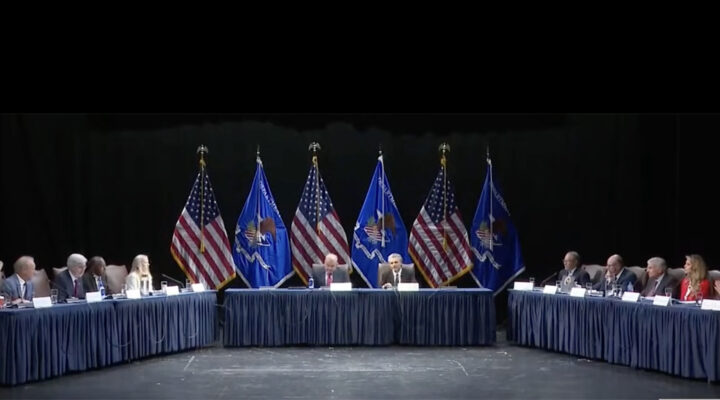
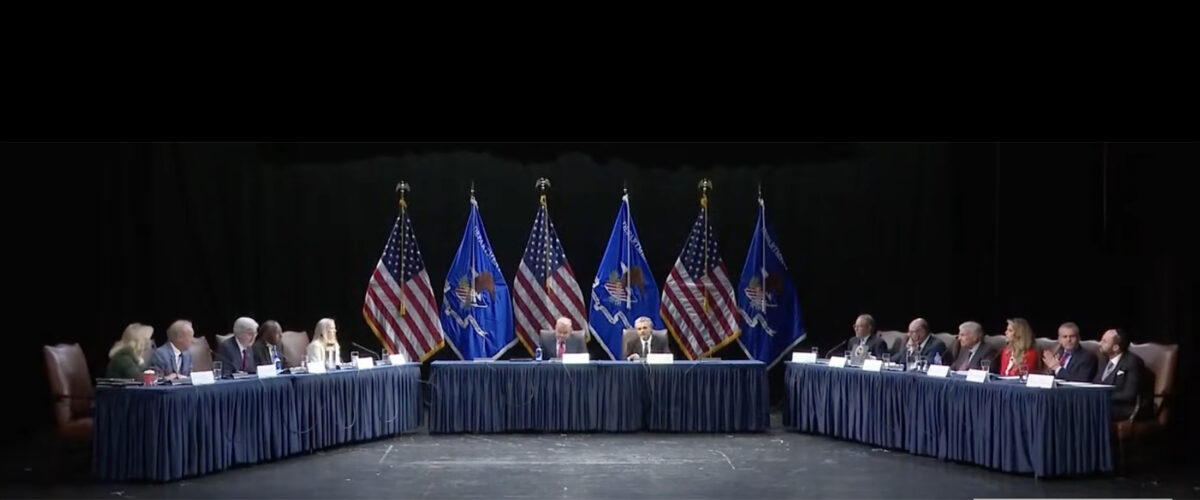
The evangelical Christian church in America is under attack, Jentezen Franklin told members of President Donald Trump’s Religious Liberty Commission at the start of their third meeting Sept. 29.
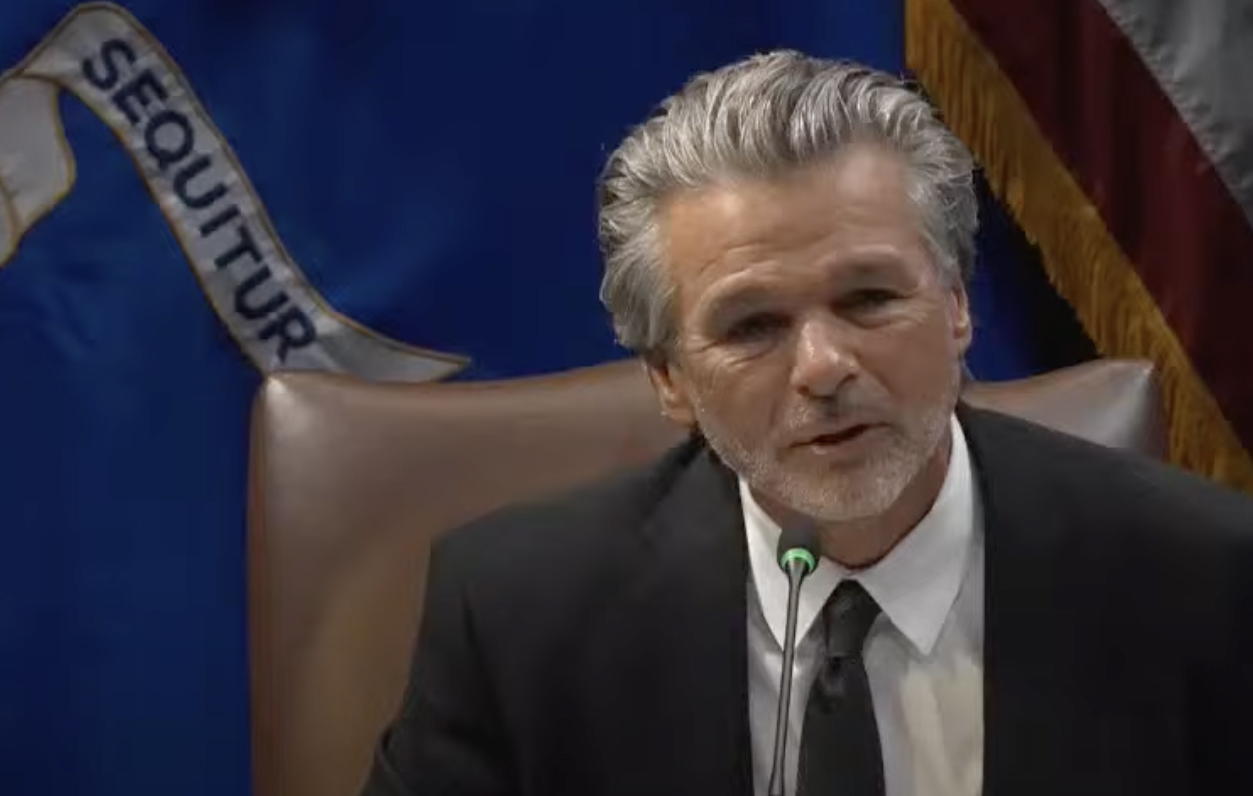
Jentezen Franklin
“We’re under attack. It’s not coming. It’s here. Our family and my loved ones, my children, we’ve had to deal with this,” he said. “And I know all of you understand that, but this commission is so important. I’ve said in every session, and I want to thank you. And if ever we needed to stand together and stand up for what we believe in the faith, it’s time for pastors and preachers to do that.”
Then he asked for 10,000 preachers to “stand up” where Charlie Kirk fell. “We will stand like never before.”
Franklin, a Georgia pastor, led the group in a tribute to Kirk, founder of Turning Point USA, who was killed by a sniper’s bullet three weeks ago. That was the opening agenda item for the council, which is comprised of evangelicals and Catholics and Jews sympathetic to Trump’s agenda.
Metaxas on God’s sovereignty
Next to speak was Christian nationalist speaker and author Eric Metaxas, who told the group he’s struggling to understand the sovereignty of God. “How can the same God who miraculously preserved the life of Donald Trump allow this? That’s the conundrum. And we all have to be honest about that. And if you don’t really know the God of the Bible, there is no answer to it. It’s too much basically. And you have to either say God is not good or there’s no answer to it. But I think we have to deal with the fact that God is sovereign and that we have to know whom we worship. The God of the Bible is sovereign. He’s infinitely good, but he allows evil. He allowed the Holocaust.”
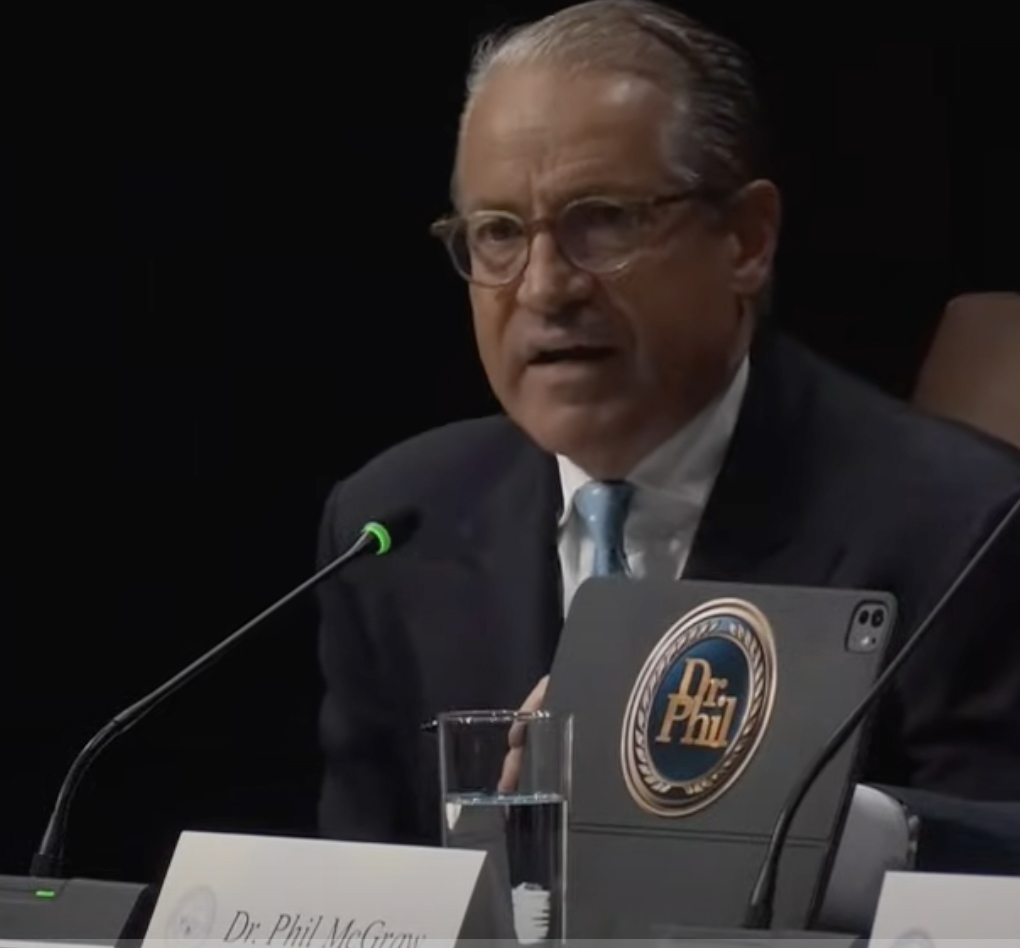
Eric Metaxas
Metaxas lamented that a film he produced with Kirk, Letter to the American Church, was made available to all U.S. churches for free but most didn’t want it. The film’s promo says it is about how “cultural Marxism has taken over America, including the church.”
“We offered it free to every church that wanted to screen it. And most churches refused to do that because they’re cowards or perhaps they’re not cowards. Perhaps they’re just theologically ignorant or they’re ignorant of civics,” he said.
“When pastors don’t understand what religious liberty is or the link between faith and freedom and virtue, … that is the problem.”
Evangelist Franklin Graham said Kirk’s death is symptomatic of a nation riddled with attacks “against God and his Son. And for those that claim the name of the Son, those that worship God, this is an attack against God … Every demon in hell seems like they’ve been let loose. And we see it all throughout our society. And it’s not just here, it’s around the world. You stand for your faith in God and his Son, Jesus Christ, you’re going to be a target.”
Coach Kennedy
After a full hour of tributes to Kirk and commentary on how his death represents the persecution of the evangelical church in America today, the commission turned to its scheduled speakers, the first of whom was Joseph Kennedy.
Kennedy was the part-time assistant football coach at a high school in the Seattle area whose contract was not renewed after he insisted on holding prayer meetings on the 50-yard line after football games, even after the district forbade such practice out of concern for students feeling coerced.
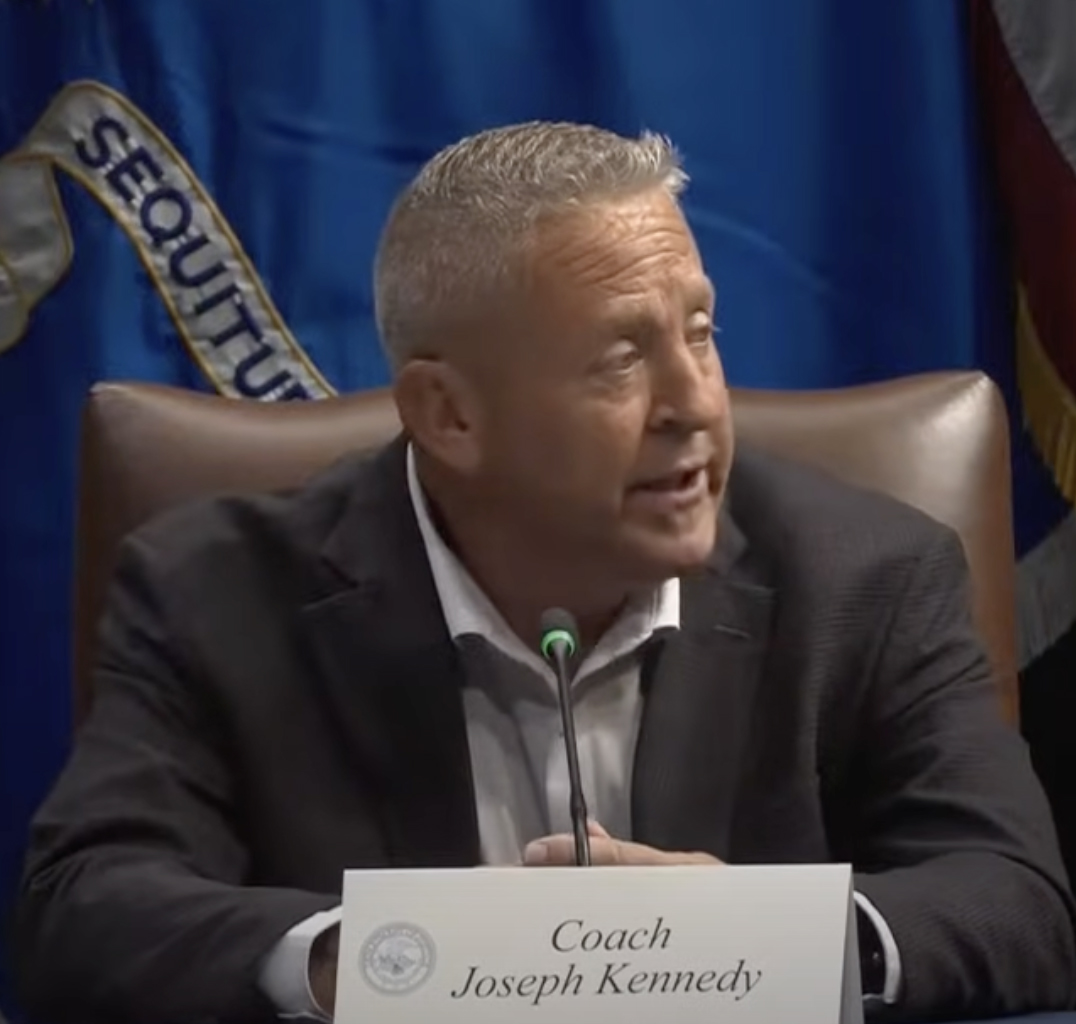
Joseph Kennedy
The case went all the way to the U.S. Supreme Court, where a conservative majority ruled narrowly in favor of Kennedy based on what critics said was false information by his attorney. The court ordered the district to give Kennedy his part-time seasonal job back, but he initially failed to report back to work. He already had moved to another state. When he finally did show up the next season, he stayed only a couple of weeks.
Kennedy continues to tell his story with him as the victim of a secular culture that dislikes prayer. Speaking before the Religious Liberty Commission, he compared himself to Charlie Kirk: “I think about Charlie Kirk and we say what a sacrifice he did, but he actually is up partying with God right now and we are still here fighting. So we are actually the ones that are still suffering here. He’s not suffering. He’s up in heaven smiling right now and cheering again. But we are down here.”
And in a disclosure not previously reported, Kennedy said his wife was the human resources director for the school district. Therefore, when he sued the district, he sued his wife.
“We almost got divorced over it,” he said. “It came down to where she asked me, she said, ‘Is this worth it? What’s more important, your marriage or this fight?’ And I had to look her in the eyes and I had to tell her that this fight was more important because without this fight, I wouldn’t have my marriage. I wouldn’t have my faith. I wouldn’t have gone with what God has asked me to do, which was to pray after every game and be thankful that was my covenant.”
Then Kennedy again compared himself to Kirk’s family by talking about losing connection with the football players when his contract was not renewed. “I don’t know what it feels like to lose a child, but I do know what it feels like to lose 60 of them all in one shot.”
Francis Beckwith
Kennedy was one of 15 speakers to address the panel over four hours. All the speakers represented a conservative evangelical, Catholic or Jewish perspective. None of the speakers represented other viewpoints.
One of those additional speakers was Francis Beckwith of Baylor University. He summarized the day’s testimonies as clear evidence of the secular attacks on people of faith in public education.
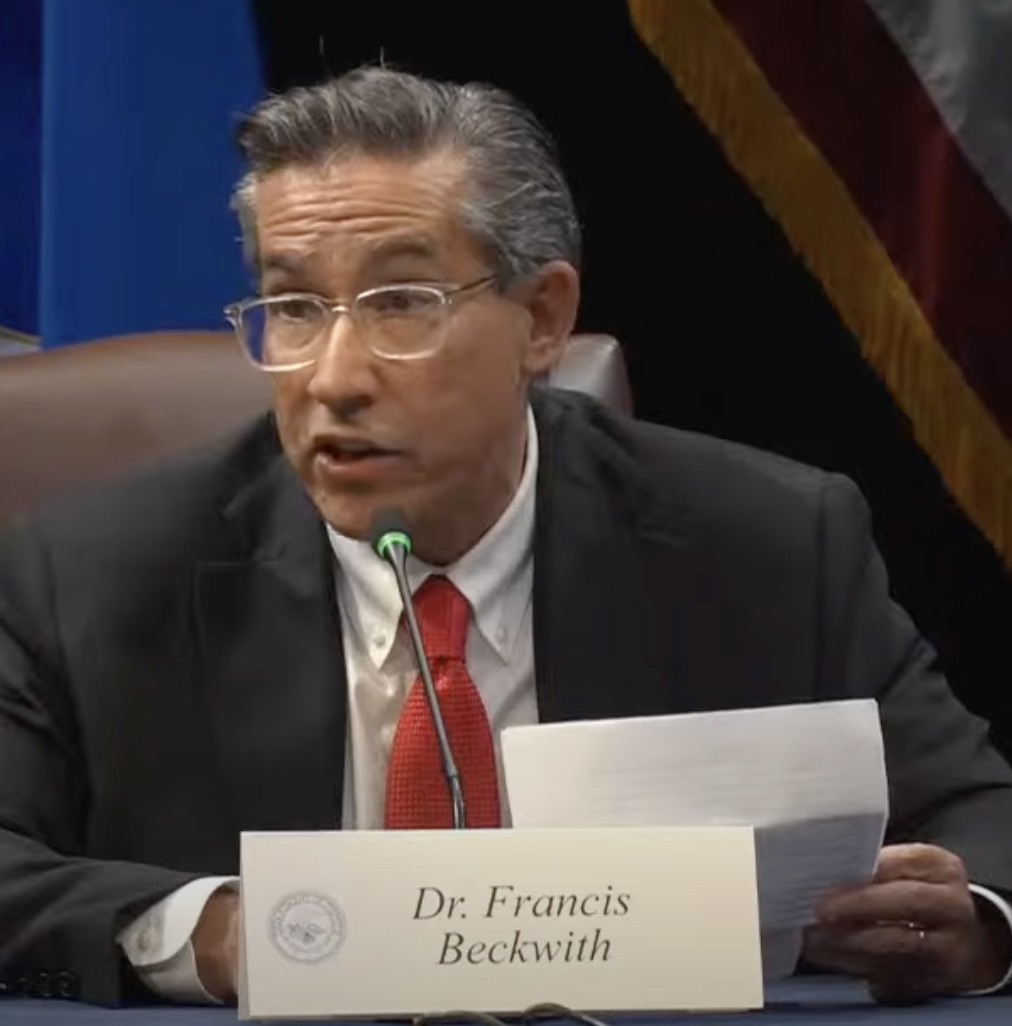
Francis Beckwith
“These witnesses provided shocking accounts of the persecution they had to endure in our public schools and universities,” he said. “In some cases, teachers and administrators refused to accommodate the religious convictions of students and staff members, while in other cases they marginalized and punished religious students and staff members because they had the temerity to insist they follow their conscience rather than acquiesce to the spirit of the age.
“What is particularly striking in these cases is how the advocates of the government seemed incapable of envisioning how anyone could reasonably disagree with the burden they sought to place on their fellow citizens. In some of these cases, students were forced to participate in activities contrary to their religious convictions, while their views were subjected to ridicule and disparaging comments by officials who seemed to harbor contempt for these students and their families.”
Beckwith concluded his comments with this suggestion: “To properly honor the memory of Charlie Kirk, this commission should recommend legislation and executive action that encourage our educational institutions to promote a culture of conversation and listening. One that rejects an unbending progressive orthodoxy that is effectively functioned for decades to undermine the kind of civic friendship that allows us to live and learn together in peace despite our religious and sometimes political differences.”
Laser responds
As she has done before, Rachel Laser of Americans United for Separation of Church and State blasted the commission for its one-sided approach.
“Yet again, President Trump’s Religious Liberty Commission demonstrated that its true purpose is to advance a Christian nationalist agenda and impose one narrow religious view on the nation’s public school children,” she said. “The speakers at today’s hearing made that clear — from the former high school football coach whose attorneys spun what one federal judge called a ‘deceitful narrative’ to recast his coercive post-game prayer rallies with public school students as quiet, personal, private prayers, to a public high school history teacher who has likened public schools to a ‘mission field’ where she engages in ‘spiritual warfare’ to oppose LGBTQ students’ identities.
“The majority of speakers at today’s hearing are affiliated with Christian nationalist organizations working to obliterate church-state separation, turn public schools into Sunday schools and misuse religious freedom as a license to discriminate. The commission continues to ignore the true threats to religious freedom in public education: Christian nationalist mandates to display the Ten Commandments, teach the Bible as truth, infuse curricula with Christianity, install school chaplains and impose coercive prayer on students, to name just a few.”
Laser called the meeting “an outright assault on our country’s promise of church-state separation.”
Related articles:
Trump’s Religious Liberty Commission repeats evangelical grievances
Trump says he’s bringing back prayer to schools
Trump creates Religious Liberty Commission
Here’s the back story on the 26 people Trump named to Religious Liberty Commission advisory boards