



My granddaughter Zoey loves and reads fantasy. She loves tales of dragons, wizards and elves. Me, not so much. However, I am visiting my granddaughters and the adults who spawned them. Every grandparent understands that order.
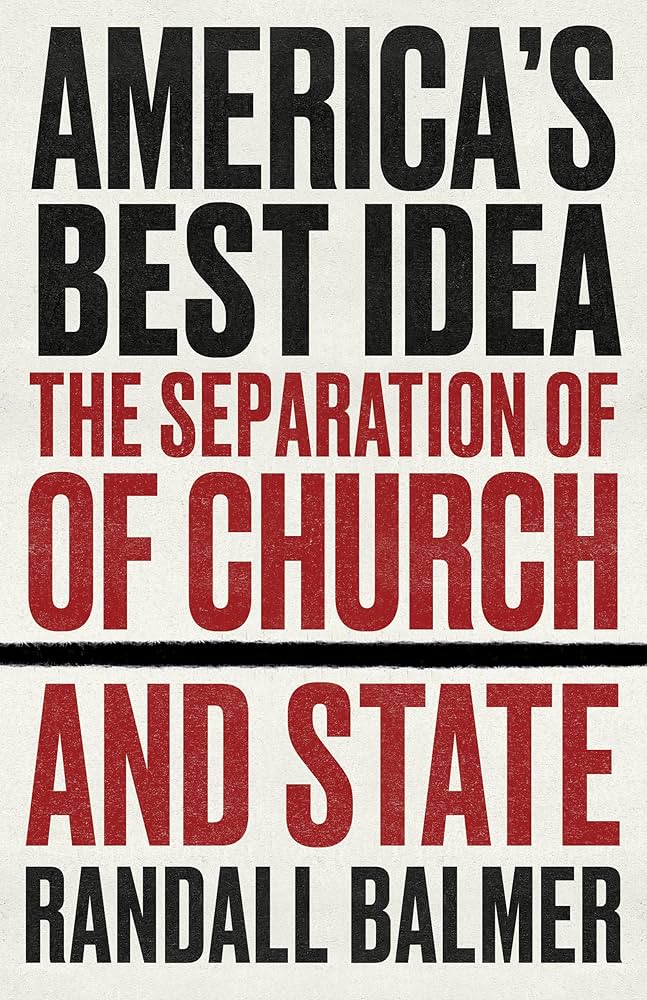
My visit coincides with a book I finished on the plane out here to North Carolina. Randall Balmer’s America’s Best Idea: The Separation of Church and State. Balmer’s book is a work of history, a field that researches the past and includes commentary on what those events meant.
This discipline isn’t about what we wished had happened or what we believe happened. That field is called “fantasy.” Although not populated with dragons or witches, it is fantasy, nonetheless. The two never should be confused.

Michael Chancellor
The oft-repeated narrative that the United States was founded as a Christian nation is fantasy, not history. Careful historians have dismissed such notions as wishes and fabrications used to prop up an unhistorical narrative. Balmer’s book details the history of a Baptist distinctive and position, one only abandoned after the Moral Majority seduced Baptist fundamentalists into leaving a great distinction in the dirt of power and the seduction of influence.
I believe Balmer is right in his research and perception that separation of church and state accomplished at least two great things for the United States.
First, it set American Christians free to evangelize, disciple, worship and live out their faith. There was no fear of running afoul of government. Before the First Amendment, colonies established preferred churches, supporting them with law and tax dollars. Balmer is right in connecting the separation of church and state to the robust faith that has characterized the Christian experience in America.
Second, the First Amendment reflects historical examples of what happens when the state and church are separate. In the birth of the church, beginning in Jerusalem and then throughout the known world, the message of Jesus was not favored by the state, but it flourished beyond belief. There were martyrs and prisons, but nothing could stop the spread of the Good News.
“The fact the Christian church is hemorrhaging members … has everything to do with loss of credibility.”
The fact the Christian church, the evangelical church, is hemorrhaging members and attendance has nothing to do with the gospel and nothing to do with a secular culture. It has everything to do with loss of credibility and the fruit of the Spirit, replacing the gospel with the corrupt allure of power and influence and a pathological love of country over a devoted life lived in obedience to Christ.
The culture war is a distraction from the real problems of the church in America. Like our sitting chief executive who blames others for his failures, the evangelical churches and their leaders, who are joined at the hip with this deeply flawed man, choose to violate the First Amendment rather than make their case in the modern marketplace of ideas. They also condescendingly condemn folks while overlooking the same behaviors in their own congregations. The unchurched have no problem pointing out the hypocrisy.
 The party of the sitting president is a portrait of corruption and poor historical and constitutional scholarship. That is amazing, since so many are lawyers, and every representative and senator in both statehouses and Congress has taken an oath of office to defend and protect the Constitution. It does not surprise me they take that oath about as seriously as some of them have taken their marriage vows and their vows to be guided by the rule of law.
Our founders saw and many experienced the marriage of government and religion, as well as the abuses that always followed. We now are seeing the government’s overreach in moral matters such as abortion, sexual minorities and an ongoing oppression of immigrants — both legal and illegal — people of color and anyone who threatens white supremacy and status.
Balmer also cites historical records of national leaders who attempted to draw down God’s blessings during significant times of stress or distress. A clear pattern in history of trying to secure God’s blessings for a “noble” cause, historically has been a failed way to cater to God.
“I was reminded of members who would show up in church when their world fell apart only to disappear when things got better.”
Since Texas passed laws requiring classrooms to display the Ten Commandments in violation of the First Amendment, all the while showing a contempt for those very commandments, I am reminded of this: The Texas attorney general who is fighting any resistance to that law is being sued by his wife for divorce, and another affair recently made the news. His first affair surfaced at his impeachment. He has faced charges of fraud and of using his office to benefit a friend. I was reminded of members who would show up in church when their world fell apart only to disappear when things got better.
If the Legislature wants to post the Ten Commandments, they might want to consider a good translation of the Third Commandment, which simply says, “You shall not take the Lord your God to be nothing” (Exodus 20:7). Attempting to manipulate God while not obeying him in the routine of life is a dangerous place to be and a dangerous game to play.
If you believe you can bring God back into a classroom he never left or into a school he never abandoned because a court said he should leave, then the words of J.B. Phillips apply: “Your God is too small!”
Ask any schoolteacher: As long as there are challenging students and challenging standards, teachers will pray. As long as teachers give tests, students will pray.
I know that because I have the experience to remember those moments in my life.
Michael Chancellor served 33 years as pastor of four Baptist churches in Texas, six years as a mental health manager in a maximum-security Texas prison before becoming a therapist in private practice in Round Rock, Texas. He now lives in Taylor, Texas.
Related articles:
Baptists were for separation of church and state before they were against it
Professor outlines three common rebuttals to church-state separation
Five reasons separation of church and state is essential
Progressive leaders call for renewed attention to 8 principles of faith and democracy