

In the spirit of reading other people’s mail, specifically 2 Timothy 2:1-14, I present a letter to the faithful when it feels like the world is on fire.
To the dearest faithful, blessed doubtful, foolishly hopeful, the ragamuffins and the dapper dans, those who wear mismatched socks and those who actually iron your slacks — you are not here by chance. Your songs, your protest signs, your scribbled pictures, your baked goods and yes, even your spreadsheets and meetings, are threads in the tapestry of our communal calling.

Ashley Robinson
We are not here by chance. We claim that truth, and yet, these days it might feel like we’re here by some measure of insanity, hoping maybe this time the world beyond these walls will begin to resemble the kin-dom of God we pray for.
While I come before you in a fancy preacher costume, I am no more qualified to shine the light than anyone here. In fact, when it comes to hope, the only thing I know for sure is that we’re all fools and experts in equal measure. So, how do we keep going? Why do we keep going?
We keep going because the hope that hovered over the formless void of creation is the same hope that empowers communities to rebuild after devastation. We keep going because the holy disobedience that empowered Shiphrah and Puah to spare the Hebrew babies in the face of a genocidal pharoah is the same holy disobedience that empowers every protest, vigil, parade and flotilla. We keep going because the radical love Jesus showed to the hungry, sick and outcast is the same radical love that fuels our empathy — even as showing empathy is quickly becoming a crime.
“Faithfulness often feels like insanity.”
We’ve heard the phrase “the definition of insanity is doing the same thing over and over and expecting a different result.” I guess it makes sense, then, that faithfulness often feels like insanity. The fundamental difference between faithfulness and insanity, though, is that faithfulness means we keep showing up in spite of the results of our work, not because of the results. I fear capitalism has spoiled us into thinking we need to search for a return on investment, even on our faithfulness.
What if I told you there was no return on investment for faithfulness besides the immeasurable gift of community? That seems priceless to me.
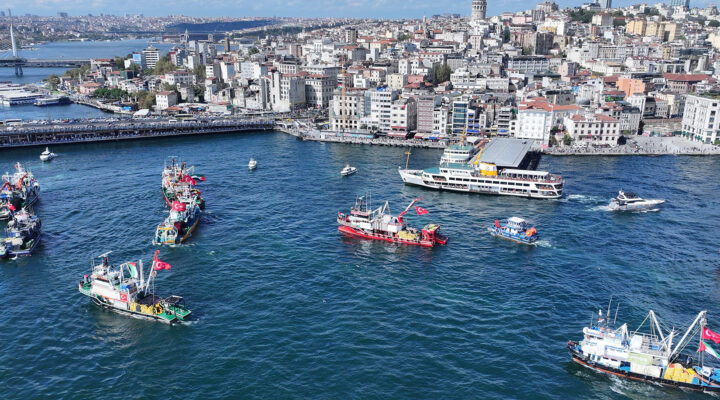
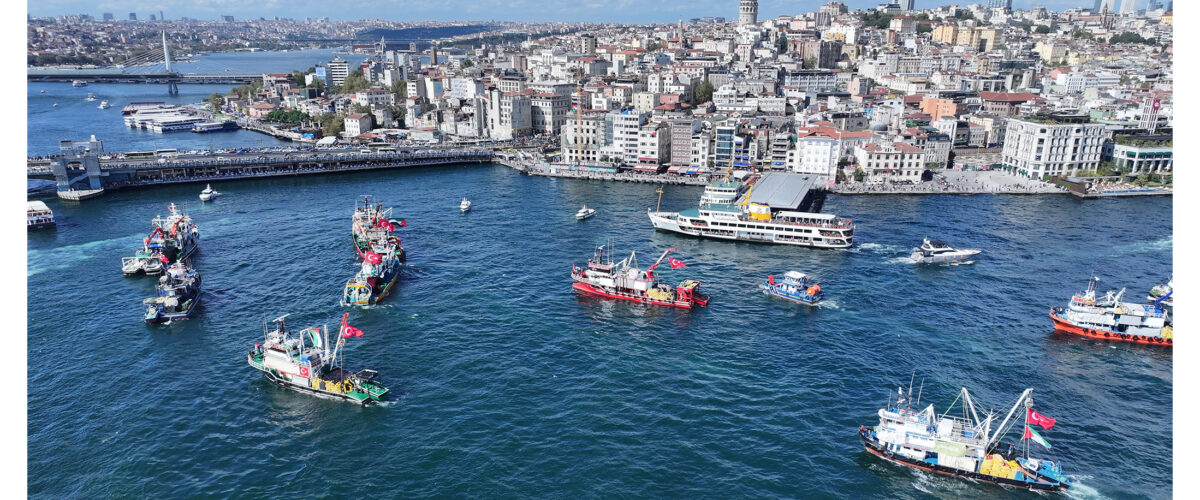
When I think of the word “faithful,” I think of the flotilla. This week, I watched as the largest civilian flotilla in history made its way toward the waters of Gaza. This nonviolent group of 42 small vessels from 57 countries gathered essential aid to be distributed to the citizens of Gaza. Each boat represents a community and a refusal to stay silent in the face of genocide.
This wasn’t the first humanitarian flotilla headed toward Gaza, but it was the largest so far. An answer to one of the frequently asked questions on the Global Sumud Flotilla website, “Why not just use large ships?” really struck me. Their response was: “Large ships are expensive, more vulnerable to bureaucratic pressure and slow to deploy. Our decentralized model — with hundreds of small boats — builds resilience, distributes responsibility and amplifies grassroots leadership. If a large vessel becomes available and aligns with our mission, it may join. But our strength is in scale, speed and strategy.”
I can’t think of a more perfect picture of the gospel, of what it means to be faithful, to show up, knowing you face insurmountable odds and you may never reach the shore.
As of early last Saturday morning, all 42 vessels of the flotilla were intercepted by Israeli forces and the nonviolent participants of the flotilla were illegally kidnapped. The 130 members of the flotilla were held captive.
“Our strength is in scale, speed and strategy.”
As those individuals are being held captive, however, another flotilla already has taken sail. This new Freedom Flotilla has been joined by the Conscience, a vessel that was attacked earlier this year by Israeli forces.
This flotilla is a picture of what it means to be faithful, driven by the belief that our humanity is interwoven, not by the promise of results or accolades. We spend a lot of time wondering what the church will be like in a few years. To be fair, it’s wise to plan, but let’s be careful not to let our planning turn to ruminating. In its best form, the faithfulness of the church resembles a flotilla, small vessels navigating toward a common purpose.
There are scores of researchers who predict the church is dying. In many ways it is dying, and in many ways, parts of it should be buried so we can welcome something new. But before we bury any dead weight of ministry, let’s linger for a moment on what’s good and very much alive among us. My hunch is the future of the church will be made up of the very best parts of our now.
We’re called, beloveds, to let our little light shine, even if the pilot light for our hope is a dumpster fire. We’re called to keep showing up for one another, even in the face of apathy, even in the face of tyranny. We’re called to be faithful, even when, especially when, we’re unsure if we’ll ever reach the shore.
So, let’s sail on the best way we know how — together.
Onward.
Ashley Robinson serves as pastor for Christian education and community engagement at Oakhurst Baptist Church in Decatur, Ga.