

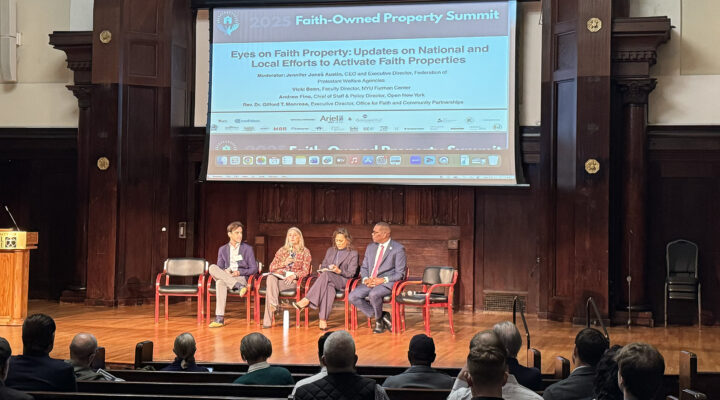
Congregations that are property rich but cash poor need help from municipalities to continue serving their communities, according to a pastor who works in New York City government.
These faith institutions “have stood the test of time over all mayors, governors, epidemics, COVID-19,” said Gilford T. Monrose, director of the mayor’s office of faith and community partnerships. “And then to not have the government or the city help to give them a second chance of life” is wrong.
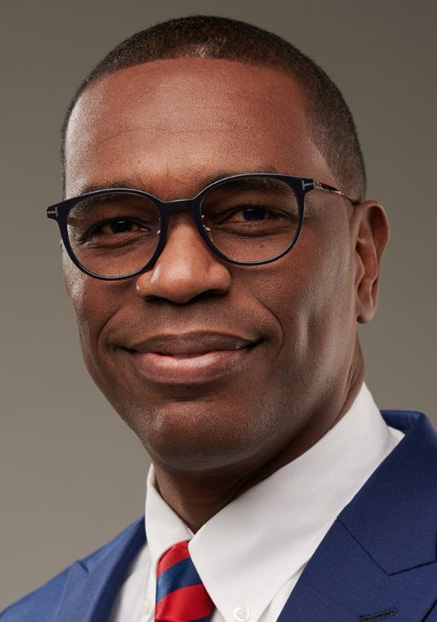
Gilford T. Monrose
“How do we as a city support them because they supported the pulse of the city, because they stayed in that community and they have been in that particular location for over a hundred years, 50 years. So what I’ve been hearing is that we need the city to also support us now because we supported the city through the long years.”
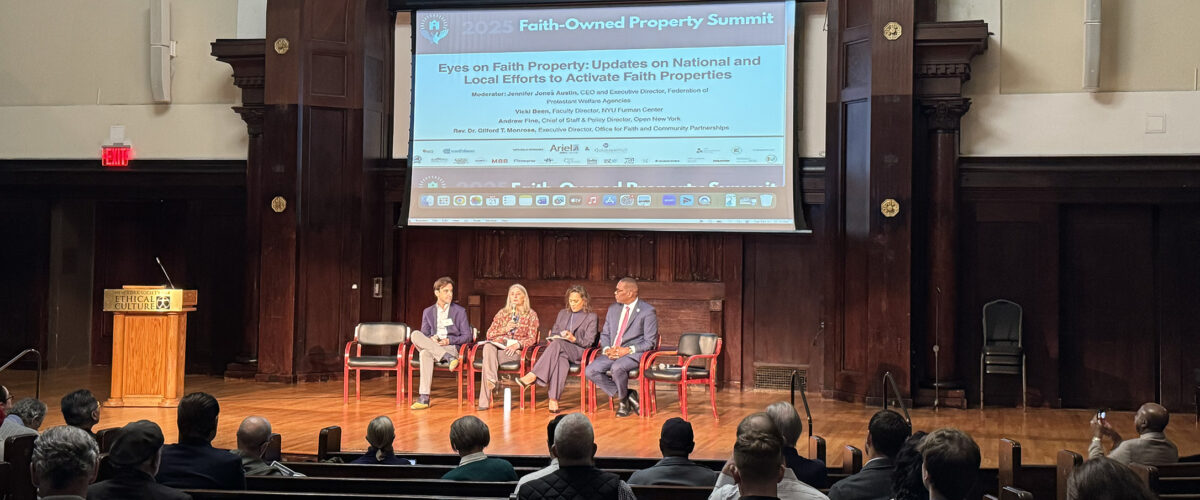
Monrose, who also serves as lead pastor of Mt. Zion Church of God Seventh Day, was among four panelists in a discussion Oct. 21 sponsored by Bricks and Mortals, an innovative nonprofit seeking to help New York City faith communities make the most of their properties. In New York, as in the rest of the country, many historic churches have far more space than people and cannot afford the deferred maintenance required to keep their buildings up to code.
That space can be used in creative ministries — from housing to shared office space to social service ministries.
The opening panel discussion at the daylong “Faith-owned Property Summit” also included Vicki Been, faculty director of the NYU Furman Center; Andrew Fine, chief of staff and policy director for Open New York; and moderator Jennifer Jones Austin, executive director of the Federation of Protestant Welfare Agencies.
Government help without strings?
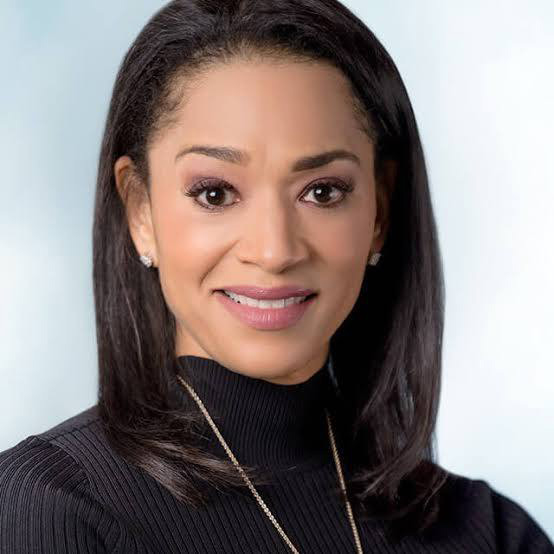
Jennifer Jones Austin
Austin is the daughter of William Augustus Jones Jr., a colleague of Martin Luther King Jr. and a founder of the Progressive National Baptist Convention. He was the longtime pastor of Bethany Baptist Church in Brooklyn.
Austin asked Monrose how he would balance his desire for civic help in keeping churches in their buildings and avoiding the entanglement of government intrusion into the church. Her father used to say, “You cannot sit at Caesar’s table and eat Caesar’s meat and then take Caesar on.”
Monrose replied: “If the government comes into a place where we can give them the right resources to help with the problem, I think they can also maintain their spiritual integrity. Government needs the faith community.”
The summit was attended by about 150 people from a variety of religious traditions, including Christians and Jews and Muslims. This was the first such large-scale event put on by Bricks and Mortals, which was founded in 2016. The event was held at the New York Society of Ethical Culture.
‘You don’t want a soulless city’
Monrose said the task of preserving and empowering faith-based institutions for community service is a challenge in New York, despite its rich diversity.
“It was a challenge for me to actually push inside of city government, especially City Hall, to get on the same page with faith-based institutions. … What people have to realize is that faith institutions are one of the most important pieces we can have.”
He quoted former New York Mayor Michael Bloomberg who said, “You don’t want New York City to be a soulless city.”
“You can have all the bricks and the mortar you want … but at the end of the day we need young people to realize there is a moral value to life.”
Monrose added: “You can have all the bricks and the mortar you want. We can talk about the buildings, but at the end of the day we need young people to realize there is a moral value to life. … We also need to build people, and the only institution besides education, of course, that gives people a spiritual moral upbringing for people is faith-based institutions.”
For that reason, city and country and state governments should see the value of helping churches remain viable in their mission, he said.
Zoning problems
He and other panelists reported this is one place where local governments have much more control than federal government. Zoning laws, for example, are local issues.
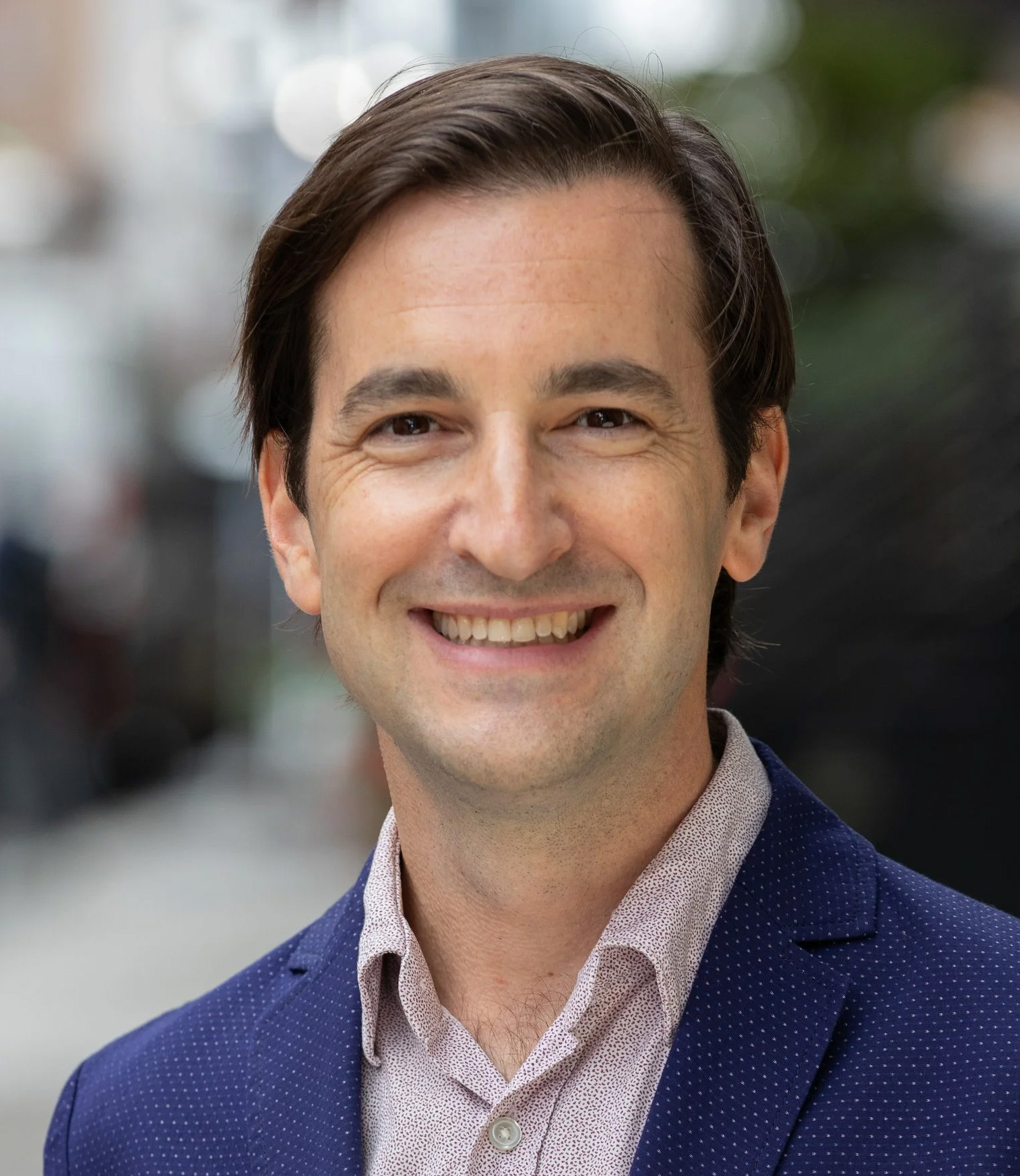
Andrew Fine
And when churches attempt to use their facilities for new and innovative purposes — like affordable housing — it is the zoning laws that most often trip them up, said Fine, whose organization advocates for more housing to get built.
“We’re saying we want as much housing as possible in our communities of all kinds, in all sizes. That can be a backyard cottage to a house for a multi-generational family. It can be a new affordable housing development on a parking lot. … It can be anything we sort of dream up if it’s allowed.”
However, “a huge problem we have in making that work is that the laws on the books, the local zoning laws are very, very restrictive and that has accrued over decades and become more and more restrictive, particularly in places outside the city but also in parts of New York City as well.”
The state Legislature has power to make that job easier, and there are bills currently pending in the New York Legislature that would help. There are also proposals before the New York City Council — including two voter propositions currently — that would make it harder for a single city council member to block housing development.
For information on the proposed state law, visit here.
Push for single-family plots only
According to research reported by NYU’s Furman Center, about 80% of the land owned by faith organizations across the state has zoning restrictions that only allow single-family homes to be built there.
“You cannot build multifamily housing on that land,” Fine said. “So that’s saying people who want to build affordable housing, who want to build townhouses or things that would just be less expensive than single family homes are not able to on most of that land.”
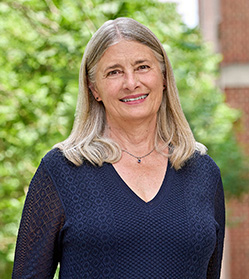
Vicki Been
These zoning restrictions are more prevalent in the Northeast than in the West and Pacific Northwest, he added. “States like California and Oregon and Washington have shifted the balance over time.”
Elsewhere, though, decisions that were made in the 1950s remain on the books and can be a hindrance to church property development, Fine explained. The goal then was “to make the separation between residential and nonresidential very strict. And to make it so basically in the residential areas you can only build single-family homes.”
The motivation behind this often was buried racism, he added. “A huge part of the history of local zoning starting in the 1910s is about enforcing segregation. It was explicit back in the day.”
Even if racial identifiers are not explicit in the codes, the intended effect makes it so.
Fine talked about the suburb where he grew up in Boston, which is 95% white. “You can only build a single-family home on 95% of the land. You must own two acres — that’s a hundred thousand square feet of land. You cannot purchase those two acres now for less than a couple million dollars. And so even though that does not have explicit racial language in it, we know what the disparate impact of that is.”
To create more affordable housing — even moderately priced housing — such zoning laws must be changed, he said.
Help needed
Understanding and navigating these complex city codes requires professional help, all the panelists agreed. And not just professional help but specialized professional help from people who have experience with faith-based clients. That’s one reason Bricks and Mortals was created.
“People spend years of their lives becoming the kind of architects and land-use attorneys and finance folks that can help you, and it is not a project for the faint of heart,” Been said. “So seek help early and often.”
She said NYU’s Furman Center also offers help from students who staff a clinic for advising faith-based property owners. For example, “How do you advise a faith-based organization about the advantages and disadvantages of the ground lease versus a sale?”
Faith-based property owners also need professional counsel because too often the developers who want to recreate their spaces are “the most optimistic people on earth,” she said. Such optimism may drive faith communities to believe transformation will be easier and cheaper than it really will be.