

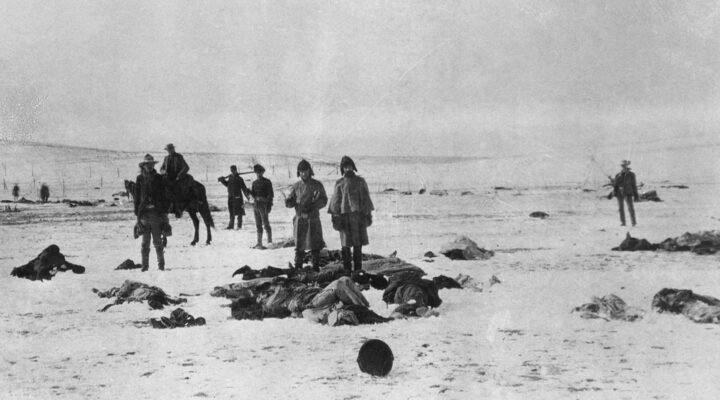
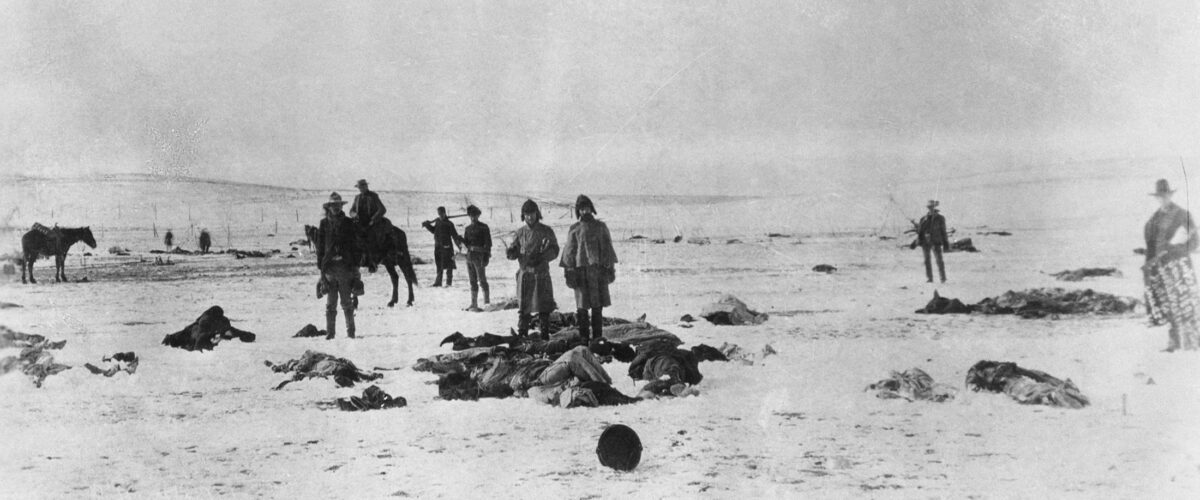
On Sept. 26, U.S. Secretary of Defense Pete Hegseth announced that the 20 soldiers who participated in the 1890 massacre of hundreds of Lakota men, women and children at Wounded Knee would retain the Medals of Honor awarded to them. He declared the decision final, stating, “Their place in our nation’s history is no longer up for debate.”
Secretary Hegseth further stated that U.S. soldiers deserve these medals for their bravery and suggested that any contrary opinion would favor “political correctness” over “historical” accuracy.
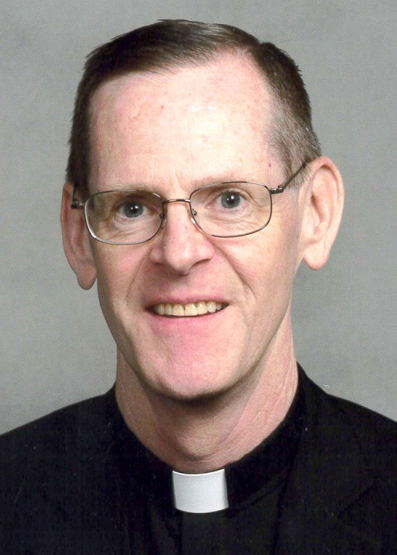
Scott Bullock
The facts of the tragedy at Wounded Knee Creek on Dec. 29, 1890, are clear. On that day, U.S. Army soldiers massacred nearly 300 Lakota women, children and unarmed men. This was not a battle. To recognize these acts as honorable is to distort history itself.
Our response, therefore, is rooted not in “political correctness” but in prayerful correctness, grounded in truth, conscience and compassion.
We, the De Smet Jesuit Community of West River, South Dakota — including the Jesuit Residences at Holy Rosary Mission (Maȟpíya Lúta / Red Cloud) on the Pine Ridge Reservation, St. Isaac Jogues Parish in Rapid City, and St. Francis Mission on the Rosebud Reservation — together with Bishop Scott E. Bullock — serve among our Lakota brothers and sisters. We acknowledge the government’s intent to honor its troops, yet we reject any narrative that erases the humanity of the victims or glorifies acts of violence.
“Our response is rooted not in ‘political correctness’ but in prayerful correctness, grounded in truth, conscience and compassion.”
The Congressional Report: Wounded Knee Massacre Memorial and Sacred Site Act cites a “General Miles Letter to Mary Miles, Jan. 15, 1891,” in which Miles described Wounded Knee as “the most abominable, criminal military blunder and a horrible massacre of women and children.”
In light of our lived experience with the Lakota people — and the hope they embody — we firmly reject Secretary Hegseth’s decision. We share the sentiment of the South Dakota Senate, which in 2024 overwhelmingly approved Senate Resolution 701, stating: “Allowing honor to the Seventh Cavalry for acts in the Wounded Knee Massacre dishonors the Medal of Honor and is an implication of hostility and genocide against the Great Sioux Nation and the persons who were killed by the United States at Wounded Knee.”
As Catholics and followers of Jesus Christ, we proclaim the infinite dignity of every human life. We confess that humanity — capable of love and goodness — is also capable of terrible evil. Our Lord Jesus, out of love for the world, accepted the Cross rather than take up arms against others. His crucifixion and resurrection reveal that true victory comes not through killing but through suffering love, mercy and truth.
Those who died at Wounded Knee are sacred. Jesus stands with all who suffer and die at the hands of others. Those who committed the violence are also sacred; for this reason, Jesus offers them mercy and healing. Yet the acts themselves were grave evils and cannot be honored.
If we deny our part in history, we deepen the harm. We cannot lie about the past without perpetuating injustice and moral blindness. Even if we are not personally responsible for Wounded Knee, we bear a moral responsibility to remember and speak the truth.
Let us, through the power and love of Jesus, choose — like him — to stand with our brothers and sisters, walking together in truth, remembering the victims and seeking reconciliation rooted in honesty and compassion. Only by facing the cross of our shared history can we move toward resurrection — a future of just and lasting peace for all God’s beloved children.
Scott E. Bullock serves as Catholic bishop of Rapid City, S.D. This opinion piece was published by the diocese on its website and was signed also by L. Ryen Dwyer, Edmund Yainao, Phillip Cooke, David Mastrangelo and Peter J. Klink, all clergy serving among the Lakota people.
Related articles:
Never forget | Opinion by Jason Coker
The lies my country taught me | Opinion by Richard T. Hughes
Sorry, Secretary Hegseth, ‘Jesus don’t like killing’ | Opinion by Cynthia Astle