

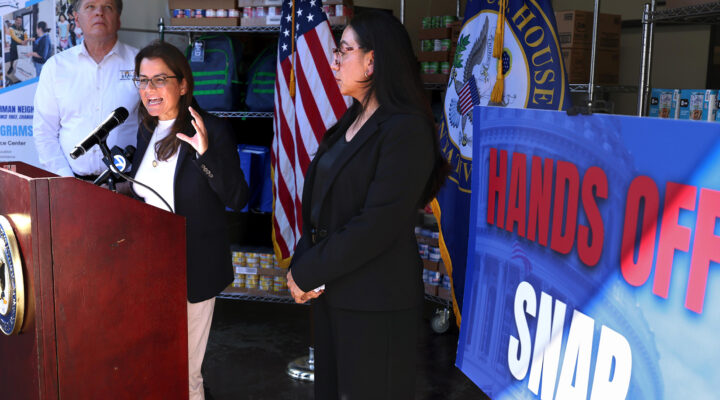
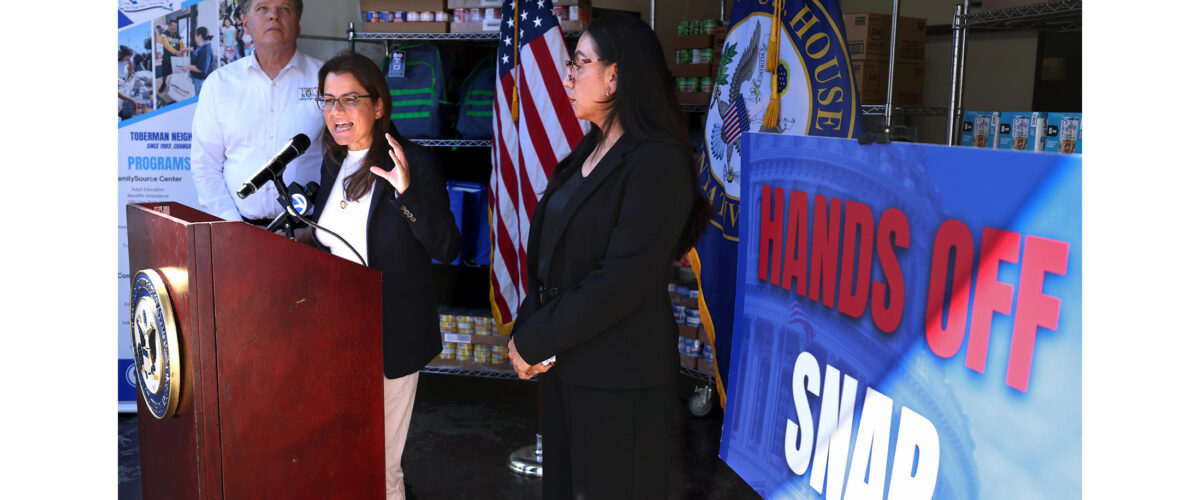
A federal judge in Rhode Island barred the Trump administration Oct. 31 from freezing food stamp spending during the ongoing government shutdown.
About 42 million recipients were set to lose Supplemental Nutrition Assistance Program benefits Nov. 1 but Judge John McConnell ordered the funding to continue.
The restraining order followed two lawsuits filed in late October after the U.S. Department of Agriculture said “the well has run dry” for food-stamp dollars despite the availability of $6 billion in a contingency fund and the fact other social safety net programs were being continued despite the government shutdown.
One of the suits was filed by 25 U.S. states, but McConnell’s temporary restraining order was in response to an action filed Oct. 30 by a coalition of faith-based nonprofits, small businesses, local nonprofits and workers’ rights groups whose clients and customers receive SNAP benefits.
“Today’s ruling is a lifeline for millions of families, seniors and veterans who depend on SNAP to put food on the table,” according to the plaintiffs in the case represented by Democracy Forward and the Lawyers’ Committee for Rhode Island. “It reaffirms a fundamental principle: No administration can use hunger as a political weapon. This victory is about more than one program — it’s about the American values of fairness, compassion, and accountability that hold our democracy together.”
McConnell directed the administration not only to keep SNAP operating but also to immediately demonstrate the court order has been communicated to government officials involved with the program. He also determined plaintiffs were likely to succeed in their suit.
The 239-page order includes numerous sworn statements from SNAP recipients about the harm they and their families would endure without the program.
A 20-year-old pregnant woman in Georgia said she does not know how she would provide for her and her son if SNAP is interrupted.
“I have significant monthly bills, including paying $600 to $800 per month for car insurance, $100 per month for the phone bill, and paying $100 per month for an old car I purchased that cannot be driven due to transmission issues. In addition, I have to worry about child care expenses and how to transport my son to places since my car does not work. I was hoping to purchase a new car soon but with SNAP benefits cuts, that will not be possible.”
“Should SNAP be unavailable, the impact on Rhode Island’s communities, and on United Way’s frontline teams, would be immediate and profound. Families would lose a vital source of nutrition support, forcing them to make impossible choices, whether to pay rent or buy groceries, whether to heat their homes or put food on the table,” the United Way of Rhode Island stated.
“Many of the individuals and families we serve rely on both SNAP benefits and our food pantry services to meet their basic nutritional needs,” Jewish Family and Career Services in Louisville, Ky. explained. “The harms to JFCS and our clients … would be irreparable if SNAP benefits are suspended or if Kentucky’s waiver is terminated early.”