

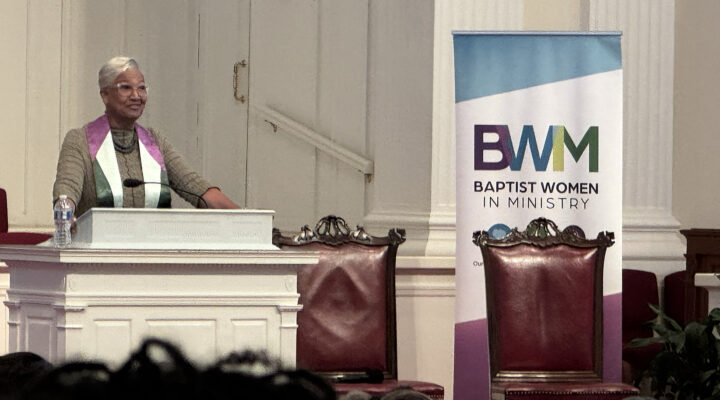
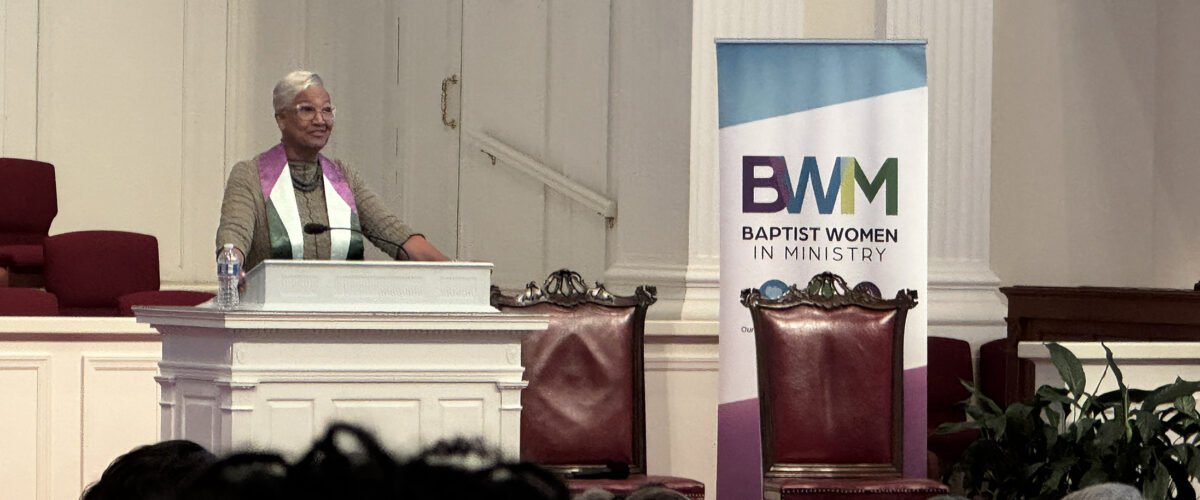
The equality of women is a gospel issue, not just a social justice issue, according to veteran pastor Cynthia Hale.
She was among the speakers at the Nov. 6-7 annual gathering of Baptist Women in Ministry held at Second Ponce de Leon Baptist Church in Atlanta. Hale is the founding pastor and senior pastor at Ray of Hope Christian Church in Decatur, Ga., a congregation affiliated with the Christian Church (Disciples of Christ).
Her presentation was laced with learned wisdom from five decades of pastoral ministry interspersed with biblical interpretation. The session ended with a lengthy question-and-answer period.
Affirming and practicing the equal value, dignity and calling of women is “not just a matter of social justice or fairness, it is first of all deeply rooted in the gospel of God’s intention toward humans,” she declared.
Echoing another preacher from the night before, Hale began in the book of Genesis, which she said “spells it all out for us what God had in mind when he created the world and especially us as humans.”
“Since all humans are created in the image and likeness of God, there is no superiority of one gender over another.”
Scripture says God created women and men in God’s own image, she noted. “Male and female, he created them. That’s what he said. God created humans. He did so with divine intentionality. God made us male and female in his image and since all humans are created in the image and likeness of God, there is no superiority of one gender over another. God established gender equality in the creation of humans. Both males and females are created in the image and likeness of God. Both males and females are intelligent, created again with the ability and the assignment to lead.”
If God wanted to establish a hierarchy in creation, that would show up in Genesis, she said. “If ever there was a time that God could have settled the issue about female leadership, this would’ve been it. All God had to do would be to say, ‘Adam, you rule the earth and subdue it.’”
And to Eve, God could have said, “You’ve been made to be a follower, so no ruling allowed for you,” she added.
“But of course God didn’t say that. The woman was no mistake, no afterthought, no mere help made for men, not second to but equal. … God loves variety, and God did his best word when he created women all he in Christ.”
Despite the message of men interpreting Scripture for generations, “we are members of one body, all uniquely gifted for the good of the whole,” she said. “Being created in the image and likeness of God makes us equal and entitled to the same rights. Men and women share equal worth and divine purpose from the beginning. God intended for males and females to work together in partnership. Not only was our equality established at creation, but it’s also deeply rooted in the message and mission of the Lord Jesus Christ.”
“Not only was our equality established at creation, but it’s also deeply rooted in the message and mission of the Lord Jesus Christ.”
Traditional conservative Christian theology — as espoused by the Southern Baptist Convention and others — says women are more responsible for sin entering the world than men.
Not only is that a faulty interpretation, Hale said, but the New Testament adds an important word: “The gospel makes clear that in Christ God is restoring what was broken by sin, including relationships of domination and inequality. The equality of women isn’t an optional add on. It is part of the new creation that Jesus not only inaugurated but also modeled in his dealings with women as he walked the earth.”
For example, the story of the woman at the well is “the longest recorded conversation with anyone in the gospel,” she said. “She had a theological discussion with Jesus.”
Armed with new information from her encounter with Jesus, this woman “went back home and ministered to her whole village.”
While women today make up the majority of churchgoers, they remain woefully underrepresented in church leadership, Hale said. Especially in the Black church, “women make up the numerical majority, 75% to 80% in most Black Baptist churches … and serve as the glue that holds these churches together with inside talent and treasure. The proportion of women in leadership is not commensurate with these numbers. One report in 2016 says that 10% of women are church leaders and as little as 1% are pastors. While the numbers have been increasing since then, they still are not where they should be.”
Some denominations have made more progress than others, she noted, including the African Methodist Episcopal Church, which has been ordaining women since 1960.
But acceptance should not be confused with recognizing calling, she added. “Affirming women as senior pastors is not the same as calling, placing” women in senior pastor roles.
And while women now make up a majority of students enrolled in many U.S. seminaries, women still do not hold commensurate shares of seminary leadership roles, she reported. “Fewer than 25% of faculty and deans and only 11% of the presidents are women.”
“Women are still relegated to positions that no one wants to admit have been designated for women.”
In the church and the academy, “women are still relegated to positions that no one wants to admit have been designated for women.”
And when women are called as pastors, they often are candidates of last resort, Hale said. “In too many cases when we are called to pastor, we are still being sent to churches that are on their last leg. So we are sitting as nurses and doctors to help them regain life even at a time when women are making greater strides and enjoying greater privileges than any other time in history.”
Hale said she wonders if “people in the church understand what they’re doing in denying women in ministry the freedom to fulfill their calling. Do they understand the true nature of the gospel and the mission of the church? The gospel is about reconciliation, justice and love. The gospel calls the church to embody the kingdom of God where all people use their gifts freely for God’s purposes.
“When women are denied full participation or treated as less than equal, the church’s witness to that gospel is distorted. If women are restricted from leadership or ministry because of gender, the church hinders the Spirit’s work and fails to reflect the inclusive mission of Christ. When the church affirms equality, it is proclaiming that the good news is for everyone and it can come through anyone. Therefore, honoring women’s equality is a test of whether or not the gospel is truly shaping that community.”
It’s also about the church’s public witness, she continued. “As believers, we are called to represent Christ in the world. People in our nation and world are watching to see how the church treats women. They want to know if we are who we say we are, if what we’re proclaiming is true. When the church models mutual respect, shared leadership and equal opportunity, it reflects the transformative power of the gospel. When it fails to do so, it risks discrediting the message Christ came to bring.”
Related articles:
BWIM research shows 6 markers of congregations that empower women
‘Unlearn the lies about women,’ BWIM preacher urges