



Business and faith-based investment groups are suing Texas to stop enforcement of a new law that limits expert advice available to investors.
“The plaintiffs are faith-based and nonprofit organizations that, as part of their missions, partner with institutional investors to engage with companies to seek strong long-term financial performance,” said Democracy Forward, a nonprofit legal group leading the lawsuit filed Nov. 10 in the U.S. District Court for the Western District of Texas.
At issue is the enforcement of Senate Bill 2337, a 2025 law that restricts the ability of advisory firms to offer nonfinancial investment guidance. The measure went into effect Sept. 1.
The state already has been sued by two of the most prominent shareholder proxy advising firms in the U.S.
The Interfaith Center on Corporate Responsibility, United Church Funds and Ceres filed the action asserting the statute violates advisors’ and investors’ freedom of speech guaranteed under the First Amendment and is “unconstitutionally vague” about due process rights under the Fourteenth Amendment.
“As part of that work, the plaintiffs take into account environmental and social impacts of company practices, as well as strong corporate governance and other factors, because they believe — correctly — that these factors can be central to the long-term financial success of companies,” Democracy Forward explained. “SB-2337 classifies those factors as ‘nonfinancial’ and places burdensome restrictions on sharing such considerations with shareholders.”
The state already has been sued by two of the most prominent shareholder proxy advising firms in the U.S. In August, a district court blocked Texas from applying the law to Glass Lewis and ISS pending the outcome of a February 2026 trial.
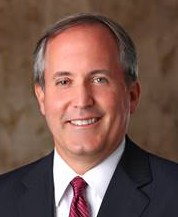
Ken Paxton
Texas Attorney General Ken Paxton confirmed the law is about politics rather than ensuring ethical financial advising.
“The role of a proxy advisor is to provide sound guidance based on financial considerations, not use their position to promote woke, left-wing ideology,” he said. “SB-2337 stops liberal activists posing as proxy advisors from giving guidance based on their ideological goals without making that clear to their clients. The new law is critical for promoting transparency in corporate America, and I will continue to defend it aggressively in the courts.”
In 2015, Paxton was accused of persuading investors to buy stock in a technology company without disclosing that he was being paid to promote it. As a result, he faced felony securities fraud charges, which eventually were dismissed nine years later after a pre-trial agreement in which Paxton agreed to pay restitution to victims and complete 15 hours of legal ethics courses.
Plaintiffs in the latest litigation contend their clients have a key right to invest in ways consistent with their values and goals.
The Interfaith Center on Corporate Responsibility is a collation of values- and faith-based investors; United Church Funds provides investment management for United Church of Christ congregations and ministries; and Ceres provides asset management related to food and agriculture.
“Yet SB-2337 penalizes firms and nonprofit organizations for providing this type of information and advice when it is inconsistent with the state’s beliefs,” they argued in the lawsuit. “The state defines the type of speech it disfavors as ‘nonfinancial,’ and requires that organizations that provide so-called ‘nonfinancial’ information and advice publicly pronounce that this information and advice is not ‘solely in the financial interest of the company’s shareholders.’”

Charles Buck
The litigation invites Texas to disagree with the plaintiffs views on what is and isn’t financial advice, the suit added. “What it cannot do is compel plaintiffs to speak in furtherance of Texas’ views about these issues. Yet the recently enacted SB-2337 does precisely that.”
Applying the law to faith-based groups would cripple the relationship between faith and fiduciary duty, United Church Funds President Charles Buck said separately. “Texas’ law is written so vaguely that even ordinary, good-faith stewardship could be misinterpreted as unlawful. Responsible investors shouldn’t have to guess whether sharing our values or our analysis puts us at risk for simply doing our jobs.”
Josh Zinner, CEO of the Interfaith Center on Corporate Responsibility described the law as an attack on the free-speech rights of all Americans. “A robust and dynamic economy requires honest competition and the free exchange of ideas that leaders in Texas are seeking to undermine with this law,” he said.