


Church is a school of forgiveness where we learn to forgive and be forgiven.
The Lord’s Prayer invites us to this form of spiritual healing every time we pray it: “Forgive us our trespasses as we forgive those who trespass against us” is about the cleansing of the heart.
Christians of the second century were instructed to pray the Lord’s Prayer three times a day. We could do worse.
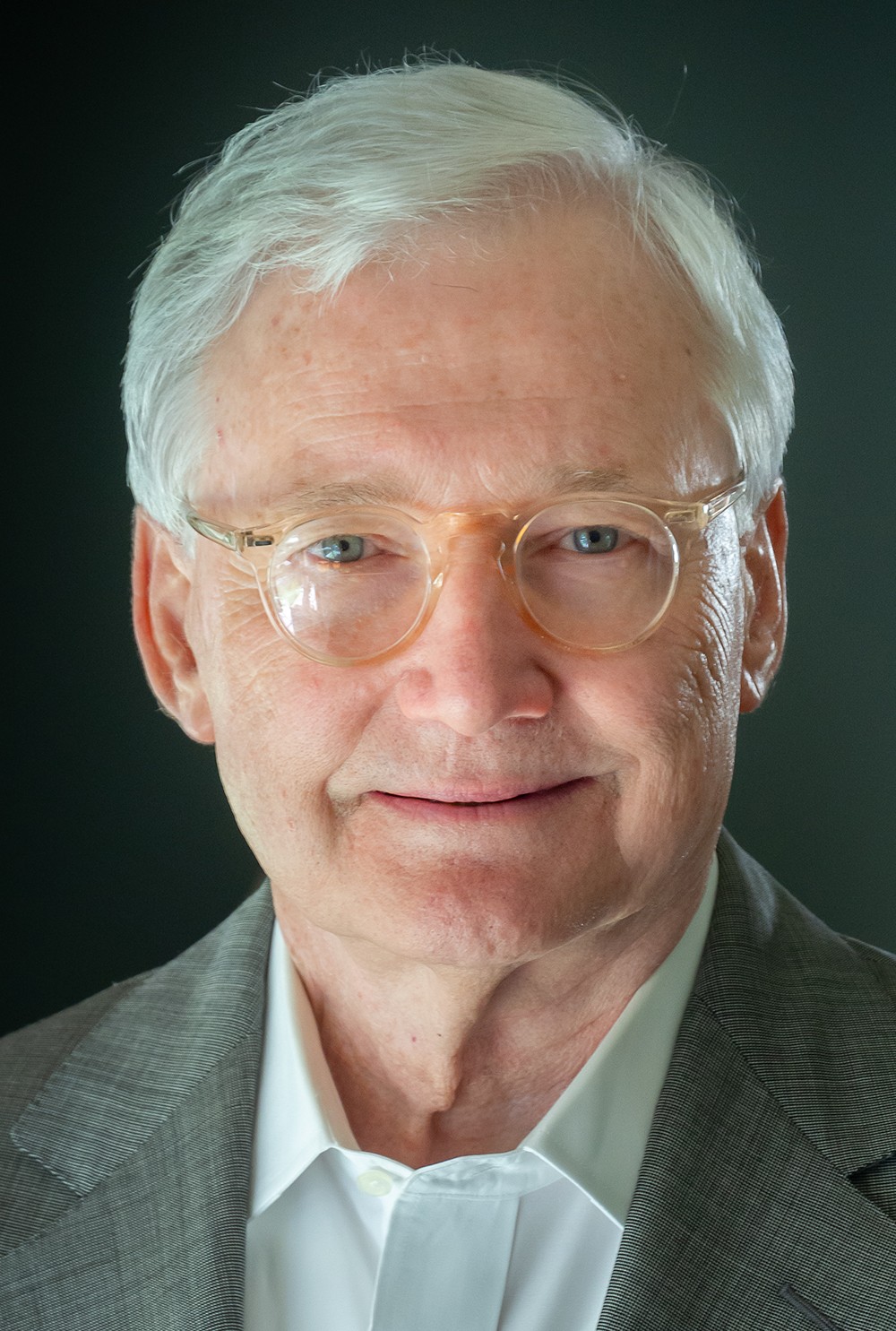
Stephen Shoemaker
But what about institutions? Can we forgive institutions or social groups? They aren’t likely to confess, but we try anyway because God’s forgiveness flows anyway.
What about the church? Can we forgive Mother Church? Can we forgive the sins and failures of our local congregations? The sins of the church are manifold. Too often we live out of fear rather than faith. Too often we are captive to our culture.
To forgive the church does not mean hiding from its misdeeds through the years. The church is a human institution with a divine calling. We have been the face of Christ. We also have denied him as Peter did and by our lack of love marred his face to the world.
At our best we learn from these failures and seek to be a truer, more faithful people of God. The Reformation slogan, “The church reformed and always being reformed” might be rephrased, “The church always sinning and always seeking to be better.”
A friend had left the Roman Catholic Church and joined Myers Park Baptist Church in Charlotte, N.C. He told me of a life-changing spiritual moment when he went to a Catholic Church retreat led by a priest. As he talked to the priest, the priest said, “Maybe you need to forgive the church.” His anger began to dissolve as he sought to forgive his church.
We may have been personally wronged by the church, as an institution or by the actions of our local congregations. The lay leadership of the church may have made mistakes as they tried to lead the church. They were doing the best they knew to do, however misguided. We may have — as ministers or lay leadership — failed our church and feel remorse or guilt about it.
One of Maya Angelou’s most memorable sayings is: “Do the best you can until you know better. Then when you know better, do better.”
“When you know better, do better.”
We need to forgive ourselves and others for making decisions we and they would not make now with more wisdom and perspective. I need not say that in these times, especially since the pandemic, everything is more difficult for the church.
There is a prayer of confession from the Iona Community off the West Coast of Scotland. I have been moved every time I have said it and heard it.
We confess to our brokenness,
To the ways we wound our lives,
The lives of others
And the life of the world.
Think of the “we” of that prayer not just as a personal prayer but as the “we” of the church.
We are all part of the reality of sin in the world, not just the sins we commit but also the power of Sin which can take over, Sin itself imbedded in our corporate life, the church disfigured by antisemitism and anti-Judaism (our original sin), by racism, patriarchy, misogyny and heterosexism, to name some of our institutionally embodied sins.
Our confession gives us the grace to forgive the church and new energy to renew it. The Declaration of a Pardon in the Iona Community’s Prayer of Confession offers the words not only which we as individuals need to hear but also which the church needs to hear: “May God forgive you, Christ renew you and the Spirit enable you to grow in love.”
Perhaps once a year the church needs to set aside a time to confess and forgive alongside God the sins of the church, local and universal. Ash Wednesday, perhaps, or our own “Ten Days of Awe,” as with the Jewish days of repentance and amends between Rosh Hashanah and Yom Kippur.
The first commission of the Risen Christ happened as he appeared to his disciples on Easter evening. He blew on them his breath and said, “Receive the Holy Spirit.” Then the charge: Go, forgive, literally “loose” people of their sins.
“Perhaps once a year the church needs to set aside a time to confess and forgive alongside God the sins of the church,”
Forgiveness looses them, sets them free, from their sins and the residue of guilt and remorse. Sometimes in the process we are set free ourselves.
It is most painful when members leave a church because they have been hurt in the church or by the church. Will we give them grace? How would we welcome them back if they gave the church another try? With grace? You pass your former church. Your stomach tightens. You may need to go back, you may need to say a final goodbye. You still can forgive.
Institutions, as Reinhold Niebuhr reminded us in Moral Man and Immoral Society, operate in a self- interested way, but church is an organism created by God to embody the gospel in a non-self-interested way. We can work to curb the plundering violence of society’s structures, but the church has a higher calling. It sometimes needs correction and reform. It always needs forgiveness.
There are many passages of Scripture in which God forgives the people of God. Two examples:
“And I will have pity on ‘Not Pitied’ and I will say to ‘Not my people,’ ‘You are my people!’” — Hosea 2:23
“Once you were no people but now you are God’s people; once you had not received mercy, but now you have received mercy.” — 1 Peter 2:10
I cannot think of a passage about our forgiving God’s people, but maybe there should be one, and since there are ample instances of God forgiving God’s own people, we in the Spirit of God can too.
Stephen Shoemaker most recently served as pastor of Grace Baptist Church in Statesville, N.C. He previously served as pastor of Myers Park Baptist in Charlotte, N.C.; Broadway Baptist in Fort Worth, Texas; and Crescent Hill Baptist in Louisville, Ky.