

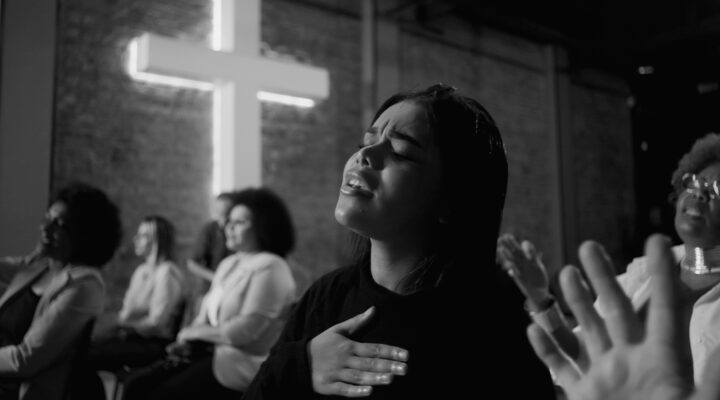
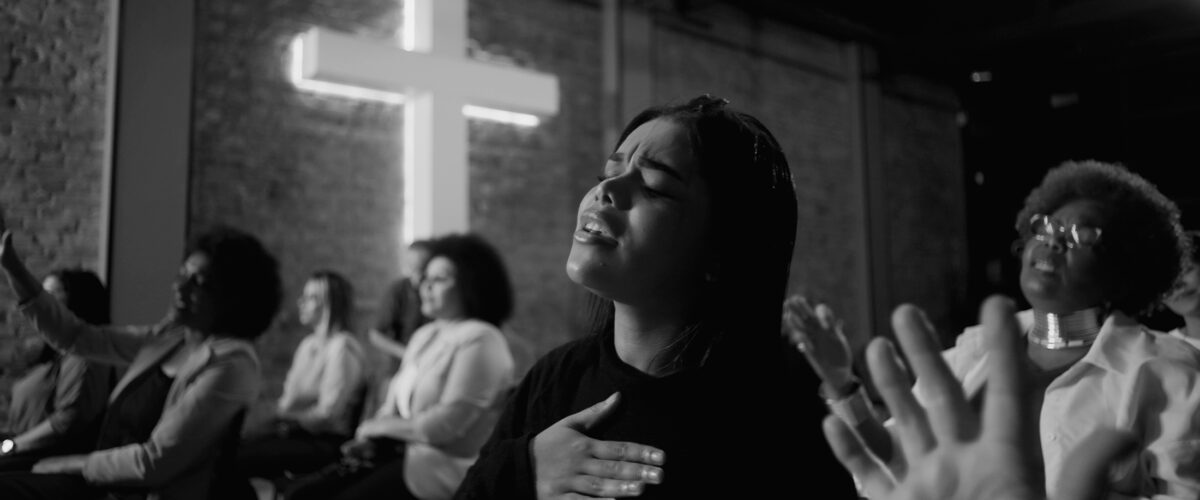
There was a time when I almost lost myself trying to fit into white evangelical spaces that never were designed for me. These were spaces where I was preemptively labeled a “liberal” and my passion for racial justice was dismissed as a “distraction from the gospel.”
Spaces where the Jesus of Scripture was supplanted by a white American Jesus. Spaces where affiliation with the Republican Party became a surrogate for biblical fidelity.
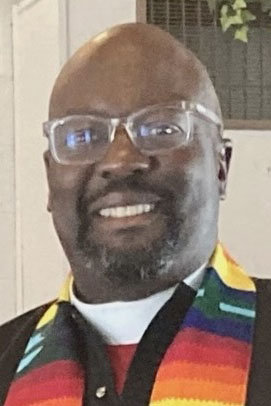
Joel Bowman
I didn’t leave the faith, but I nearly let a distorted version of it strip me of my spiritual roots. I almost was deceived into believing the “white way” was the “right way” to be a Christian and to do church.
What kept me from losing my sense of identity was the same nurturing community that first taught me about Jesus — the Black Church.
My spiritual roots
The historic Second Baptist Church of Detroit is where I first learned that salvation and liberation are two sides of the same coin — that faith and freedom belong together.
It was a major stop on the Underground Railroad, where those escaping from slavery would find refuge. It was a place where abolitionists like Harriet Tubman, Frederick Douglass and John Brown strategized.
Second Baptist was a place where the pastors preached with uncontainable fire, the church mothers prayed heaven down, and the deacons believed God could make a way out of no way.
It was in that sanctuary where I was given the faith that enabled me to hope while hurting, sing while suffering and stand firm when the world tried to break me down.
Ralph Bunche, the respected diplomat and first Black recipient of the Nobel Peace Prize, was baptized at Second Baptist.
Additionally, Martin Luther King Jr. preached from the church’s pulpit on several occasions, including Sunday, Feb. 28, 1954.
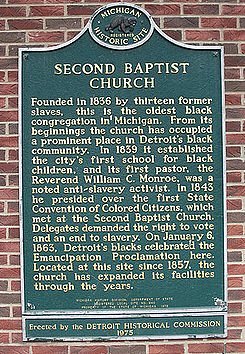 I was honored to be baptized in the same pool as Bunche and to preach my initial sermon from the same pulpit from which King sermonized. So, I have literally followed in the footsteps of greatness.
Hostile territory
Little did I know, when I first entered white evangelical spaces in college, I would be entering hostile territory. Some in those spaces acted as if my faith was “too emotional,” my concern for justice “too political,” my talk of the presence of racism “divisive.”
I was expected to silence my prophetic voice for the sake of “unity” and white comfort. But the Jesus I met in the Black Church would not allow me to remain silent. In the words of an old song, “I said I wasn’t gonna tell nobody, but I couldn’t keep it to myself.”
My Jesus is the Savior of the world, not a mascot for Christian nationalism. He is my Liberator, my Deliverer and a brown-skinned Palestinian Jew from the “hood” in Galilee.
My engagement in campus ministry was not my only foray into the turbulent waters of white evangelicalism. After becoming the founding pastor of the Temple of Faith in 2001, I began to affiliate with the Southern Baptist Convention.
Like several other denominations, the SBC was founded in the 1800s because of its founders’ support of chattel slavery. In 1995, it apologized for its complicity with slavery.
When I first connected with the SBC, it appeared as if it was making a turn in the right direction — away from its long history of white supremacy and toward racial inclusion and equity. But then Donald Trump became U.S. president for the first time, with overwhelming support from white evangelicals (including many members of the SBC). The tide had turned.
As a Black pastor in the SBC, I began to feel subtle pressure to demonstrate my theological orthodoxy and intellectual capacity to my white counterparts.
Southern Seminary President Al Mohler said he was endorsing Trump in the 2020 election after saying he could not, in good conscience, endorse him in 2016. I wrote an open letter to Mohler in which I called him out on his hypocrisy and opportunism.
The last straw for me was when the six SBC seminary presidents put out a statement repudiating Critical Race Theory as “incompatible” with the SBC’s statement of faith.
I determined the SBC was not a safe place for Black people. So, I broke away from it publicly. I did not so much leave the SBC, but the SBC left me when it doubled down on its racism.
“I did not so much leave the SBC, but the SBC left me when it doubled down on its racism.”
Holistic salvation
The Black Church offered me something white evangelicalism could not — holistic salvation.
Not only is the Black Church concerned with the saving of souls, but also the liberation of Black bodies from the shackles of oppression. It proclaims a gospel that refuses to divorce spiritual renewal from social responsibility. In the Black Church, salvation is not merely a moment of conversion; it is a lifelong journey toward personal and communal freedom.
The Black Church also tends to the healing of the mind. It provides space where grief can be voiced, trauma can be acknowledged and resilience can be cultivated. In its worship, testimonies and preaching traditions, the Black Church teaches that our emotional and psychological well-being are sacred matters that God cares deeply about.
Holistic salvation means reclaiming one’s identity after being pressured to conform to someone else’s cultural expectations of what “good Christianity” should look like. It means learning that joy is not a liability, that lament is not a weakness and that our cultural expressions of faith are not inferior but God-honoring.
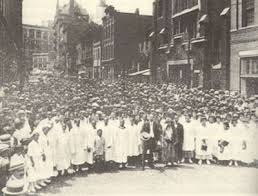
Historical photo of the congregation of Second Baptist Church of Detroit.
While I was “saved” at the age of 12, the Black Church saved me again as an adult by delivering me from the internalized racism perpetuated within white evangelical spaces. It reminded me that apologizing for my Blackness was never part of the gospel.
Internalized racism is a phenomenon people of color experience when they adopt negative messaging about their worth and abilities based on their ethnic or racial group membership. The Black Church became the antidote to that toxic narrative.
No place like home
The Black Church reminded me of who I was — and whose I was. It encouraged me to see myself not as a problem to be managed but as a person made in the image of God.
In the end, the Black Church welcomed me home. It restored me to my God-given position. It taught me the gospel is not a tool for cultural conformity but a call to collective liberation, rooted in the dignity of all human beings.
In its pews and pulpits, I recovered the faith that first taught me to love Jesus without surrendering the skin I’m in.
I rediscovered a community where orthodoxy is not measured by political allegiance, where justice is not a threat to unity and where my full humanity is not up for debate.
The Black Church saved me from a version of Christianity that demanded my silence, questioned my worth and tempted me to shrink.
It reoriented me toward a faith large enough to hold both salvation and liberation, both hope and lament, both my voice and my story. For that, I am forever grateful.
And as I continue to walk this journey, I carry with me the conviction that the faith handed down by my ancestors is more than enough — firm enough to stand on, rich enough to sustain me, powerful enough to keep me free.
In the Black Church, I’m free to be me.
Joel A. Bowman Sr. Is a native of Detroit who serves as founding pastor of the Temple of Faith Baptist Church in Louisville, Ky. He also maintains a full-time practice as a licensed clinical social worker. Follow him at acompellingvoice.com. and joelabowmansr.substack.com.