

“Set in stone” is an expression that conveys permanence. Perhaps some versions are not worth keeping forever.
The Trump administration has continued its attack on history and representation with the recent seizure of monuments honoring World War II Black soldiers in the Netherlands American cemetery.
In addition to intensifying earlier strikes at Smithsonian museums over their inclusion of the history of enslavement, this blatant racism is severely destroying museums, art and factual history and representation.

Mary Frances Phillips
With the adoption of the White House Executive Order 14253, which is purposefully designed to target institutions that prioritize cultural histories and modify the public history narrative to center whiteness, as well as attempts to eliminate diversity, equity and inclusion initiatives, art that misses the mark contributes to revisionist history that distorts and misrepresents.
For example, the recently installed Fred Ajanogha sculpted Tina Turner statue in Brownsville, Tenn., near where she spent her childhood, has garnered public criticism. The 10-foot-tall monument depicts Turner in the midst of a high-powered performance, dressed in a miniskirt and jewelry and holding a microphone, with her hair exaggerated in such a way that it takes center stage.
Among the lifetime accolades of the late renowned rock-and-roll performer, actress and author who passed in 2023 at the age of 83, are 12 Grammys, a Lifetime Achievement Award, two inductions into the Rock and Roll Hall of Fame and several international awards.
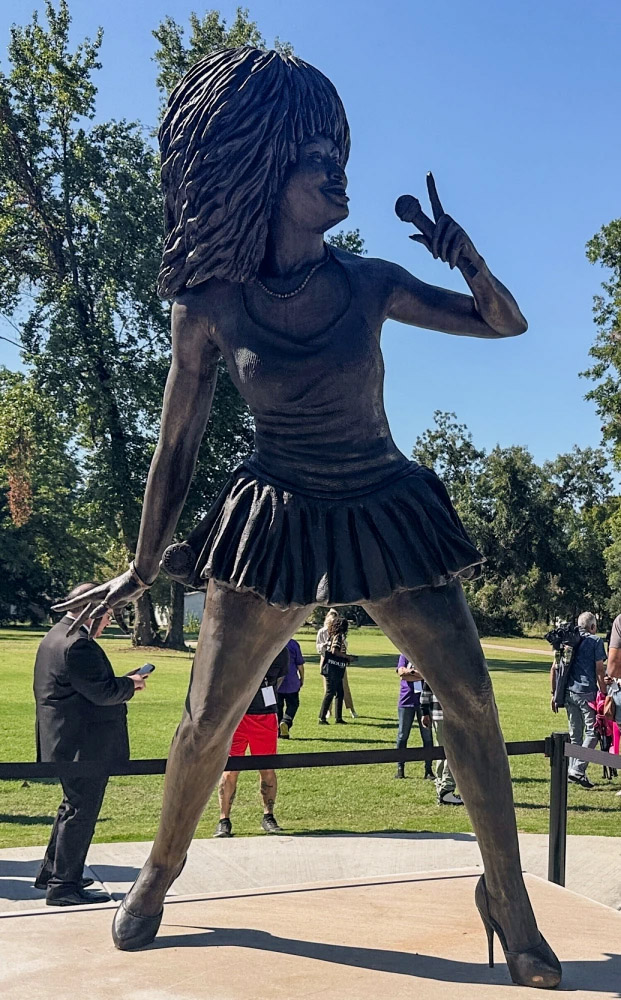
Statue of Tina Turner at a park in Brownsville, Tenn. (Adrian Sainz/AP)
She deserves eternal tribute, yes, as an inspiration to generations. But the statue lacks the depth of spirit of Turner as a global phenomenon and holds a caricature-like appearance of her.
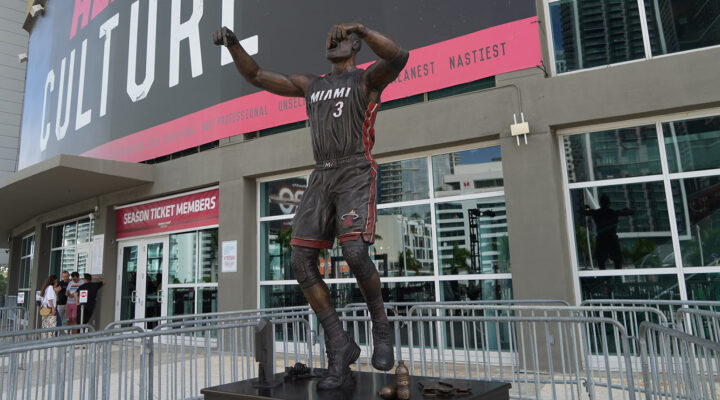
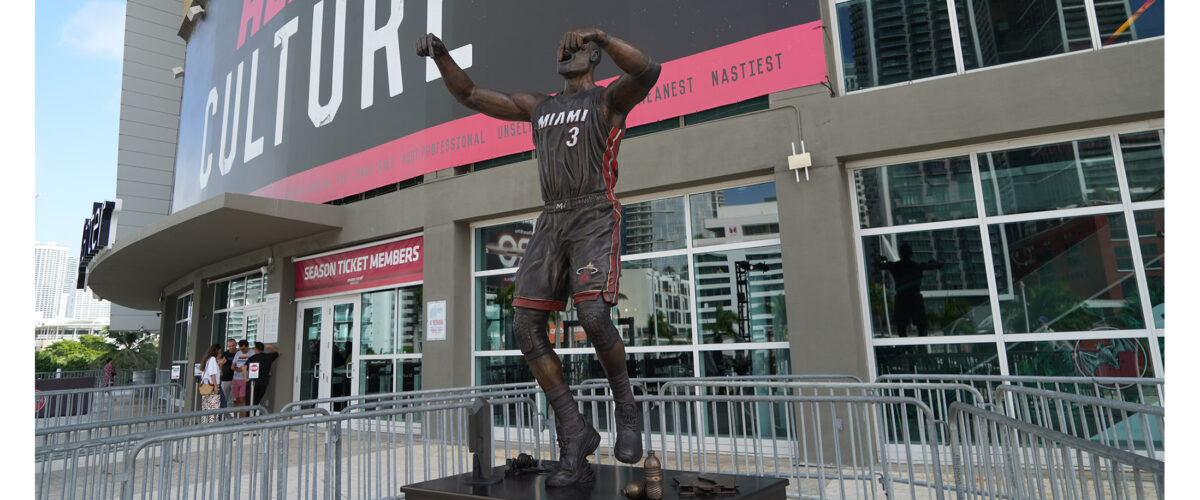
This is also true for the statue unveiled last year depicting NBA legend Dwayne Wade in Miami.
The statue situates Wade on the court wearing his No. 3 Miami basketball uniform with a defined musculature, his arms bent and flexed outward with his index finger in both hands pointed downward, and his mouth wide open as he declared, “This is my house” in celebration of his three-point victory over the Chicago Bulls in 2009.
The problem is the Wade statue is unrecognizable; the features do not resemble him. It may not have been deliberate, but the result makes their likeness cartoonish.
While the sculptor for the Turner statue is of African descent, this is not the case for the Wade statue designed by Rotblatt Amrany Studio sculptors Omri Amrany and Oscar León.
The 2024 book, The Shape of Power: Stories of Race and American Sculpture, co-authored by Karen Lemmey, Tobias Wofford and Grace Yasumura, states that “historical sculptures racialized their subjects reveals why specific racial categories were constructed and makes evident the relationship between race and power.” This applies to the Wade statue as it allows us to see how Blackness was represented from the gaze of the sculptors.
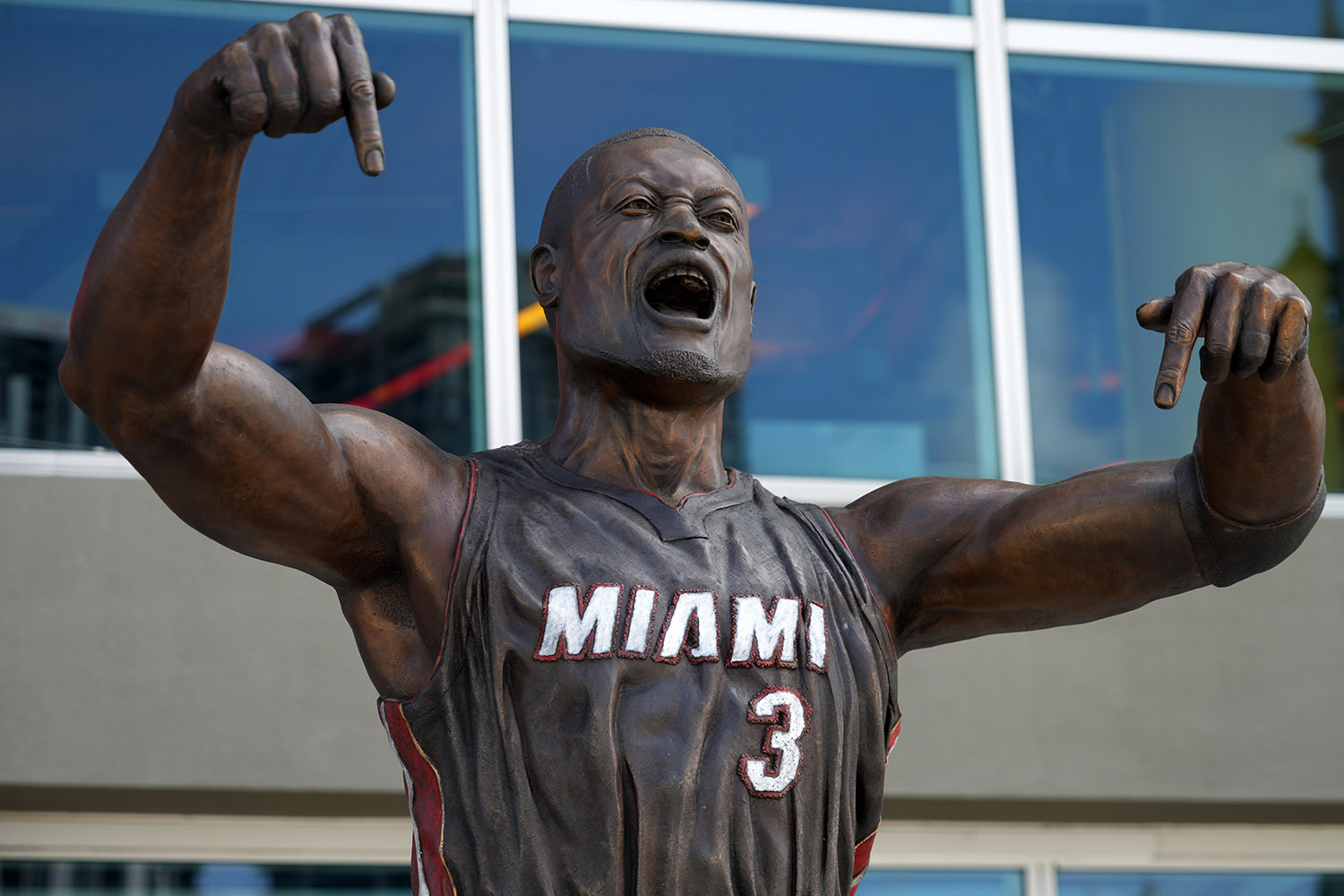
(Photo by Kirby Lee/Getty Images)
This calls to mind what is lost when a work of art fails to visually depict a historical figure and what is revealed in how race is represented. It generates public outcry when the essence of a person’s contributions is diminished by misrepresentation. The personal and political consequences are more than just an artist’s miscalculation.
The statues produced by these sculptors lack respect for Turner and Wade and the gravity of their accomplishments. Other examples of statue misrepresentations of popular icons include Michael Jackson, Shakira, Kate Moss and Cristiano Ronaldo. All these statues are offensive.
When artists are commissioned to portray well-known historical figures and they are not appropriately and accurately represented by the sculptors — even by artists of color — the consequences are wide-reaching.
These statues deprive the icons of their humanity by turning them into abstractions. A person in a statue is taken out of their context when their image departs from reality. Once the context is removed, the statue loses its significance. The artists then end up perpetuating a false narrative and diminishing these individuals’ substantial cultural significance. Repression has an impact.
Fans were outraged that these statues did not capture realism and have turned to social media to express their disdain. The injury is personal because it disrespects the icons.
Humor has served as a tool to lighten discomfort. For example, critics have used lyrics from Turner’s hit songs to express their contempt.
“What’s art got to do with it,” comedian KevOnStage remarked about the Turner statue. He added, “She deserves better. … You’re dishonoring her.” His plea is simple: “No more statues.”
His comments encapsulate the public attitude of numerous carved statues.
At this time of defunding efforts of ethnic studies, the historical misrepresentation of real figures in statues has political consequences. It contributes to one-note, sanitized depictions of American history.
While some onlookers may be disturbed, others may not feel the same way or support the public criticism of the statues. Some may consider it an accomplishment that these statues were constructed at all in our current intensely divided and tenuous political climate.
However, public outrage has meaning and must be taken seriously. Fans are engaging in a “practice of refusal,” said Tina Campt, professor of humanities at Princeton University, Black feminist theorist and historian. Campt writes that these efforts are “a refusal to recognize a system that renders you fundamentally illegible and unintelligible.”
Critiques highlight the statues’ indiscernibility. This separation makes it difficult for the spectator to associate it with personal memories. Getting these statues close to the person’s likeness is crucial.
Statues serve as permanent conduits for introducing idols to a new generation. These statues’ depictions of history must be authentic to the source. Historical representation of real people matters. It comes down to ethics, a value that must be central to history making.
Mary Frances Phillips serves as associate professor of African American studies at the University of Illinois Urbana-Champaign and is a Public Voices Fellow with The OpEd Project. She is the author of Black Panther Woman: The Political and Spiritual Life of Ericka Huggins.