

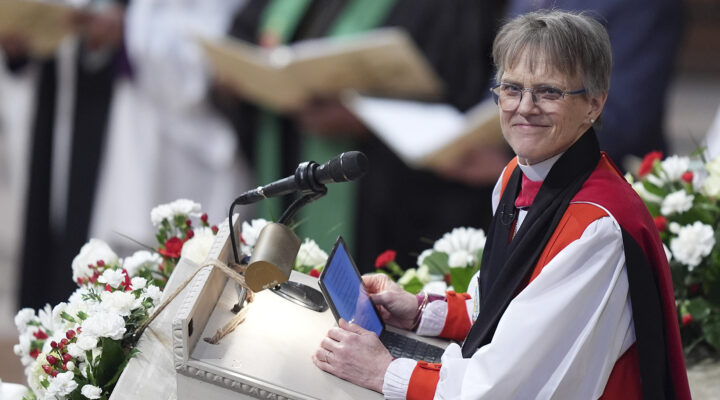
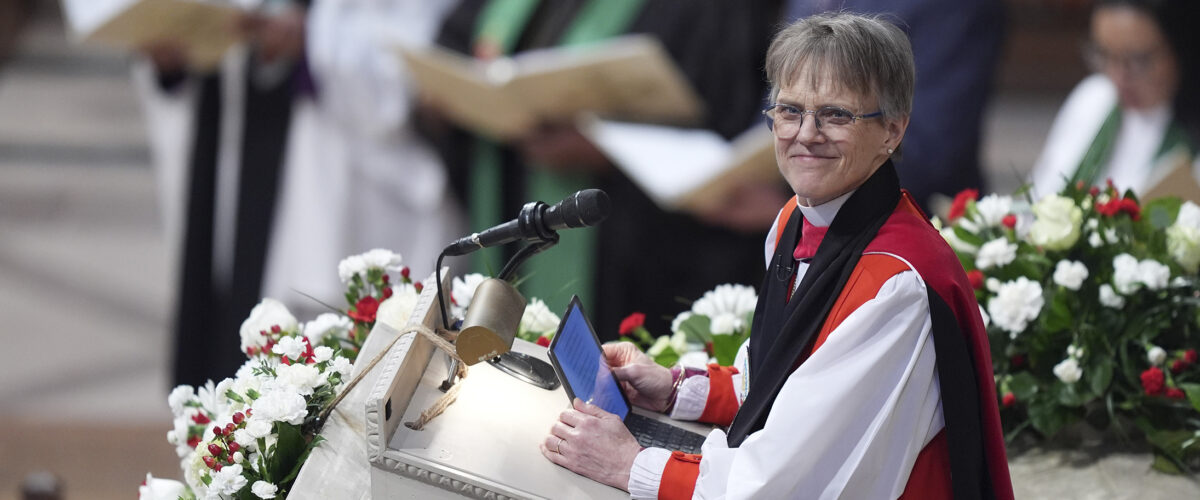
Many came to know Bishop Mariann Budde when she gave a passionate plea to President Donald Trump at the presidential prayer inauguration: “May I ask you to have mercy.”
Budde serves as bishop of the Episcopal diocese of Washington, D.C. That thrust her into the national spotlight at the traditional interfaith prayer service that follows modern presidential inaugurations.
“I needed to offer what I had and then let it be.”
Now, when she looks back on that January day, she is clear that her mission and focus were true: She wanted to make sure the president and others around him heard with clarity.
“There are always moments where I feel I may have something to say. I wanted to say it so that it could be heard. I can’t control that,” she said in recent interview with BNG. “I bring all of that anxiety, or that uncertainty, into the pulpit every time. I certainly felt that, but once I was there, it just kind of carried me. The reaction was almost immediate.”
She looks back on that day with resolve and understanding. It’s not a soft dictate for others to do what she did. It may or may not feel to others like something she had to say. But it was something she had to say.
“I needed to offer what I had and then let it be,” she explained.
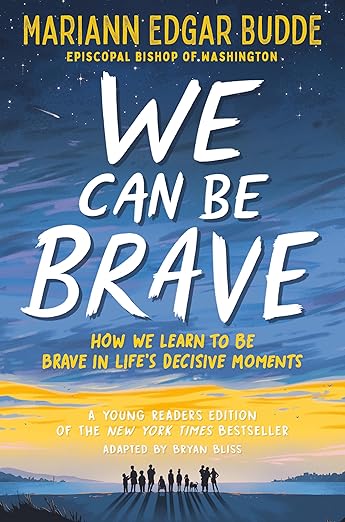 Budde, who has written a new book for young readers on the topic of courage, We Can be Brave, wants her audience to walk away knowing they too can have the same type of courage she believes God has given her.
“I define courage as the capacity God has given us as human beings to look at something we’ve never done before, or to see a threshold,” she said. “There is potentially great risk and lack of control. And courage is that innate capacity we are given to face what we’ve never done, or to cross thresholds that take us beyond our site. It is both given to us. But it is also something we cultivate and we learn. I think it’s a gift. We pass it around. It’s like most gifts of the Spirit. We draw from one another, and courage inspires me when I feel afraid. Other people might be inspired by something that I was able to do.”
There is an adult component to the book, but after her prayer at the inauguration prayer service, Budde’s publisher asked her to write a young adult version.
Budde takes the reader down the path of her own traumatic and troubling family dynamic, of how her parents divorced and suffered with mental health issues, and her own courage in deciding to move out from staying with her mom and going to live with her dad.
Budde takes the reader down the path of her own traumatic and troubling family dynamic.
These are “what I call decisive moments — those moments when we know we’re making a decision — that one memory I described when I was 17, which is in the first chapter that for me, remains the touchstone of every courageous experience I’ve had since, because I remember so vividly what it felt like and how I navigated by the grace of God through the terrain of coming into my own, listening to the God speaking inside me in my inner world.”
Budde seems to know what’s at stake by sharing her own story and then challenging a generation of young adult readers: “There’s the writing of the book, and then there is the sending it out into the world and not knowing how it will be received.”
Throughout the book, Budde not only tells her own story but also the story of leaders who have inspired and encouraged her along the way.
“I really love reading history,” she said. “I’ve always wanted to understand the Civil Rights era, since I was a young person, I wanted to understand that. I didn’t appreciate until recently the impact and the influence of the generations that were the parents and the grandparents of the leaders of the Civil Rights Movement. I wanted to provide stories of people who lived out the meaning of courage, that have helped me along the way.”
When writing for a book assignment or a sermon, Budde has a process she walks through.
“I have to sit down and actually take a look at the text for the day or the theme, the context, the community. I tend to work early in the morning, when it’s quiet and then I’m working right up into the time I step into the pulpit. I do a lot of refining at the end. I’m refining it as I go. It’s always with me in conversation between me and the biblical texts and the people around me. I try to discern, in this context, Lord for these people, what is most helpful to share?
“You can’t throw in the kitchen sink, you know, you have to make some choices and hope what you’re offering is what’s most needed and received.”
Related articles:
Politics, faith and mission: A conversation with Bishop Mariann Edgar Budde
At prayer service, Episcopal bishop calls on Trump to show mercy
Now the US House wants to censor a preacher? | Opinion by Rodney Kennedy