

As if exasperated by a quarrel during Thanksgiving dinner, columnist Michael Sean Winters pleads with whoever will listen: “Can everyone please stop talking about ‘Christian nationalism?’”
Writing in the Nov. 21 issue of the National Catholic Reporter, he claims with firm conviction, but without evidence, “Christian nationalism” as a phrase drives religious voters into the arms of MAGA politicians.
Winters writes: “Hurled as an epithet, voters who are Christian and who love their country will think they are being looked down upon for their dual commitments to God and country, and they are not wrong. Whenever anyone mutters the phrase ‘Christian nationalism’ in your presence, thank them for helping to make MAGA inevitable.”
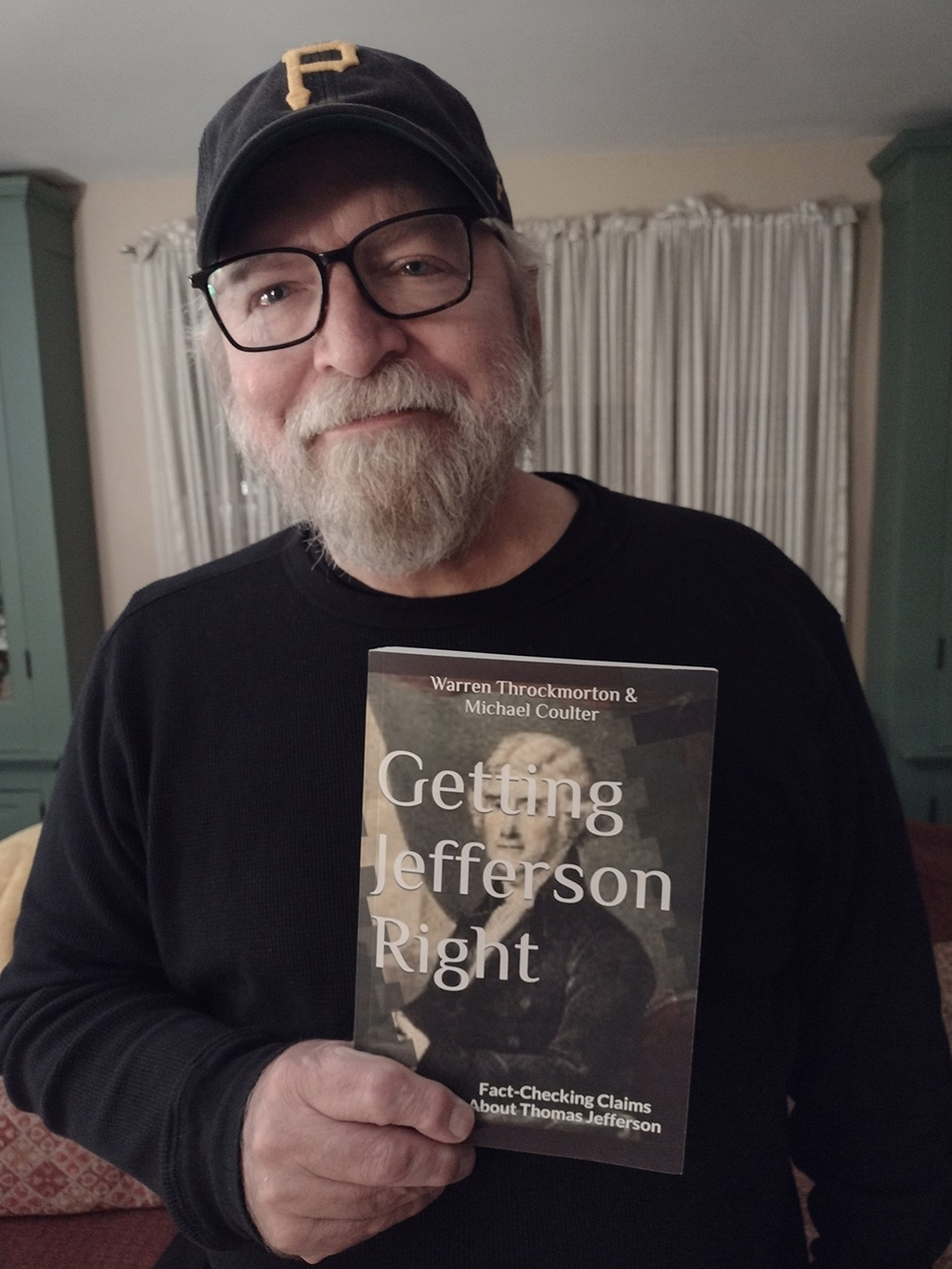
Warren Throckmorton
Is Winters right? He offers no data but seems guided by his intuition. On the other hand, my intuition tells me it seems far-fetched that people who voted for Donald Trump did so because someone called them a Christian nationalist. It seems more important to find evidence something like Christian nationalism exists. If it does, then why stop talking about it?
The most obvious evidence Christian nationalism exists is there are quite a few conservative Christians who embrace the term and talk about it all the time. People like Andrew Torba and Stephen Wolfe come to mind. Both have written books advocating their support for Christian nationalism. Another prominent Christian nationalist is Doug Wilson, an Idaho pastor who published Wolfe’s book and has a book of his own on the way. Wilson favors the incorporation of the Apostles’ Creed into the Constitution and would prohibit non-Christians from holding public office. Secretary of War Pete Hegseth attends a church in the denomination Wilson founded.
“Winters can plead all he wants, but these guys are on a mission from God.”
Winters can plead all he wants, but these guys are on a mission from God. They aren’t going to quit talking about Christian nationalism, nor are they going to quit working to make America a nation in the image of their version of Christianity.
It is true not all Christians are on board with everything Wolfe and company have in mind for the American republic. Those who don’t want Christianity to be the ruling religion might bristle at being called Christian nationalists. Winters might have a point for those people, but that is why we need to keep talking about it. We need to identify the Christian nationalists from those who aren’t.
In his article, Winters doesn’t clearly define Christian nationalism, so I will call upon historian Paul Matzko for a simple definition. On my podcast, “Telling Jefferson Lies,” Matzko describes it simply as an ideology promoting “a state run by Christians for Christians.” Short of a Christian state, Christian nationalists want their version of history and science taught in public schools. They want freedom to invoke Jesus in public spaces but want to forbid other religions the same rights. In short, they want government power to privilege their version of Christianity over all other ideologies.
In his column, Winters implies Christians who express their religious beliefs by voting and supporting candidates might be Christian nationalists. He says Martin Luther King Jr. was a Christian nationalist because his “vision of what the American nation should look like was grounded in and infused with his Christian values.”
I disagree.
There’s a big difference between King and the current crop of Christian nationalists. King didn’t call on the government to favor Christianity over other religions. He didn’t want rights just for Christians. He used religious language to express his support for equal rights for all, rights promised by the founding documents of the nation.
Winters’ overly broad description of Christian nationalism is why we need more conversation, not less.
I believe we should save the phrase “Christian nationalist” for someone who calls for government promotion of Christianity. Torba, Wolfe and Wilson believe only Christians should hold office in a Christian state. They think laws should favor Christian holy days exclusively; blasphemy against Jesus Christ should be punished by civil laws. In other words, the government should favor Christianity over all other faiths.
King didn’t believe that. He believed in equal rights for all people and people of all faiths. In a Christian nationalist regime, people who don’t believe as Christian nationalists do might be tolerated if they keep their beliefs to themselves. However, if dissenters protest the discrimination against them, they could be subject to harsh penalties.
“If we don’t talk about Christian nationalism now, we may not be allowed to speak against it later.”
If we don’t talk about Christian nationalism now, we may not be allowed to speak against it later.
In service of that conversation, I asked a few friends if they thought it was time to retire the phrase “Christian nationalism.” One, Todd Komarnicki, director of the movie Bonhoeffer, told me he prefers the term “religious nationalism” but not to help placate MAGA voters.
One reason the term “Christian nationalism” can be vague is disagreement about what a “Christian” government would look like. Many evangelical Christians think the current administration is following Christian teaching, whereas others like Komarnicki object that “extrajudicial killings and the wild, indiscriminate mistreatment of people even suspected of being an immigrant aren’t consistent with the teachings of Jesus. Christ calls us to care for the immigrant and go out of our way to help our neighbor; a neighbor described as a badly wounded stranger from a different land.”
Komarnicki says there may be some kind of religion in what many call Christian nationalism, but “there is no Christ in it.”
Paul Matzko, my podcast guest, agrees: “I’m reminded of Voltaire’s note about the Holy Roman Empire being ‘in no way holy, nor Roman, nor an empire.’ Likewise, Christian nationalists are neither good Christians nor great nationalists.”
However, Matzko, favoring retention of the term, describes Christian nationalism as a collection of “somewhat inchoate but still recognizable social movements taking place among various strains of increasingly status-anxious American evangelicals.”
Pastor Caleb Campbell, author of Disarming Leviathan: How to Love Your Christian Nationalist Neighbor, agrees, calling Christian nationalism “an identifiable movement composed of an ideology, identity and idolatry.”
“The lack of an alternative from Winters is a major failing.”
Campbell is unpersuaded the difficulty in defining Christian nationalism is a reason not to discuss it. He added, “I say this as one who frequently engages in public communication about an ancient faith and uses words like ‘repentance,’ ‘faith’ and ‘grace.’ These are words that are often misused in pop culture and media.” Surely, Winters would not argue against talking about repentance and grace.
There is little question the term has been used inconsistently within the last decade. However, according to Michael Coulter, professor of political science at Grove City College, “that doesn’t mean the term doesn’t describe something real and important.”
Coulter adds: “We need a term to describe people who reject freedom of religion and freedom of speech for non-Christians and who think political life can build a Christian order and not just a free society filled with many Christians. Maybe there is a better term, but Winters doesn’t offer one.”
As I see it, the lack of an alternative from Winters is a major failing. “Christian nationalism” isn’t a new phrase. As a term, it has been used periodically in our nation’s history to describe the belief Christianity and the state should not be separate because America was founded as a Christian nation. Supporters and critics largely agree about what Christian nationalists want. Who does it benefit to stay quiet?
While the conversation about Christian nationalism often is difficult and nuanced, it is one we need to pursue. A growing number of professing Christians in influential places want to use government power to impose their beliefs on the rest of us. While we have First Amendment freedoms, we should use them.
Warren Throckmorton is host of the podcast series “Telling Jefferson Lies” and the author of the upcoming book The Christian Past that Wasn’t: Debunking the Christian Nationalist Myths That Hijack History.
Related articles:
Christian nationalism: A Baptist evaluation and response | Analysis by Ronald S. Cava
My summer quest to learn more about Christian nationalism | Opinion by Daniel Holcomb
Christian nationalism is a power grab, Kaylor says in new book