

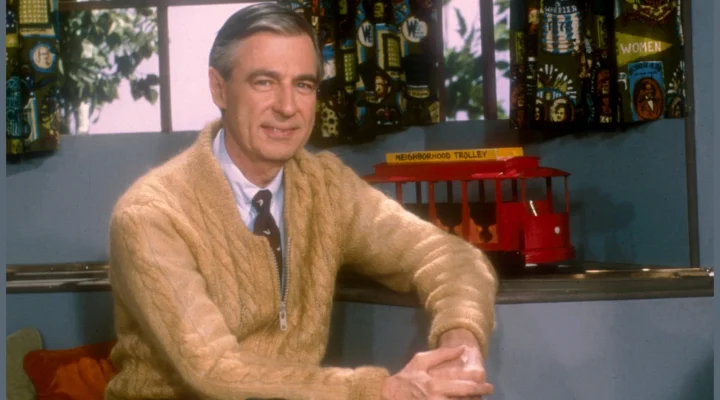
One of the most impactful storylines of 2025 was the assassination of Turning Point USA founder Charlie Kirk on Sept. 10 and the subsequent response on the Right.
As you’ll probably notice this week, a number of BNG’s most-read articles of the year were about how Christians were processing Kirk’s life and message. The most downloaded podcast episode on BNG’s “Highest Power: Church + State” also was about Kirk.
Back in April, Mara Richards Bim wrote an excellent analysis of how Kirk went from college dropout to Trump influencer. Then after Kirk was killed five months later, BNG republished her piece, which helped introduce Kirk to many people who may not have been familiar with the right-wing Christian nationalist provocateur before his death.
The most downloaded podcast episode on BNG’s “Highest Power: Church + State” also was about Kirk.
Rodney Kennedy documented how Kirk’s rhetoric fit into the context of Trumpism and authoritarian Christian theology.
BNG also published articles about Charlie Kirk in his own words, as well as about MAGA supporters of Kirk in their own words.
While white evangelical churches promoted AI videos of Kirk in heaven talking to them as a martyr, Joel Bowman revealed how Kirk was no modern-day Martin Luther King Jr. Despite the Right’s attempt to turn Kirk into a college phenom, Mark Wingfield showed how most college students disagreed with Kirk. And Edmond W. Davis broke down how Kirk created the illusion of debate by “bullying underprepared college kids.”
With all the harm Kirk caused, many progressive Christians were struggling with whether or not to rejoice that such a harmful person would do no more harm while at the same time condemning his murder.
Given how so many people who claim to be committed Christians have such different takes on Kirk, one of the questions going into 2026 will be how Christians allow their faith to inform their posture toward their neighbors. Will Christians focus more on loving their neighbors or on protecting their brand?

AI-generated video of Charlie Kirk with Christian martyrs in heaven.
Threatening the Left
When President Donald Trump, Deputy Chief of Staff Stephen Miller and other right-wing bomb throwers responded to Kirk’s assassination by blaming the Left and threatening to tear down any organization they considered to be extreme, many progressives rightly became concerned.
Miller confirmed earlier this month on X that “vast government resources have been unleashed to find and dismantle the violent fifth column of domestic terrorists clandestinely operating inside the United States.”
“Ever since Kirk’s assassination, the Right has been talking about targeting ‘the enemy within.’”
In a memo obtained by journalist Ken Klippenstein and confirmed by the Washington Post, the Department of Justice is working on a plan to target people or organizations who the Trump administration considers to be promoting “anti-Americanism,” “anti-capitalism,” “anti-Christianity,” “opposition to law and immigration enforcement,” “radical gender ideology” and “hostility toward traditional views on family, religion and morality.”
Apparently to the Right, affirming LGBTQ people is now considered equivalent to promoting terrorism.
According to the Washington Post, many are concerned this memo “could land large numbers of liberal activists on government watch lists and chill Americans’ First Amendment right to protest the administration’s policies.”
Ever since Kirk’s assassination, the Right has been talking about targeting “the enemy within.” Erika Kirk went so far as to tell CBS News, “We are living in enemy-occupied territory,” followed by her signature stone cold stare that creeps a lot of people out. Then in what many interpreted as a thinly veiled threat, she added, “You cannot separate the Old Testament from the New Testament. You cannot.”
But while many on the right define “the enemy within” as referring to Democrats, Republican influencers who noticed Kirk’s empty chair began defining it as referring to one another.
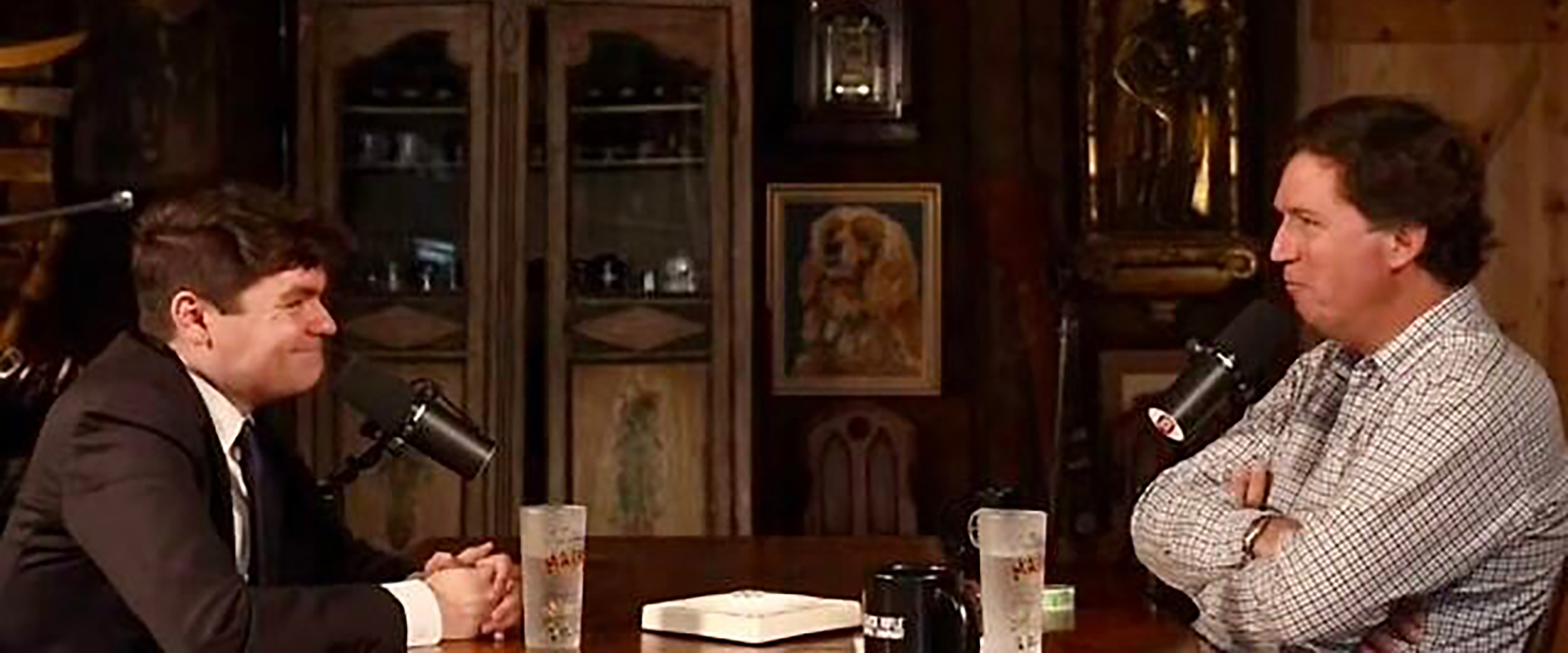
Nick Fuentes and Tucker Carlson (screecap)
The battle of the brands
Weeks before Kirk’s assassination, Nick Fuentes claimed Kirk was on Israel’s payroll. Regarding Turning Point USA, Fuentes addressed Kirk, saying: “We own you. We own Turning Point USA. We own this movement. … That’s something you’ll have to tell your children, when Nick Fuentes became the future, when the Groypers took over the movement … did you go down swinging? Or did you go down like a bitch? Did you run and hide? That’s the only thing, when you’re explaining that to your family, Mr. Family Man.”
A few weeks later, Kirk was dead.
Then Tucker Carlson interviewed Fuentes, without grilling Fuentes on all the statements he’s made about how Hitler and Stalin were cool.
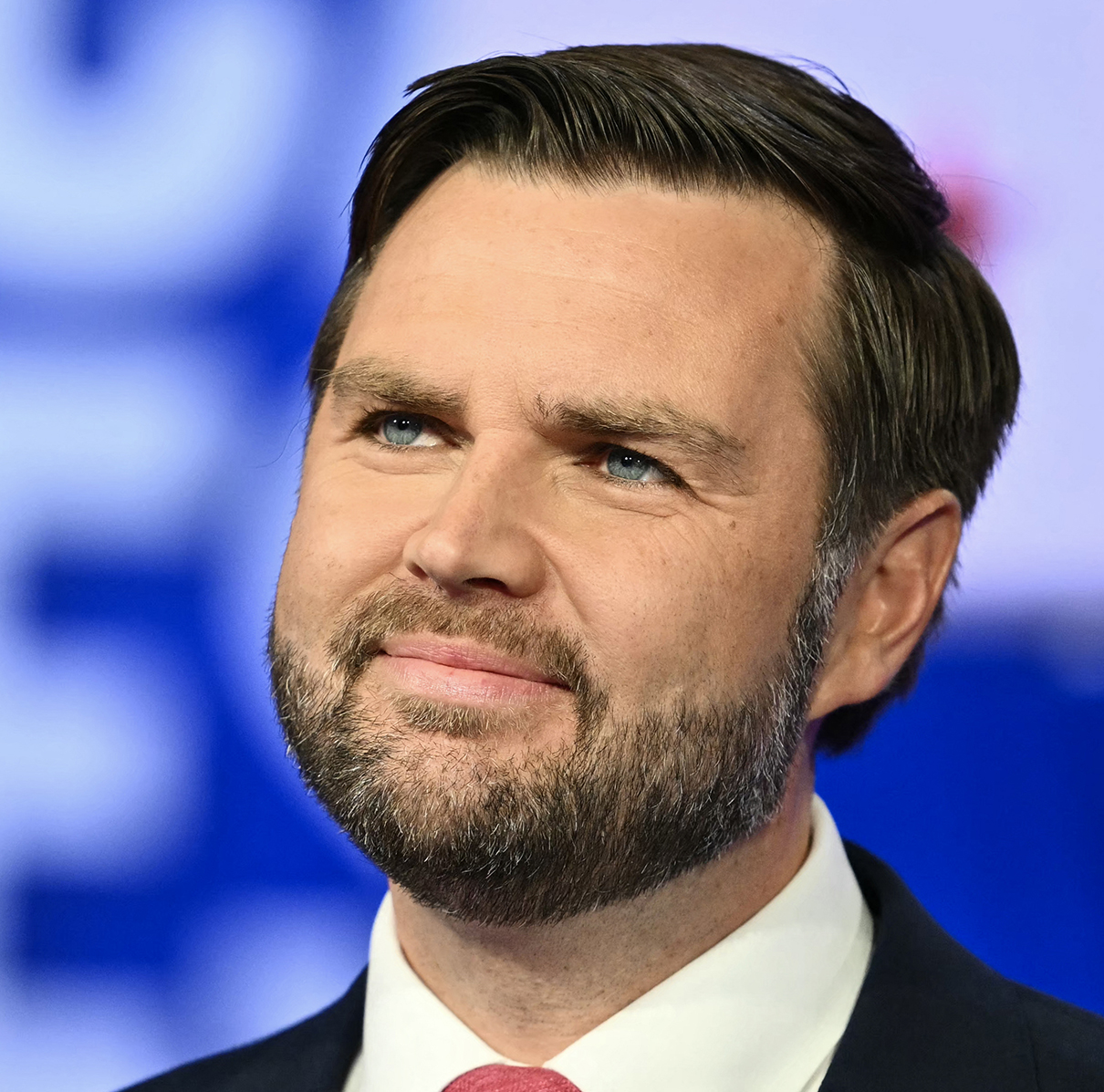
JD Vance speaks during the vice residential debate October 1, 2024. (Photo by ANGELA WEISS/AFP via Getty Images)
Vice President JD Vance weighed in, not wanting to cancel Carlson for interviewing Fuentes. Then Vance dismissed concerns about leaked texts containing pro-Nazi rhetoric among young Republicans.
Pastor Mark Driscoll took to his social media feeds, claiming to have received a prophetic vision during worship where he “saw Charlie ascend into the sky like a magnet and I saw a bunch of pieces of metal gathering and being collected up under that magnet.”
Candace Owens tapped into the Israel storyline and began talking about whether or not Israel arranged to have Kirk assassinated due to Kirk possibly changing his mind on support for Israel’s war in Gaza. She even stumbled upon my 2023 article about the January 6 insurrection and discussed it on her show.
Erika Kirk became so upset about it all that she took a break from her media tour to confront Owens personally.
Then Megyn Kelly revealed at Turning Point’s AmericaFest that all the fighting on the right has led her to pray to Charlie Kirk for guidance. “I’ve prayed so many times to Charlie and to God to give me the right guidance on how to handle this whole thing — the fracture within the conservative movement, my friends turning on me because I won’t call out my other friends like Tucker, this dustup between Candace and Erika and Turning Point and Candace.”

Donald Trump shakes hands with Turning Point CEO Charlie Kirk before speaking during the Turning Point USA Student Action Summit, Saturday, July 23, 2022, in Tampa, Fla. (AP Photo/Phelan M. Ebenhack)
Charlie Kirk’s brand-driven Christianity
With everyone on the right pushing their brands while arguing about Israel in the wake of Kirk’s murder, one might wonder what Kirk would think about it all. One way to find this out could be to generate an AI video of him, since conservatives have been creating post-death AI videos of Kirk and even of George Washington in recent months. Another idea would be to pray to Kirk for guidance, as Megyn Kelly likes to do.
Or perhaps, we could simply reflect on Kirk’s own words.
During one of his public debates, Kirk was approached by a Palestinian Christian who completely caught him off guard by challenging some of Kirk’s assumptions about Muslims’ treatment of Christians based on his personal experience as a Palestinian Christian with family in the Middle East.
Kirk asked him, “As a Christian, do you think that it’s better for Christianity to have Israel controlled by Jews or Israel controlled by Muslims? What’s better for Christianity?”
Kirk’s question gets to the heart of the problem we’re seeing among all these right-wing brands posturing for power in the wake of his murder this year, as well as with Christian nationalists as a whole.
Kirk didn’t ask what’s better for his neighbors. He asked what’s better for Christianity. And by Christianity, he meant his particular brand of Christianity. As historian Jemar Tisby wrote over the weekend: “White Christian nationalism doesn’t protect Christians. It decides which ones deserve protections and which ones can be discarded.”
“Where does the Bible call Christians to make things better for Christianity?”
If Kirk’s Christianity was about loving your neighbor as yourself, then why would his primary motivation be controlling his neighbors’ political dynamics in order to make things better for Christianity? Where does the Bible call Christians to make things better for Christianity? And what does “Christianity” even mean?
Regardless of the Right’s attempt to colonize Christianity with the political rhetoric of white conservatives, the truth is that there is no univocal thing called Christianity. There are people who call themselves Christians who wield theology to protect their brands by bolstering their own power over their neighbors. There are others who call themselves Christians who invoke theology to inspire liberation and foster wholeness through love of neighbor as self. And there are spectrums of people calling themselves Christians in various stages of growth in between.
Kirk’s framing of that question reveals how flawed his understanding of Christianity actually was. He wasn’t following Jesus. He was advancing a brand.
I couldn’t care less about what’s better for Christianity.
I care about what’s good for my neighbors, which includes Democrats and Republicans, Christians and non-Christians, Israelis and Palestinians. For any of us to embody a presence of healing in the world in 2026, we’re going to have to stop following Kirk’s example of brand building and start taking seriously the call to love our neighbors as ourselves.
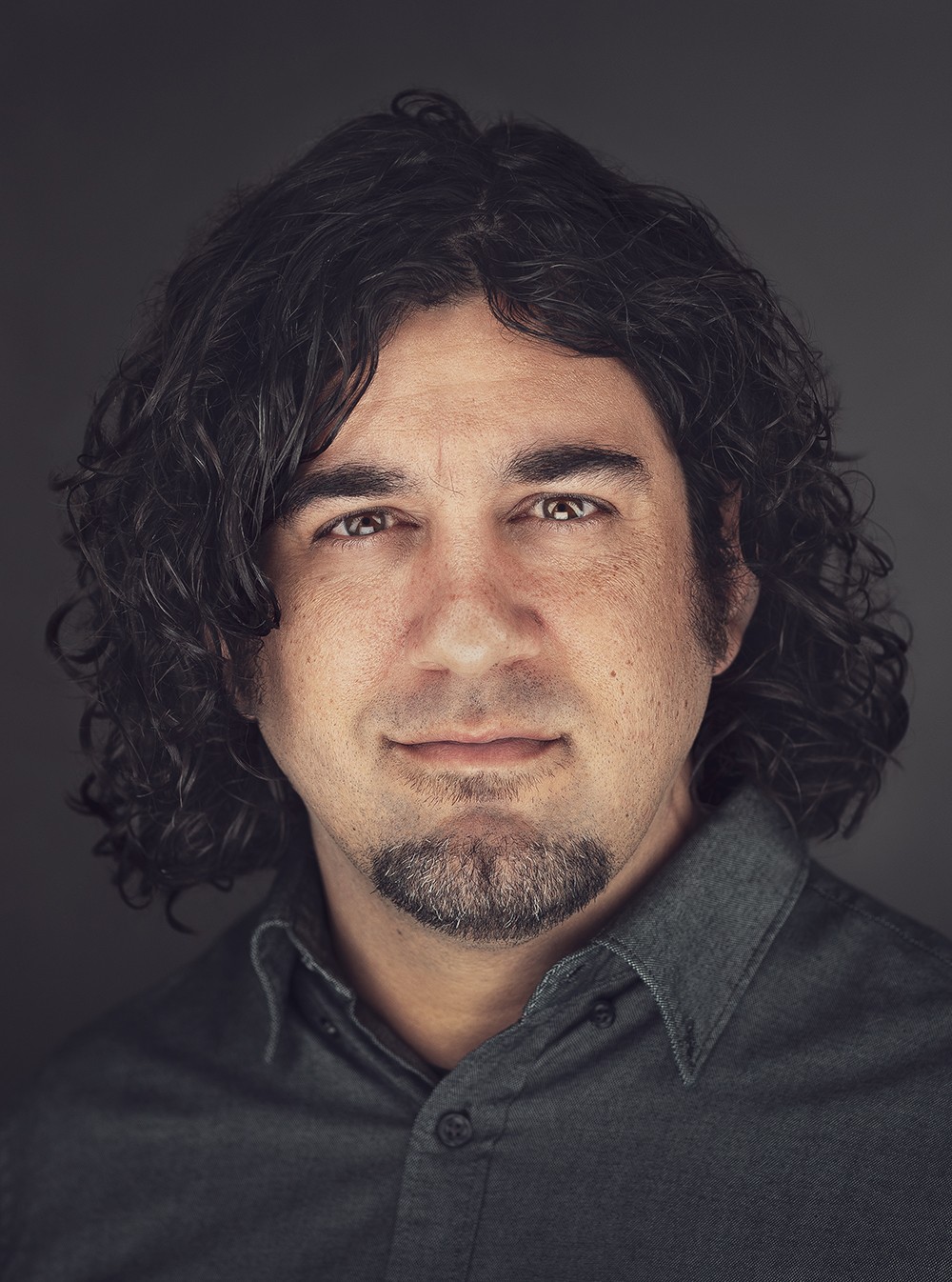
Rick Pidcock
Rick Pidcock is a 2004 graduate of Bob Jones University, with a Bachelor of Arts degree in Bible. He’s a freelance writer based in South Carolina and a former Clemons Fellow with BNG. He completed a Master of Arts degree in worship from Northern Seminary. He is a stay-at-home father of five children and produces music under the artist name Provoke Wonder. Follow his blog at www.rickpidcock.com.