

It is hard to believe we are now marking the fifth anniversary of one of the most shameful days in American history.
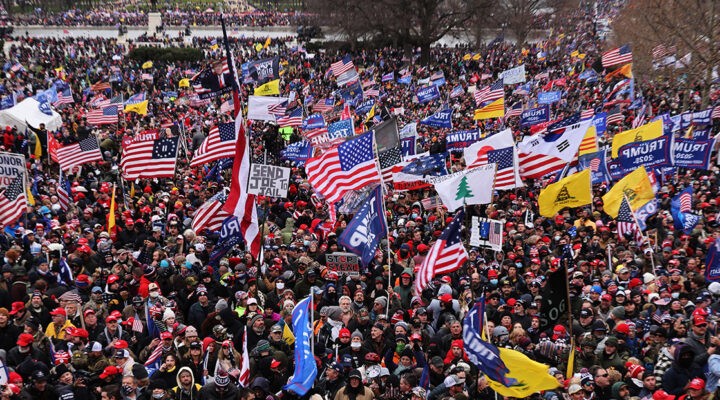
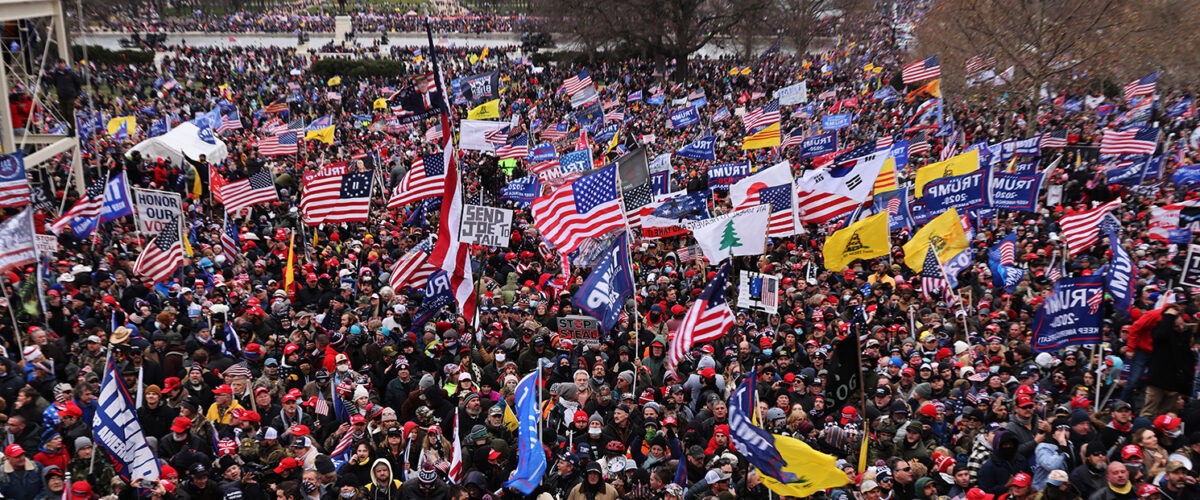
On January 6, 2021, President Donald Trump incited a violent insurrection at the United States Capitol that resulted in more than 140 law enforcement officers being injured and at least five deaths.
The insurrection was a modern “remix” of the Confederate Lost Cause. A remix is simply a new version of an old song. In this case, the Lost Cause is a familiar tune — one that has been sung, replayed and repackaged across generations of American history.
Joel Bowman
The Lost Cause is a false, romanticized narrative that portrays Confederate leaders as heroic and their cause as noble. Adherents to this myth insist the Civil War was fought over “states’ rights,” rather than the preservation of slavery. They often refer to the conflict as the “War of Northern Aggression,” deliberately obscuring the moral and historical truth.
The Lost Cause was designed to whitewash the brutality of American slavery and to undermine the progress Black Americans made during Reconstruction. Tragically, those who spread this false gospel were largely successful. As Bryan Stevenson, founder and executive director of the Equal Justice Initiative, has observed, “While the North won the Civil War, the South won the narrative war.”
“In the past five years, the January 6 insurrection has become the Lost Cause of our time.”
In the past five years, the January 6 insurrection has become the Lost Cause of our time. Like its predecessor, it is rooted in three destructive forces: false reality, white supremacy and bad theology.
False reality
Like the original Lost Cause, the insurrection and its aftermath were grounded in a fabricated reality.
Trump refused to accept the fact that he lost the 2020 presidential election to Joe Biden. Instead, he relentlessly promoted the “Big Lie” that the election had been stolen. This falsehood — amplified by Trump and echoed by right-wing media outlets such as Fox “News” — became the foundation upon which the insurrection was built.
In the immediate aftermath of January 6, many Republican leaders advanced baseless conspiracy theories. Some claimed Antifa or Black Lives Matter activists were responsible for the violence. Others alleged the attack was a “false flag” operation orchestrated by the FBI to entrap peaceful protesters.
When it became undeniable that Trump supporters were responsible for the breach of the Capitol, the narrative shifted yet again. The insurrectionists were recast as “patriots” who had merely come to protest a supposedly fraudulent election.
After more than 1,500 individuals were arrested, Trump and his allies began referring to them as “J6 hostages” or “political prisoners.” Every Lost Cause needs its martyrs, and these individuals were elevated to that role.
“Every Lost Cause needs its martyrs, and these individuals were elevated to that role.”
On the first day of his second term, Trump compounded the historical revisionism by issuing a blanket pardon to all of his supporters who participated in the insurrection.
As a result, there is now no shared national understanding of what occurred on January 6. We are living in two competing realities — one rooted in truth, the other sustained by deliberate falsehood.
White supremacy
Like the Confederate Lost Cause, the January 6 insurrection was deeply rooted in white supremacy.
The mob that stormed the Capitol was overwhelmingly white. Ninety-one percent of those charged in connection with the insurrection were white. Several right-wing extremist organizations were prominently represented, and members of these groups did not merely attend the event; they helped plan and organize it. Many of these organizations can accurately be described as white nationalist or white nationalist adjacent.
One of the most disturbing images from January 6 was that of Kevin Seefried parading a large Confederate flag through the halls of the Capitol. He was not alone. The Confederate flag, long associated with racial terror and white supremacy, had no legitimate place in the seat of American democracy — yet there it was, a visual bridge between the past and the present.
Civil rights leader Ben Jealous captured this connection clearly when he said, “Trump’s claim that his victory was stolen by Black and brown voters in corrupt cities was the lie that fueled insurrectionists’ rage. Republicans who deny or downplay the insurrectionists’ attempt to overturn the presidential election are creating their own Lost Cause ideology.”
“Trump’s claim that his victory was stolen by Black and brown voters in corrupt cities was the lie that fueled insurrectionists’ rage.”
Bad theology
The insurrection also was rooted in bad theology — an especially dangerous form of belief that sanctifies power, privileges some over others and baptizes injustice. This theology provided the ultimate permission structure for the violence witnessed on January 6.
Many rioters were animated by the ideology of Christian nationalism. They carried Christian flags, “Appeal to Heaven” banners and signs declaring, “Trump Is President. Jesus Is King.”
Sociologists Samuel L. Perry and Andrew L. Whitehead define Christian nationalism as an ideology that idealizes and advocates a fusion of Christianity with American civic identity and political life. It encompasses various forms of politically and culturally conservative Christianity that place a high premium on white identity — versions of faith that stand in direct contradiction to the teachings of Jesus Christ.
Some of these expressions are found within segments of the broader evangelical movement, including adherents of the New Apostolic Reformation and others who promote “Seven Mountains” dominion theology.
These groups seek a theocratic form of government and were among the earliest and most fervent supporters of Trump, whom they viewed as divinely chosen.
Many of their leaders and followers were prominently involved in the insurrection.
Historian and author Jemar Tisby has rightly called Christian nationalism “the greatest threat to democracy and the witness of the Church today.”
Truth as a moral reckoning
January 6 confronts the nation with an unavoidable question: Will we choose truth, or will we continue to live comfortably inside lies?
“Will we choose truth, or will we continue to live comfortably inside lies?”
History teaches us societies rarely collapse all at once. They erode slowly, as falsehoods are normalized, accountability is abandoned and moral clarity is traded for political expediency.
The danger of a post-truth society is not simply that people disagree about facts, but that truth itself is treated as disposable — something to be bent, revised or rejected when it becomes inconvenient.
The Lost Cause of the Confederacy survived not because it was true, but because it was useful. It soothed wounded pride, preserved racial hierarchy and excused injustice. In much the same way, the revisionist narratives surrounding January 6 liars persist because they serve power, protect privilege and absolve wrongdoing. But lies that go unchallenged do not remain harmless; they metastasize. They shape memory, harden hearts and prepare the ground for future violence.
Truth-telling, therefore, is not an act of partisanship — it is an act of patriotism. It is also a moral and spiritual discipline. For people of faith, truth is not merely a factual category; it is a theological one. Scripture consistently portrays truth as liberating, while deception enslaves. Any theology that sanctifies lies, blesses domination or excuses violence in the name of God is not only false — it is dangerous.
America cannot move forward by remixing its lies or rebranding its myths. Healing requires honesty. Democracy requires memory. Justice requires courage.
If we refuse to tell the truth about January 6 — about what happened, why it happened and what it reveals about us — we ensure it will not be the last time such an assault occurs. The choice before us is stark: We can confront the truth and reckon with it, or we can cling to false causes and repeat the tragedies they inevitably produce. History will record which path we choose.
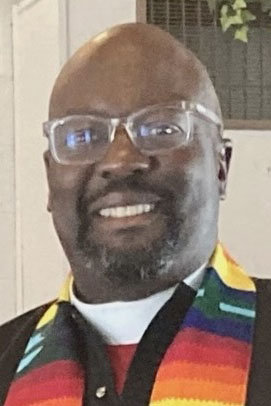
Joel A. Bowman Sr. is a native of Detroit who serves as founding pastor of Temple of Faith Baptist Church in Louisville, Ky. He also maintains a full-time practice as a licensed clinical social worker. He is the co-host of a new podcast called “Sins of our Fathers” with Matthew Pridgen.
Related articles:
Trump’s false narrative on January 6 is gaining traction | Analysis by Mark Wingfield
Pastors respond to unbelievable events at Capitol on Epiphany 2021
It’s past time to admit the hard truths behind the Capitol riots | Opinion by Wendell Griffen
Denominational leaders denounce Capitol violence while evangelicals offer mixed responses
Broken churches, broken nation: Will evangelicals ‘recalculate’ or rebel? | Opinion by Bill Leonard