



I rarely read an op-ed by John Pavlovitz without exclaiming, “I wish I had written that!”
That was especially true when I saw his Dec. 5 piece on “America’s Divide Isn’t About Politics Anymore.” I may not be able to claim to have written it, but I certainly am allowed to riff on it. Call it “variations on a theme.”
Our differences are not merely matters of differing party affiliation or political beliefs. Deep beneath the many differences between Trumpers and anti-Trumpers is a more fundamental difference. Pavlovitz asserts our differences are not political but rather about what our response will be when we are faced with suffering and injustice: “Will we … default to compassion or to cruelty?”
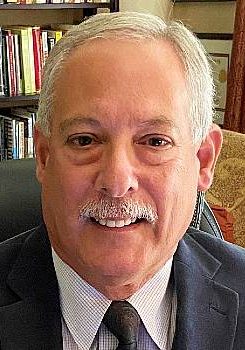
Andrew Manis
How we answer that question reveals the deep-down orientation of our hearts, your hearts, my heart.
Pavlovitz asks, “Will we be bleeding heart empaths who err on the side of love toward all our neighbors, or calloused … sociopaths who rejoice in the pain of others because we’ve dehumanized them to the point that their lives are worthless to us?”
Then comes his stark conclusion: “We’re not politically divided; we are morally fractured.”
“No one who is calloused to the pain of others can claim to be in a very high spiritual condition.”
For Christians, however, being morally fractured is to be theologically and spiritually fractured as well. After all, whether we are Christian, Buddhist, Hindu, Muslim, Taoist or a humanist, no one who is calloused to the pain of others can claim to be in a very high spiritual condition.
More crucially for Christians, one who has dehumanized others to the point of worthlessness is clearly not following Jesus of Nazareth very closely, if at all. And no amount of singing about the “Baby Jesus” can change that verdict.
In November, the current president of the United States issued an official Thanksgiving Day proclamation adopting traditional presidential themes of unity and divine blessings. He took a different tone, however, in his late-night post on Truth Social. That Thanksgiving “proclamation” included attacks on enemy political figures and concluded, “HAPPY THANKSGIVING TO ALL, except those that hate, steal, murder and destroy everything that America stands for — You won’t be here for long!”
When a president issues a private Thanksgiving message to his followers that pours damning hate upon his enemies, and then follows a week or two later with a dedication of the White House Christmas Tree quoting the “beautiful words” of the Gospel of John, but spends roughly twice as much time bloviating and beating his chest in celebration of his own questionable “accomplishments,” we are witnessing a presidential example of moral and spiritual fracture.
But Pavlovitz’s mention of the dehumanization of human beings reminds me of a comment by reader Beth Bergheim, whose father back during the Nixon administration often said, “Democrats are selfless, Republicans are selfish.” Bergheim then wonders how much lower we have fallen “with the difference between empaths and sociopaths.”
Nixon had, of course, campaigned against the Civil Rights Movement and his campaign managers created the “Southern Strategy” of wooing Southern white voters disgruntled about the alliance between the Democrats and the aims of heroes like Martin Luther King, Fred Shuttlesworth, John Lewis, Diane Nash, Ella Baker and Fannie Lou Hamer.
“On the eve of our 250th birthday, our score on the dehumanization scale is still tragically high.”
But frankly I’m not so sure as a nation we have fallen all that far. Because on the eve of our 250th birthday, our score on the dehumanization scale is still tragically high. Were we empaths or sociopaths when we white Europeans dehumanized African-descended and Native American peoples into plantations (later called concentration camps in Nazi Germany)? To dehumanize Africans and Native Americans made it much easier for those of us with tender consciences to justify our oppression by refusing to see the image of God in our victims and thus committed them to 400 years of chattel and hereditary slavery.
Another century brought “Indian” removal, the Trail of Tears and reservations. Next came European immigrants who became the objects of our scorn because they were less Protestant, less white and less able to speak English. Then came Chinese Exclusion (1882) and still later FDR’s Japanese internment. But through it all, the dehumanization and white supremacy persevered, even while changing forms as needs required from slavery to segregation to modern America’s disgraceful record of Black incarceration in the post-Civil Rights eras.
And now, has our record improved under a 34-time convicted felon who paraded his white supremacy and misogyny in a presidential campaign against Kamala Harris? Is there any moral or spiritual improvement when the first Trump administration halted replacing the image of Andrew Jackson — a slave-holding president who censored antislavery mailings and gave enslavers more land for more slavery by removing the Cherokee people from the South — with the image of Harriet Tubman on the $20 bill?
This partial list of insults is much shorter than it could be:
- Trump’s belittling of people, especially women of color, in Congress from 2019 to the present.
- Trump’s eagerness to send the National Guard to quell Black Lives Matter protests after the shooting of George Floyd in 2020. He also used the slogan, “When the looting starts, the shooting starts” and referred to protesters as “thugs,” typically a “polite” way of saying the N-word.
- His immigration policies have targeted Black and brown migrants from, in his words, “shithole countries” like Somalia or Mexico. He also said he preferred immigration from whiter countries like Norway or Sweden.
- During the 2024 presidential campaign, he applied Hitler’s favorite term for Jews as “vermin” to contemporary immigrants who would “poison the nation’s bloodstream.”
- His long history of support for monuments to the Confederacy and his refusal to denounce the Klan or other hate groups in America.
- His tendency to equate Muslims with terrorists while ignoring the growing prominence of homegrown hate or white supremacist groups.
- Trump’s National Parks Service announced plans to remove the “fee-free day” status from the Martin Luther King Jr. holiday and Juneteenth, only to replace them with Flag Day as a “fee free day.” Flag Day also just happens to be Trump’s birthday.
Ever noticed how often the victims of Trump’s mischief have black or brown complexions?
Of course, Trump is not alone in his white supremacy, with many Congressional Republicans and evangelical church people as willing accomplices, As John Pavlovitz also has perceptively noted, “Trump supporters have lost the ability to love anyone but him and themselves.”
“At the heart of our spiritual fracture was the white supremacy embedded even in our own Revolution.”
At the heart of our spiritual fracture was the white supremacy embedded even in our own Revolution. (See Ken Burns’ new documentary on the American Revolution.)
As a religious and civil rights historian from Birmingham, Ala., where the Civil Rights Movement had its most important turning point, my moral gyroscope is inevitably attuned to our nation’s “Great Matter” race. It is our original sin that morally and spiritually fractured our still unperfected union.
A friend of mine, also from Birmingham, recently sent me a recording of a song called Born with a Wound, by Jeff Clayton, also a minister and Birmingham native. Clayton sings plaintively:
Born with a wound I did not know;
Born with a wound, it did not show.
The wound runs deep, as deep as the soul.
It’s lying in wait. It won’t let me go.
Words of hate from ages past
Sounding still now, a damage that lasts
When I was a child, those words came to me
Tryin’ to teach me how the world’s supposed to be.
Born with a wound, I did not know.
Born with a wound. It did not show.
It is a haunting song. Might its power move us toward repentance and repair? Maybe even reparation? One can hope so. We can all so hope.
Andrew M. Manis earned a Ph.D. in American religious history at Southern Baptist Theological Seminary in Louisville, Ky., and is retired professor of history at Middle Georgia State University in Macon, Ga. He also is author of A Fire You Can’t Put Out: The Civil Rights Life of Birmingham’s Rev. Fred Shuttlesworth, which is soon to be a documentary film by Mercy Pictures.