

A coalition of conservation, history and scientific organizations is suing the Trump administration to stop its ongoing efforts to censor displays and monuments in the federal park system.
The National Parks Conservation Association and Union of Concerned Scientists were among six groups to sue the U.S. Department of the Interior and the National Park Service Feb. 17.

Alan Spears
“In filing this litigation together, we are taking a stand for the soul of our national parks. Censoring science and erasing America’s history at national parks are direct threats to everything these amazing places, and our country, stand for,” said Alan Spears, senior director of cultural resources for the conservation organization. “We will not watch idly as the Department of the Interior distorts accurate, inclusive storytelling at national parks. We will see the administration in court.”
The action has its origins in President Donald Trump’s March 2025 executive order directing the removal of references to racism and oppression in American history from all displays, markers, monuments and statues erected in U.S. parks and museums. Interior Secretary Doug Burgum followed by ordering the National Parks Service to “review property for inappropriate content” and for tourists to report any signs or markers containing “negative” information about U.S. history.
The service wasted no time and launched a series of actions, including:
- Removing a slavery exhibit from The President’s House Site in the Independence National Historical Park Philadelphia. However, the city sued NPS over the removal and a federal judge ordered the exhibit to be restored. The Interior Department has appealed the order.
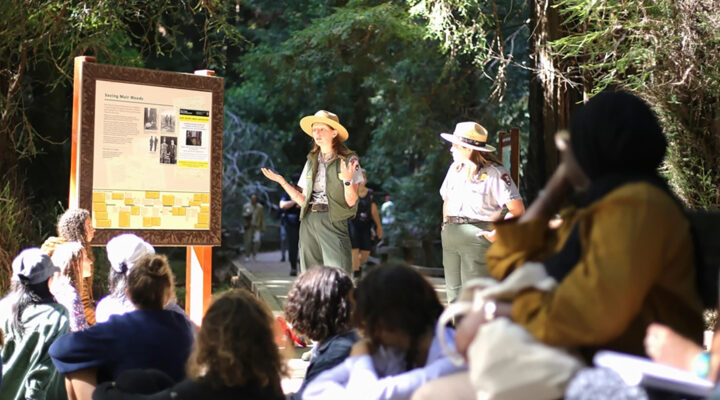
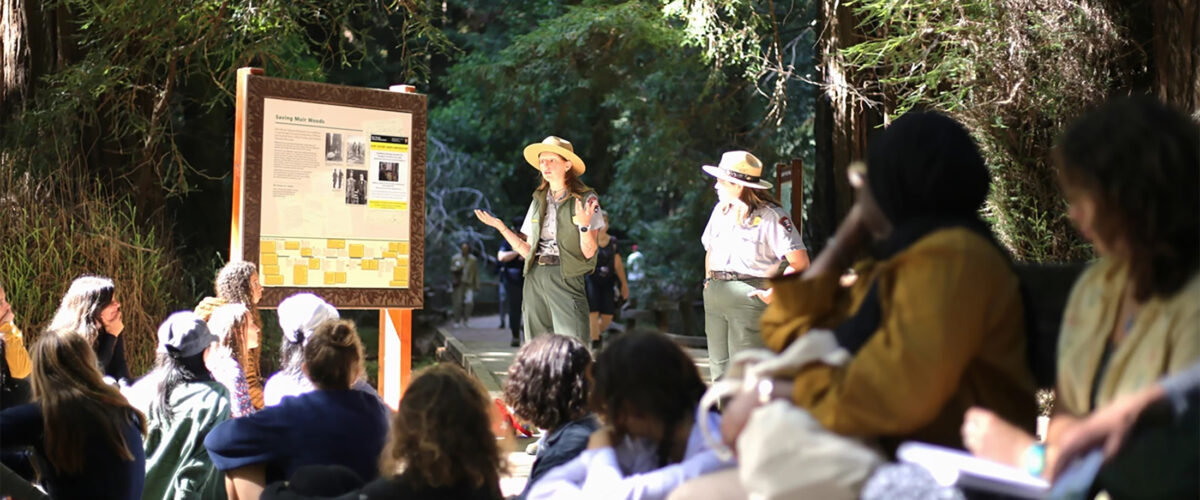
- Altering the now-removed “History Under Construction” exhibit at Muir Woods in Golden Gate National Park in California. The display featured references to indigenous history, the role of women in conservation and the participation of parks service staff in the eugenics movement.
- Blocking films on labor history at Lowell National Historical Park in Massachusetts.
- Removal of an exhibit on climate change and women’s history at Jamaica Bay Wildlife Refuge at the Gateway National Recreation Area in New York.
- Taking down history and science displays at Acadia National Park in Maine.
- Marking historical displays for removal from Civil Rights locations including the Selma to Montgomery National Historic Trail in Alabama and the Brown v. Board of Education National Historical Park in Kansas.
- Denying scientific discoveries by removing descriptions of pollution of wetlands at Everglades National Park in Florida and designating for removal references to global warming and endangered species at Organ Pipe Cactus National Monument in Arizona.
- Removing or flagging for removal historical information about the mistreatment of indigenous Americans from sites such as Sitka National Historical Park in Alaska, Bent’s Old Fort National Historic Site in Colorado and Little Bighorn Battlefield National Monument in Montana.

Tourists inspect a display titled “The Dirty Business of Slavery” at the President’s House in Philadelphia. The display has been removed by the Trump administration. (Photo by Matthew Hatcher/Getty Images)
Filed in federal court in Massachusetts, National Parks Conservation Association v. U.S. Department of the Interior seeks to preserve monuments and displays that remain and to restore those that have been removed.
The suit also argues the administration violated federal law in how the parks system is to be operated, did not provide information on why certain installations have been removed and failed to provide opportunities for public input.
The suit claims: “The orders and resulting implementation actions ignore Congress’ mandate for how the parks must be managed; erase the history of countless people and communities from public spaces; limit the availability of scientific information relevant to ensuring the long-term preservation of the parks themselves; and impair the mission of the National Park Service to preserve the parks ‘for the enjoyment, education, and inspiration of this and future generations.’”
The American Association for State and Local History, the Association of National Park Rangers, the Coalition to Protect America’s National Parks and the Society for Experiential Graphic Design are co-plaintiffs with the conservation and science groups. They are represented by Democracy Forward.

Skye Perryman
“You cannot tell the story of America without recognizing both the beauty and the tragedy of our history. You cannot truly love America without understanding our country’s true history and what it teaches about the country we must work together to build and the country we can be,” said Democracy Forward President Skye Perryman. “The president’s effort to erase history and science in our national parks violates federal law and is a disgrace that neither honors our country’s legacy nor its future.”
The public needs reliable scientific information about climate change from the government, said Gretchen Goldman, president of the Union of Concerned Scientists.
“Such censorship by the Trump administration is not only bullying behavior designed to instill a culture of fear and keep the public in the dark, it violates the law. Iconic landscapes and cultural heritage sites across the country are already feeling the impacts of climate change. Ignoring the science and data won’t pause climate change and will instead leave our historical and cultural treasures in peril,” Goldman said.
Current and former national parks employees are frustrated after working diligently for years to tell the history of national parks, said Bill Wade, executive director of the Association of National Park Rangers.
“To deprive visitors of those stories, even those we should no longer be proud of, and to give them incomplete information is unthinkable. We want to see this ‘erasure and sanitizing’ of history and science halted and the damage already done repaired.”
Related article:
Thin places, sacred spaces: Why our national parks matter | Opinion by Tyler Tankersley