

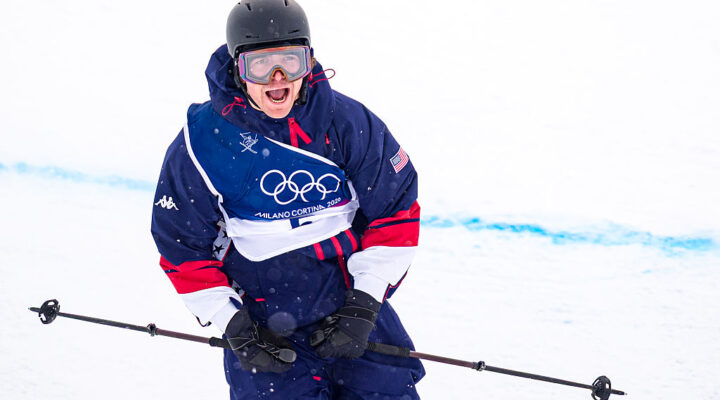
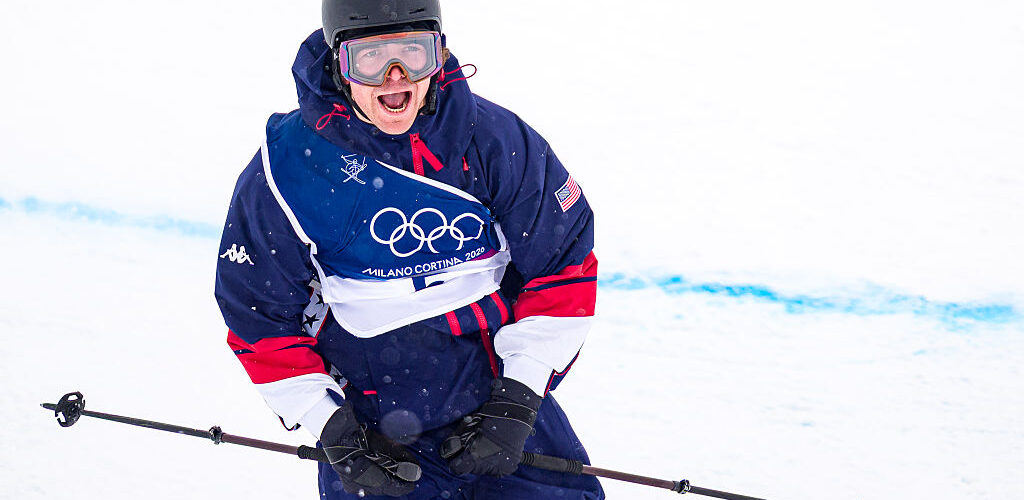
With the Winter Olympics just ended, we have been reminded of the dangers of performative patriotism that cannot tolerate contradiction.
When we demand those who wear the flag speak only in praise, we are not preserving the apolitical nature of sport or presenting the nation as without flaw. Rather, we suppress a deeper love of country that seeks not the glory of its systems or its sports, but the flourishing of all its people.
Perhaps the measure of a nation is not in how loudly it cheers its champions, but how it treats those who dare to tell the truth.
It took less than two days into the Winter Games for the tension of proper patriotism to surface. Responding to a question from the media about representing the United States on the world stage in light of current events in America, Hunter Hess — a U.S. freestyle skier — stated that “it brings up mixed emotions to represent the US right now, I think. … Just because I’m wearing the flag doesn’t mean I represent everything that’s going on in the U.S.”

Josh Olds
Almost immediately, the president of the United States responded, calling Hess “a real Loser.”
Writing on his Truth Social account, Donald Trump claimed the skier “shouldn’t have tried out for the team” and “it’s too bad he’s on it.”
For the Trump regime, being an American Olympian isn’t just about being the top athlete in the country, not even about representing the diversity of America, but about representing the agenda of the White House. Vice President JD Vance said Hess and others should not “show up in a foreign country and attack the president of the United States.” He warned them to expect “pushback” if they “pop off about politics.”
Trump-aligned media immediately took up the cause. Political commentator Michael Knowles, speaking on Fox News, called Hess “the absolute worst of America” and claimed, “This guy hates his country” and “has no place on the Olympic team.”
Republican Rep. Derrick Van Orden wrote that Hess “needs to be stripped of that uniform and sent back home via Arlington National Cemetery” as a reminder of U.S. soldiers who risk their lives for this “entitled, ungrateful ass.”
The criticism got so intense that Hess’ parents revealed they have received threatening phone calls and Hess himself has received death threats.
Meanwhile, Focus on the Family chose to contrast Hess with the “refreshing patriotism” of Jasmine Jones, a U.S. Olympian who isn’t “‘heartbroken’ about recent political decisions or warning about the climate or critiquing the actions of U.S. Immigration and Customs Enforcement” but rather, serves her country as a senior airman in the Air Force.
“The Olympics is a war without bullets.”
The message seems clear: The Olympics is a war without bullets. Toe the line and be good little soldiers. There can be no dissent.
But the Olympics — and sports in general — have a long and storied history of protest. Hess is not the first American Olympian to discover being an elite athlete representing their nation in a specific sport comes not just with the expectation of excellence but the demand of uncritical and absolute allegiance. Most famously, during the 200-meter medal ceremony of the 1968 Summer Olympics, U.S. sprinters Tommie Smith and John Carlos stood with their heads bowed and a black-gloved fist raised to the sky — a silent symbol meant to protest Jim Crow America and segregation throughout the world. Smith later commented: “If I win, I am an American, not a Black American. But if I did something bad, then they would say ‘a Negro’. We are Black and we are proud of being Black. … Black America will understand what we did tonight.”
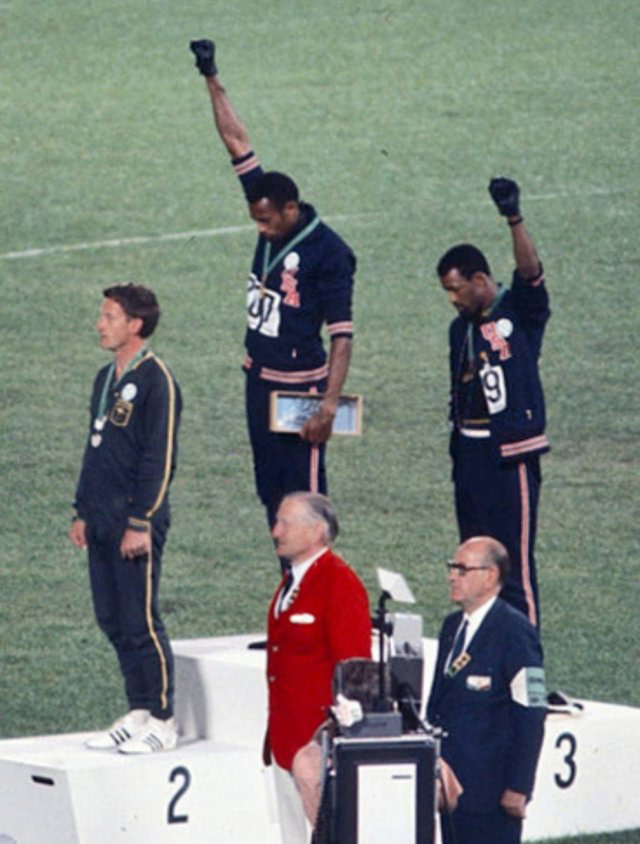
Gold medalist Tommie Smith (center) and bronze medalist John Carlos (right) showing the raised fist on the podium after the 200 m race at the 1968 Summer Olympics; both wear Olympic Project for Human Rights badges. Peter Norman (silver medalist, left) from Australia also wears an OPHR badge in solidarity with Smith and Carlos.
Retribution was swift. Smith and Carlos were expelled from the Games. The IOC claimed their act was a “deliberate and violent breach” of the Olympic spirit. Everett Barnes, head of the U.S. Olympic Committee, condemned the protest, saying “it makes our country look like the devil.”
Los Angeles Times columnist John Hall wrote he was “sick of Smith and Carlos and their whining.”
New York Times columnist Arthur Daley called the protest “disgraceful, insulting and embarrassing.”
Once back home, the athletes found themselves ostracized by American society. They received hate mail and death threats. They struggled to find jobs. Their children were bullied in school. And they were banned from future Olympic Games.
Today, that act of protest is considered one of the most iconic moments of Olympic history.
Almost 60 years later, history is drawing a strange parallel. On one hand, there should be no real comparison between the overtly political and consciously planned protests of Smith and Carlos with the relatively benign and vague comments made by a white skier. On the other, the authoritarian rhetoric in the name of patriotism remains the same.
To some, athletes are tools of the empire meant to showcase dominance and superiority. They are not meant to have opinions that differ from the empire. In a system that demands uncritical allegiance, their refusal to showcase even a performative patriotism was seen as ungrateful, disrespectful and un-American.
The question is not whether politics belong in the Olympics. They always have. The flags, the anthems, the medal counts — these are not neutral symbols but declarations of national identity and power. The question is whether or not the athletes will be permitted to be more than symbols themselves.
Josh Olds is a public theologian and pastor for those disillusioned with institutional church. He is the creator of the small-group video series “Year on the Mountaintop” and a featured contributor to Fostering Hope: A Prayerbook for Fostering and Adoptive Parents. Follow his work on Facebook or at JoshOlds.com.