

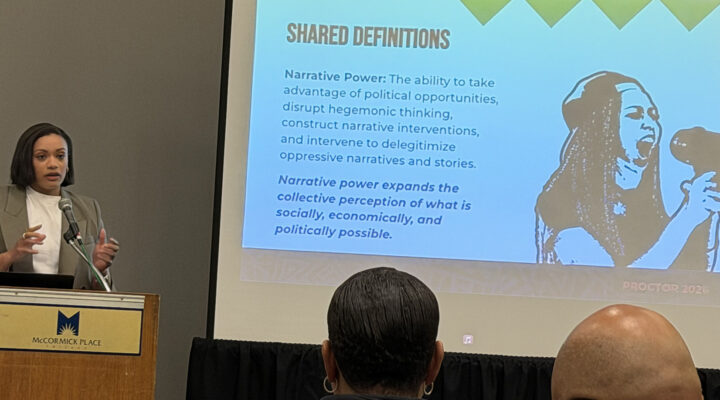
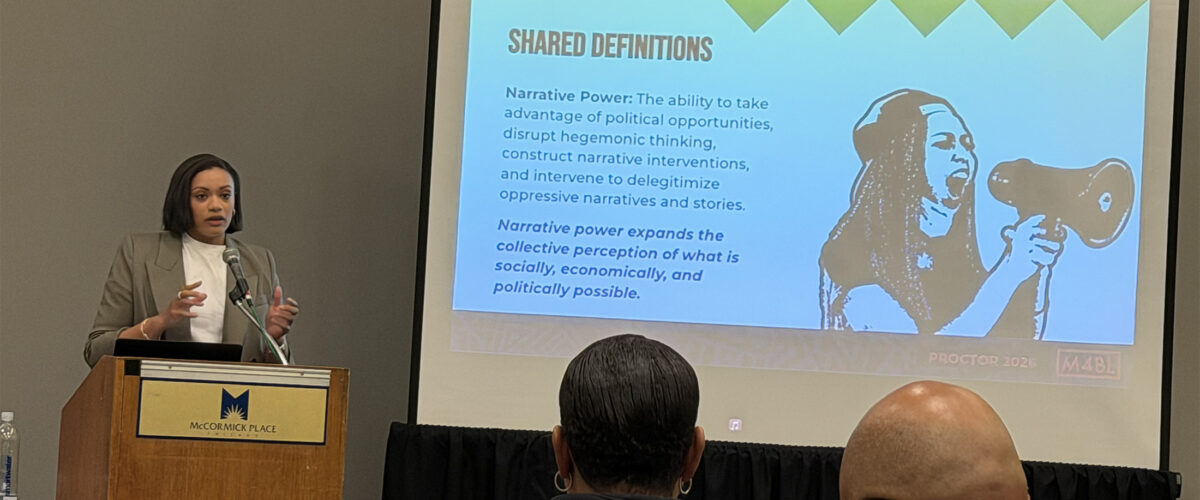
The Black Church is not a single story but is a tapestry of stories that must be heard in context, speakers said at the Samuel DeWitt Proctor Conference Feb. 23-26 in Chicago.
In session after session, speakers returned to the importance of narrative in bringing about change in the church and nation.
A narrative is a combination of stories that tell a bigger picture, said Chelsea Fuller, a workshop leader who is senior strategist and managing partner with Black Alder and is known for her work inside Movement for Black Lives.
Think about a mosaic, she said. “Mosaics are big, beautiful pictures that from a distance tell one story. They give you one image, but if you look closely at a mosaic, there’s individual, itty-bitty little pieces of glass or ceramic or whatever that actually contribute to the bigger picture you see.”
While people often want to tell seamless and flawless stories, “there’s nuance and complexity in our stories,” she explained
Narratives shape political movements, Fuller said. “Narrative power is the use of story to shift our reality and to make interventions that change the way people see themselves, see the world, see issues, and how we interact with one another. We know there never has been significant change in this country or anywhere without narrative power.”
That means “there is no narrative change without narrative power.”
“There is no narrative change without narrative power.”
Just telling a story doesn’t mean it will create change, she explained. “You can see a message blasted out so many times that you would think it’s actually really powerful or it’s creating narrative change. That’s not always the case. There is no way for us to actually create narrative change, which happens over a longer-term period of time, without having built some form of narrative power. And we build narrative power when we are delegitimizing existing power infrastructures.”
False narratives need to be challenged, she said. But there’s more than one way to do so. Those include challenging false stories and also telling better stories to replace the false narratives.
Also, the “narrative terrain” changes with time, Fuller said. The present narrative terrain is different right now than it was a year ago or even a month ago. “The hard work is that you can have a brilliant strategy that makes sense and you could have to change it like that.”
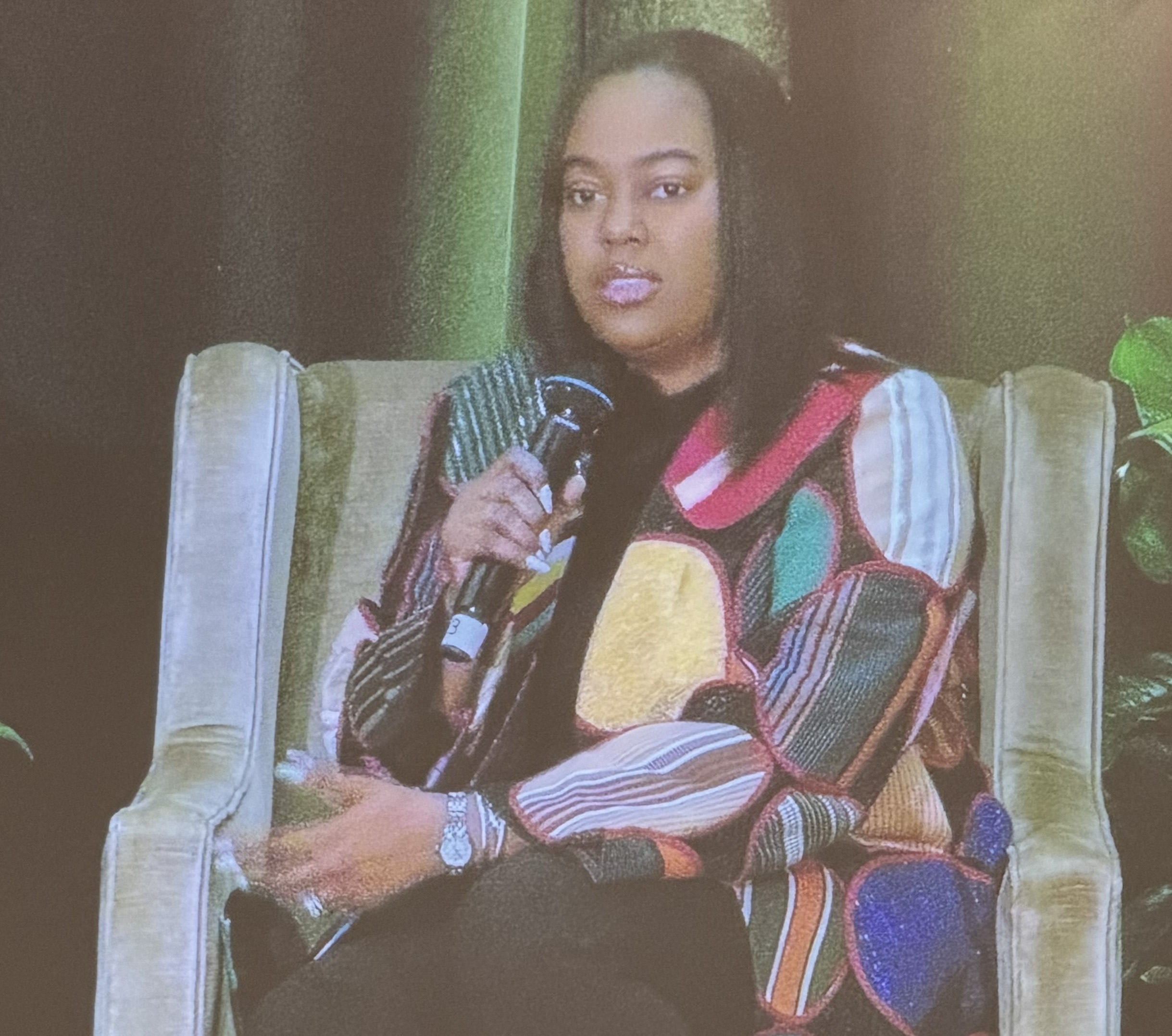
Gabby Cudjoe Wilkes
The theme of narratives was picked up in a later general session by Ciera Bates-Chamberlain, founder and executive director of Live Free Chicago-Live Free Illinois, and Gabby Cudjoe Wilkes, a brand strategist, event planner and pastor in Brooklyn, N.Y. Their conversation was moderated by Mark Thompson, host of the “Make It Plain” podcast and a 40-year veteran in civil rights activism and broadcasting.
Wilkes referenced a TED Talk by Chimamanda Ngozi Adichie on the dangers of telling only one story. The problem with telling one story is not that it is incorrect, but that it is incomplete,” she explained. “You can always find somebody’s single story you want to tell, but it would never be expansive enough to incorporate everyone.”
Also, “If you tell the single story about a people group enough times, that is who the people group becomes over time. And so that is my concern, that we are allowing the Black Church to be packaged into a single story of bigotry and hate and conservatism without care. And we … must push against that single story.”
Bates-Chamberlain said the stories told inside the Black Church must get out of the walls to be heard.
“Oftentimes we are on these panels and we’re in these rooms and we’re having these really good conversations and then they don’t go beyond the room or beyond the conversation. And we’re in this critical moment that if we do not hit the streets, our people, our children will literally die.”
The narratives that need to be told include stories about gun violence and unjust incarceration and job loss, she said.
Particularly with the Black Church, people think they know the story of all congregations when they do not, Wilkes added. “Until we can make it plain that there are many Black churches that are still Black churches founded as a liberation movement, not buildings with Black people in it which are not Black churches, then we will still be bound to the incomplete story about what the church can be, which actually zaps our power in our agency.
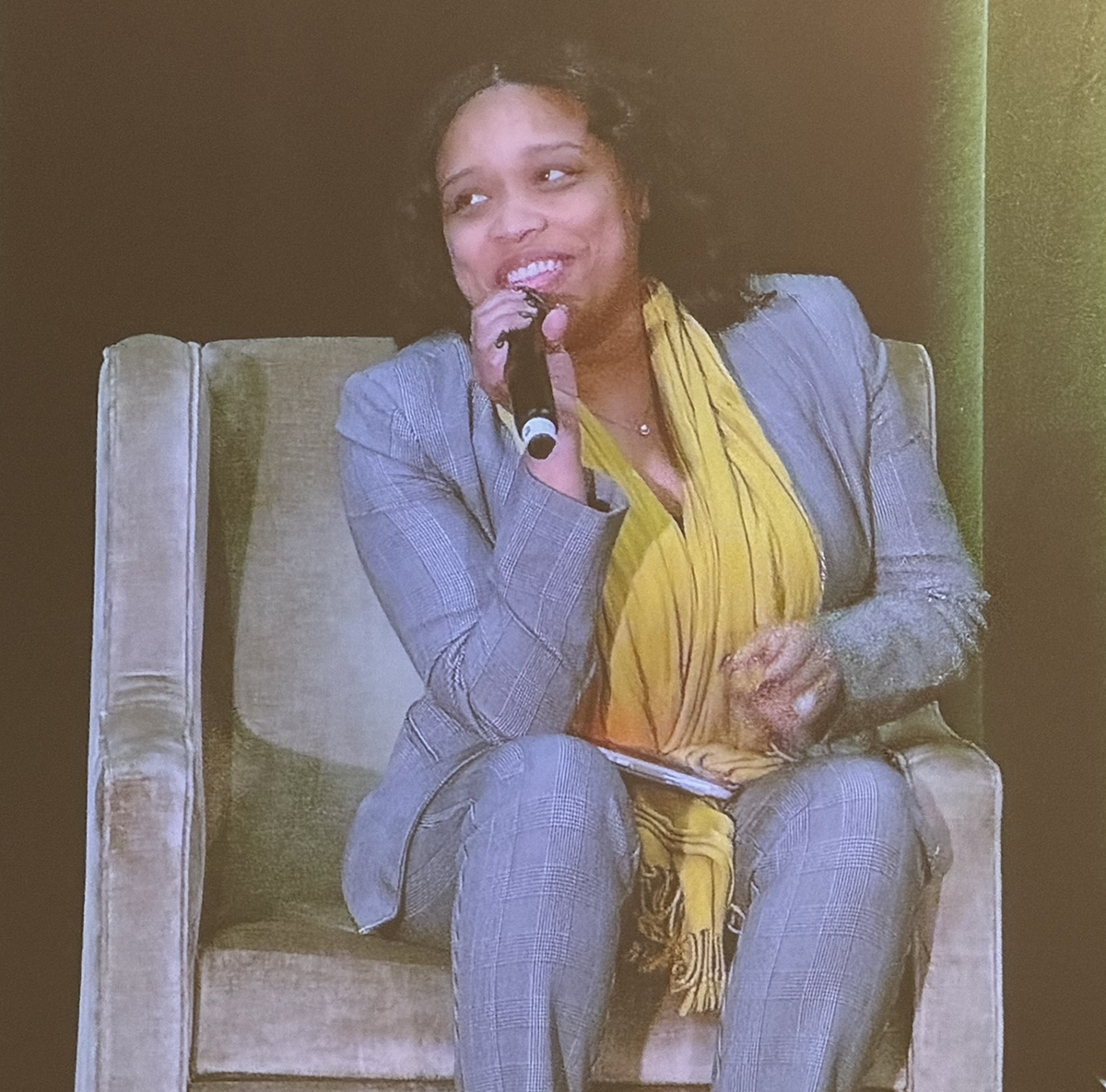
Ciera Bates-Chamberlain
“Every time I say I’m a pastor, I have to explain what kind of pastor I am because my parish is Brooklyn, N.Y., and they look at me and say, ‘Oh, my God, I know you.’ They know the single story. And then once they get to know our work, once they get to know they can trust us, once they see our track record, then they say, ‘Oh, you are different from the others.’”
She urged all present to leave the conference, go home and “show the complete story of the Black Church and not simply the incorrect, incomplete single story.”
Another narrative that is wrong is that younger people are leaving the church in droves, Wilkes said. “A lot of data show that Gen Z and Gen Alpha are actually coming back to the church. … But what we have to recognize is that this is a demographic who goes to church by choice. They’re not culturally being forced to go to church.”
She added: “This current younger generation, if you see them, they are there by choice and because they’re there by choice, they want a voice. And so what ends up happening is a lot of our churches cannot bear the weight of a younger demographic with agency, … we can’t bear the weight of a young person who’s informed. We can’t bear the weight of a young person trying to put into practice what they heard you preach on Sunday about challenging and dismantling systems, holding one another in community accountable.”
When young people “leave your church, it does not mean they left the church,” she continued. “It means they are in search of not a perfect relationship to congregational life, but an accountable relationship to congregational life. They do not expect anyone to be perfect. They expect for us to be accountable, and if we’re not going to do what we’re preaching, they’re not impressed.”
Wilkes also said faith leaders must articulate what they’re for more than what they’re against: “People don’t really care as much about what we’re against. They care about what we’re for because if we can’t name what we’re for, then we can’t even raise up leaders who can do the work of what we’re for. We need to teach deconstruction, but we’ve also got to be concerned about reconstruction. Because if we tear something down and leave a gap in its place — I mean just think about it from a very literal perspective — if you tear a building down, it becomes an empty lot in an open field, and nothing gets placed on top of that. Weeds grow, animals come, it becomes this place that is not safe for anyone. So yes, someone must teach what we’re for.”