

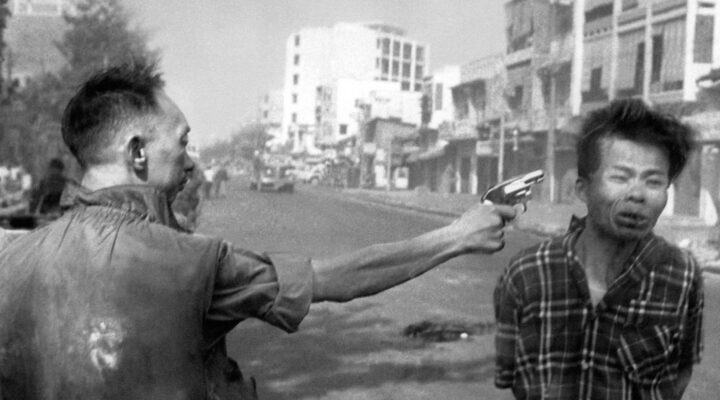
When I saw the cellphone videos of U.S. Border Patrol agents executing Alex Pretti on a snowy street in Minneapolis, the shameless brutality of the shooting reminded me of another execution 58 years earlier on a war-torn street in Saigon.
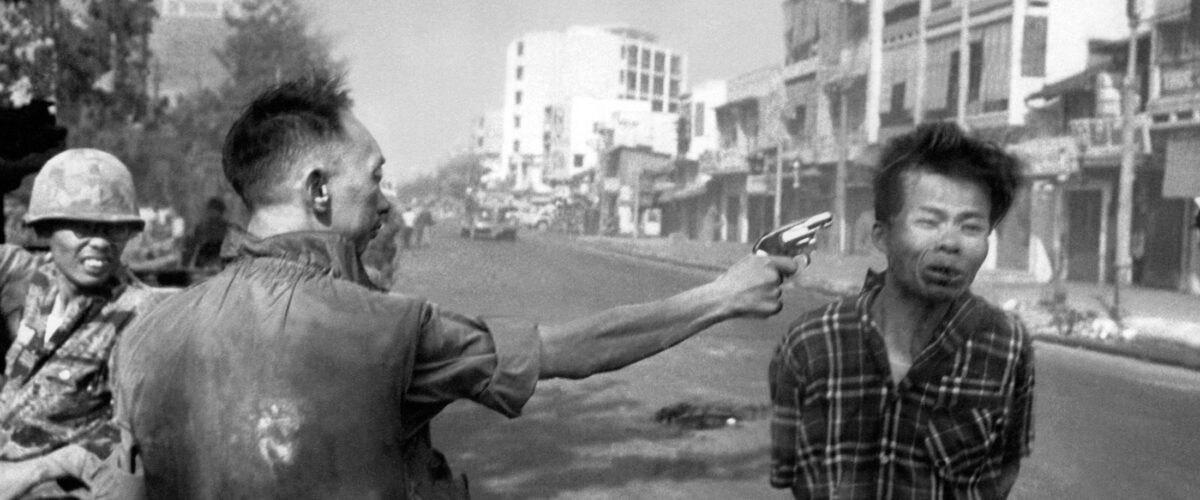
The U.S. ally police chief, Brig. Gen. Nguyen Ngoc Loan, stands with his back to the camera, expression hidden, right arm extended, his finger on the trigger of a .38 Special Smith and Wesson Bodyguard revolver. The gun’s barrel hovers only a few inches away from the temple of prisoner Nguyen Van Lem.
Hands tied behind his back, disheveled and wearing a plaid shirt, Lem hardly looks old enough to be a Vietcong captain. As Loan pulls the trigger to summarily execute Lem at point-blank range, Associated Press photographer Eddie Adams clicks the shutter on his 35mm Leica and changes the course of the Vietnam War.
The black-and-white Pulitzer Prize-winning photograph known as “Saigon Execution” is gritty and slightly out of focus. But Hal Buell, Adams’ photo editor at the AP, says it remains impactful more than 50 years later because it “in one frame symbolizes the full war’s brutality.”
Americans who saw Lem’s contorted face on the front page of newspapers the morning of Feb. 2, 1968, began to question the morality of the U.S. military’s presence in Vietnam.
Footage of the illegal execution, captured for NBC by Vietnamese cameraman Suu Vo, aired that evening on The Huntley–Brinkley Report to an audience of 20 million viewers. Some who saw Lem’s body crumple to the ground complained to NBC about the video’s graphic nature. Others wondered if they could still trust President Lyndon Johnson’s promises of an easy victory in Vietnam.
“If body count is your measure of success, then there’s a tendency to count every body as an enemy soldier.”
CBS’s Walter Cronkite, “the most trusted man in America,” traveled to Saigon later that February and declared the U.S. “mired in stalemate.” He questioned Gen. William Westmoreland’s use of body count as a measure of success and called for a negotiated peace that wouldn’t materialize for another seven years.
The U.S. military had abandoned its original objective of “winning hearts and minds,” which had worked well to quell communism in Western Europe, and replaced it with a “search and destroy” strategy. With no frontline to advance and no territory to hold, maximizing the total number of enemy combatants killed was the goal.
However, as Lt. Gen. Robert Gard Jr. says in the documentary The Vietnam War by Ken Burns, “If body count is your measure of success, then there’s a tendency to count every body as an enemy soldier.”
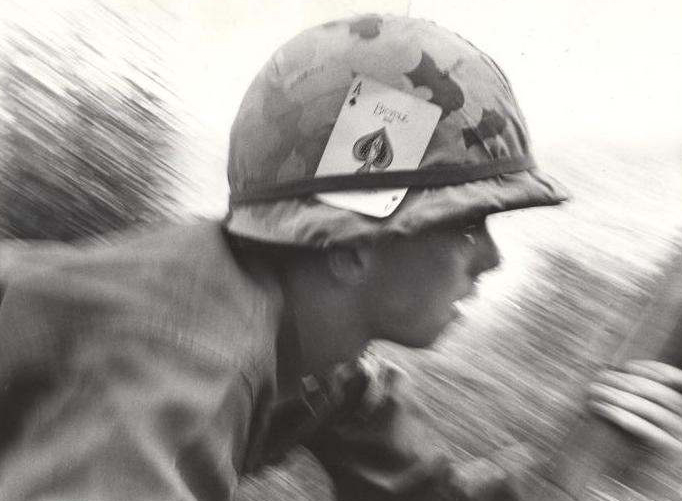
A U.S. soldier in Vietnam wears a “death card” in his hatband.
To raise the body count, units held competitions to see which could score the highest tally on the “kill boards” and win an extra case of beer. Commanders encouraged the use of racial slurs to strip the Vietnamese people of their humanity. Platoons adorned the bodies of dead Vietcong with “death cards,” playing cards featuring the ace of spades and catchy slogans trivializing the taking of life. This dehumanization and racism extended to noncombatants who also were included in the body count to pad the totals.
Soldiers burned homes, destroyed crops and fired on “anything that moved,” including the civilians they claimed to be defending. Gen. Norman Schwarzkopf, a Vietnam veteran and later allied commander in the Persian Gulf, said relying on body count as a metric “compromises the integrity” of junior commanders. Perhaps he was remembering the murder by American GIs of 500 innocent civilians, including women and children, at a hamlet called My Lai on March 16, 1968.
Violence comes home
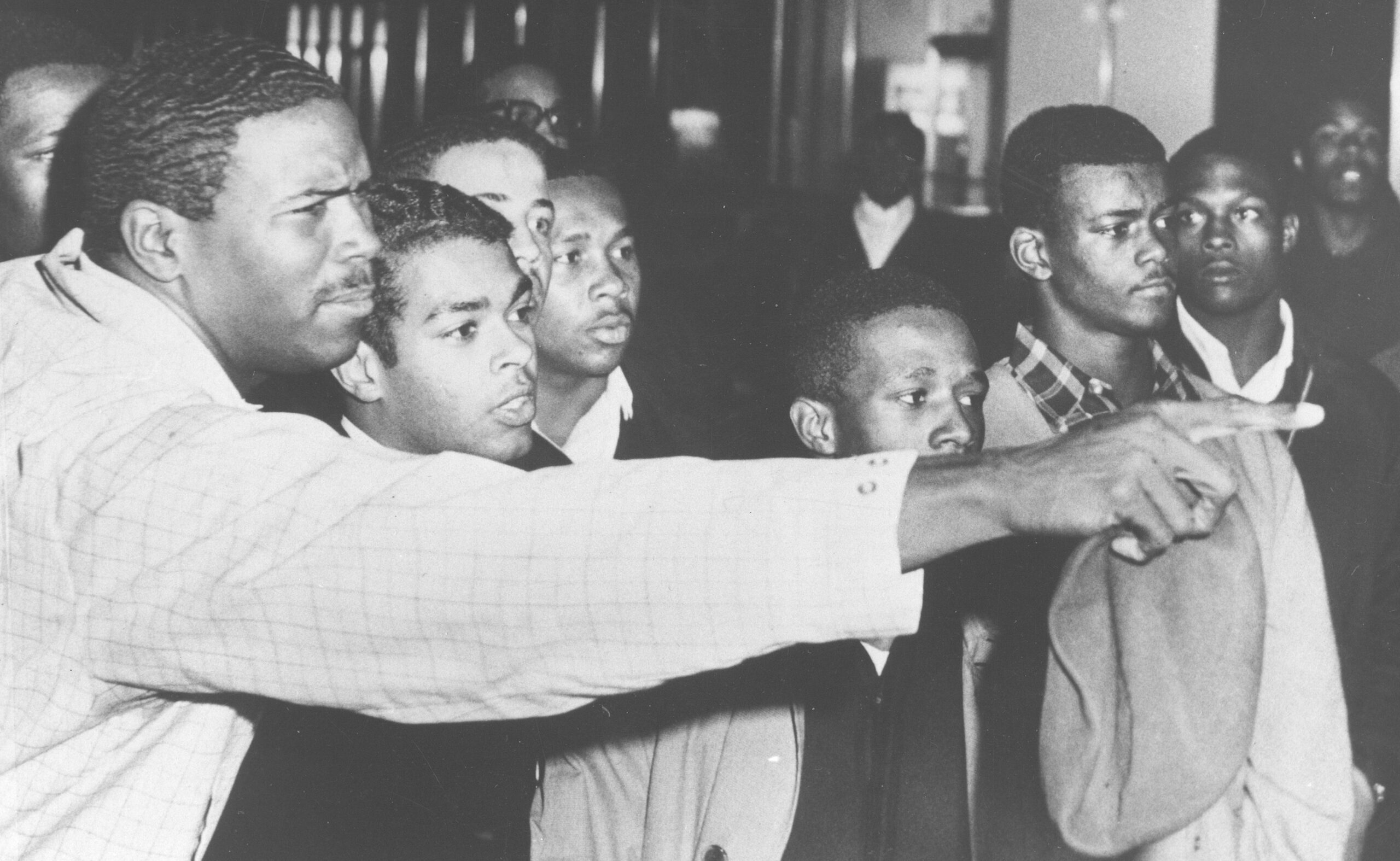
Tyrone Caldwell, a student at a South Carolina State College, shakes his finger at law officers after arrests were made when Black students were barred from an all-white, private bowling alley in Orangeburg, S.C., Feb. 6, 1968. Windows were smashed, cars overturned and police hospitalized before the crowd dispersed. (AP Photo)
Wanton killing abroad eventually led to killing at home. In Orangeburg, S.C., just a few days after Lem’s execution, 200 students from two historically Black universities gathered on Feb. 8, 1968, at South Carolina State College to hold a bonfire and protest the treatment of a Black Vietnam veteran at the town’s segregated bowling alley. They were met by military tanks and 100 law enforcement officers, including local and state police, National Guard troops and FBI agents.
Research shows when law enforcement responds aggressively, tensions escalate and conflict increases. Such was the case in Orangeburg. After a skirmish over the bonfire, officers fired on students as they fled, injuring 28 and killing three. Over the police radio, a patrolman on the scene gloated he “got a couple of ’em tonight.”
That August, Chicago police and Illinois National Guard troops indiscriminately tear-gassed and clubbed demonstrators, bystanders, photographers and journalists prior to the 1968 Democratic Convention. They barged into homes without warrants and held student protesters at gunpoint, saying: “In Chicago, the police have guns and use them. We can smash your heads in and leave or take you to the street and let others finish you off.”
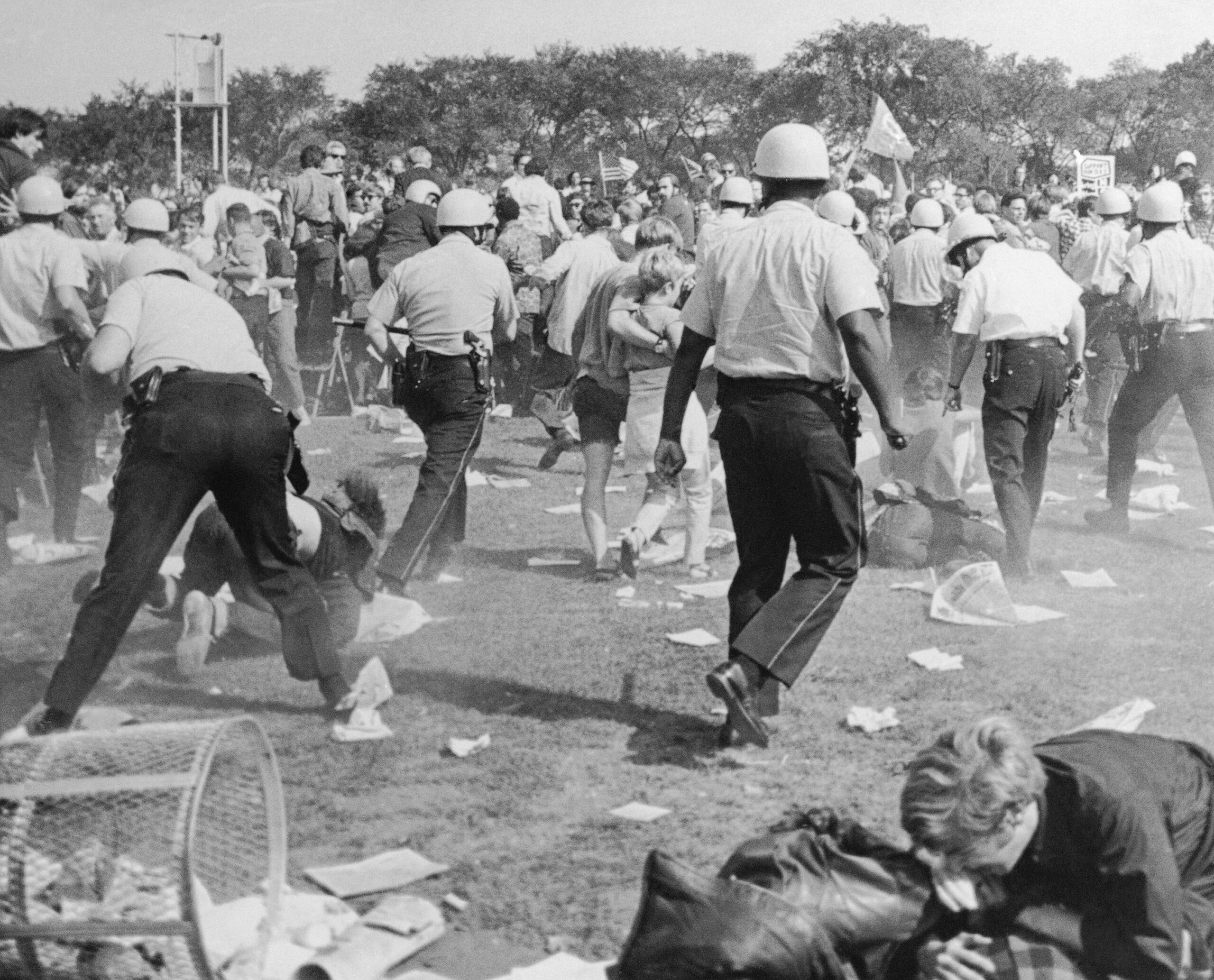
Police reroute demonstrators as they try to clear Grant Park during the Democratic National Convention in Chicago on Aug. 28, 1968. (AP Photo)
History repeated itself two years later in May 1970 when 3,000 students at Kent State University gathered to protest President Nixon’s expansion of the Vietnam War into Cambodia. Nixon himself referred to protesters as “bums” and said they were controlled by “communists” and “outside agitators.”
Ohio National Guard troops, accompanied by small military tanks, doused the protesters with tear gas and fired 67 shots into the dispersing crowd, killing four students and wounding nine. John Filo’s Pulitzer Prize-winning photograph of a distraught Mary Ann Vecchio, calling for help while kneeling over the body of Jeffrey Miller, ran in the national newspapers and, like Adams’ “Saigon Execution,” further inflamed divisions in the country and criticism of the war.
History repeats
History is now repeating itself yet again. Under President Donald Trump, attitudes and tactics from the jungles of Vietnam are reappearing on the streets of Minneapolis and other American cities. The violent, chaotic scenes of civilian shootings and unnecessarily aggressive arrests that have flooded our computers and televisions are the result of Operation Metro Surge, the effort by the Department of Homeland Security to maximize the detention and deportation of immigrants in Minnesota.
In May 2025, White House adviser Stephen Miller confirmed the administration had set a quota of 3,000 arrests of undocumented immigrants a day, a massive increase from the 700 to 900 daily arrests made at the end of Joe Biden’s presidency and beginning of Trump’s second term. In practice, Miller’s quota system amounts to little more than a body count strategy.
“In practice, Miller’s quota system amounts to little more than a body count strategy.“
The administration claimed it was targeting “the worst of the worst,” but a report by the Cato Institute revealed that, of those arrested, “73% taken into ICE custody had no criminal conviction and only 5% had a violent criminal conviction.”
In order to raise the body count and meet their quota, ICE and Customs and Border Patrol pursue those who are easiest to arrest. Agents are detaining undocumented immigrants with no criminal records at their immigration check-ins, snatching Hispanic teenagers stocking the shelves at Target, using racial profiling to arrest Native Americans and forcing a pregnant mother to watch as her preschooler is taken hostage and carted 2,000 miles away.
Essentially, these arrests amount to “search and destroy missions,” and the brutality is intentional. Now ousted Homeland Security Secretary Kristi Noem told Fox News America’s sanctuary cities are “war zones.” Trump’s dehumanizing rhetoric, referring to immigrants as “garbage” and “illegal monsters” and saying they are part of an “invasion,” is a license for ICE to treat them as such.
Agents in full body armor carrying machine guns are bashing in car windows, dragging out passengers and shipping them off to immigration detention centers. Family members searching for their loved ones are even finding the ace of spades in these abandoned cars. Alex Sánchez, president and CEO of Voces Unidas, says ICE’s customized death cards were “designed with this legacy (i.e., the Vietnam War) in mind.”
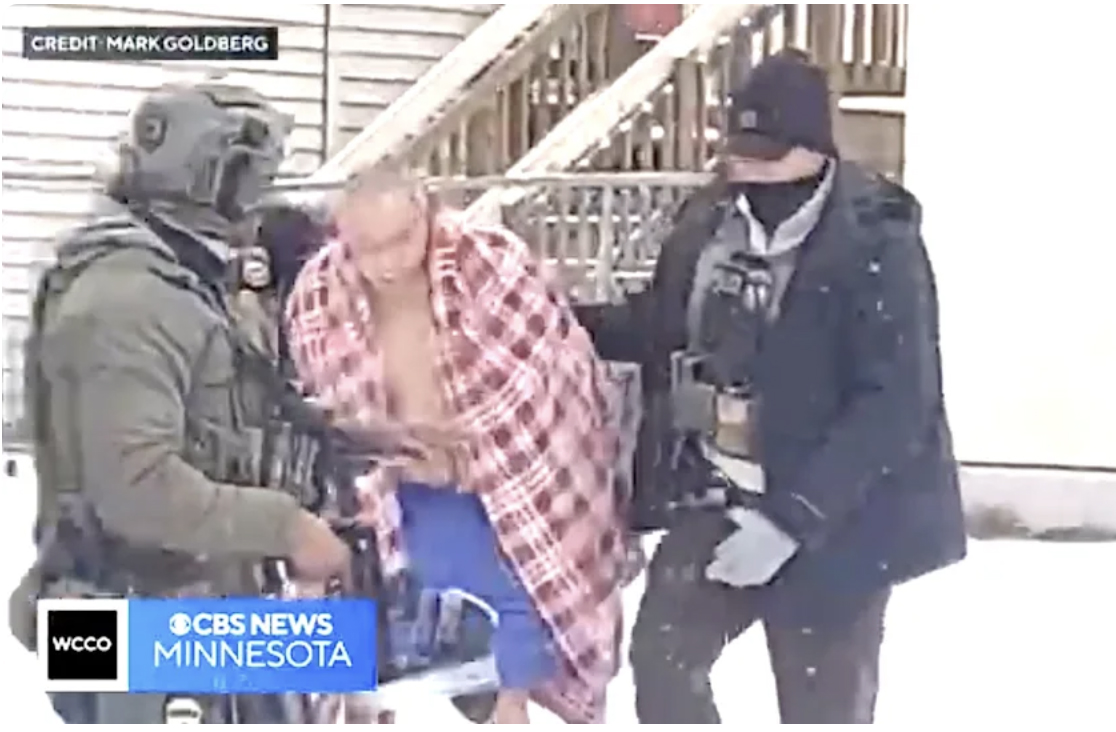
ChongLy Thao (Screencap)
Following the example of the 1968 Illinois National Guard, ICE officials, without a warrant, broke open the door to the home of ChongLy Thao and, at gun point, forced him outside into the falling snow wearing nothing but Crocs, shorts and a blanket around his shoulders. Thao is a naturalized citizen and member of the Hmong community, many of whom, including Thao’s mother, aided covert CIA operations during the Vietnam War.
Minneapolis and St. Paul are home to the largest population of Hmong immigrants in the country. In 1975, churches sponsored Hmong refugees, helping them find work and housing. Now, ICE is going door to door looking for Hmong to arrest, and Franklin Graham says the nation should pray for these agents because they are doing “God’s work.”
Video of Thao in his shorts shuffling through the snow, images of ICE once again separating children from their parents and the repeated threat and use of deadly force have galvanized residents of Minneapolis. They’ve taken to the streets to protest the cruel and cavalier treatment of their neighbors by DHS. And as with the Vietnam War protesters in Orangeburg, Chicago and Kent State, the government has retaliated with violence.
Roseann “Chic” Canfora, an eyewitness to the Kent State shootings who now teaches journalism there, sees similarities between Nixon and Trump: “There is an eerie parallel between what Nixon did to brand our anti-Vietnam War movement as something organized by communists and what we’re seeing here with Trump’s claims that any anti-Trump, immigration or pro-democracy protest is secretly funded by George Soros or part of Antifa, which is a phantom, nonexistent group.”
(Screencap KTSP in Minneapolis of Renee Good’s murder)
Denigrating language
In an almost laughable homage to Nixon, Stephen Miller referred to protesters in Washington, D.C. as “stupid white hippies.”
Just as he does with immigrants, Trump denigrates and dehumanizes protesters on social media, calling them “lunatics, agitators and insurrectionists,” to imply they are not deserving of civil rights. CBP and ICE have been caught on camera throwing pregnant women and elderly Vietnam veterans to the ground, pummeling crowds with pepper balls and tear gas, blinding them with “less-lethal munitions” and, in the case of Renee Good, shooting her three times with lethal ones.
Jonathan Ross, the agent who shot Good and then used a slur to describe his victim, was a trained National Guard veteran who had served in Iraq but never saw combat. In the mid-2000s, DHS recruited veterans who brought a war zone mindset with them to the agency, a practice the Trump administration once again encourages.
In another Kent State parallel, DHS, like the Ohio National Guard, declared Good’s murder an act of self-defense.

(Screencap via Drop Site News on X)
When Alex Pretti was murdered, after attempting to protect other bystanders from CBP agents, those agents wrestled Pretti to the ground, pepper-sprayed him, bludgeoned him with the pepper spray can and then shot him in the head, arm and back at point-blank range.
Tom Nolan, a former Boston police commander who once advised DHS on civil rights issues, called Pretti’s death a “stone cold murder.”
In one cell phone video of the atrocity, Pretti goes limp after the first bullet to the head and yet agents continue to fire nine more times into his prone body with the casual cruelty of “Saigon Execution.” The woman who is recording the massacre screams, echoing the despair of Mary Ann Vecchio. Again, a nation is left divided by the image of a senseless killing.
The vast majority of veterans who served in the Vietnam War did so honorably and to the best of their ability in circumstances that often were less than honorable. Many were unfairly reviled when they returned home. Fifty years on, America is still trying to heal from these physical and psychological wounds.
Sadly, Trump’s withdrawal of senior U.S. diplomats from events related to the 50th anniversary of the war’s end was a blow and an insult to efforts by veterans on both sides to tend the war’s wounds by working together to find the remains of missing soldiers, remove unexploded ordinances and clean up the environmental legacy of Agent Orange. But Trump’s spurning of these efforts only serves to highlight rather than diminish the importance of such work.
The Vietnam War ended because the public would no longer condone the cost in lives lost and taxpayer money spent. As ICE and CBP reenact some of the worst atrocities of the Vietnam War era on the streets of the United States, it’s not too late for the country to learn from the past, force a change in the government’s course and begin the work of healing what has been ruptured.
Kristen Thomason is a freelance writer and journalist living outside Edinburgh in the United Kingdom. She has produced educational and promotional media for national and international religious organizations and public television. Kristen also worked with local churches in Metro D.C. and Toronto, Canada. With a master’s degree in communication and undergraduate degrees in media studies and classics, she is interested in the intersection of politics, religion, history and the arts.