

There is a song in Mel Brooks’ musical The Producers called “Springtime for Hitler.”
In the show, two producers intentionally create the most offensive Broadway musical imaginable. They assume no audience would tolerate a Broadway number glorifying Adolf Hitler. The production is meant to collapse immediately because of its absurdity.

Ginny Brown Daniel
Instead, the opposite happens.
The audience interprets the performance as satire. They laugh at the spectacle, and in doing so Brooks exposes something deeper: the absurd logic that allows authoritarian power to flourish.
Sometimes the only way to expose evil is to reveal the absurd logic of authoritarian power and the unthinking obedience it demands. That insight has been echoing in my mind as the United States’ war against Iran stretches deeper into its double-digit days.
Here in Texas, spring is beginning to arrive. Azaleas are starting to bloom. The air feels warm without the heavy humidity that will come later. I often tell friends March is the most beautiful time of year to visit Texas. Creation is waking up as spring brings beauty.
“Sometimes the only way to expose evil is to reveal the absurd logic of authoritarian power and the unthinking obedience it demands.”
Spring also reveals what is unfolding in the world around us. And halfway across the world, bombs are falling.
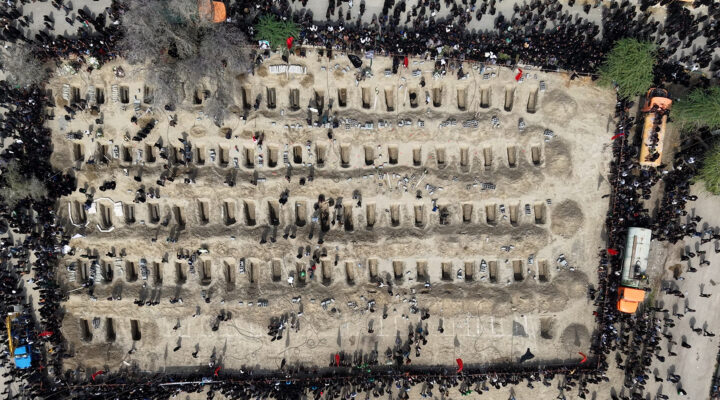
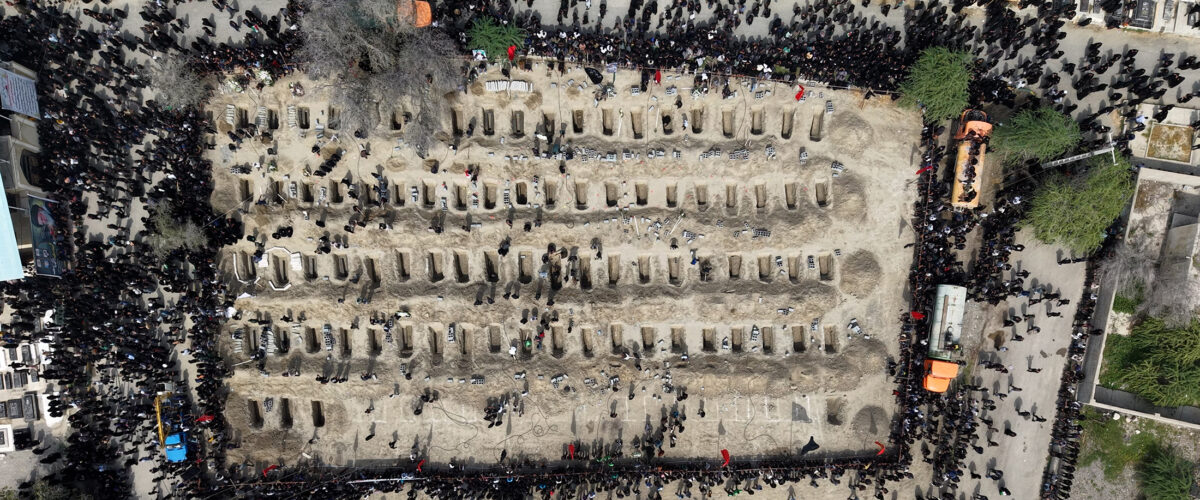
On Feb. 28, a U.S. missile strike destroyed the Shajareh Tayyebeh girls’ elementary school in Minab, Iran. Reports indicate that 165 to 180 people were killed, most of them schoolgirls, and about 95 others were injured. The United Nations and human rights organizations have called for the attack to be investigated as a possible war crime.
A school is a place where children gather to learn. It is a place where futures are imagined and nurtured. For girls in particular, education has long carried political meaning in places where freedom is fragile.
Several years ago, I read Azar Nafisi’s memoir Reading Lolita in Tehran. After the 1979 Iranian Revolution stripped women of many freedoms, Nafisi secretly gathered female students in her home to read literature together. In that private home, education became an act of intellectual and spiritual resistance. An educated girl represents a future authoritarian systems cannot easily control.
The destruction of a girls’ school forces a different kind of reckoning. When a bomb falls on a classroom filled with children, the conversation moves beyond strategy or national security. It brings us face to face with the moral boundaries we claim still exist in war.
During National Women’s History Month, it is a sobering reminder that the struggle for girls’ education and freedom is not only part of the past. In many parts of the world, it remains unfinished.
Even in war there are supposed to be limits. International law recognizes those limits. The Geneva Conventions prohibit attacks directed at civilians and civilian structures such as schools and hospitals.
Schools are protected because children are not combatants. They are children in classrooms, students whose only act that morning was showing up to learn. And yet a bomb fell on a school. Students died. International law recognizes this as a potential war crime.
Spring is arriving in Texas. Azaleas are blooming. And across the ocean, a girls’ school lies in ruins.
Springtime for war crimes.
I do not expect the leaders who authorized this strike to face legal accountability. History shows how rarely powerful nations investigate themselves. Yet even within the political system there have been moments of honesty. Sen. John Kennedy, a Republican from Louisiana, acknowledged the tragedy in an interview with NBC News, saying, “It was terrible. We made a mistake. … I’m just so sorry it happened. It was a mistake.”
“When atrocities remain unnamed, they become easier to repeat.”
Acknowledgment matters. Language shapes conscience. Silence protects power. When atrocities remain unnamed, they become easier to repeat.
For people of faith, this is where conscience must speak. The Christian tradition has long wrestled with the moral limits of war. Just War Theory itself emerged from the belief that even in conflict there must be boundaries protecting the innocent.
Children in classrooms should be among those protected.
Followers of Jesus cannot allow patriotic loyalty to silence moral clarity. The prophets of Scripture spoke uncomfortable truths to their own nations. Christian faith does not call us to defend power. It calls us to defend human dignity. That includes the lives of girls in classrooms on the other side of the world.
Moments like this remind us how often authoritarian power and misogyny travel together. The control of women and girls has long been one of the first instincts of regimes that fear freedom.
Education challenges that control. Education creates imagination. Education creates possibility.
Which is why the destruction of a girls’ school is not only a tragedy. It is a warning, which is why we must act in courageous and faithful ways:
- Read credible reporting about civilian casualties.
- Learn what international law says about the protection of civilians in war.
- Contact elected officials and ask for accountability.
- Demand transparency about civilian harm caused by U.S. military actions.
- Support organizations that document war crimes and defend human rights.
History rarely turns on the decisions of the powerful alone. It turns when ordinary people refuse to look away, when we name the harm and insist on moral accountability.
Bombs fall. Students die. The world moves forward.
Really?
I guess it is indeed springtime for war crimes.
Ginny Brown Daniel is an ordained minister, writer, and keynote speaker based in Texas. She writes and speaks at the intersection of faith, politics, and public life. Learn more at her website.