

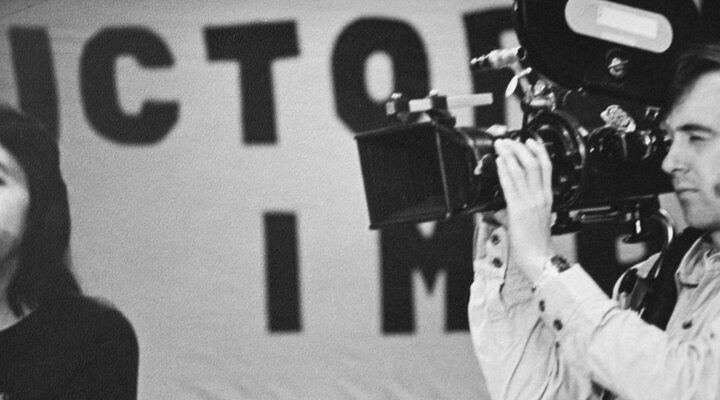
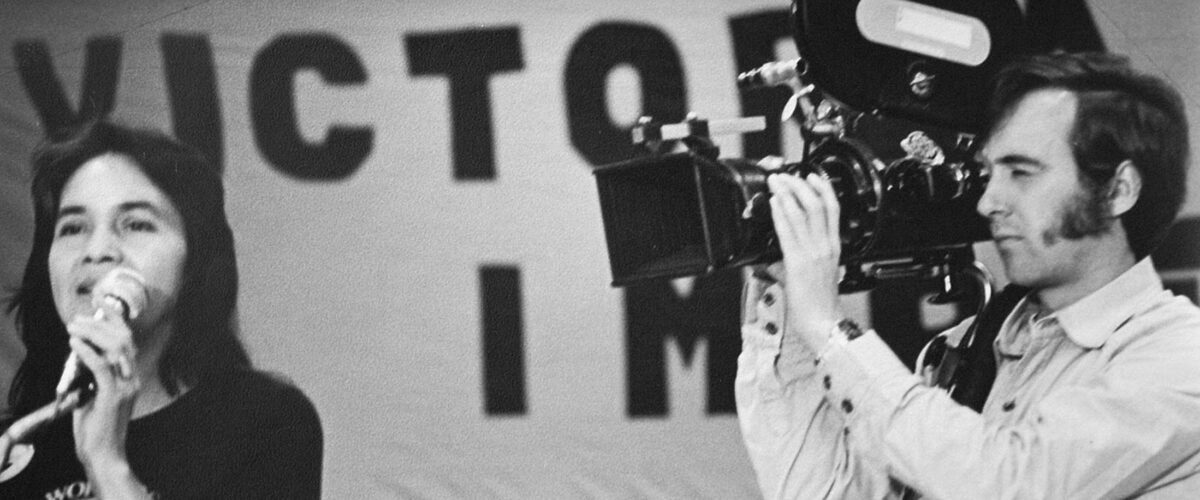
Last week, The New York Times published an investigation uncovering at least five instances of sexual abuse committed against girls and women by César Chávez, an influential Latino leader in the farmworkers labor justice movement.
According to interviews from 60 sources, including survivors and others close to the matter, most of Chávez’s victims were minors at the time of the abuse, having known him throughout childhood. Allegations range from general sexual harassment of girls and women in the movement to rape.
Three survivors say Chávez fathered at least four children as a result of these crimes.
Although Chávez died in 1993, his work has been commemorated posthumously by many in the United States. Survivors choosing to tell their stories now want to ensure this part of the truth is included in his legacy.

Dolores Huerta, Labor Leader, Civil Rights Activist, and Co-Founder of United Farm Workers speaks onstage during Together For Democracy January 29 in Washington, DC. (Photo by Paul Morigi/Getty Images for Democracy Forward)
Among the survivors is Dolores Huerta, who played an influential role in the movement and worked closely with Chávez for decades. She says she considered him as not only a boss but a “hero.”
Huerta alleges Chávez raped her twice, once in 1960 and another time in 1966. Both assaults resulted in pregnancies, and she arranged for both children to be raised by other families to keep the abuse secret. The reason for secrecy, she said, was to protect the already fragile movement.
“I never talked about it to anybody, and the reason I didn’t is because I just didn’t want to hurt the movement,” she explained.
Survivors also say the movement had a poor relationship with the police, which made things even more complicated. Some felt unsure law enforcement would take their claims seriously, while others feared public knowledge of this violence would perpetuate police brutality against Latino protesters within the movement.
While Chávez’s abusive behavior was committed mostly in secret, the Times uncovered numerous documents revealing inappropriate relationships he had with girls and women in the movement. For instance, in a letter written by then 13 year-old-Delores Rojas, who claims Chávez groped her breasts for the first time when she was 12, she tells him: “I think of you all the time. Do you think of me?”
He later raped her when she was 15, telling her he’d known they belonged together since she was just 9.
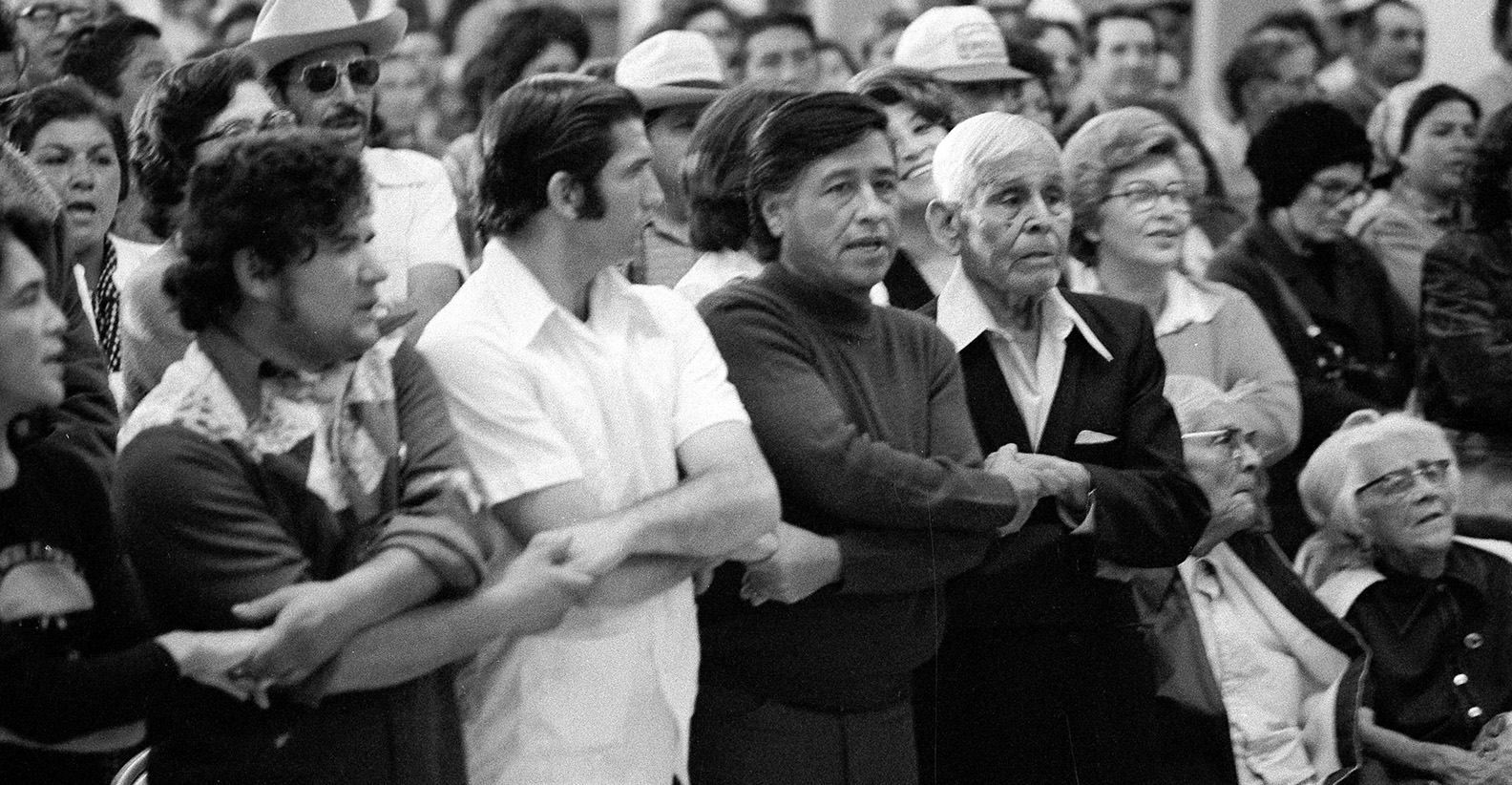
American labor leader and co-founder of the United Farm Workers (formerly known as the National Farm Workers Association) Cesar Chavez (1927 – 1993) (center, in dark turtleneck) links hands with unidentified others at a rally, mid to late 1970s. (Photo by Cathy Murphy/Getty Images)
Machismo
Along with the sexual abuse, Chávez’s generally aggressive behavior toward women was well known among other leaders. While Chávez promoted women working alongside him, it seems he did not like them rising to the top. And according to Huerta, he was no stranger to verbal abuse, which she often took without a fight for the sake of the movement.
This, she said, is all part of machismo culture.
“Environments dominated by machismo culture foster a sense of shame.”
The term describes a type of male chauvinism in Latino communities that embraces an exaggerated pride in masculine identity juxtaposed by a degradation of femininity. This often results in violence against women and others who express feminine qualities as a means of elevating the importance and maintaining the power of men.
Like other forms of patriarchy, environments dominated by machismo culture foster a sense of shame, which is imposable on people by the men in power by whatever means they deem necessary, including violence. This makes it easy for abusive leaders to justify their behavior as part of their masculine leadership role and consequential for victims to believe they cannot change the system.
The normalization of this aggression and violence, coupled with the fragility of a movement heavily aligned with Chávez’s personhood, contributed to the choice made by numerous girls and women to remain silent about these horrific acts.
Delayed disclosure
This fear of disclosure is not unique to Huerta and her fellow survivors. In fact, it is quite common.
Often, sexual abuse survivors and those who endure other types of abuse and discrimination fear what telling the truth about their experiences could mean for their communities. This is especially true for survivors of abuse at the hands of otherwise beloved leaders, and it is even more complicated when those leaders are beloved for contributing positively to other causes of justice.
This is called “delayed disclosure.”
And according to trauma psychologists, there are many reasons for this, including shame, trauma-induced memory loss, fear of an abuser’s retaliation or fear of the impact one’s story may have. Delayed disclosure also could be caused by a lack of understanding of abusive situations, which is especially common among child victims who were groomed by trusted adults, as well as victims of any age who exist in communities where aggression or violence are normalized.
For many of Chávez’s survivors, it seems a mixture of these factors have been at play in their decades of silence. But one, in particular, seems to be more prominent than others: Fear of how their stories of abuse might impact the greater movement of liberation charged by Chávez and his peers.
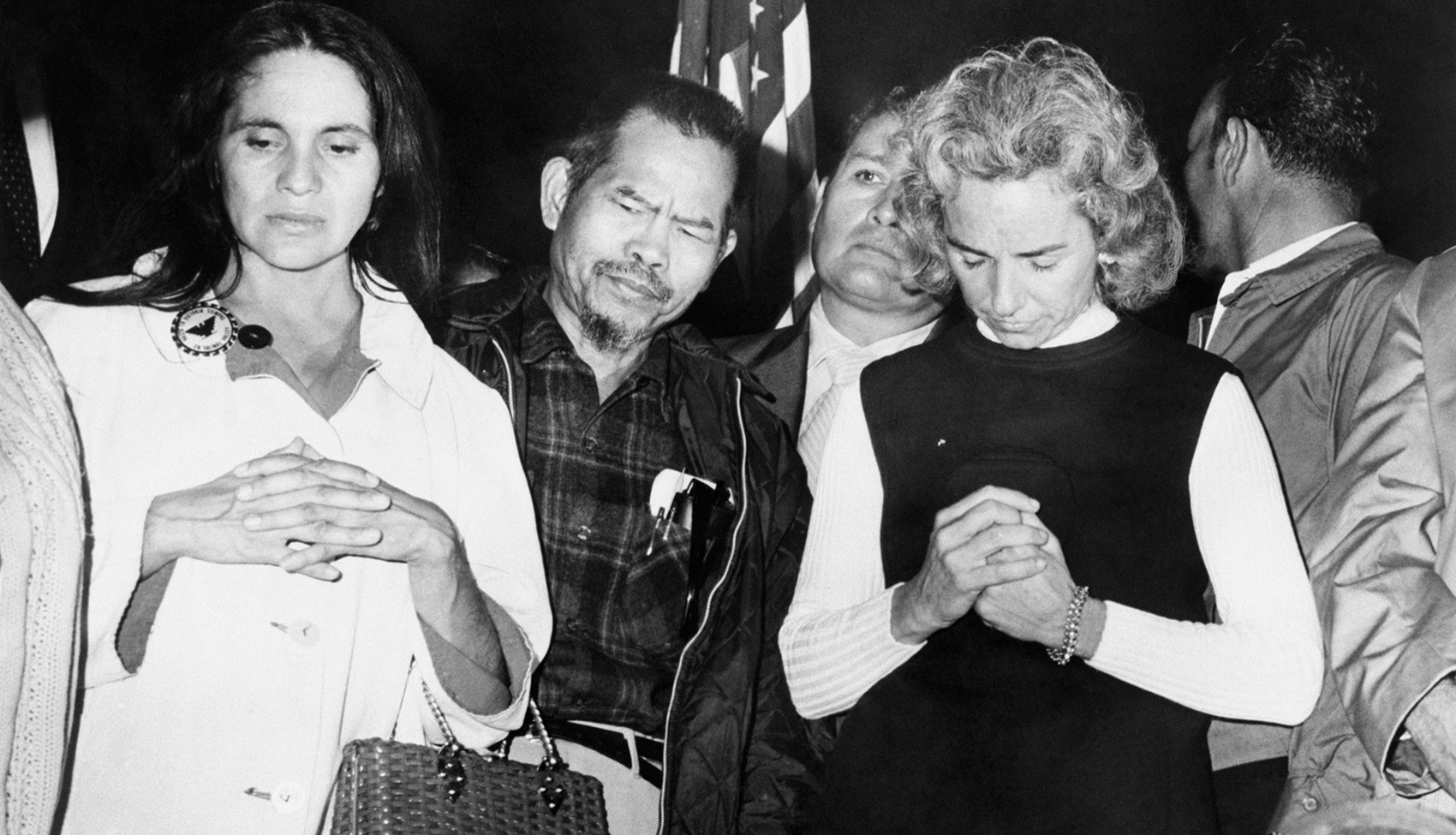
In 1970, Ethel Kennedy joins in prayer for Cesar Chavez outside the Monterey County Jail. Chavez, United Farm Workers Union leader, was jailed for violating a court injunction prohibiting the lettuce boycott. At left is Dolores Huerta, UFWOC vice president; Larry Itliong, UFW co-leader; and Kennedy, who marched to the rally through Salinas with hundreds of Mexican field workers before attending the Mass and visiting Chavez in jail. (Getty Images)
A binary of liberations
These fears often are layered for individual survivors but in general tend to appear in a binary manner. For Chávez’s victims, this fear created a binary between two types of liberation: Collective vs. individual.
In their context, Chávez worked as a leader in the group, but due to his popularity and sense of authority, he represented the farmworkers movement itself. For many, the work being done by this movement to liberate poor and exploited workers became inseparable from his personhood.
“Would the movement survive if the public knew its perceived champion was a rapist?”
Would the movement survive if the public knew its perceived champion was a rapist?
In this binary, these stories suddenly pose a threat. Victims feel they must choose between the survival of the movement and their own.
Survivors might tell themselves, “If I tell others this leader is an abuser, everyone will question the credibility our movement and our liberative work will end.” Alternatively, “If I never tell my story, everyone will believe this leader and our movement is good, and we will do lots of liberative work.”
Each option comes at a cost.
When it seems like there is no middle ground, assumptions about what can and cannot be, will or will not occur or ought and ought not to change get made. And they necessarily privilege one agent and threaten another.
Blurring the binary
But the stories of these survivors beg this question: Why can’t we blur the binary?
Less than 24 hours after these allegations dropped, I attended a symposium on liberation theology called “The Future(s) of Liberation Theology” at Wake Forest University’s School of Divinity. Taking advantage of the wealth of knowledge in the room, I asked during a panel discussion how the theologians thought we might honor the bravery of survivors who are telling their stories without throwing out the liberationist movement altogether.
Among the panelists was Kelly Brown Douglas.
She replied: “His story is just one of many stories of men who have been part of great struggles for freedom, and yet …”
We must, she advised, “continue to lift up the pain of the people and question where (people like Chávez) belong in our pantheon,” noting there are plenty of other liberationists whose work we can uplift in his wake. For instance, Dolores Huerta and other women contributed to many of the movement’s accomplishments but have been overshadowed by Chávez’s popularity.
Another panelist was Edgardo Colón-Emeric, dean of Duke Divinity School. In holding space for the tragic allegations, he called upon the Apostle’s Creed, which asks reciters to proclaim, “I believe in the communion of the saints.”
Colón-Emeric said those “saints” are imperfect members of the “communion.”
“There’s something profound in being honest about the good things of the members and the failures of the members,” he explained, saying one of the most powerful responses we can have to abuse allegations such as this is to be willing to hold the tension between this perceived binary.
He said we must acknowledge the various truths at play.
It is true that Chávez worked alongside other liberationists in a movement that helped many people who have suffered injustice.
It is true that he has been accused of sex crimes by numerous girls and women.
And it is true that the movement, although Chávez made a huge and public mark on it, need not be centered only on him.
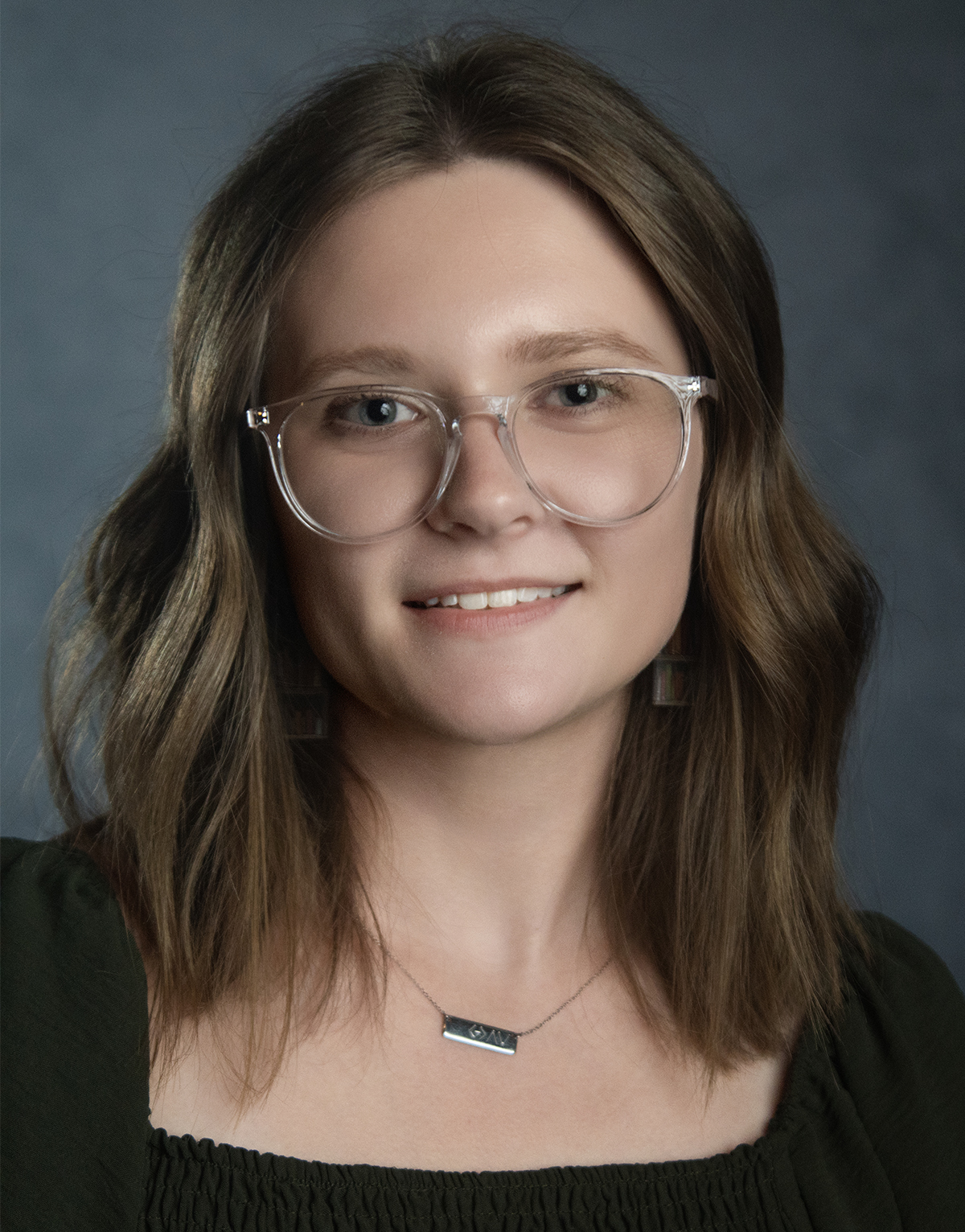
Mallory Challis
Mallory Challis is a former Clemons Fellow with BNG. She is a third-year student in the master of divinity program at Wake Forest University School of Divinity. She is creator and host of the BNG podcast “Non-Disclosure,” about child sexual abuse at Kamp Kanakuk.