

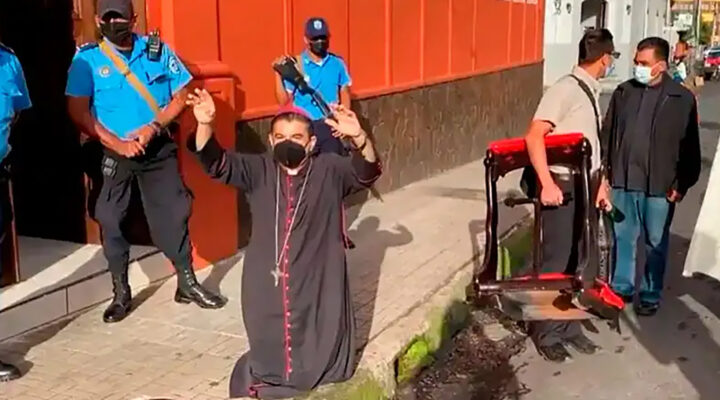
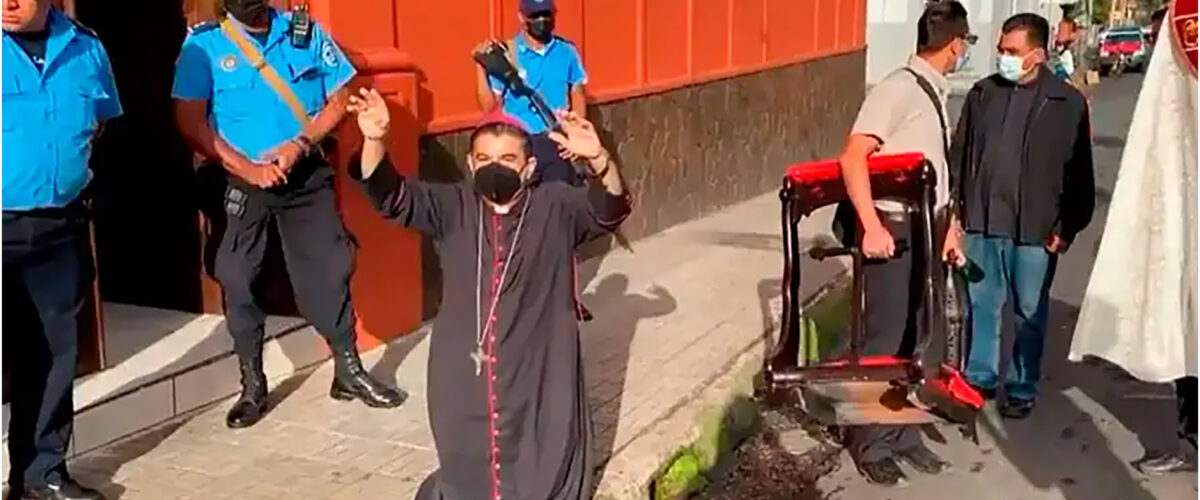
The Nicaraguan government is ramping up its persecution of Baptist and other religious organizations and restricting the use and possession of Bibles, according to the international human and religious rights group CSW.
Formerly known as Christian Solidarity Worldwide, CSW said the offenses included threats and harassment, restrictions of communal worship, forced exiles and arbitrary detentions.
“Those affected included religious orders, churches and entire Protestant denominations — for example, the Association of Independent Fundamentalist Baptists, which was stripped of its legal status in February (2025),” the organization said in a new report, “No Respite: Another Year of Increasing Repression in Nicaragua.”
The study documents 309 alleged violations of freedom of religion or belief last year under President Daniel Ortega, his wife, Rosario Murillo, and the Sandinista National Liberation Front.
Of those cases, 200 victims were Roman Catholic and 108 were Protestant Christians including Baptists and Seventh Day Adventists, the report says. A journalist covering religious issues was targeted in an additional case.
“Leaders of different religious groups were subjected to harassment and surveillance by security forces. ‘Precautionary measures’ were increasingly imposed on religious leaders, forcing those targeted to make weekly in-person reports to local police stations, to share details of planned activities, and requiring that they obtain government authorization in order to go outside their municipality of residence.”
Other religious freedom violations in 2025 included covert and overt government monitoring inside sanctuaries and other church spaces, and prohibitions against praying or preaching for detained leaders, national or religious unity or the condition of the country, the report says.
Leaders of different religious groups were subjected to harassment and surveillance by security forces.
“Many public religious activities, including traditional Roman Catholic processions and some associated with the Day of the Bible, observed by both Roman Catholics and Protestants, remained prohibited. Religious activities that previously took place outside in public spaces were confined to within the walls of the church building and often required prior authorization from the National Police.”
Exempt from the persecution were religious groups aligned with the government, which has co-opted some faith-based events in an effort to appear open to religious freedom, CSW charges.
Religious detainees in Nicaragua were held in inhumane conditions and without communication with the outside world. Prisoners also were denied access to Bibles or other religious literature, the agency reported.
“CSW documented 55 cases of short- — from a few hours to a few days — and long-term — from months to years — arbitrary detention of religious leaders over the year. Some of the cases involved the detention of multiple individuals. Women involved in multiple cases reported being stripped and searched by male officers,” CWS reported.
Human rights and pro-democracy activists and political opponents were harassed and also warned against associating with faith-based organizations and their leaders.
“The government continued to forcibly shut down independent civil society organizations, including religious institutions, arbitrarily stripping them of their legal status, bringing the total number of iCSOs that have been made illegal to upward of 5,600. The government froze the bank accounts of some groups.”
The Bible was targeted, too, the report says. The government banned bus and other transit companies entering Nicaragua by land from bringing Bibles and other religious literature into the country.
“Shortly after the news of the restrictions on Bibles and other religious literature was shared publicly by CSW, signs with restricted items were removed from bus terminals in neighboring countries.”
The government later demanded religious groups post statements online saying no Bible prohibitions existed in the country. “Threats included a warning that their churches would be forcibly closed and that they could be imprisoned if they refused to post the statement,” CSW says.