

The rise of U.S. authoritarianism requires Americans to be deliberate in living their faith, Sojourners founder Jim Wallis said during a webinar hosted by Interfaith Alliance.
“Faith has to be strategic. It’s deep in our conviction. It’s in who we are. It’s our core, our vocation, but also strategic.”
In the current moment that includes being realistic about the threat President Donald Trump and his Christian nationalist supporters pose to American democracy, especially in this election year, said Wallis, now director of the Georgetown University Center on Faith and Justice.
“When I hear people on the Left say, ‘Oh, he’s dropping in the polls, look how Trump is dropping in the polls, we’re going to win the midterms, I’m deeply concerned about that. If we think Donald Trump is going to freely concede to free and fair elections, we’re being foolish. I think we can defeat him, but not unless we really get strategic.”
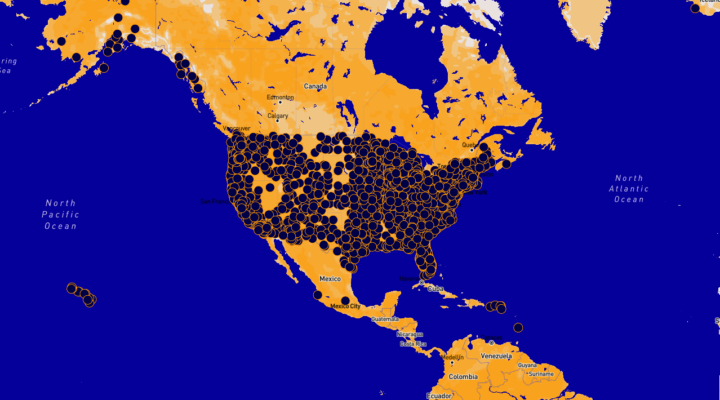
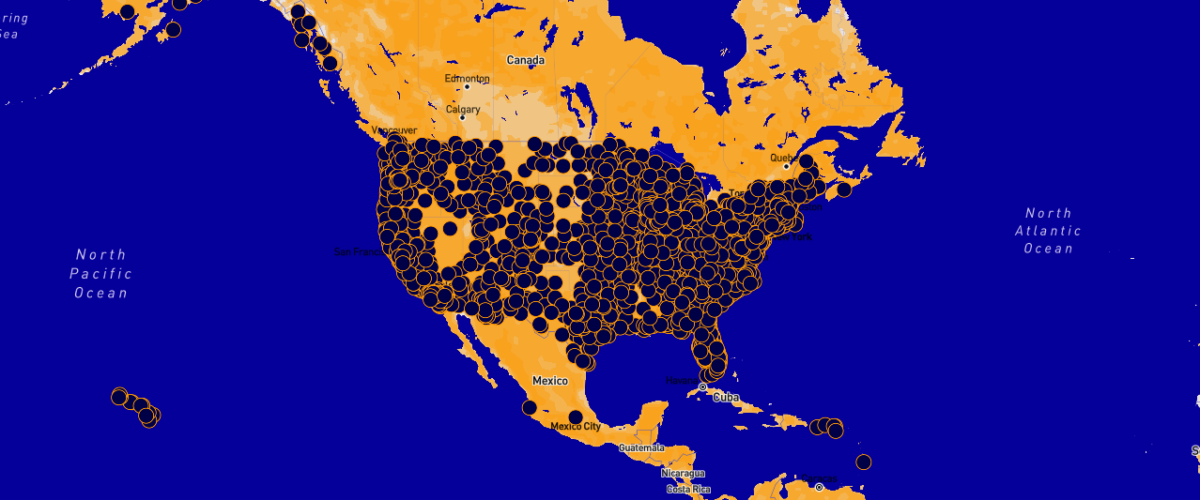
Strategy was the focus of the Alliance’s virtual and interfaith town hall called to capitalize on the momentum generated by the third and most recent wave of No Kings demonstrations held March 28. More than 8 million people participated in at least 3,100 events in all 50 states and in more than 18 countries.
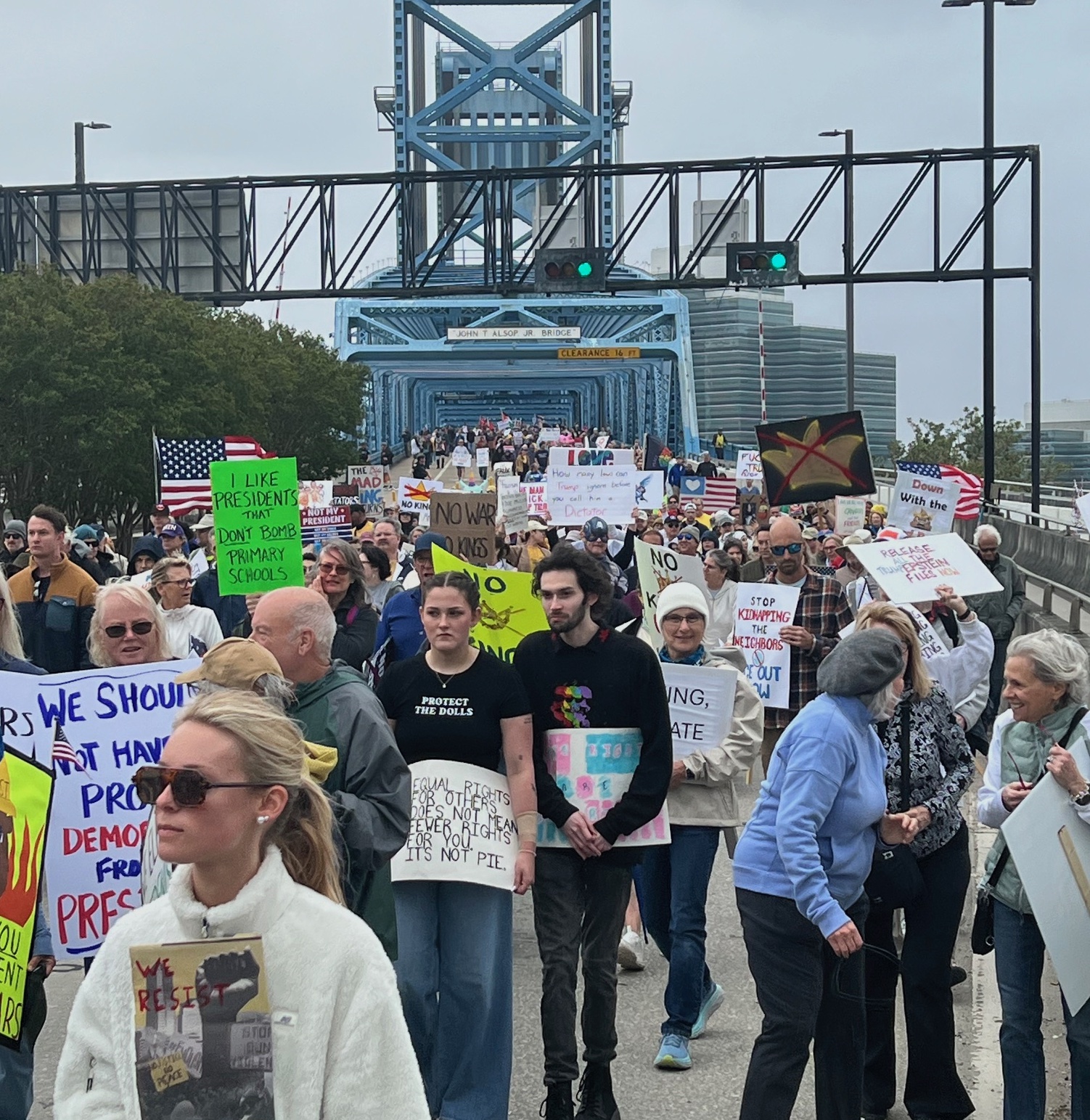
No Kings march over the Main Street Bridge in Jacksonville, Fla., March 28, 2026. (Photo: Lindsay Bergstrom)
“No Kings III showed once again that the American people will not tolerate cruelty, will not accept authoritarianism, and will stand shoulder to shoulder with their neighbors in the fight for democracy,” Alliance President Paul Brandeis Raushenbush said.
“Our task now is to carry that courage forward — into our congregations, our communities and everywhere those with authority use fear to make us feel isolated or powerless,” he added. “The incredible success of No Kings has shown that if faith communities show up with moral courage, discipline and hope, we have the power to bring about the promise of a democracy that belongs to all of us.”
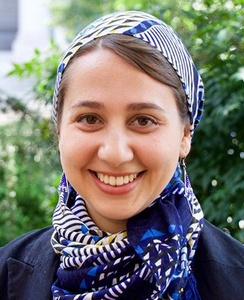
Maggie Siddiqi
As a faith-based partner of the No Kings movement, the Alliance recognized a gathering of stakeholders could boost support for the organizing networks advocating for democracy, moderator and Alliance Senior Advisor Maggie Siddiqi said.
But the latest marches where a testament the movement is growing and getting stronger, “even all the way to Antarctica,” she said.
“Authoritarianism needs us to get trapped in this feeling of being isolated and being hopeless, and part of our resistance to engage in that call to action and to say, ‘no, this is our moment where we can engage and we can take control of the future of our country, a country for all of us together.”
Dani Negrete, national political director at Indivisible, said the effort against authoritarianism is helping people put their faith and principles to work for democracy and peace.
“We’ve watched as this authoritarian political project has worked to encroach on our collective rights and our individual dignity day after day, and we know we have a greater need than ever for this space to be one where people of all races, religions and creeds can find themselves and understand that this is a place for them to bring their work, to bring their values together,” Negrete said.
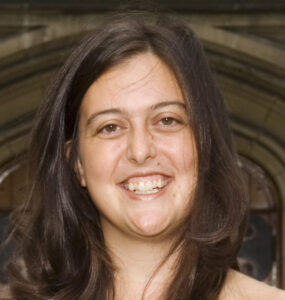
Liz Theoharis
Falling during Holy Week provided the No Kings’ message a dimension of “holy resistance,” said Liz Theoharis, co-chair of the Poor People’s Campaign and director of the Kairos Center for Religions, Rights and Social Justice.
To capitalize on the energy from the marches, the campaign will hold a series of “survival revivals” in the coming months, the idea being to live out the kind of bold faith “our sacred texts and traditions” call for, she said. “Please come out to communities all over the country this spring and summer. We’re calling for a massive organizing drive at detention centers, trying to close them, trying to bring a kind of congressional oversight of them.”
More specifically, the 2026 protest occurred the day before Palm Sunday, the day Jesus entered Jerusalem riding a donkey as peopled pleaded for him to take power and topple the Roman occupiers, Sojourners President Adam Russell Taylor observed. “But we know Jesus didn’t come to be a king. Instead, he came to establish the kingdom of God, which is rooted in a commitment to justice, righteousness and steadfast love.”
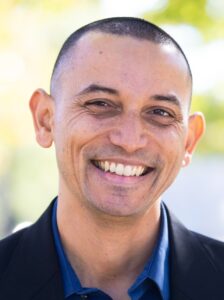
Adam Russell Taylor
But those qualities also are actions, he added. “Our faith calls us to resist idolatry and the abuse of power. Our faith is not just personal. It must also be public, costly and, at times, even disruptive to confront injustice, expose lies and to move people toward courageous action.
Taylor invited people of all faiths to participate in a coming campaign of prophetic witness in defense of immigrants and others persecuted by ICE, and to alert elected officials they will be held accountable as democratic freedoms are assaulted.
“We are also working to bridge divides. We know authoritarianism thrives on polarization and convincing people their neighbors are their enemies. But in our response, grounded in love, we are convening and equipping church leaders to overcome fear, combat hate and reimagine a future in which our democracy works for everyone.”
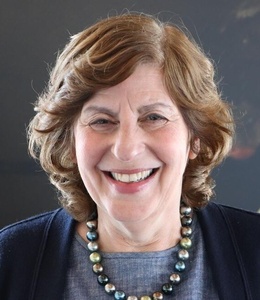
Shifra Broznick
The fact that No Kings also fell on the eve of Passover was poignant because both are examples of movement toward freedom, said Shifra Broznick, a justice organizer and member of Jews for Freedom.
“The story of Passover starts with action when the daughter of Pharaoh walked along the Nile and saw a baby floating down the river in a basket. She picked up the baby and held him close, and then she took him home to live in the palace. That baby was Moses, who grew up to lead his people out of slavery and towards freedom.”
Jewish groups are planning to do likewise for those being targeted by the Trump administration and Immigration and Customs Enforcement, Broznick said.
“We are calling for a day of action right away to build on this momentum from No Kings, a day when we demonstrate and say, ‘Jews demand ICE out,’” she said. “We will go to detention centers, bring food to people, patrol the streets, show what it looks like when we are neighboring everywhere, all over the country. We are calling for a day of action to safeguard one another.”
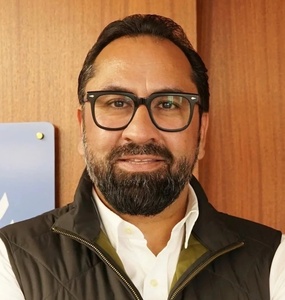
Tarin Haris
A saying in Islam is that anyone who sees an evil being committed should take direct steps to change it, said Haris Tarin, vice president of policy and programming at the Muslim Public Affairs Council. “What is driving us is to make sure we don’t slide into further authoritarianism, that we don’t slide further into repressive measures against immigrant communities, against Black communities, Latino communities and American Muslim communities as well.”
The council will launch a campaign against the war in Iran which has been justified by the rhetoric of Christian nationalism, Tarin said.
“We will work with our Christian, Jewish, Buddhist, atheist neighbors to make sure our principle of separation of church and state and our First Amendment rights are protected. Because it is maybe one faith community or one ethnic or immigrant community today that is being impacted, but tomorrow it’ll be someone else, it’ll be another group, and we don’t want to slide down that path of authoritarianism.”