

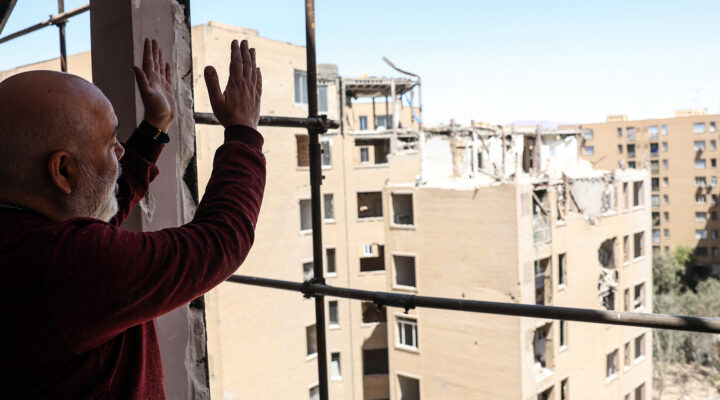
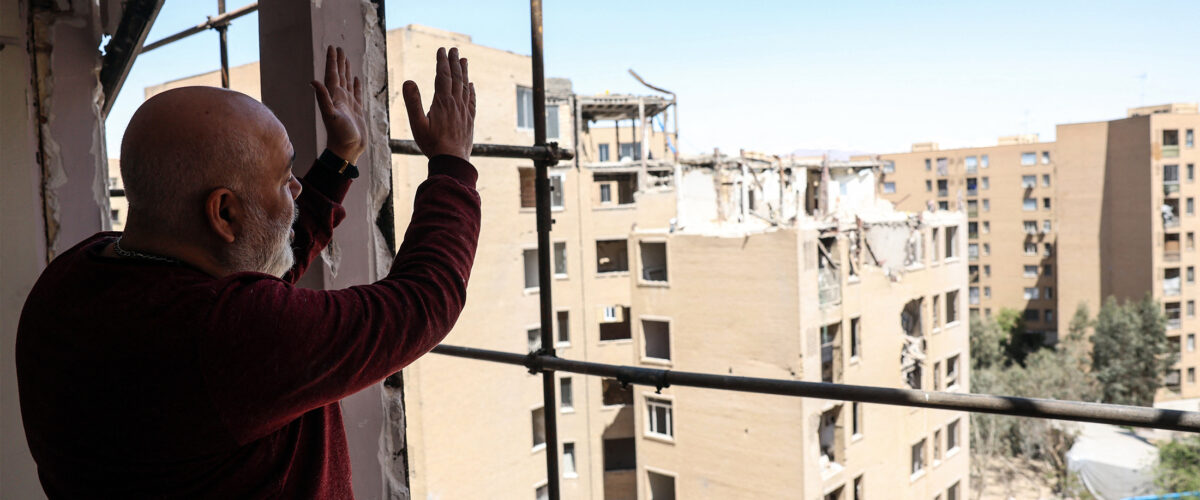
Whatever its specious rationales and eventual outcomes, one underlying fact about the war in Iran is clear: What is largely fueling this dangerously combustible conflict is essentially a clash of fundamentalisms — Islamic, Jewish and Christian.
When speaking of Islam generally, it is important to state emphatically that most of the world’s Muslims are peaceable peoples. (In my former role as a leader of the Alliance of Baptists, we entered into a formal partnership with the American Baptist Churches and Islamic Society of North America in the aftermath of the Sept. 11, 2001, attacks on New York City and Washington, in one of many such interfaith efforts to defuse anti-Muslim sentiment in our country.)
Of the two principal strains of Islamic thought and practice — Shia and Sunni — the former prevails in Iran. Shia clerics in Iran, already more hardline than their more moderate Sunni counterparts, became even more radicalized in the mid-20th century after a 1953 coup d’état backed by the CIA and Britain’s M16 that overthrew Iran’s prime minister, Mohammad Mossadegh, installing Mohammad Reza Pahlavi in his place. Pahlavi, better known as the Shah of Iran, was the last head of the Imperial State of Iran, a part of Britain’s empire.
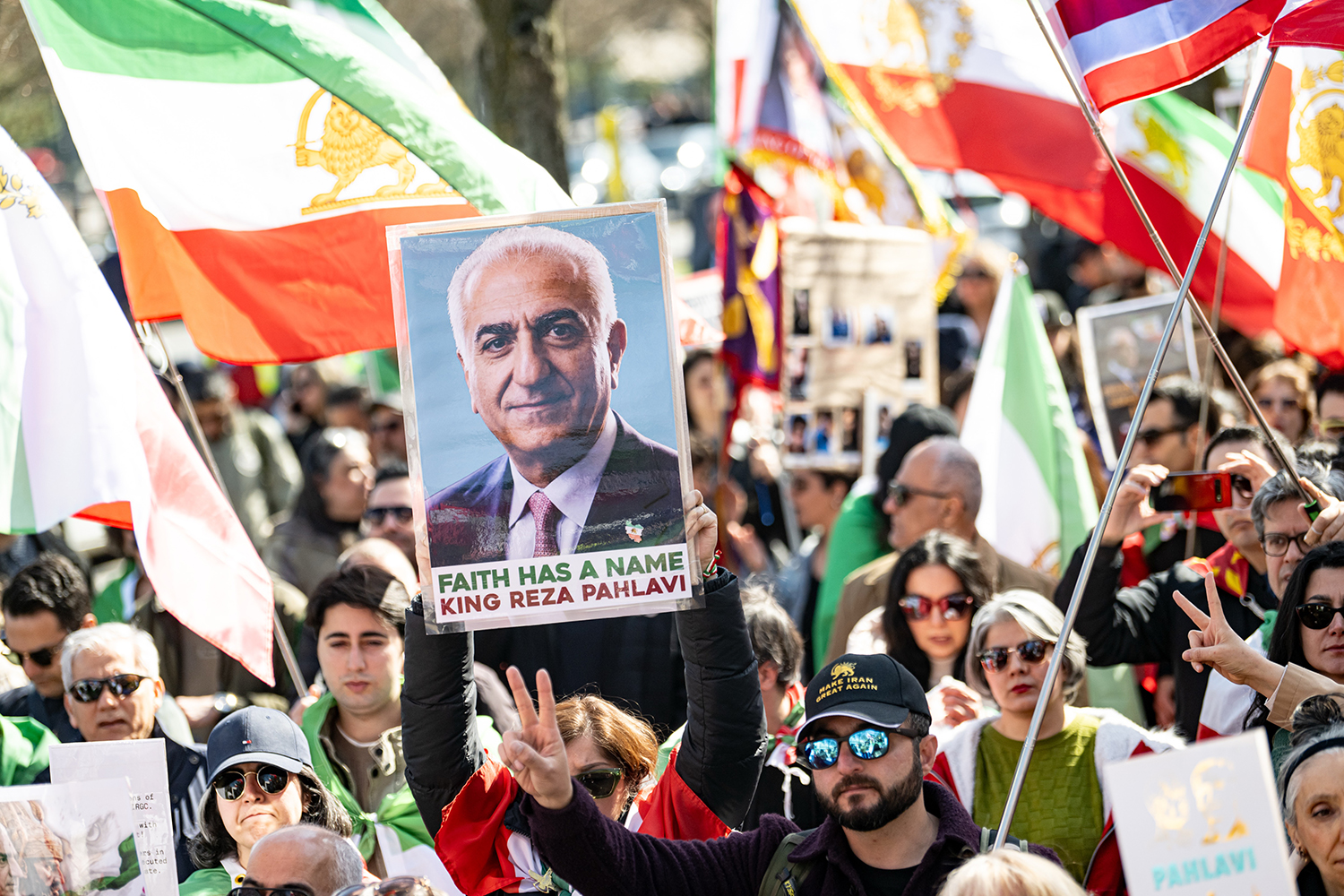
A person holds up a sign with the son of the former Shah of Iran Reza Pahlavi during a demonstration against the regime in Iran in central Berlin in April 2026. (Photo by Fabian Sommer/picture alliance via Getty Images)
In early 1979, beset by a rising fundamentalist fervor among Shia clerics, by now supported by elements of the Iranian military, the shah fled into exile. Shortly thereafter, in one of the most ironic twists in recent Middle East history, the Imperial State was supplanted by the Islamic Republic of Iran, headed by its first supreme leader, Ayatollah Ruhollah Khomeini, who himself returned to Iran from a long exile forced by the shah.
Critically ill with an advanced stage of cancer, which he had hidden for years, the shah was granted temporary exile for medical treatment in the United States by then-President Jimmy Carter on Oct. 22, 1979. Two weeks later, on Nov. 4, Islamic revolutionaries stormed the U.S. embassy in Tehran, taking hostage 66 embassy officers. Although Carter had been warned by the State Department that the embassy was in danger of seizure should Pahlavi be granted entrance, Carter, under heavy pressure from former Secretary of State Henry Kissinger, financier David Rockefeller and other influential figures at home and abroad, reluctantly relented.
Dogged by the crisis for the remainder of his single term as president, Carter was essentially held hostage by Khomeini who, in another of recent history’s ironic twists, adamantly refused to release the 52 embassy hostages still being held until moments after the inauguration of Carter’s successor, President Ronald Reagan, on Jan. 20, 1981. The hostage crisis had lasted 444 agonizing days.
“In the intervening 47 years, the Islamic Republic of Iran has wreaked havoc across the Middle East and beyond.”
In the intervening 47 years, the Islamic Republic of Iran has wreaked havoc across the Middle East and beyond. Under Khomeini (who died in 1989) and his successor Ayatollah Ali Khamenei (killed by Israeli bombing on Feb. 28, 2026, the first day of the current war) the Islamic Republic has engaged in, directly and indirectly, attacks on U.S. military and diplomatic personnel and many others, resulting in hundreds of deaths across the region and as far away as Central Africa.
Among dozens of such attacks, some of the most notorious included the April 1983 Islamic Jihad suicide car bombing at the U.S. embassy in Beirut, Lebanon, in which 17 Americans were killed; the Iran-backed, Lebanon-based Hezbollah’s killing of 241 U.S. military personnel in a truck bombing at a U.S. Marines compound in the Lebanese capital in October 1983; and the September 1984 Hezbollah car bomb attack at the U.S. embassy in Beirut that killed 23, including two U.S. military members. One of the most brazen of Iran-backed terror attacks came in 1998, when Al Qaeda suicide bombers, facilitated by the Iranian-backed Hezbollah, simultaneously bombed U.S. embassies in Kenya and Tanzania, killing 224.
In Israel, numerous attacks by Hezbollah on Jewish settlements in Northern Israel, along with many others, including deadly bus bombings by the Iran-financed terrorist organization Hamas in Jerusalem and Tel Aviv, are to be counted as well.
Finally came the horrific attacks by Hamas fighters on Oct. 7, 2023, in which more than 1,200 Israeli citizens and military personnel were savagely murdered in Southern Israel, with some 250 others kidnapped and taken to Gaza, one of the precipitating events leading to the current war jointly commenced by Israel and the United States on Feb. 28 of this year.
“Their hatred of Jews and of the Jewish state, while perverting the highest ideals of Islam, is nonetheless menacingly real.”
Beneath all this mayhem lies the undeniable fundamentalism of the most radical of Islamic groups, whose battle cries of “Death to Israel” and “Death to America” are motivated by deeply held religious fervor. Their hatred of Jews and of the Jewish state, while perverting the highest ideals of Islam, is nonetheless menacingly real.
Jewish fundamentalism
Jewish fundamentalism, likewise a distinctly minority perspective within Judaism writ large, has fueled the war in Iran from its beginning. Indeed, religious fervor by a distinct minority of Israelis in recent times, including leaders of religious parties and their followers, has gained strength, this despite the founding of modern Israel in 1948 as a secular state.
The perspective of these and others that the whole of what they call “Greater Israel” — including the West Bank and Gaza Strip — belongs to them by divine decree arguably never has been so fervently held as it is today. Furthermore, the October 7 attacks have popularized this viewpoint across a wide swath of the Israeli citizenry, a majority of whom still are nonreligious.
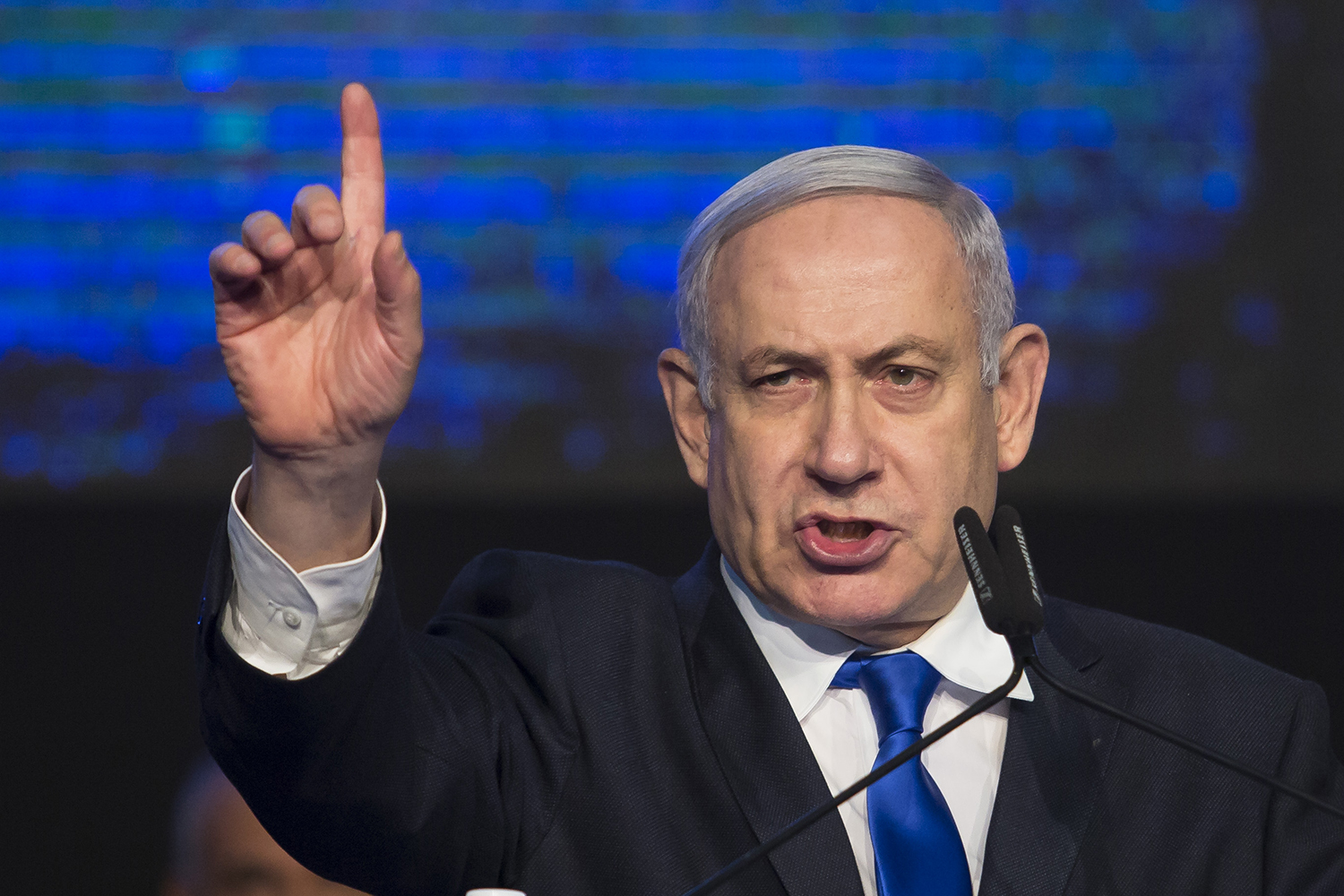
Israeli Prime Minister Benjamin Netanyahu speaks to supporters at a Likud Party gathering on November 17, 2019, in Tel Aviv, Israel. (Photo by Amir Levy/Getty Images)
While an adequate discussion of the difference between antisemitism and opposition to the state of Israel is not the purpose of this analysis, suffice it here to note that both are real, at times ragingly so. This is true not only among non-Jews, but within Judaism itself, particularly in the United States.
And just as anti-Muslim prejudice and violence rose after September 11, so has antisemitism and violence against Jews increased exponentially since October 7, including in the United States.
Likewise undeniable is the fact that Israel’s response to Oct. 7, supported by the overwhelming military power of the United States, has been alarmingly disproportionate, first in Gaza, now in Iran and Lebanon.
The casualty numbers and levels of destruction are so staggering that some human rights observers label the Israeli revenge as genocide. (Conversely, others say the overriding objective of Iran and its proxies is nothing less than the genocide of Jews and the destruction of Israel as a nation-state.) What is clear, even to some Jewish scholars, is that a rising tide of religious fundamentalism has taken hold of the Israeli response to the hostility of Hamas, Hezbollah, and Iran itself.
One such observer is Tomer Persico, research fellow at the New York-based Shalom Hartman Institute, who in an essay last year wrote: “Under the impression of the current war the Religious Zionist fundamentalists blatantly asserted what in the past was only implied: that they simply disregard universal humanism, liberal values, and at times even Israeli law; that theirs is a Judaism that disavows core Jewish values and ideals such as the fundamental equality between all human beings and the struggle for justice; that they adhere to a limited, diminished, and immoral version of Judaism.”
“Denials of core, historic Jewish values are dramatically reflected in what have been the clearly disproportionate casualties of Israel’s wars against Gaza, Lebanon and Iran.”
Such denials of core, historic Jewish values are dramatically reflected in what have been the clearly disproportionate casualties of Israel’s wars against Gaza, Lebanon and Iran since Oct. 7, 2023. In Gaza, according to figures published by Wikipedia, more than 72,000 Palestinians had been killed as of February — more than 57,000 of these civilians, including nearly 22,000 children. Israeli attacks in the West Bank, many by radicalized settlers allowed to run rampant by Israeli police and the Israeli Defense Force, have killed more than 1,000 Palestinians since October 7.
In the bombing campaign against Iran by Israel and the United States that began Feb. 28, estimates of the dead vary from 2,000 to nearly 3,500, with another estimated 20,000 Iranians injured. Meanwhile in Southern Lebanon, where Israel attacked Hezbollah fighters who were launching missiles into Northern Israeli towns and villages, more than 3,000 Lebanese have been killed and more than a million displaced.
Given the nature of warfare and ongoing hostilities, such figures are understandably tentative. What can be said definitively is that Israel’s response to its neighbors’ attacks fails the proportionality test for what constitutes just war under international law.
For his part, Israeli Prime Minister Benjamin Netanyahu repeatedly has cited biblical passages as justification for wars in Gaza and Iran. On Oct. 13, 2023, six days after the infamous Hamas attacks when he swore in Israel’s emergency unity government, he declared: “Today, against the enemy, with the ancient command ‘Remember what Amalek did to you’ ringing in our ears, today we are uniting forces to ensure the eternity of Israel.” Just days into the joint U.S./Israel war against Iran, Netanyahu invoked the same passage from 1 Samuel 15: “We read in this week’s Torah portion, ‘Remember what Amalek did to you.’ We remember — and we act.”
Another staple in Netanyahu’s scriptural arsenal, which has gained popular usage in Israel during the Iran conflict, comes from Numbers 23:24: “The people rise like a lioness; they rouse themselves like a lion that does not rest till it devours its prey and drinks the blood of its victims.” Israel’s war on Iran is called Operation Roaring Lion. In a Passover address two weeks ago, Netanyahu declared Israel had dealt its enemy “10 blows,” echoing Yahweh’s 10 plagues on Egypt, and likened the assassinations of Ayatollah Khameini and a host of other Iranian leaders to the killing of Egypt’s firstborn precipitating the Exodus.
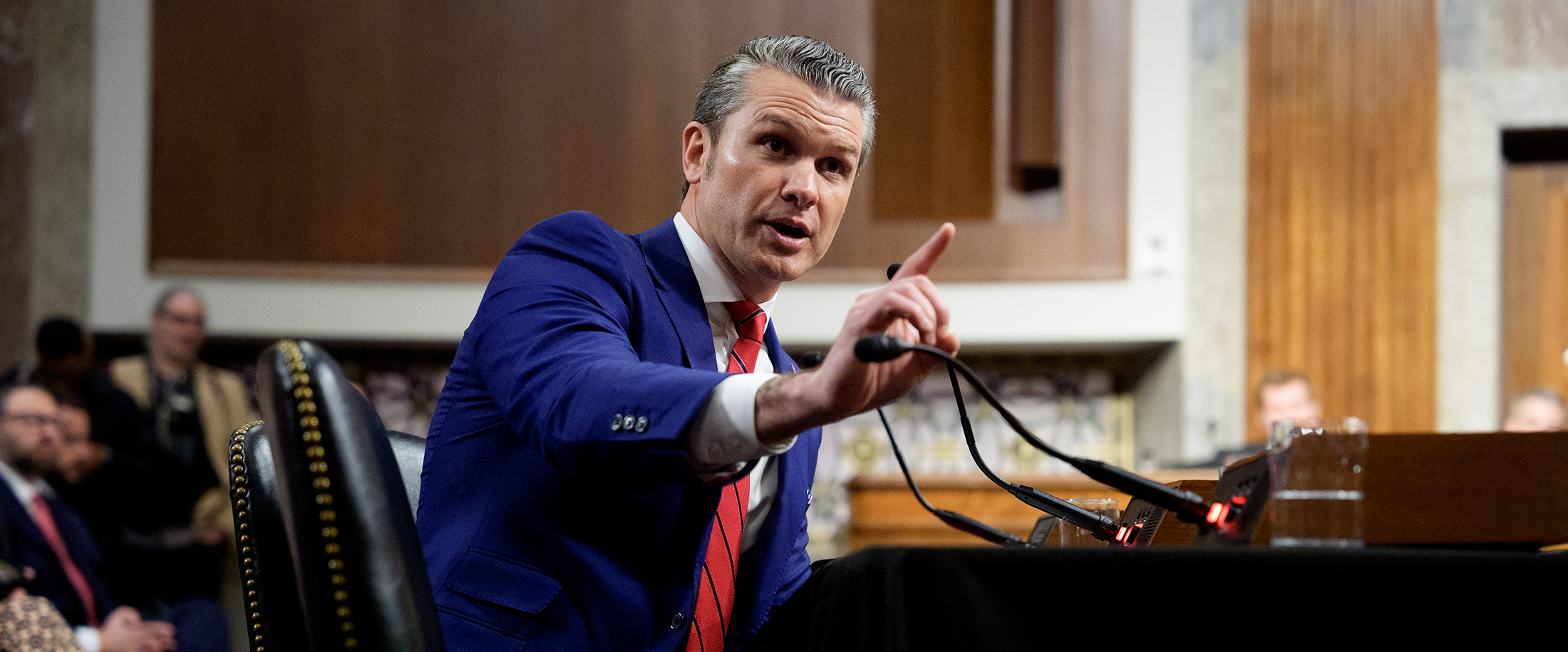
Pete Hegseth speaks during a Senate Armed Services confirmation hearing on Capitol Hill on January 14 in Washington, D.C. (Photo by Andrew Harnik/Getty Images)
U.S. fundamentalism
In the United States, the fundamentalist battle cry has been led by the self-designated Secretary of War Pete Hegseth, a Christian nationalist who has written favorably of the Crusades of the Middle Ages against Islam. During a press briefing shortly after the beginning of the war, he cited Psalm 144:1, “Blessed be the Lord, my rock, who trains my hands for war and my fingers for battle.”
During the March prayer gathering he has instituted as an official monthly event at the Pentagon, Hegseth sounded a similar note: “Let every round find its mark against the enemies of righteousness and our great nation. … Give them wisdom in every decision, endurance for the trial ahead, unbreakable unity and overwhelming violence of action against those who deserve no mercy.”
Hegseth, who with Trump’s approval — but not that of Congress — changed the name of the Department of Defense to the Department of War, often invokes apocalyptic themes in which he echoes the views of fundamentalist preachers.
One of these is John Hagee, head of Christians United for Israel and a prolific promoter of Christian travel to Israel. Hagee is a classic premillennialist who foresees Armageddon in Israel’s wars with its neighbors. Specifically on the conflict in Iran, he has said succinctly, “Prophetically, we’re right on cue.” He also has prayed that God be “brought onto the battlefield” to defeat the enemies of Israel and the United States.

Screencap of preview for Franklin Graham’s Easter broadcast from Israel.
Franklin Graham, whom Hegseth invited to preach at the December 2025 Pentagon Christmas service, declared that God is not only loving, but is capable of judgment and war. “God also hates,” he said. Referencing the 1 Samuel passage on the elimination of the Amalekites, he added: “God is a God of war.”
Another prominent fundamentalist supporter of President Trump is Robert Jeffress, pastor of First Baptist Church in Dallas, who likewise has indicated strong support for the war effort. Reporting that he met with Trump in the early days of the conflict, Jeffress said he had thanked the president for his “courage in confronting an evil.”
A few weeks later, at the infamous Holy Week luncheon for religious leaders at the White House during which Faith Office Senior Adviser Paula White likened Trump’s travails to Jesus’ sacrificial death, Jeffress framed global conflicts such as the regional war in the Middle East as “spiritual warfare.”
According to the Military Religious Freedom Foundation, not all U.S. service members have bought into the narrative of divine sanction of the war effort. Hundreds of officers reportedly objected to the notion that the war is meant to help usher in Armageddon. More specifically, they objected to one commander’s urging them to tell the troops that this was “all part of God’s divine plan,” while referencing verses in the book of Revelation about Armageddon and “the imminent return of Jesus Christ.”
For his part, Trump’s theological framing of the war seems to lack such nuances. Asked by a reporter if he thinks God supports the war effort, Trump hesitated for a moment, then said: “I do. Because God is good.”
That’s an assessment of the war many Islamic, Jewish and Christian fundamentalists share.

Stan Hastey
Stan Hastey, a veteran Baptist journalist and first full-time leader of the Alliance of Baptists, was confirmed into the Episcopal Church in 2018. A member of the Church of Bethesda-by-the-Sea in Palm Beach, Fla., he serves that congregation as a lay reader