

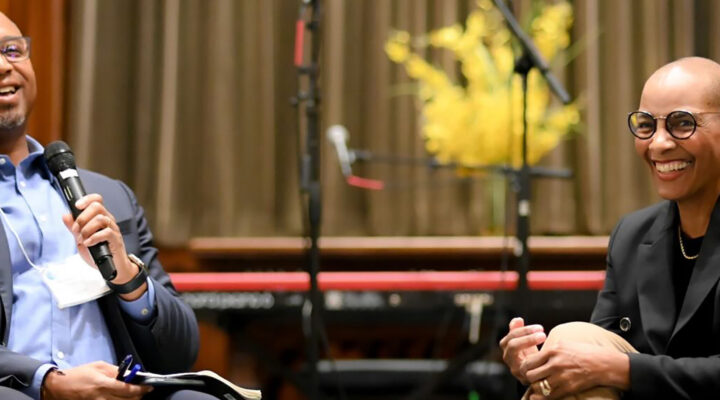
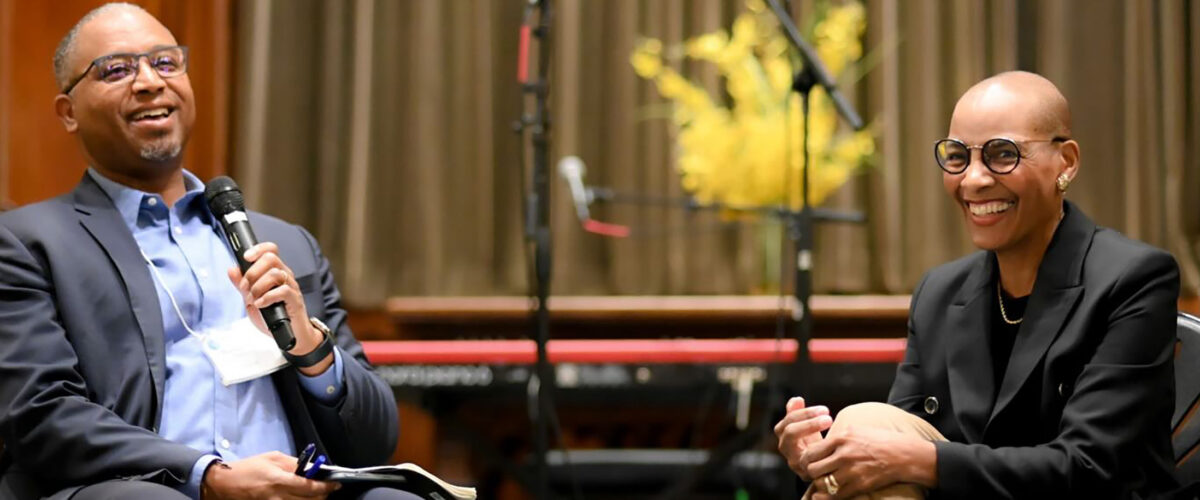
Because “covered wounds don’t heal,” American Christians must continue to expose the truth of their harmful past, Michael Woolf told the Alliance of Baptists annual gathering.
That message was echoed in a second address by Kelly Brown Douglas, visiting professor of theology at Harvard Divinity School. She told the group making soul reparations is the work of reclaiming freedom.
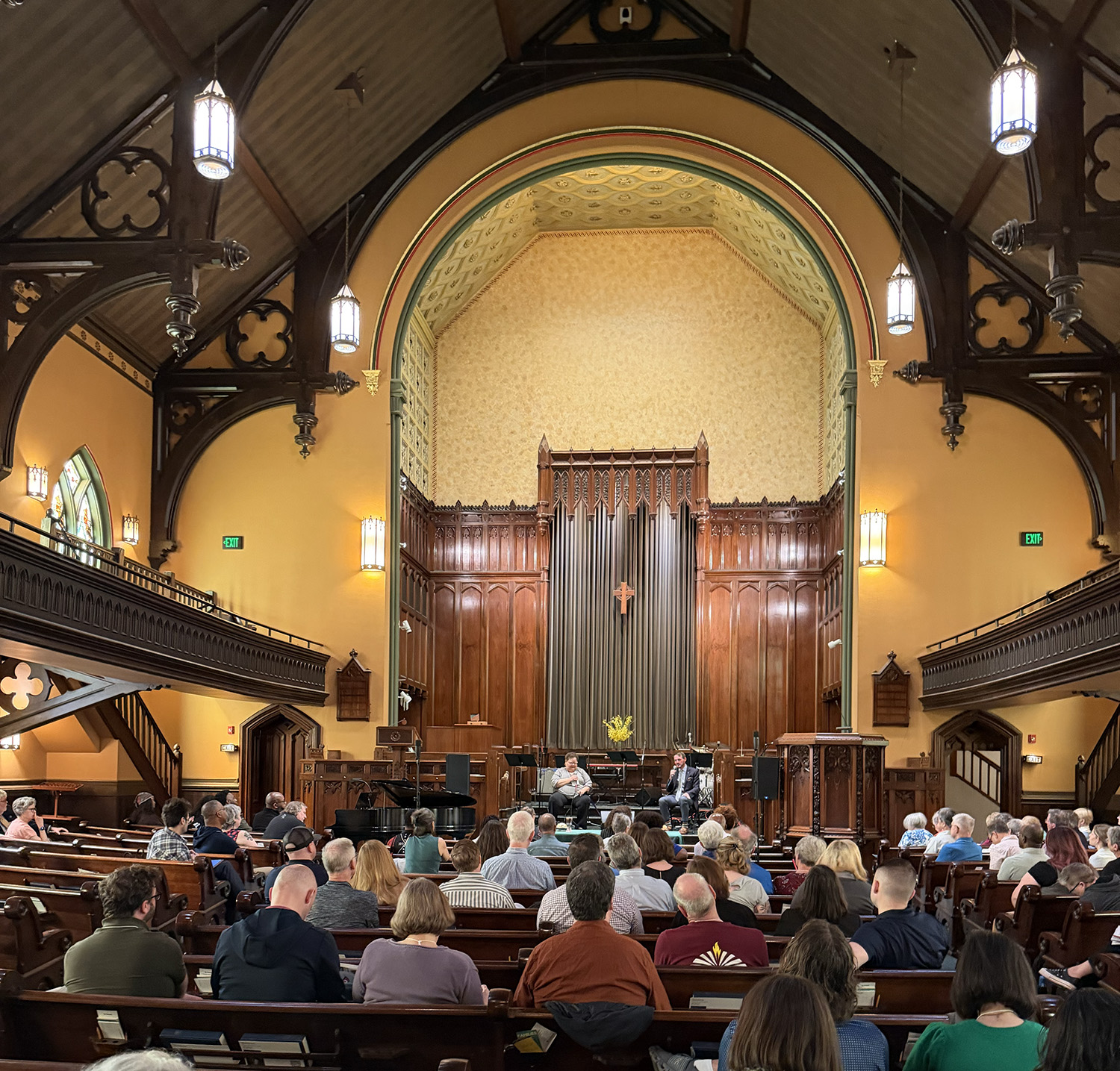
The three-day annual gathering at Lake Street Church in Evanston, Ill., built on the theme of “Reckoning with Our Roots.” The work of liberation and anti-racism is core to the Alliance’s identity.
 “What does it mean to reclaim our freedom in these disorienting times intended to create and cultivate our despair?” Douglas asked. “It means refusing to be defined by systems of domination that betray the sacred worth of God’s people. It means cultivating joy as an act of resistance to that which deprives others of the divine joy of life.
“It means preserving and proclaiming the sacred stories that others would erase. It means being accountable to a moral imaginary rooted in the values of God. And so it is that reclaiming our freedom is a fugitive practice, for it is about fostering the freedom of God in a world, in a society during a time that is hostile to divine freedom.”
This kind of reparations is about “repairing the gap between our unjust present and God’s just future,” she said. And it begins “not someday, but now, with us, with what we refuse, with how we live, with what we create, with what we remember, with what we imagine, and thus with what we are willing to repair.”
This, she said, is the “fugitive act of reclaiming our duty to be free.”
The Alliance meeting happened “in a moment when it seems the very moral compass of this nation, indeed its soul, is in jeopardy,” she said. “Each day brings new challenges to our democratic aspirations, attacks on immigrants, mostly those of color, the erosion of voting rights, especially for those of color, renewed questions about citizenship, again for those of color. And wars waged without accountability again, mostly against those of color.
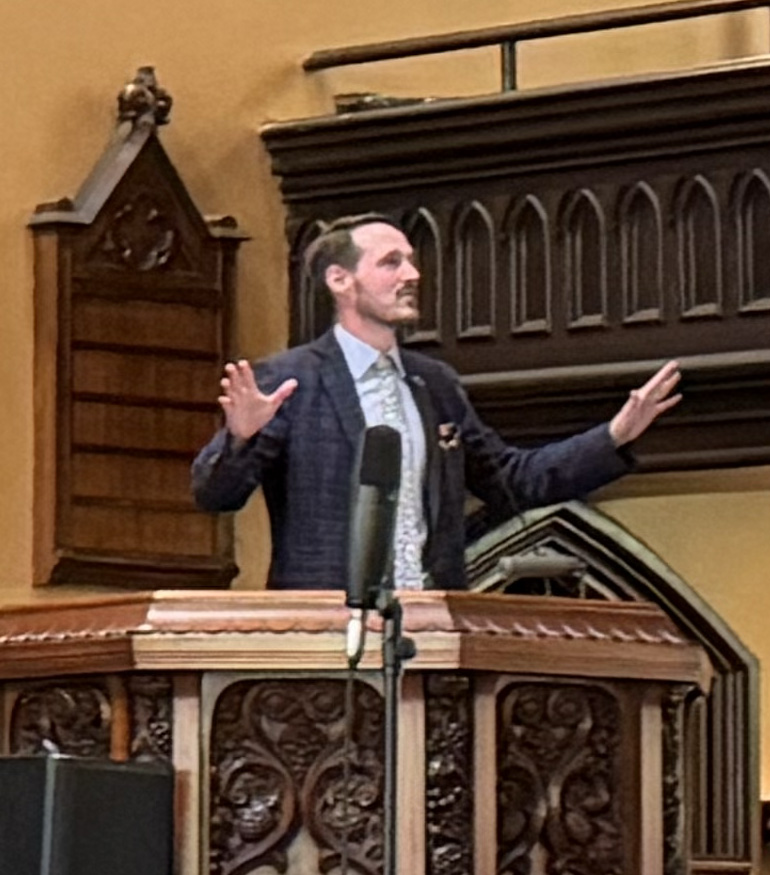
Michael Woolf (BNG photo by Mark Wingfield)
“It is a time in which old certainties, even if we had them, have come unglued. We are a part of a country that proclaims liberty and justice for all while perpetuating bigotry. We are a part of a country that professes equal opportunity while tolerating staggering inequality, a country that speaks of peace while relentlessly investing in systems of war, even as it wages devastating violence abroad.”
Christians of good conscience must not be unmoved by these circumstances, she implored. “How can we accept the bombing of schools filled with children and the taking of thousands of innocent civilian lives? … How can we tolerate people being taken off the streets, out of their homes, out of courthouses where they are trying to do the right thing? How can we accept the conditions in which immigrant children are detained? How do we remain silent as the sacred dignity of every human being is violated?”
“They are questions about who we are and who we are allowing ourselves to become.”
These not merely political questions but are moral and spiritual in nature, she said. “They are questions about who we are and who we are allowing ourselves to become.”
And amid this despair, silence is not an option, she preached. “We settle for silence. We go along to get along slowly, almost imperceptibly. We lose sight of our values, our moral bearings, even of who and who’s we are. This is why disorientation is so dangerous because it is one of the most effective ways to cultivate despair.”
When Christians realize things are not the way God intends them to be, “we must reorient ourselves toward the work of repair,” Douglas said. “That is repairing the breach between the way things are and the way God created them to be. And this work, my friends, indeed requires, first and foremost— in fact, demands — that we reclaim our freedom, the very freedom that is the freedom of God.”
That repair involves white people relearning their own stories and oppressed people telling their stories, she said.
“We as a people, as communities of faith, as religious institutions must preserve and tell the stories of those who have struggled for dignity, respect and freedom. The stories banned from our schools, our libraries, our academies and various other social institutions. Those are sacred stories. They must find a home within our sacred religious institutions. We must be clear. To keep these stories alive is to keep the people alive, and it is to keep God’s story alive. This is what it means to reclaim our freedom, freedom from the false narratives about God and God’s people.”
Her Saturday morning message paralleled the previous day’s opening message by Woolf, who serves as pastor of the host church and became nationally known during the ICE raids in Chicago when he was pepper-sprayed and shot by federal agents.
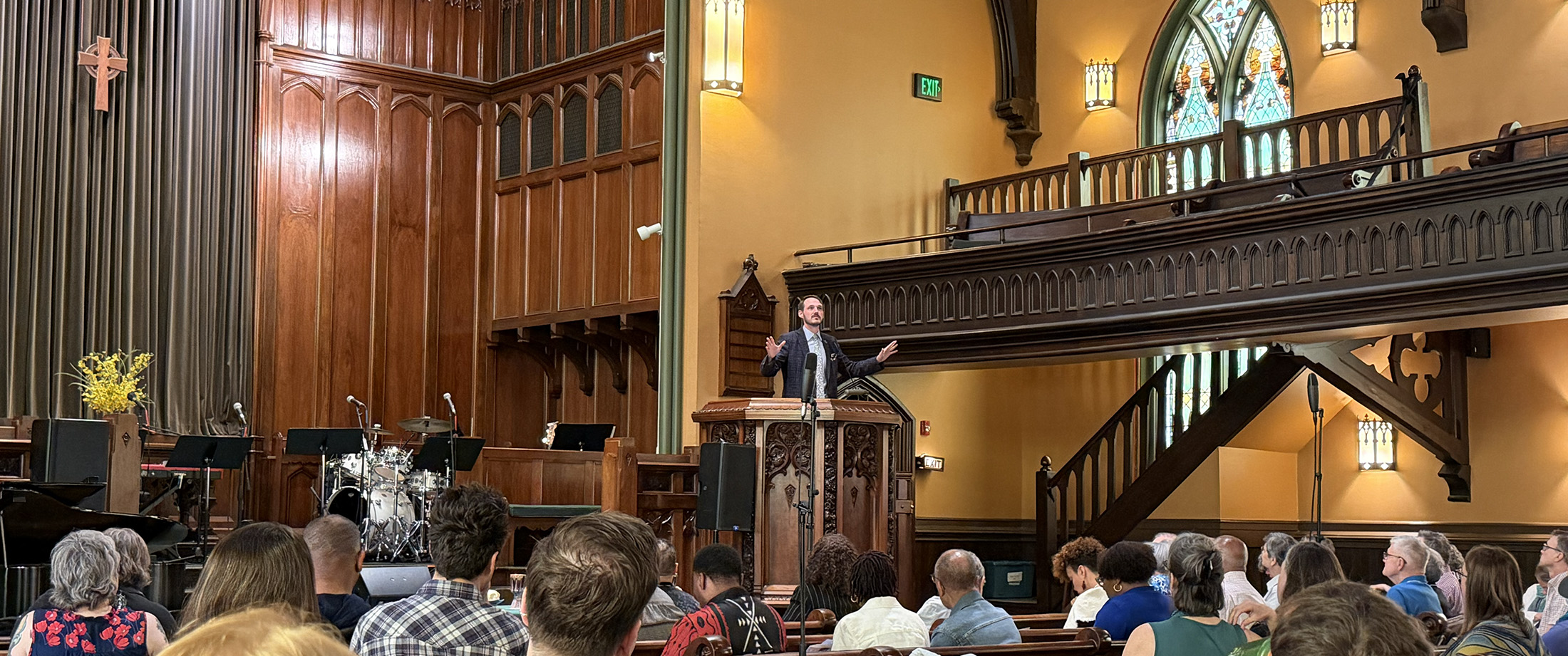
Michael Woolf preaching at Alliance of Baptists meeting (BNG photo by Mark Wingfield)
He told the story of his own church, which dates to 1858. Every Sunday he stands in the pulpit of the Victorian Gothic structure and looks at the wraparound balcony and remembers its origins as a place of segregation. That’s where Black Christians were forced to sit until they left the church and formed their own congregation in freedom.
Even today, the church must remember and confess that story, he insisted. “Covered wounds don’t heal. They fester. But as Christians, we’re called to touch those wounds. It’s so important not cover them up.”
He preached from John chapter 2, where the Apostle Thomas is told by Jesus after the resurrection to touch his wounds and believe.
“Touching wounds is the first step to healing.”
“Touching wounds is the first step to healing,” Woolf said. “And it is hard. It’s a hard first step.”
A natural response is to say, “That happened a long time ago” or “That doesn’t have anything to do with me,” he explained. “We’re professionals at pushing accountability away.”
The story of Lake Street Church is the story of many other churches and indeed the story of American Christianity, he continued. And the wounds found in the church are echoed in the economy and politics and other places as well, he said, speaking specifically about redlining practices that kept minorities out of white neighborhoods.
“One of the great benefits of churches is that these are institutions that extend beyond a human lifetime. They can enter into complex relationships of accountability and loving neighborliness. They can enter into these relationships where wounds are not ignored, papered over, they’re touched.”
The message of resurrection is that those who touch wounds and don’t ignore find newness of life ahead, Woolf said. “If we’re bold enough to seek it and touch those wounds and ask difficult questions about the nature of the church, then we can find our way to resurrection.”