

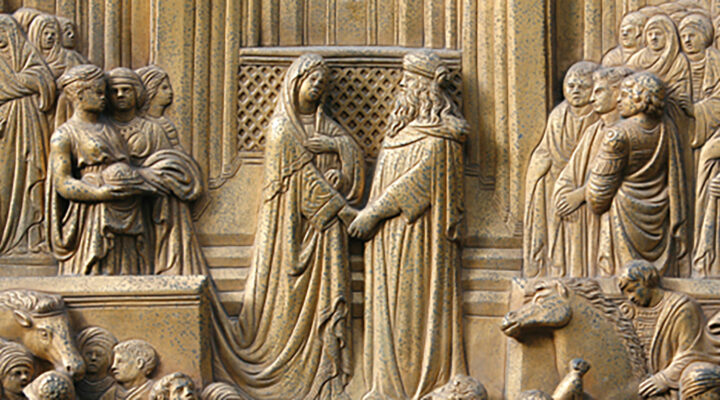
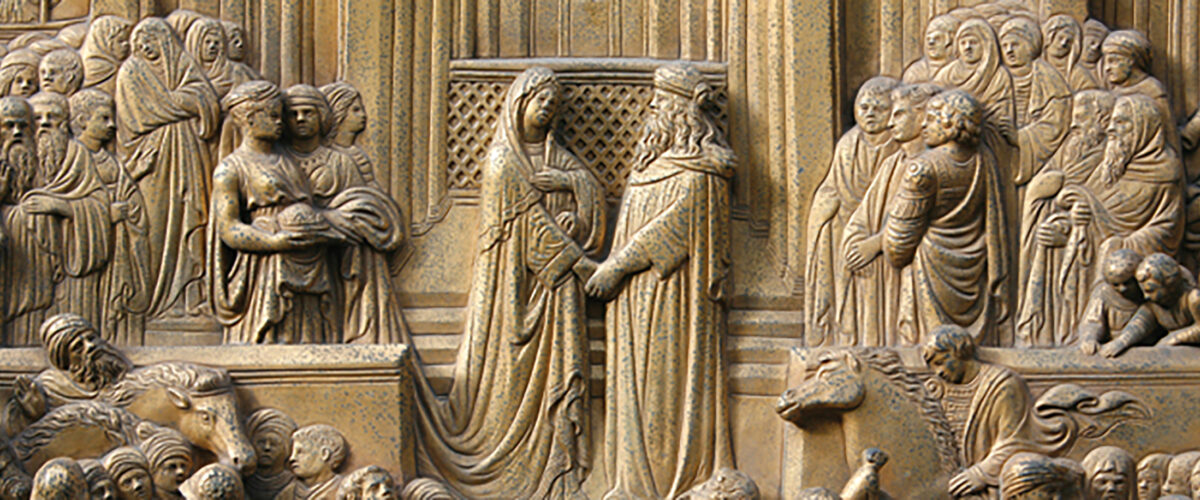
You’ve been told the Bible was a white man’s book. You’ve seen the images — pale-skinned angels, a European Jesus, blonde-haired apostles. Church walls lined with Renaissance art have shaped a quiet but powerful assumption over time, that holiness somehow looked European.
Over generations, those images became more than art; they became belief. And somewhere along the way, a question emerged, sometimes whispered, sometimes ignored: Where are our people in this story?
Let’s be clear. The Bible is not a European invention. It is not Western. And it is not colorblind. If you read it closely — without the filters of empire, colonization and artistic reinterpretation — you will discover something undeniable: Africa and African people are present, central and sacred throughout Scripture.

Edmond W. Davis
This is not about rewriting the Bible. This is about rediscovering what always has been there, what often has been overlooked, and what has, at times, been intentionally minimized. Because before slavery, there was Scripture. Before oppression, there was royalty. Before colonization, there was purpose. Before chains, there was covenant.
The story begins in Genesis 2:7, where it says, “And the Lord God formed man of the dust of the ground.” The Hebrew word for ground — adamah — points to rich, reddish-brown earth. Not pale sand, but deep soil — the kind associated with the fertile lands of Africa and the ancient Near East.
Scripture then gives us geography in Genesis 2:13, noting one of the rivers flowing from Eden surrounds the land of Cush — ancient Ethiopia or Nubia. From the very beginning, humanity is placed in a world connected to Africa. That means the first breath of life was given in proximity to African soil — the first man, the first woman, the first family. Humanity did not begin disconnected from Africa; it began intertwined with it. You were not added to the story later. You were there at the start.
“Africa is not on the margins of Scripture; it is embedded in it.”
Africa is not on the margins of Scripture; it is embedded in it. Egypt appears throughout the Bible as a place of refuge, power and provision. In Matthew 2:13, even Jesus is taken into Egypt — for protection. Let that settle for a moment: The Savior of the world found refuge on African soil.
Israel itself spent generations in Africa, growing, struggling and becoming a people. Africa is not outside the biblical narrative; it is part of its foundation, part of its movement, part of its unfolding story.
Scripture names African figures, even when history has overlooked them. In Numbers 12:1, Moses marries a Cushite woman, and her identity becomes the focus of criticism — revealing early tensions around ethnicity and difference. In Jeremiah 38:7-13, an Ethiopian official named Ebed-Melech risks his life to rescue the prophet Jeremiah, and God later rewards him directly in Jeremiah 39:15-18. In Acts 8:26-40, a high-ranking Ethiopian official is baptized, becoming one of the earliest recorded Christian converts and a bridge of faith into Africa.
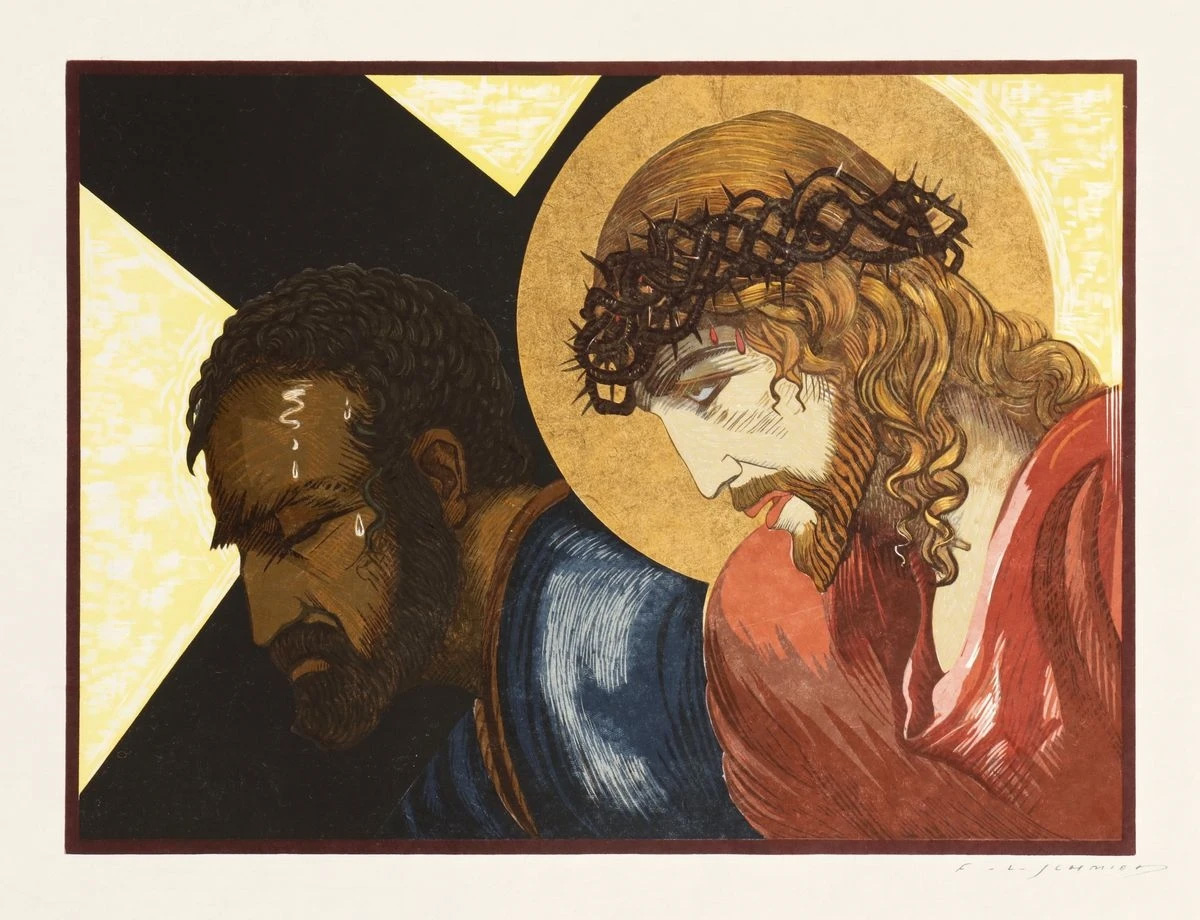
“Christ and Simon of Cyrene,” 1931. François Louis Schmied
And in Mark 15:21, Simon of Cyrene — a man from North Africa — is compelled to carry the Cross of Jesus. A Black man carried the Cross — not by accident, not by coincidence, but as part of the divine moment of redemption. In one of the most sacred moments in human history, Africa was present — not in the background, but in the burden.
Africa not only was present in Scripture, it helped lead the early church. In Acts 13:1, we see leaders such as Simeon called Niger and Lucius of Cyrene. These were not background figures; they were central to the growth and leadership of the early Christian movement. They were teachers, prophets and decision-makers. Africa was not merely a mission field; it was a leadership center, a place of influence, a driver of early Christian expansion.
The biblical narrative also presents Africa in terms of royalty and influence, not inferiority. In 1 Kings 10, the Queen of Sheba arrives with wealth, wisdom and authority, engaging King Solomon as an intellectual equal. She was not portrayed as lesser, but as powerful, discerning and respected. This is royalty. This is dignity. This is power long before the distortions of history reduced Africa to a story of oppression and lack.
The Bible does not erase identity; it acknowledges it. In Jeremiah 13:23, it asks, “Can the Ethiopian change his skin …?” The verse assumes identity; it does not deny it. Scripture reflects a diverse world — geographically, culturally and ethnically. It does not flatten difference; it recognizes it as part of God’s creation.
Still, the message of the Bible is not about elevating one group above another. Jesus represents all people. As Revelation 7:9 declares, there will be a great multitude “of all nations and kindreds and people and tongues.” That includes Africa. That includes you. That includes all humanity under one divine authority.
And yet, if we are honest, much of what we have been taught — especially in the West — has required unlearning. We as humans — not just Americans, Europeans, Asians, Latinos, Caribbeans, Native Americans or even Black people across the diaspora — must recondition, reinvest and retrain ourselves, at every age, to understand what has been done, what has been hidden and what has been reshaped. Because a distortion this deep is not accidental — it is systemic, generational and powerful.
“Much of what we have been taught — especially in the West — has required unlearning.”
As a child and early teen in the 1980s, I remember what I saw on television about Africa. It almost always was the same: famine, poverty, apartheid, tribal conflict, disease, crime, wildlife. Images of suffering dominated the narrative. Rarely, if ever, did we see strength, innovation, wealth, advanced civilizations or cultural brilliance. Africa was not shown as a place of origin, but as a place of struggle.
And yet, contrary to those portrayals, Africa always has been rich — rich in land, rich in soil, rich in minerals, rich in gold, rich in natural resources, rich in culture, rich in knowledge, rich in spirit. The distortion was not accidental; it was constructed, reinforced and repeated until it felt like truth.
So whatever you thought you knew about Africa, expand the equation. Reimagine it. Reinsert truth where narrative once lived. Challenge what you were shown and seek what was omitted.
If culture can give us a fictional Wakanda that symbolizes power, innovation and African excellence, then surely history — and Scripture — can remind us the real story is even deeper, even richer, even more profound.
So yes, Wakanda Forever. But more importantly, truth forever.
Because your story did not begin with slavery. It began with Scripture. With soil. With breath. With purpose. Africa is not a footnote in the Bible. It is part of the foundation. And when that truth is reclaimed — not rewritten but remembered — it restores more than history.
It restores identity. It restores dignity. And it restores faith.
Edmond W. Davis is an American social historian, international speaker and Amazon No. 1 bestselling author. He is a global authority on the Tuskegee Airmen and serves as the founder of the National HBCU Black Wall Street Career Fest. A native of Philadelphia and current resident of Little Rock, Davis is committed to cultural empowerment and educational equity through storytelling and civic engagement.