

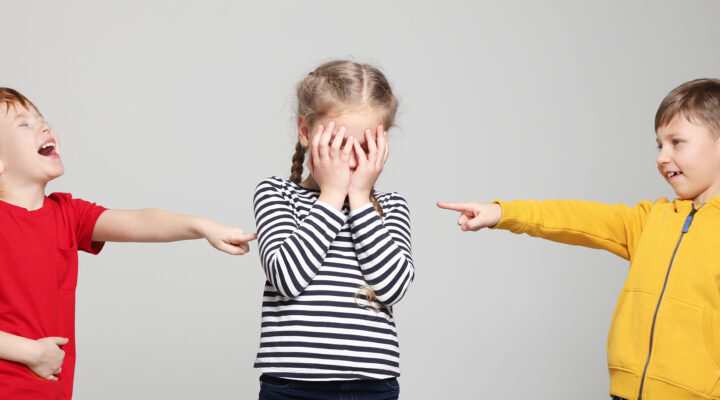
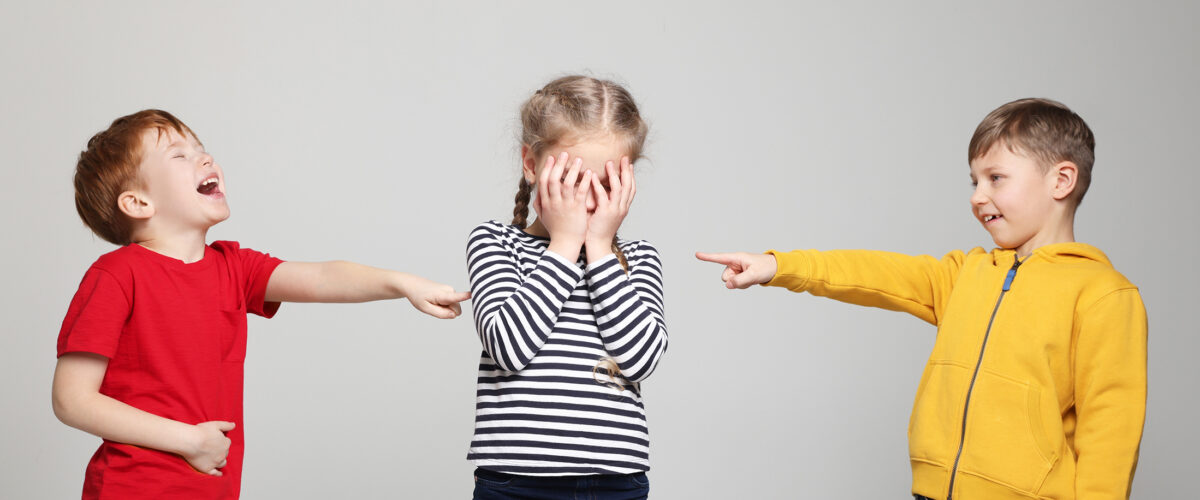
“Mommy, Jason is being mean to me, and I can’t get him to stop!”
My 6-year-old daughter was calling from her hour-long school bus ride home (no, she doesn’t have a phone but uses a Fitbit watch for emergencies). In the background, I heard a boy’s voice berating my sobbing child and screaming at her to “shut up,” seemingly unfazed by her obvious emotional distress.
Upon investigating, my husband and I discovered our daughter had been the victim of repeated and continued verbal abuse from this boy, a third grader. In other words, she was being bullied.

Shannon Small
My thoughts immediately turned to Jason when I saw the footage of an ICE agent killing Renee Nicole Good in Minneapolis back in January. It wasn’t the use of deadly force that shocked me; instead, it was the response of Agent Jonathan Ross seconds after firing into her vehicle at point-blank range, seemingly while also filming her death on his own cell phone: “f**king b**ch.”
Those words sent chills down my spine. When he was a young boy, I wondered, would this man have screamed at a younger girl, just because he could? Would the suffering and pain of another human being have affected him at all? Similar bullying behavior was exhibited by another agent before Good’s death — videos show him attempting to open her driver’s side door while saying “get out of the f**king car” — and yet another immediately after the shooting — “I don’t care!” he responded when a physician asked to check for a pulse.
The same seeming lack of compassion also was demonstrated in videos documenting the killing of ICU nurse Alex Pretti, who, by multiple accounts, was demonstrating kindness toward a woman shoved to the ground by ICE officials before being shot in the back more than 10 times.
All the while, President Donald Trump and his administration continue to support responses that paint the victims as “domestic terrorists” and “professional agitators,” with not one word of condolence to the families of Good or Pretti.
In today’s America, it seems, there is no room for kindness. Indeed, it is kindness that can get you killed. Our current political climate has created a culture where hateful rhetoric has emboldened and normalized the denigration of other people.
“Our current political climate has created a culture where hateful rhetoric has emboldened and normalized the denigration of other people.”
This is an epidemic: Congress recently found that nearly one in five K-12 students — more than 10 million — have reported being bullied at school. Worse, bullying behavior has been on the rise since the pandemic; in a national survey conducted by the Department of Education in 2022, 100% of student participants reported experiencing, witnessing or being aware of bullying. The American Osteopathic Association conducted a recent survey that found nearly a third of Americans have been bullied as adults.
It is also a cycle. We know — from resources provided by our own federal government — that kids who bully others become adults who also can engage in violent, aggressive and impulsive behavior.
But there’s also reason for hope: Studies from various children’s hospitals have demonstrated that bullying behaviors are learned. That means the cycle can be broken.
Until we remember that bullies are not born but made, the violence and suffering on display for the past year will only continue, along with their negative effects. Both children who are the victims of bullying and children who witness bullying can have a high risk of mental health and behavioral problems, feel unsafe in school and have increased suicidal ideation.
With no federal laws directly addressing bullying and Congress unwilling to pass HR-2682 (the “STOP Bullying Act”), all we parents can do to end this cycle is focus on the lessons we are providing our children.
These lessons should start at home and start young. And so, I instructed my daughter that while the boy who was screaming at her was wrong, and that she should not be spoken to or treated that way, her father and I do not expect her to scream back. We do not expect her to tell him to shut up. We expect her to walk away, take a deep breath and remember she is loved. I told her we will do everything we can to keep her safe.
While we parents seek to raise a kinder, more empathetic generation, I would task adults to also stop, take a deep breath and work to suppress their own urge to engage in heated rhetoric, which has risen sharply since the pandemic. To work toward a kinder version of themselves as well. To model the behavior we want for our children. That is the only way for us to heal.
Shannon F.R. Small serves as assistant professor of surgery at Yale School of Medicine and is a Public Voices Fellow of the OpEd Project.