



Four stories. One week. Femicide.
In recent days, the news has carried story after story of women killed or missing at the hands of husbands, partners, former partners and other perpetrators of violence.
These stories reveal a pattern that is persistent and deadly, one the church must name with clarity.
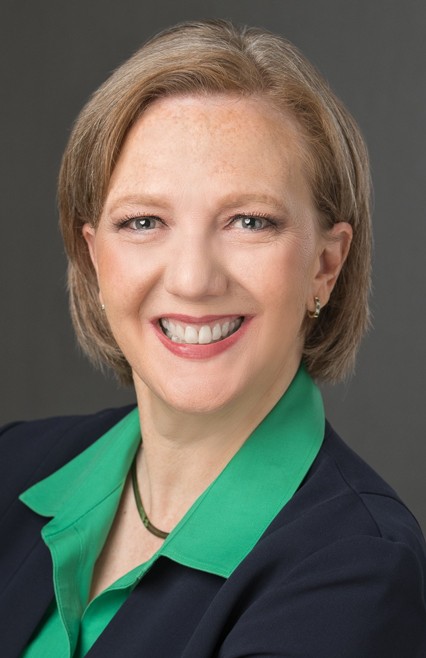
Ginny Brown Daniel
The details differ, but the pattern does not. A woman or girl exercises her autonomy. A man responds with violence.
If the church cannot name this for what it is, we fail in our call to bear witness to the dignity of every human life.
In the prophetic tradition, naming is not a rhetorical device. It is an act of witness. It resists the reduction of human beings to headlines and insists their lives carry weight.
- Celeste Rivas Hernandez, 14, a daughter of Salvadoran immigrants, a girl whose life was still unfolding
- Cerina Fairfax, 49, a dentist and a mother, was killed in her own home
- Shaneiqua Elkins, whose children were the center of her life
- Lynette Hooker, 55, a sailor and a mother, disappeared in the Bahamas
These women and girls were not statistics. These were lives.
And still, more than half of women murdered in the United States are killed by a current or former intimate partner.
We are often told to understand these stories as tragedies. But tragedy suggests something without agency, something inevitable or beyond human control.
This is not tragedy. This is choice.
“More than half of women murdered in the United States are killed by a current or former intimate partner.”
The word for this is “femicide”: the killing of women and girls because they are women and girls.
It is rooted in a belief that the autonomy of women and girls is a threat, that their independence or refusal can be punished with violence.
This violence is rooted in the belief that the autonomy of women and girls is punishable. A belief that is learned, reinforced and normalized.
For people of faith, this should be a moral line we do not cross in silence.
Every woman, girl and trans person bears the image of God. To harm them is not only a social failure; it is a theological one.
And yet too often, the church has struggled to speak clearly about violence that happens in homes, relationships and in the private spaces we are taught not to question.
Many have centered these acts of violence on the mental health of the men who commit them. Mental health matters. It deserves serious attention, particularly in communities shaped by trauma and systemic neglect.
But when the focus shifts to the suffering of the perpetrator, the story shifts with it. The woman or girl becomes a footnote in the narrative of his pain.
Mental health matters, and it deserves serious attention. But centering it in these moments shifts the focus away from the beliefs and power structures that make this violence possible.
What drives this violence is a belief system that grants men entitlement over the lives and bodies of women and girls, a belief system that has been shaped by culture, reinforced by power and too often left unchallenged.
That belief system does not exist outside the church. It is sometimes nurtured within it.
“What drives this violence is a belief system that grants men entitlement over the lives and bodies of women and girls.”
This violence also does not fall evenly:
- The children and mother killed in Shreveport were Black
- Celeste Rivas Hernandez was a Latina teenager who had been labeled a runaway repeatedly, even after her death
- Cerina Fairfax was a highly accomplished Black woman whose life was quickly overshadowed by the public identity of her husband.
The question is not only what happened. The question is how we respond. Whose deaths are treated as tragedies, and whose are treated as complications? Whose lives are held in public grief, and whose are explained away?
A faithful witness refuses those distinctions.
If the church is to be a place of refuge, it must be a place where women, girls and transfolk are safe. That requires more than prayer. It requires clarity, courage and action.
- It requires preaching that names violence against women and girls as sin, not misfortune.
- It requires policies that protect those who disclose abuse.
- It requires partnerships with shelters and advocates who are doing the daily work of keeping women and girls alive.
- It requires a theology that makes clear that no relationship, no marriage or no minister is more sacred than a person’s safety.
Silence permits femicide.
The witness we owe is not only to those who have died. It is to the women who are making plans to leave, to those quietly calculating what safety will require, and to the girls learning, even now, what the world believes they are worth.
Naming femicide is not political. It is faithful.
The church cannot proclaim good news while remaining silent about femicide. Faithfulness requires that we name it, refuse to accept it and advocate for gender equity and justice.
Ginny Brown Daniel is an ordained minister, writer, and keynote speaker based in Texas. She writes and speaks at the intersection of faith, politics, and public life. Learn more at her website.