

The U.S. Supreme Court will decide another case about LGBTQ rights in Colorado. At issue: Are Catholic preschools that close their doors to 4-year-olds with LGBTQ parents eligible to participate in a state-funded program requiring preschools not to discriminate?
Colorado’s universal preschool program, supported by voters in 2020, provides 15 hours of free preschool per week at public or private preschools parents choose. Participating schools must agree not to discriminate based on race, religion, sexual orientation, gender identity, income or disability.
But two Denver-area Catholic parishes claim that admitting children of LGBTQ parents would violate their faith convictions. They’re being defended by Becket Fund for Religious Liberty, which has scored 13 high court victories in 15 years and calls itself “the premier religious liberty law firm.”
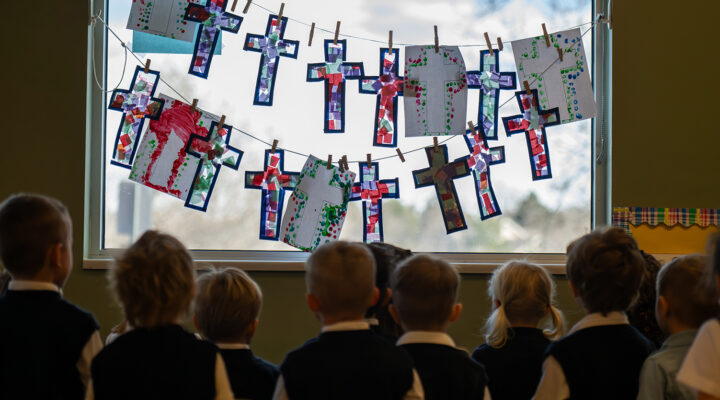
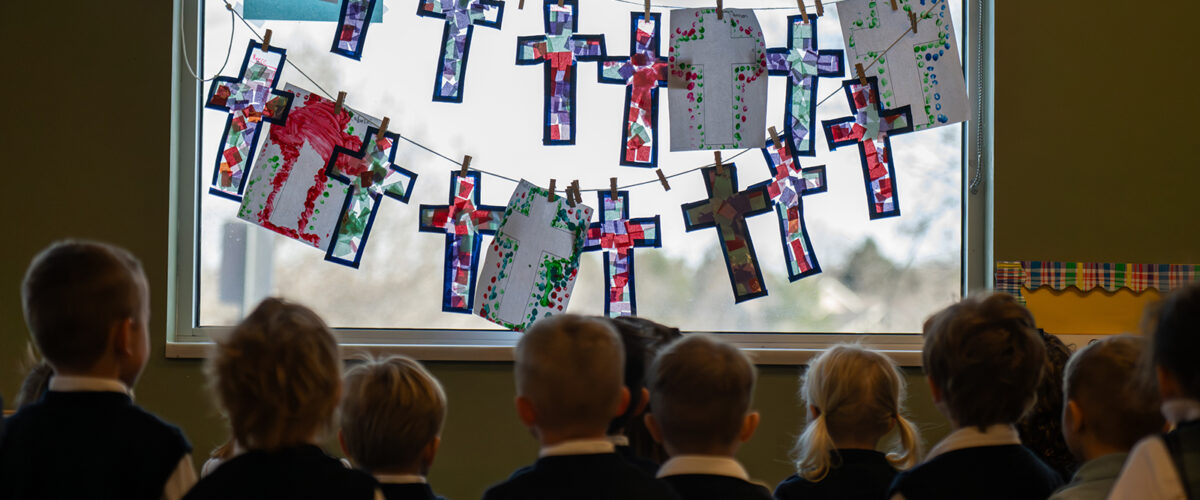
General scenes at St. Mary Catholic Virtue Preschool on March 5, 2026, in Littleton, Colorado. (Photo by Anya Semenoff/for Becket Fund)
The case, St. Mary Catholic Parish v. Roy, should be decided in the court’s fall term, which begins in October.
The Catholic parishes have the support of the National Association of Evangelicals, the Ethics And Religious Liberty Commission of the Southern Baptist Convention, the Church of Jesus Christ of Latter-day Saints, and the Lutheran Church-Missouri Synod, which filed a joint amicus brief.
In 2024, the federal appeals court in Denver ruled in favor of Colorado, saying, “When a school takes money from the state that is meant to ensure universal education, then its doors must be open to all.” The appeals court said Colorado did not exclude faith-based preschools and was not trying to keep public funds from religious preschools.
Americans United for Separation of Church and State hailed that ruling, saying, “There is no Free Exercise Clause violation when a governmental body conditions a public benefit on a religion-neutral and generally applicable requirement. The plaintiff religious schools are merely being asked to follow the same antidiscrimination rules that apply to every other school in the program— rules that are grounded in secular, not religious, concerns.”
But Catholic parents Dan and Lisa Sheley disagree. They say they must now pay thousands of dollars out of pocket for their children’s preschool that other parents receive for free because “Colorado imposed restrictions that excluded all archdiocesan preschools from the program because they ask families to be supportive of the Catholic faith,” Beckett said.
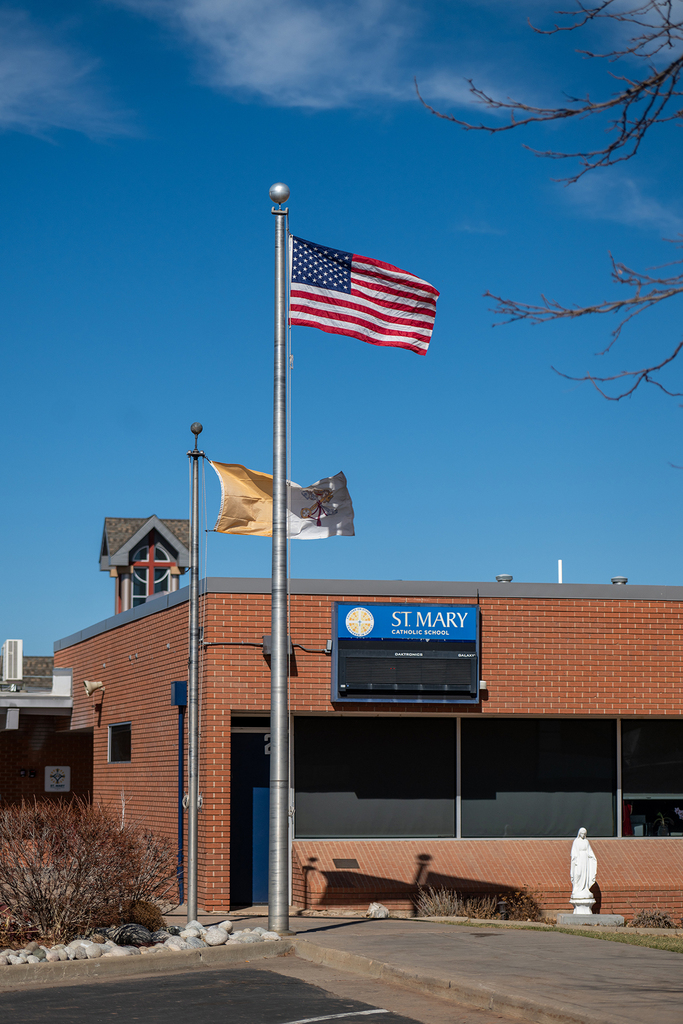
General scenes at St. Mary Catholic Virtue Preschool on March 5, 2026, in Littleton, Colorado. (Photo by Anya Semenoff/for Becket Fund)
Beckett says the Sheleys’ First Amendment rights have been violated because Colorado “prevented religious entities from obtaining state benefits that were generally available, leaving the Sheleys and many other families out in the cold.”
Southern Baptist influencer Al Mohler said in his “The Briefing” podcast that “The state of Colorado is pushing the LGBTQ revolution on parents by coercion.”
Colorado has been dealing with gay rights issues since the 1990s, when Focus on the Family moved to Colorado Springs and backed Amendment 2, an anti-gay-rights measure that voters narrowly backed in 1992 but later was overturned by the Supreme Court.
Since then, the court has decided three Colorado cases that prioritize religious freedom over the rights of LGBTQ people:
- In March, the court overturned a state ban on gay conversion therapy in Chiles v. Salazar.
- In 2023, the court ruled that a web designer could refuse to create websites for same-sex weddings in 303 Creative v. Elenis.
- In 2018, the court ruled that Jack Phillips of Masterpiece Cakeshop could refuse to create cakes for same-sex weddings in Masterpiece Cakeshop v. Colorado Civil Rights Division.
Those three cases were argued by Alliance Defending Freedom, which has 17 Supreme Court victories.
The current Supreme Court has a 6-3 conservative majority and its decisions are “creating a system in which religion and government are not separate but instead increasingly intertwined,” said the Center for American Progress.
“A majority of current Supreme Court justices now champion a vision of religion that diverges significantly from that of the founders,” said the center. “Instead of ruling that the Constitution requires church and state to be separate, the Roberts court has often held the opposite, repeatedly finding that the government must allow or even fund certain religious activities.”