

The U.S. Supreme issued a 6-3 ruling April 29 severely limiting a key element of the Voting Rights Act of 1965 that protects minorities from voting discrimination.
In a decision split along ideological lines, the court made it more difficult to apply Section 2, a provision that barred local and state governments from creating voting procedures, laws or redistricting maps based on race. Now, proof of intentional discrimination must be proved in order to challenge a voting practice under the act.
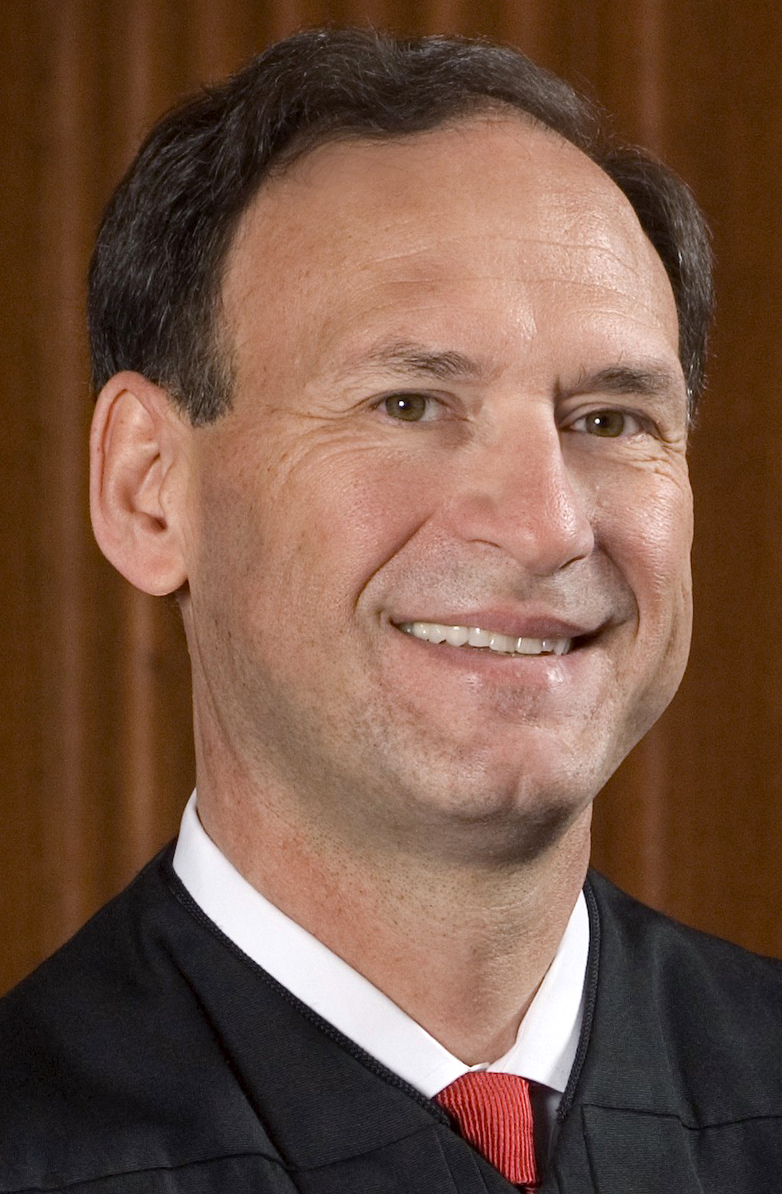
Samuel Alito
“In short, Section 2 imposes liability only when the evidence supports a strong inference that the state intentionally drew its districts to afford minority voters less opportunity because of their race,” Justice Samuel Alito wrote for the conservative majority.
Writing for fellow liberal justices Ketanji Brown Jackson and Sonia Sotomayor, Justice Elena Kagan described the ruling as “the majority’s now-completed demolition of the Voting Rights Act.”
In 2013, the court issued a ruling in Shelby County v. Holder that essentially eliminated the law’s “preclearance” requirement that historically discriminatory states and other jurisdictions must receive federal approval for changes to voting regulations.
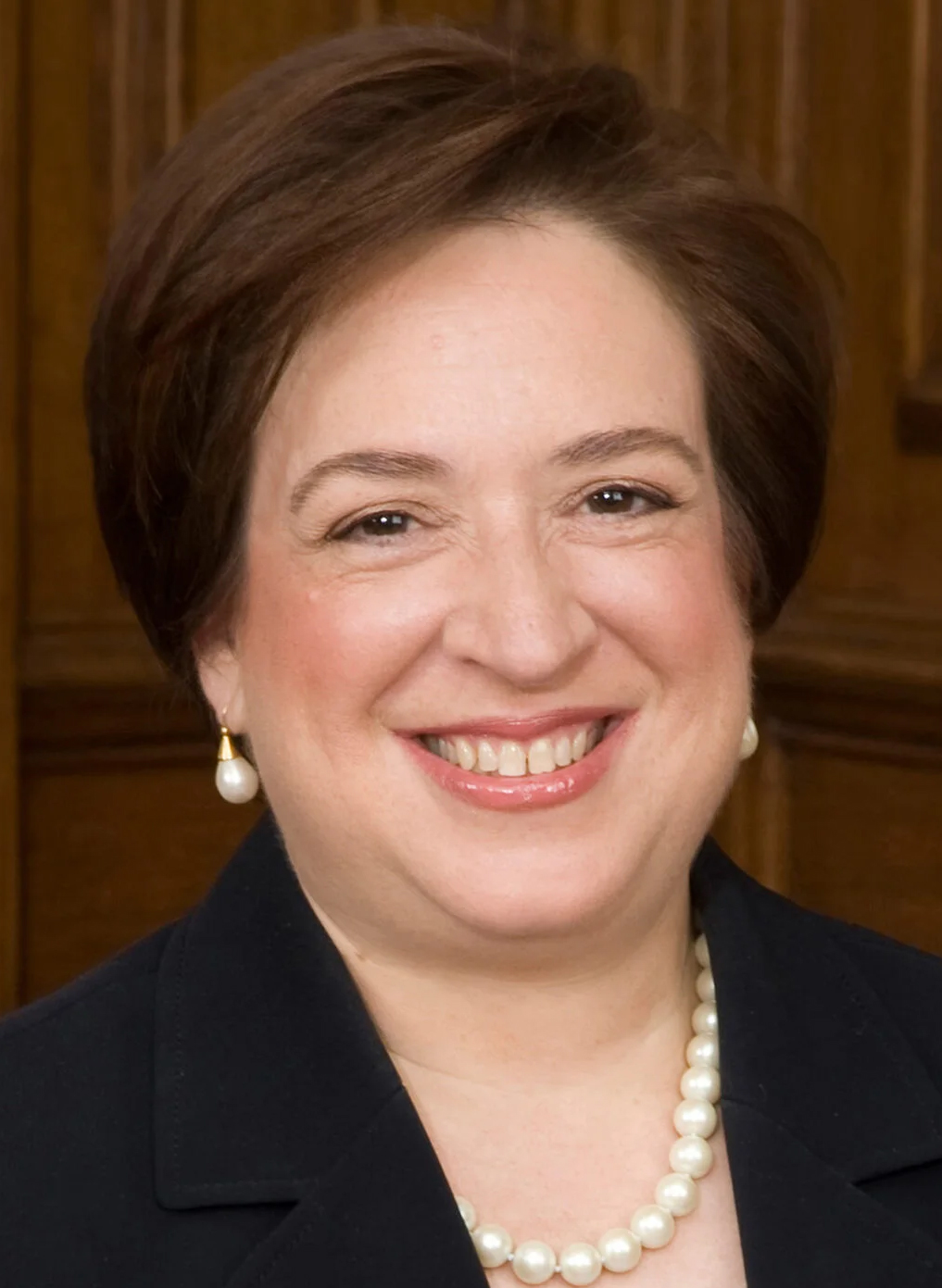
Elaina Kagan
“Under the court’s new view of Section 2,” Kagan added, “a state can, without legal consequence, systematically dilute minority citizens’ voting power.”
Civil rights activists fear the decision will erase the gains of the Civil Rights Movement and clear the way for Republican states to swiftly abolish Black and Hispanic electoral districts.
“Today’s decision is a bullet in the heart of the voting rights movement,” National Action Network President Al Sharpton said. “The Supreme Court has not just weakened a law, it has humiliated and dismantled the life’s work of Dr. Martin Luther King Jr., John Lewis and every man and woman who marched, bled and died for Black Americans to have an equal voice at the ballot box.”
This week’s landmark decision stemmed from Louisiana v. Callais, a lawsuit filed by “non-African American” voters challenging the state’s 2024 congressional map that included two majority-Black districts. The Supreme Court left in place a district court decision barring Louisiana from continuing to use the map.
“In sum, because the Voting Rights Act did not require Louisiana to create an additional majority-minority district, no compelling interest justified the state’s use of race in creating SB-8 (the congressional map),” the majority said. “That map is an unconstitutional gerrymander, and its use would violate the plaintiffs’ constitutional rights.”
But Kagan noted Congress passed a law in 1982 to override a previous Supreme Court decision requiring proof of discrimination in interpreting Section 2.
“It made sure instead, as this court recently explained, that Section 2 would ‘turn on the presence of discriminatory effects,’” Kagan wrote. “And more precisely, that the section would turn on whether, given all relevant circumstances, an electoral rule would leave minority voters with ‘less opportunity’ than non-minority voters to ‘elect representatives of their choice.’”
According to the National Conference of State Legislatures, states are undertaking mid-decade redistricting efforts at a pace not seen since the 19th century.
The organization identified 11 states either with new maps, legislation proposing new maps or already undertaking the process.
Among them is Florida, where lawmakers this week approved a new arrangement of congressional districts that would give Republicans four additional seats in the U.S. House of Representatives.
Another is Virginia, where Democrats were dealt a recent setback when the state Supreme Court barred implementation of a referendum that may have flipped four House seats in their favor in the midterm election.
Another four states, including Louisiana and Alabama, are awaiting the outcome of litigation before moving forward with the redistricting process. The unusual redistricting efforts were set off when President Donald Trump demanded Texas redraw its districts to gain more Republican seats. After that happened, California responded by reworking its maps to create more Democratic seats.
Now, the Supreme Court’s decision on voting rights puts “another nail in the coffin” of historic civil rights legislation, said Janet Murguia, president of UnidosUS, a national Hispanic rights group. “Today is a dark day for American democracy. The court has chosen, as it signaled wanting to do for years, to eviscerate the safeguards enacted by Congress to protect the voting power and choices of minority voters.”
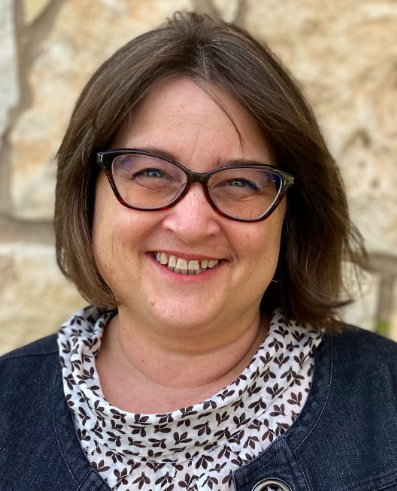
Bee Moorhead
Section 2 of the act was key to strengthening democracy and pluralism when it was enacted, said Bee Moorhead, executive director of Texas Impact.
“We cannot afford to lose ground or break faith with the Americans whose rights that law secures,” she said. “Faith communities were integral to the passage of the Voting Rights Act. More than half a century later, it’s clear that faith voices are more important than ever to re-center American political culture on advancing the common good rather than advancing partisan interests.”
The high court ruling is a severe blow to free and fair elections and will be felt from Congress to local school boards, said Skye Perryman, president of Democracy Forward.
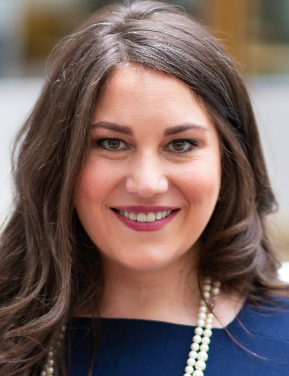
Skye Perryman
“The Voting Rights Act, passed by a bipartisan majority after the nation witnessed the horrors of racially motivated state-inflicted violence on the Edmund Pettus Bridge in Selma, Ala., has been a crown jewel of our nation’s civil rights protections and has been essential to voting rights in the United States,” she said. “As it has done with so many of our nation’s protections, the U.S. Supreme Court majority has significantly harmed voting rights and, in so doing, the American people.”
The harmful effects of the ruling should not be underestimated, according to the Legal Defense Fund: “Make no mistake: This decision threatens the political power of Black communities. The decision was a devastating blow to critical civil rights protections by permitting states to use partisan gerrymandering as a wholesale excuse to deny Black voters a voice in their government.”
Partisan redistricting long has been used as a cover for racial discrimination, the organization added. “And the Supreme Court’s decision in Louisiana v. Callais could open the floodgates for more of the underhanded manipulation and voter dilution we’ve seen play out time and again in Black communities and other communities of color.”
Leaders of the Progressive National Baptist Convention issued a statement condemning the Supreme Court ruling.
“This ruling is another deliberate and devastating blow to Black political representation and to the promise of American democracy,” the statement signed by President David R. Peoples and General Secretary Thomas L. Bowen.
“The right to vote is sacred. The Voting Rights Act was created to address the long history of racism, discrimination and efforts to silence Black voices in this country. Those problems have not gone away. Yet once again, the court has chosen to weaken protections that were won through blood, prayer, protest and sacrifice.
“As the spiritual home of Dr. Martin Luther King Jr. and our convention born in the struggle for justice, we cannot be silent. To weaken Black voting strength is not just a legal matter. It is a moral matter, a justice matter and a democracy matter. Without these protections, and without fixing the original wrongs, this decision further damages the foundation of our democracy.”
PNBC leaders called on Congress “to act swiftly to restore and strengthen the Voting Rights Act.”
For his part, Trump praised Alito: “Thank you to brilliant Justice Samuel Alito for authoring this important and appropriate opinion.” Trump said the court’s ruling “returns the Voting Rights Act to its original Intent, which was to protect against intentional racial discrimination.”
The National Republican Congressional Committee also lauded the ruling, saying: “Today’s decision is a victory for the Constitution and the principle that every American citizen is equal under the law. The Supreme Court made clear that our elections should be decided by voters, not engineered through unconstitutional mandates.”