

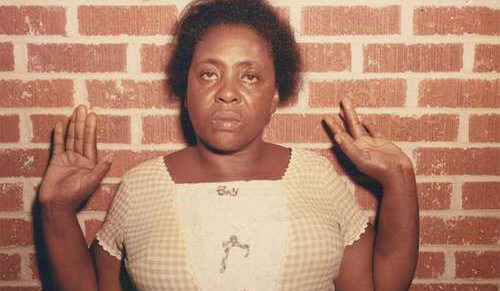
Let me tell you what just happened: The U.S. Supreme Court effectively dismantled the Voting Rights Act. The very legislation for which John Lewis bled on that bridge, for which Fannie Lou Hamer was beaten in a Mississippi jail, for which my mother — evangelist Idella Cora Thomas — bore a scar above her right eyebrow from the effects of a pipe bomb, and for which the Jesse Jackson family sacrificed.
This legislation, which took 60 years and a thousand martyrs to build, has been declared a “dead letter.” I need you to feel this and process it, because someone’s grandmother marched for that act and someone’s grandfather lost teeth for it. Yet we have allowed it to perish.

TJ Williams Hauger
I also must address those white progressive individuals who identify as our allies. Why have you sought to silence voices like mine — those of us who dare to challenge individuals of color who uphold white supremacy, even when cloaked in progressive ideology?
Two years ago, I stood in the pulpit and called upon white America to cease the cultivation of “Black faces of white supremacy,” only to be reprimanded by a minister who has become a celebrated figure in Baptist life. Just a year ago, white progressives failed to calculate the potential costs to the Black community when they supported a male candidate at the expense of freedom and equality, seemingly prioritizing patriarchy over the professional expertise and lived experience of Kamala Harris.
I value my white liberal friends and appreciate those who have stood in unselfish solidarity with us in the power of resistance, both historically and today. However, we must distinguish these allies from those governed by whiteness as a political and social ideology operating under a cloak of darkness.
We who are born of the African diaspora must seek counsel from the lived experiences of our ancestors. Rather than prioritizing our proximity to whiteness, we must center ancestral wisdom. As Black Americans and members of the African diaspora, we are called to listen, learn and submit to that wisdom for the collective well-being of the village. When I speak of ancestral wisdom, I do so from a firm biblical foundation.
“We must understand the forces that helped seat the current Supreme Court justices.”
We must understand the forces that helped seat the current Supreme Court justices. In 2016, about 3.5 million Black voters remained home, many disillusioned by Hillary Clinton’s 1994 use of the term “super-predator.” While that rhetoric and its subsequent policies were undeniably harmful, the Republican apparatus weaponized that legitimate anger.
They strategically funded “street corner” preachers, figures like Dr. Umar, and various “conscious community” influencers to propagate the narrative that both political parties were identical. They transformed valid grievances into a deterrent strategy, utilizing voices that lacked true expertise — much like “Mitch” in the barbershop. While such figures provide entertainment, their rhetoric is often baseless; yet many were led to believe their abstention was a form of protest when, in fact, they were being manipulated. This strategy was effective, and we are living with the consequences.
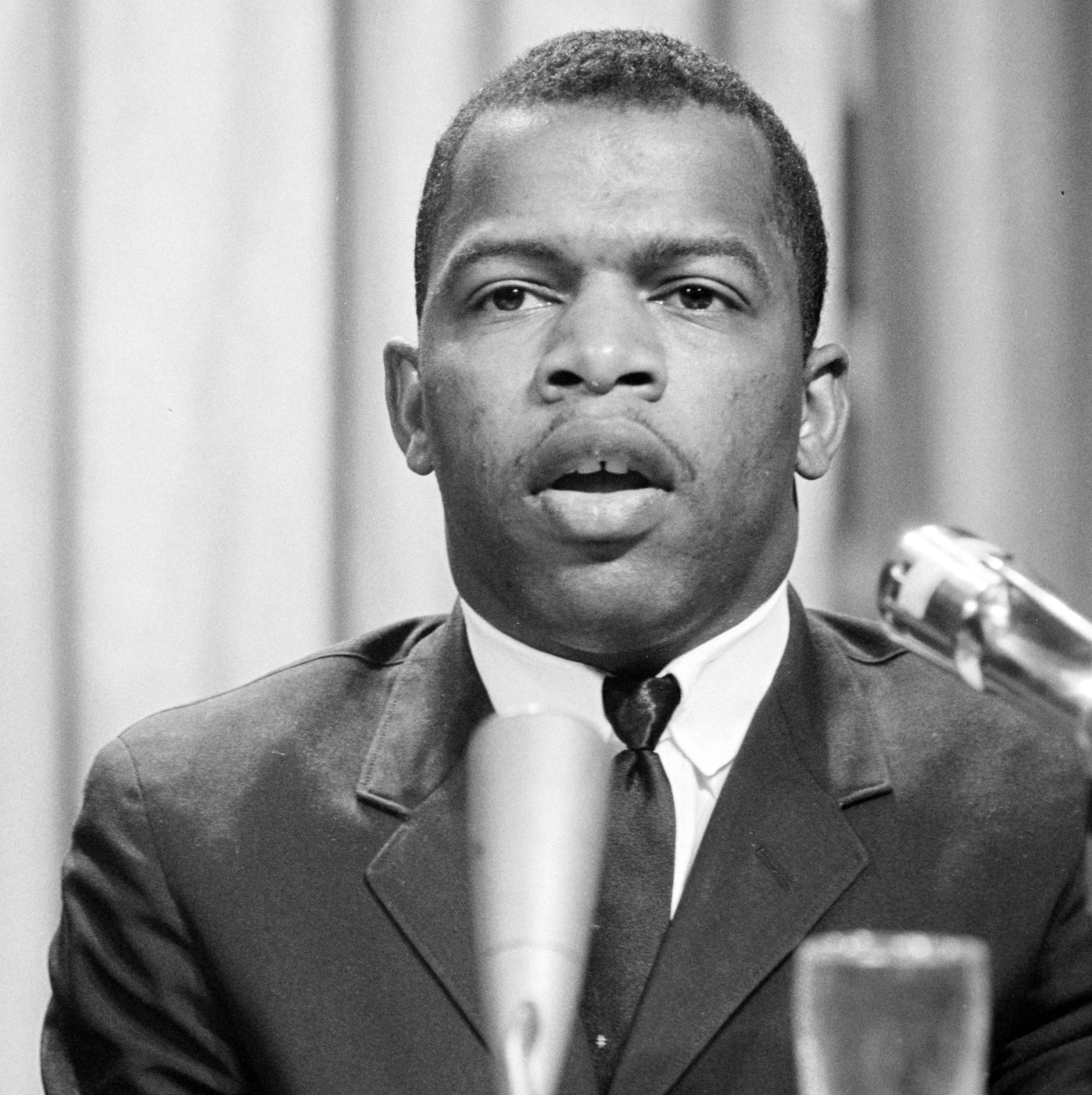
John Lewis, 1964. (Photo by Marion S. Trikosko, U.S. News and World Report, public domain image from United States Library of Congress)
The voices of Fannie Lou Hamer, Bayard Rustin, Jesse Jackson, Coretta Scott King, Malcolm X, James Cone, James Reeb, Idella Cora Thomas and Ida B. Wells speak to us today. They bid us to care for the “beloved village” and to act with righteousness toward one another.
Scripture affirms that honoring our ancestors is a moral imperative. Hebrews 12:1 describes them as a “great cloud of witnesses” who provide examples of faith, obedience and the weight of our actions and inactions. As they peer over the “heavenly balcony,” their wisdom informs our earthly existence. Their stories of moral resistance demonstrate God’s providence and guide future generations in making righteous decisions.
My ancestral lineages — the Blackshears, Malones, McClains, Williamses and Thomases — have transmitted a vision of God’s covenant manifested within the human experience. Through their collective failures and triumphs, they have bequeathed a sacred mandate to pursue the work of freedom, justice and liberation. Can we hear them in our dreams, our visions and in the wind that rustles through the trees, calling us to a higher vocation of service to humanity?
Can we hear the voices of Palestinians, South Africans and Iranians — specifically the children calling out from the heavenly balcony? They speak not merely from the grave, but from a celestial vantage point, urging us to defend what is right and to heed the modern prophets on the digital streets of TikTok who speak truth to power.
We must listen to the content creators on Instagram and Facebook who dare to confront white supremacy from the depths of its origin. We must honor those who risk their platforms — from the satirical critiques of Jimmy Kimmel to the resolute journalism of Don Lemon and Joy Ann Reid — as they stand steadfast against the demons of intolerance.
TJ Williams Hauger is a Baptist pastor in Chicago, an activist and content creator. He earned a master of divinity degree from New York Theological Seminary and is a doctoral student.