

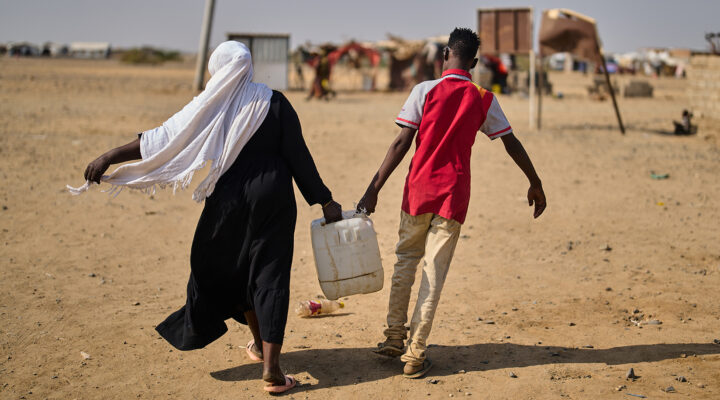
The largest humanitarian crisis in the world isn’t happening in Ukraine, or in Gaza, but in Sudan. There, 33.7 million people (out of a total population of 55 million) are in dire need of aid, and the world has forgotten them.
Twelve aid agencies in the United Kingdom are hoping to change that. On April 14, as a fourth year of the current Sudanese civil war loomed, the #KeepEyesOnSudan coalition hand-delivered a petition with 41,243 signatures to the prime minister’s office at Number Ten Downing Street.
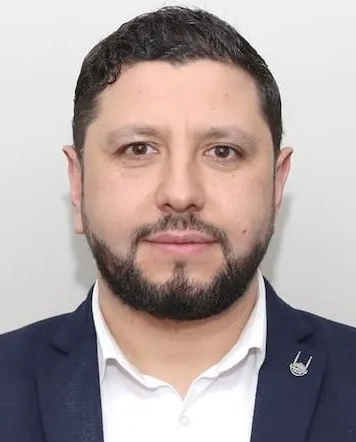
Zia Salik
“There’s a global crisis of awareness when it comes to Sudan,” says Zia Salik, interim director of Islamic Relief UK. “The infrastructure that communities have in Sudan is not like some of the other parts of the world where they could tell their own story via social media and digital communication channels.”
The coalition, which includes Islamic Relief UK, Catholic Agency for Overseas Development, Christian Aid, Action Against Hunger, Age International, CARE International UK, International Rescue Committee, Plan International UK, Save the Children UK, Tearfund, Oxfam and World Vision, is calling for a ceasefire, safe access for humanitarian workers and an increase in aid funding to Sudan.
History
The current political clash in Sudan began in 2019. In April that year, the Sudanese Armed Forces (SAF) and the paramilitary group Rapid Support Forces (RSF) ended the 30-year authoritarian regime of President Omar al-Bashir. That coup was then followed by another military takeover of the nascent civilian government in 2021. Unable to agree on the terms of their integration with the SAF, the RSF attacked SAF bases across Sudan in 2023.
Now, after years of fighting fueled by local grievances and ethnic divisions, Sudan stands divided between the internationally recognized SAF government, which occupies the north, east and central regions, including Khartoum and the Red Sea ports, and the rival RSF administration, controlling Darfur and areas in the Kordofan region along the border with South Sudan.
Tom Fletcher, the emergency relief coordinator and humanitarian affairs chief for the United Nations, called Sudan “an atrocities laboratory” because of the depraved mistreatment of civilians by both factions. The SAF has abused its authority by targeting and arresting people based on their ethnicity or political allegiance, including aid workers. Detainees have been denied due process and tortured.
The RSF, which originated with the Janjaweed, a collection of Arab militias who gained notoriety in the early 2000s for their attacks in Darfur against Black Africans, has its own history of torture and other war crimes. Last fall, the RSF and its Janjaweed allies captured El-Fasher after preventing residents from receiving food, water, humanitarian assistance and medical supplies for 18 months. A U.N. fact-finding mission said the subsequent mass killings of Zaghawa and Fur people in and around El-Fasher bore the “hallmarks of genocide.”
The U.N. also has uncovered widespread systematic sexual violence. The RSF, in particular, is known for using rape as a “tool to punish and terrorize communities.”
Stigma and fear make collecting data difficult, but aid groups and U.N. fact finders say there are thousands of victims, including hundreds of children and toddlers as young as 1 year old. Medical charity Médecins Sans Frontières has called rape a “defining feature” of the war, even in communities where the worst fighting has ceased.

Fish vendors wait for customers at a market in Omdurman, on the outskirts of Khartoum, Sudan, Sunday, April 26, 2026. (AP Photo/Bernat Armangue)
Weaponizing starvation
According to the office of the United Nations High Commissioner for Human Rights, both the SAF and RFS are weaponizing starvation by burning farming villages, disrupting agricultural infrastructure and destroying farm equipment, seed stocks and livestock vaccines. Prior to the conflict, Sudan was a farming nation where two-thirds of the population worked in agriculture or grew their own food. Now, nearly all Sudanese are struggling to access sufficient food.
About 21 million people are facing food insecurity, with 6.3 million already in a state of food emergency. Twenty towns are on the brink of famine. El Fascher and Kadugli (South Kordofan) already are there. The conflict is preventing farmers from harvesting their crops, driving up prices for what little food remains. America’s war with Iran, which has impacted Sudan’s access to fertilizer and fuel, has increased the price of food by an additional 24%. A kilogram of flour in Kordofan costs 5000 SDG or $8.31, if one is fortunate enough to find any.
Fighting and impending famine have forced a quarter of Sudan’s population, around 14 million people, to flee their homes. Nine million of them are currently seeking safety within Sudan.
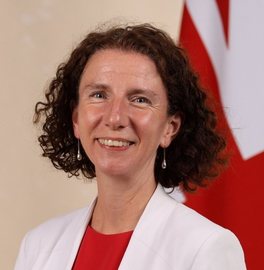
Anneliese Dodds
“When you look at the many millions of refugees, it’s just about the same number as the people who live in greater London,” said Anneliese Dodds, Labor MP and chair of the All Party Parliamentary Group on Sudan and South Sudan. Dodds joined the coalition delivering the petition to Downing Street.
Another 4 million Sudanese have sought refuge in neighboring Egypt, Libya, Chad, Uganda and South Sudan, where their arrivals are straining those countries’ limited resources. Christian Aid CEO Patrick Watt says refugees in South Sudan, a separate sovereign nation, face a particular problem: “The people fleeing across the border are not treated by the U.N. system as refugees. They’re treated as returnees and so they receive a lot less support from the official aid system than those fleeing across other national borders tend to get.”
Tearfund’s South Sudan country director, Erickson Bisetsa, says Sudan’s displaced people “lack basic needs like shelter, access to adequate food, water, sanitation and hygiene.” Making matters worse, warring parties are hindering civilian access to humanitarian aid through bureaucratic obstruction and attacks on aid workers and convoys.
Drone strikes
On April 24, a drone destroyed a truck transporting U.N. emergency shelter kits to Tawila in North Darfur, where 700,000 people have sought refuge. The loss of the shelter kits deprives 1,300 families of shelter. Preventing civilians from accessing food and humanitarian aid is considered a war crime.
According to the World Health Organization, the RSF and SAF also have carried out at least 217 drone strikes against hospitals, resulting in the deaths of patients, new mothers, children and medical staff. Doctors in El-Fasher resorted to performing surgery underground in repurposed shipping containers to hide from drone attacks before being forced to evacuate. All told, drone strikes murdered more than 1,000 civilians in 2025. With 500 already dead from attacks during the first three months of 2026, the body count this year will almost certainly exceed that of years prior.
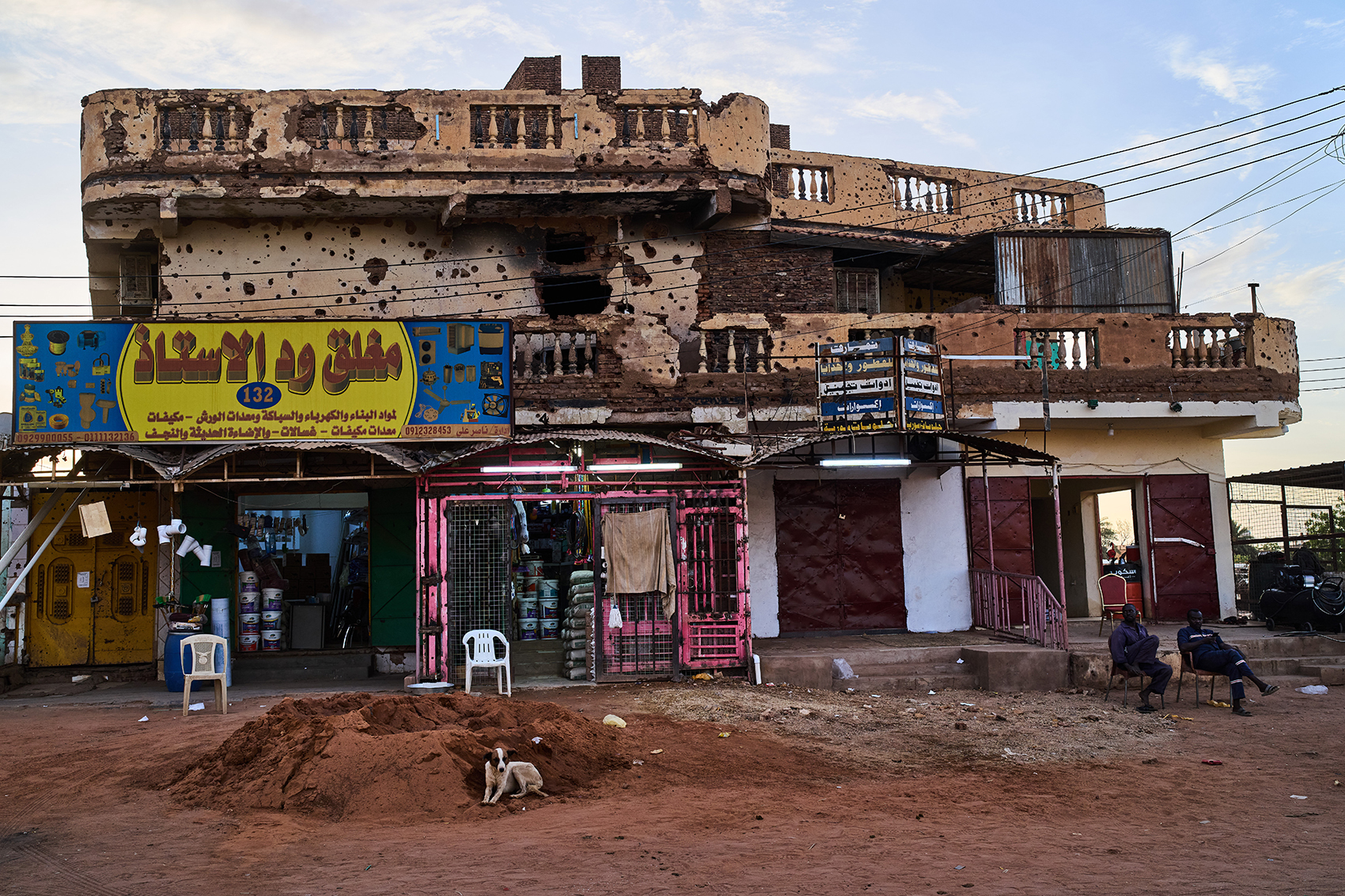
Shops operate beneath a war-damaged building in Omdurman, on the outskirts of Khartoum, Sudan, Thursday, April 23, 2026. (AP Photo/Bernat Armangue)
Helping each other
With outside aid agencies stymied, the people of Sudan are doing what they can to help one another. “In Gadarif, in one of the camps, I met an old lady called Aisha,” said Salik. “Having lost four of her sons and being a widow herself, she still mustered the energy to gather her daughters-in-law and her grandchildren and walk for four to five days until she reached Gadarif. She said it was the local villagers who provided her space in their courtyards to seek shelter, and they shared what food they had with them.”
Volunteers inside Sudan have organized community kitchens that prepare and deliver meals to displaced families like Aisha’s.
While the Sudanese diaspora is using WhatsApp to raise money for local aid groups and individuals back home, the crisis in Sudan is starting to outpace what these small organizations can do without more funding.
Over the last six months, 354 community kitchens have closed. “It’s extremely difficult, but there is a real effort and a real resilience from the local communities, which is why the international support is absolutely critical. The organizations that are still able to function need the resources to be able to upscale,” Salik said.
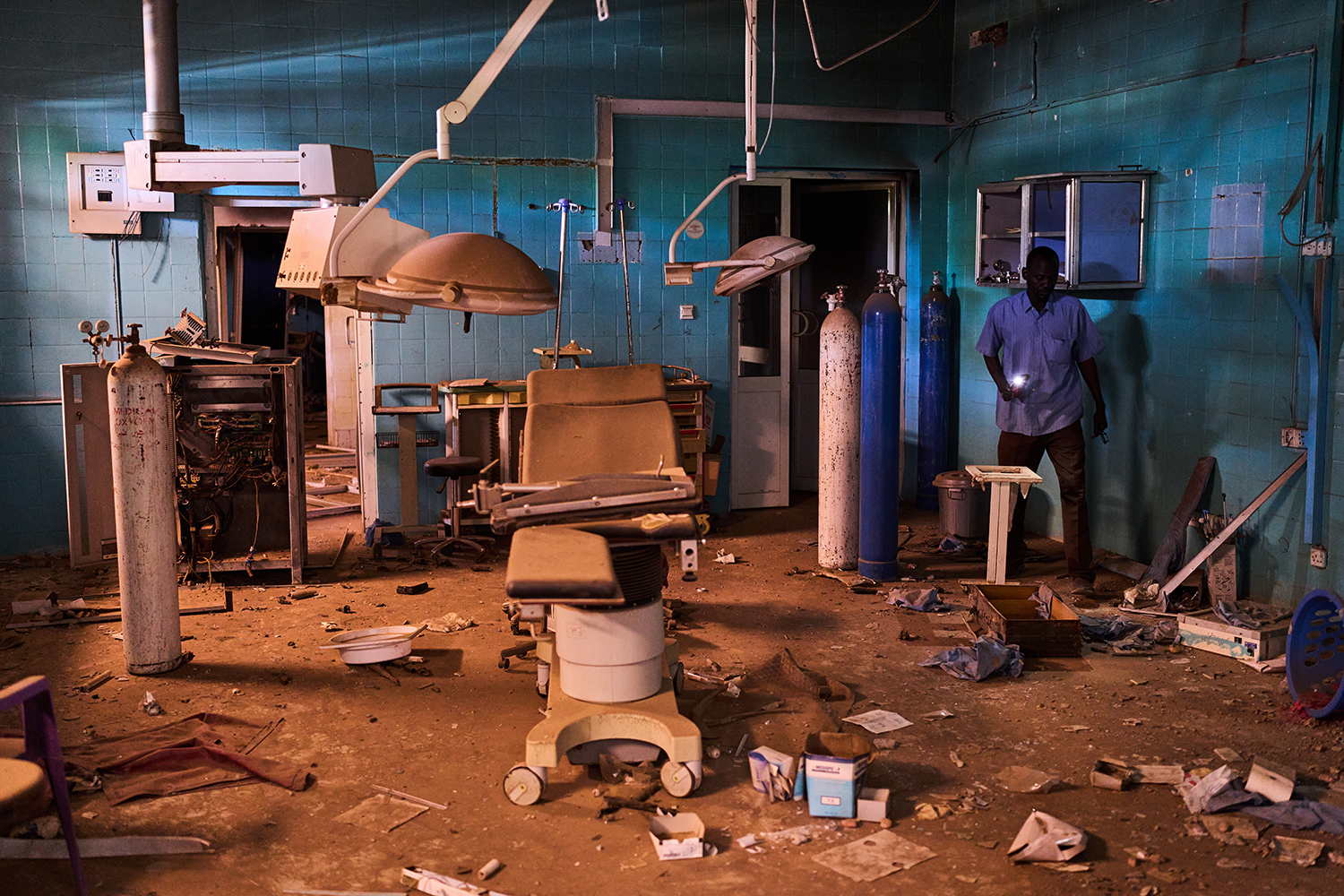
A guard walks through a war-damaged section of Al Shaabi Hospital in Khartoum, Saturday, April 18, 2026. (AP Photo/Bernat Armangue)
‘Send us help; don’t send us bullets’
As humanitarian groups struggle to deliver food to those starving in Sudan, foreign powers face little resistance in supplying weapons to both sides.
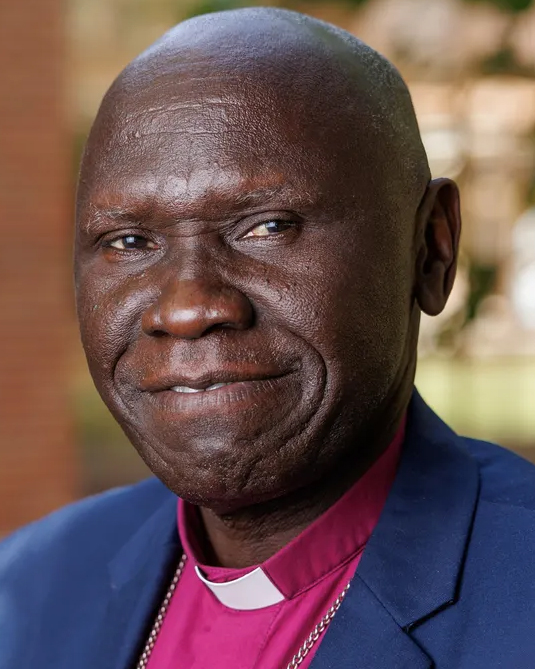
Bishop Anthony Poggo
“The message from the church leaders and other religious leaders is, ‘Send us help. Don’t send us bullets. Don’t send us guns,’” says Bishop Anthony Poggo, secretary general of the Anglican Communion. “Sadly, you know some of the countries instead of giving that support, they are arming the factions that are fighting; as a result, the conflict goes on.”
Most countries in the region have sided with Sudan’s military. However, the United Arab Emirates is backing the RSF in exchange for access to the Red Sea and smuggled Sudanese gold.
This partisan support is especially problematic considering that the UAE, Saudi Arabia, Egypt and the U.S., (a group known collectively as the Quad) are tasked with facilitating peace negotiations for Sudan.
U.S. President Donald Trump, who should have taken the UAE to task for arming the RSF and pushed for peace talks, is compromised by his family’s business dealings with both the pro-RSF Emirates and pro-SAF Saudis. When asked about the tensions between the two Arab nations, which are critical to peace in Sudan, Trump said, “We can get it settled very easily. That’s an easy one to settle.”
While Trump’s war in Iran dominates diplomatic discussions, it further distracts the world’s leaders from the humanitarian crisis engulfing Sudan. On April 15, German Chancellor Friedrich Merz hosted a gathering in Berlin to refocus attention on Sudan and raise funds for what he called “the greatest humanitarian crisis of our time.” The Berlin meeting was attended by the African Union, France, the European Union, the United Kingdom and the U.S. While the SAF and RSF objected to the gathering and deemed it “unacceptable,” participants pledged $1.53 billion to aid the country’s suffering population.
The #KeepEyesOnSudan coalition believes there’s more the UK government can do to orchestrate peace in Sudan. As the U.N. Security Council member responsible for Sudan, the UK can ensure its humanitarian crisis remains foremost on the global agenda, pressure warring parties for a ceasefire and hold those guilty of atrocities accountable.
“For three years, children in Sudan have endured the unimaginable — and they need more than empathy. They need action. They deserve protection, access to health care and nutrition, and the chance to learn again,” says Abdiladif Mohamed, country director for Save the Children Sudan. “We urge the international community to stand with them, to demand safe humanitarian access and invest in the essential services that keep children alive, learning and hopeful.”
Kristen Thomason is a freelance writer and journalist living outside Edinburgh in the United Kingdom. She has produced educational and promotional media for national and international religious organizations and public television. Kristen also worked with local churches in Metro D.C. and Toronto, Canada. With a master’s degree in communication and undergraduate degrees in media studies and classics, she is interested in the intersection of politics, religion, history and the arts.