

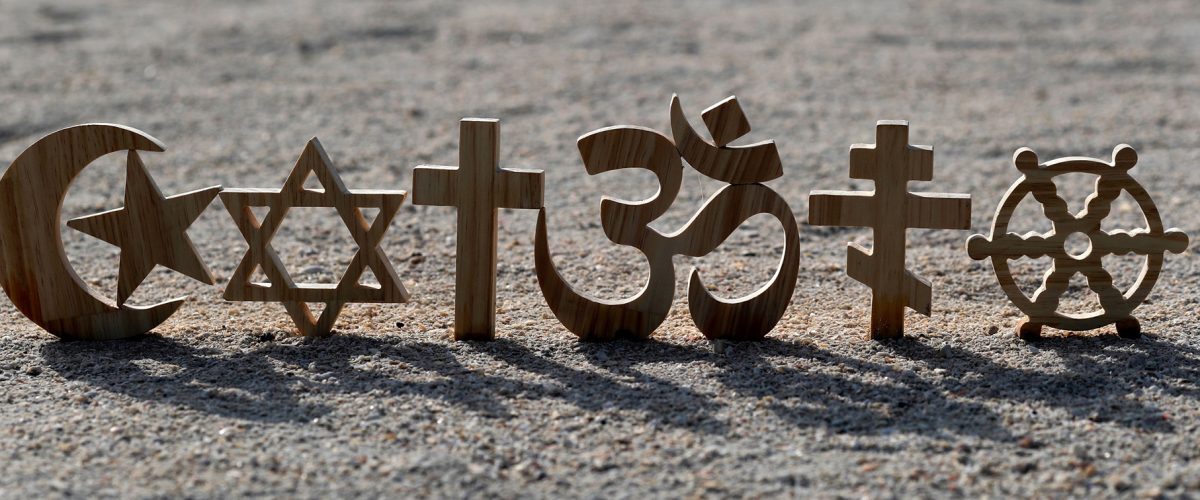
What does pluralism mean for people who believe there’s only one way to God, who believe God reigns, but who live in a nation that values liberty and justice for all?
This is the question many Christians are wrestling through. As evangelical Christians gain more power in our government, it’s important to note the range of conclusions they’re coming to.
This is an especially relevant conversation to highlight the Trump administration’s “Rededicate 250” event this weekend on the National Mall, where the federal government plans to “rededicate” the country to being “one nation under God.”
Is pluralism possible under an evangelical Christian God? And if so, in what ways?
Conservative Christian supporters of Trump will point to the fact that the Rededicate 250 event is featuring leaders from a variety of faith backgrounds. For example, headliners include Catholics such as Cardinal Timothy Dolan and Bishop Robert Barron, charismatics such as Paula White, Guillermo Mondonaldo and Lou Engle, and Baptists such as Jack Graham, Jonathan Falwell, Robert Jeffress and Jonathan Pokluda. Then there are nondenominational Christians like Franklin Graham.
From one perspective, there is a lot of theological diversity among these speakers. But from a broader perspective, there’s not much diversity at all.
The only non-Christian faith leader who has been announced so far is Rabbi Meir Soloveichik, an Orthodox rabbi who also has contributed to PragerU. There are no Muslims, Buddhists, Hindus or any other religions represented. Nor are there Mainline Christians or moderate to liberal Christians.
“All who are being given the microphone for Rededicate 250 share one thing in common — allegiance to President Donald Trump.”
Despite whatever differences they have from one another, the Catholics, charismatics, Baptists and nondenominational Christians who are being given the microphone for Rededicate 250 all share one thing in common — allegiance to President Donald Trump.
So is the extent of our pluralism limited to Jewish and Christian faith communities who are loyal to Trump? If so, how does that fit into our nation’s claim to value liberty and justice for all?
Religious freedom or Christian supremacist privilege?
According to the First Amendment to the Constitution, “Congress shall make no law respecting an establishment of religion, or prohibiting the free exercise thereof.”
This would seem to make the intentions of our nation’s Founders clear. No particular religion should be established by our government. And no particular religion should be prohibited by our government. In theory, this would mean Christians, Jews, Muslims, Hindus and Buddhists all should feel completely free to worship as their convictions lead them.
Matthew Taylor
But in the world of Christian supremacy, what seems to be clear becomes quite murky. In his book The Violent Take It By Force: The Christian Movement That Is Threatening Our Democracy, Matthew D. Taylor defines a Christian supremacist as “someone who thinks that Christians should occupy authoritative and privileged positions in culture, politics and other domains of public life. In other words, Christian supremacists believe that Christians — by dint of being Christians — are morally elevated above the rest of humanity and are empowered by God to govern civil society.”
Where, then, are conservative, moderate and progressive Christians on this binary between religious freedom or Christian supremacist privilege? And how do followers of other religions fit into this? It depends on who you ask.
Dan Patrick and ‘the biggest lie’

Lieutenant Governor of Texas Dan Patrick speaks at a ‘Save America’ rally on October 22, 2022, in Robstown, Texas.(Photo by Brandon Bell/Getty Images)
Last month, Texas Lt. Gov. Dan Patrick claimed separation of church and state is the “biggest lie that’s been told in America since our founding.”
While denying the separation of church and state, Patrick has promoted such ideas as installing the Ten Commandments in public school classrooms. Yet despite his pushing of religion into public schools, he claims the authoritarians are actually on the left.
“For too long, the anti-God left has used this phrase to suppress people of religion in our country,” Patrick said. “During all seven (Religious Liberty Commission) hearings, witness after witness testified that the so-called ‘separation of church and state’ was used to take their God-given religious liberty rights away.”
Greg Abbott’s holy war against Islam
Texas Gov. Greg Abbott is a common proponent of Islamophobia. In his latest schtick, he’s tapping into the growing fear among conservatives that the nation is on the verge of being taken over by Sharia Law.

Texas Gov. Greg Abbott speaks during the NRA ILA Leadership Forum May 18, 2024 in Dallas, Texas. (Photo by Justin Sullivan/Getty Images)
When a group of Muslims rented out a water park to host their Eid al-Adha celebration, they asked everyone attending to dress modestly. According to their definitions of modesty, this meant women in attendance were to wear burkinis that would cover their bodies from head to toe.
Although most Americans would find such a definition of modesty to be extreme, the event was a private event for Muslims. They were paying to rent the entire park. Still, Abbott claimed their private event was religious discrimination since it was closed to the public. So he signed HB-4211, which banned “Muslim only no-go zones in Texas.”
Jenna Ellis and exclusive religious freedom
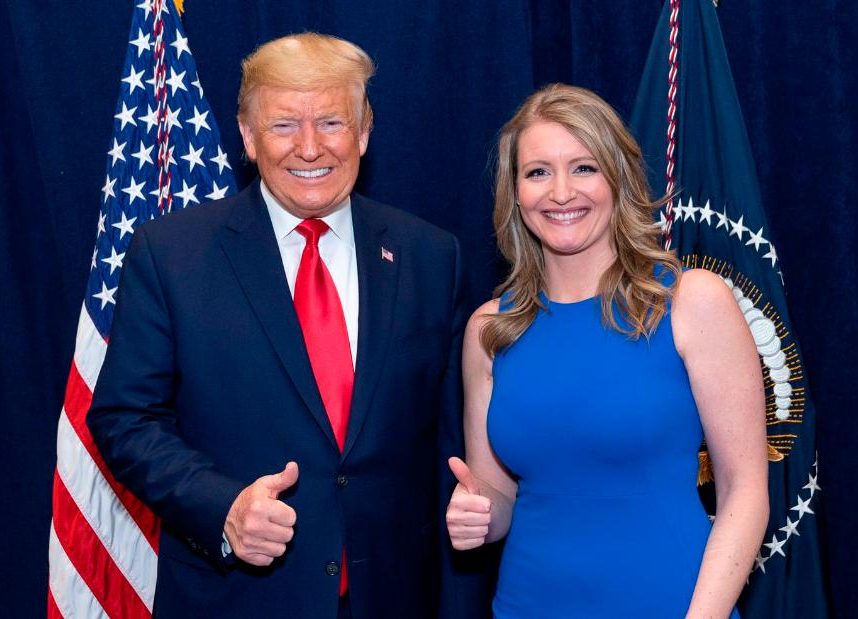
Jenna Ellis with Donald Trump (Photo courtesy of CNN)
Of course, Abbott’s complaint about Islamic “no-go zones” for private events is ironic, given that conservative evangelicals define heaven as essentially a “no-go zone” for everyone who disagrees with their theology. But apparently, Jenna Ellis thinks the “no-go-zone” policy of evangelicalism’s heaven should apply to the United States today.
The former Trump lawyer said the purpose of religious freedom in the U.S. is “so that we can preserve and protect the Christian way of life.”
“We don’t have all these protections for our rights that our Founders recognize come from God our Creator so that we can go out and live a pluralistic society and say, ‘Well, let’s recognize the dignity of Islam,’” Ellis declared. “We have a civil government that protects the right of Christians to be able to live and work. And we have this whole perverted notion that somehow our Constitution demands pluralism. That just isn’t there. If you take the whole context of the Declaration, the Constitution, the founding and everything we’re celebrating in America 250, absolutely.”
The Holy Post’s concern about both sides
In a recent episode of “The Esau McCaulley Podcast” on Holy Post Media, McCaulley spoke with Skye Jethani and Producer Mike about the Supreme Court’s recent Voting Rights Act decision. While the hosts of Holy Post Media are orthodox Christians, they differ from conservative evangelicals who are loyal to Trump.
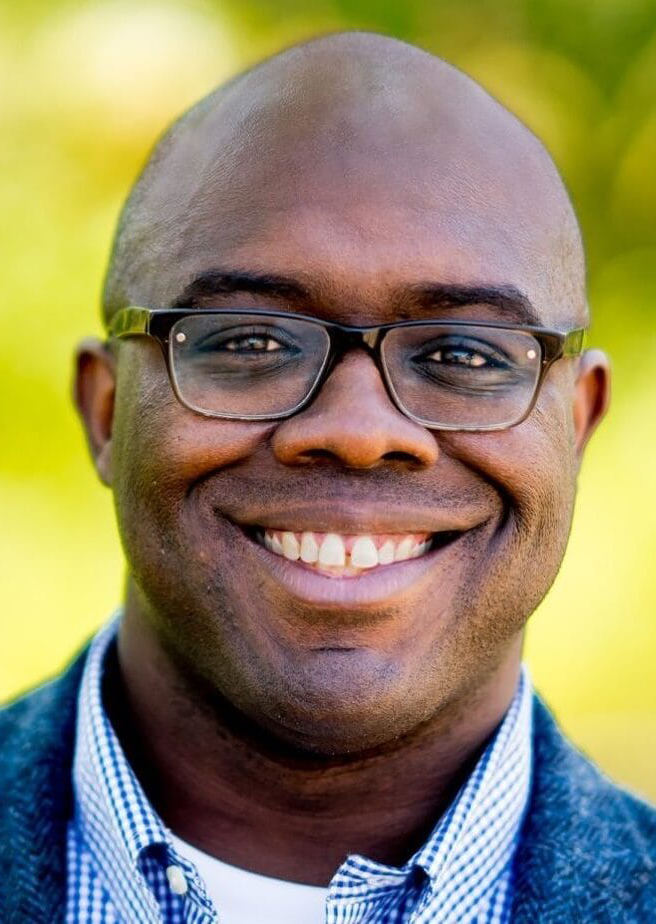
Easu McCaullley
For Christians like those at Holy Post Media, pluralism should include people from every faith and political persuasion having a seat at the table. And because such an idea is unpopular among conservative Christians today, this puts Holy Post Media in the odd position of differing from people on both sides of the aisle on significant social issues, which often leads to them critiquing the orthodoxy of both the left and the right.
According to McCaulley, “There is probably no greater threat to the left’s kind of diversity without orthodoxy kind of ethos than actually minorities who are theologically orthodox because we run across so many different categories.” He suggests the left harms pluralism by including only the people who are willing to “abandon some of (their) core convictions.”
Then Jethani adds, “The right has its way of trying to get only their voters into the booth. But then you look at the left and you go, ‘Well, there’s lots of speech they don’t want to have expressed.’ So we need leaders who step up, who give a vision for a truly pluralistic America. And I’m not saying everything should be allowed. I don’t think Holocaust deniers or other white supremacists should have an equal seat at the table. But, my goodness, people who have traditional religious values ought to be able to function.”
Russell Moore’s persuasive dialogue with friends

Russell Moore
In a conversation this week with Jewish Rabbi Michael Holzman about religious pluralism, Christianity Today’s Russell Moore admitted he doesn’t tend to use the word “pluralism” because “there are some people who think pluralism means relativism and everything is really the same and nothing really matters except that we get along.”
Holzman, his Jewish conversation partner, says pluralism gets hindered when people push dominionist ideas where “the only way we can live in diverse societies is for one group to be in charge of all the other groups or for there to be strict social separation and the Jews live in Israel and the Christians live in America.”
He asks, “How am I supposed to love my neighbor if I banish my neighbor to another country far away?”
Moore is quite comfortable sitting with people he disagrees with, as he often demonstrates on “The Russell Moore Show.”
“We’re living among each other and we’re not trying to pave over one another’s consciences,” Moore said. “So we’re talking about the things where we disagree. But we’re talking with one another in terms of persuasion and argument and connection and relationship, not in terms of whoever gets to 51% gets to drive everybody else out.”
For Holzman and Moore, healthy pluralism happens at the local level where relationships can be developed over time. But as Moore points out, “So there are some people who get exhausted and they give up and start to think if this doesn’t just immediately create harmony, then it must be a failed project. And of course, that’s not the American ideal.”
Amanda Tyler’s advocacy
Given the legal attacks on Muslims by conservative Christians like Patrick, Abbott and Ellis, Baptist Joint Committee wrote this week that Executive Director Amanda Tyler “testified at a Congressional hearing today to support our Muslim brothers and sisters.”
“Because soul liberty is not a privilege extended to government approved religions. It is the birthright of every person,” the BJC newsletter explained.
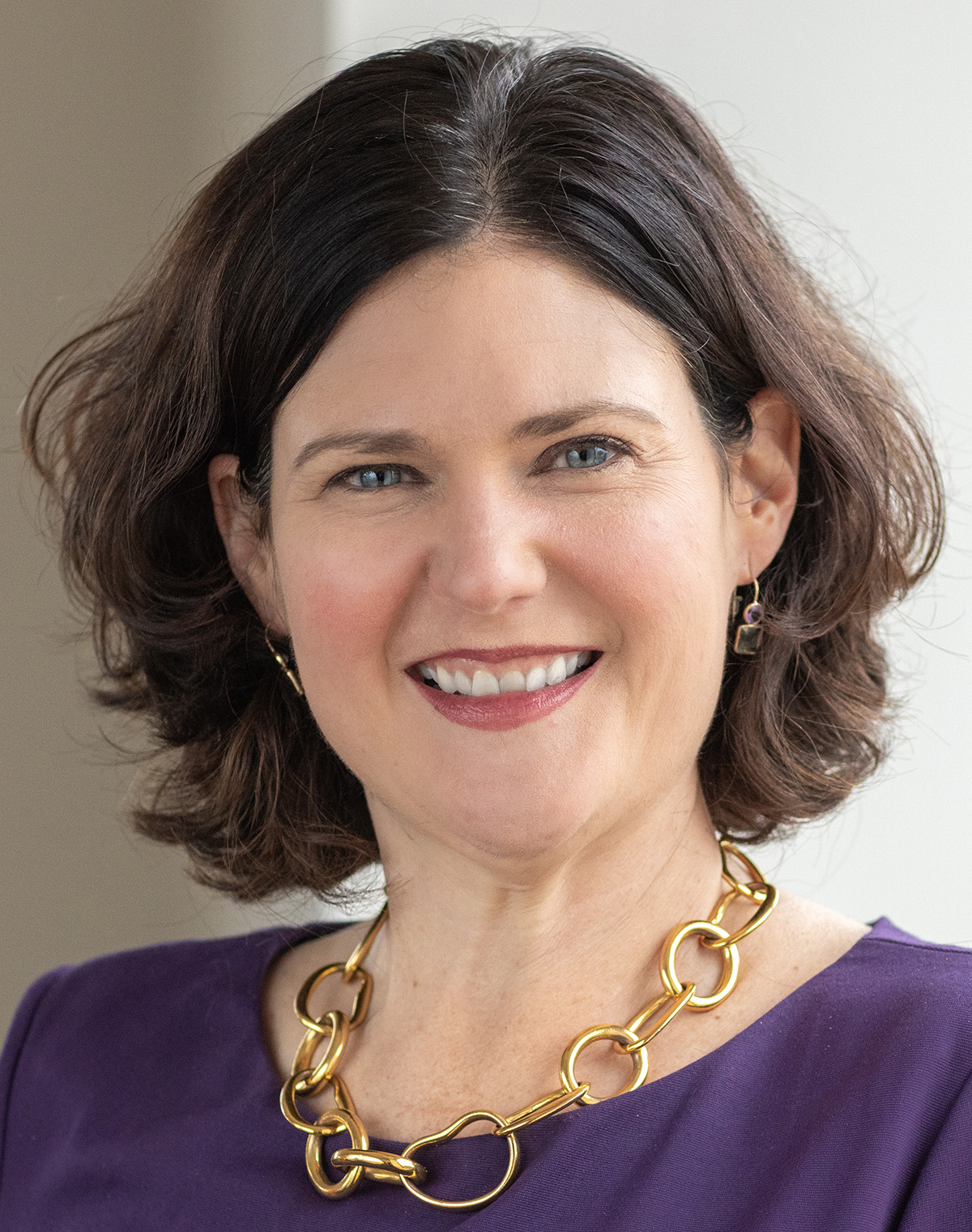
Amanda Tyler
“Today, I testified before the House Judiciary Subcommittee on the Constitution and Limited Government at a hearing titled ‘Sharia-Free America: Why Political Islam and Sharia Law are Incompatible with the U.S. Constitution,’” Tyler added. “The hearing was built around a premise that betrays our constitutional values — that Congress has the authority to determine which religion is compatible with American life. It does not. The moment the government begins making that determination, it has already violated the First Amendment. That is not a partisan position; it is the founding logic of religious freedom in this country.”
For progressive Christians like Tyler, friendship with one’s neighbors must extend to advocacy for them, despite whatever theological disagreements you may have.
“What is happening in Congress right now — introducing legislation that would deport people based on their religious practice, bar entry to those who observe their faith, strip citizenship without any possibility of judicial review — is precisely what our forebears gave their lives to prevent. Not just for Baptists. For everyone,” Tyler explained. “I testified because BJC was built for moments like this. I testified because religious freedom has never been something you protect only for yourself. And I testified because the Baptist tradition taught me that soul liberty is not a privilege extended to approved religions. It is the birthright of every person.”
A pluralism based on loving neighbor as self
If pluralism is based on allegiance to Trump, as the Rededicate 250 event demonstrates, then only those who stroke Trump’s ego are going to have a seat at the table.
If it’s based on agreement over theological content, then only the Dan Patricks, Greg Abbotts and Jenna Ellisses of the world are going to have a seat at the table.
Is that really the extent of the vision our Founders had for this nation?
“We’re going to have to repent of what Moore called paving over one another’s consciences and driving everybody else out.”
For us to begin healing from the fracturing that has happened through the hierarchies of race and ethnicity, gender and sexuality, age and class that have been sacralized with Christian theology over the past 250 years, we’re going to have to repent of what Moore called paving over one another’s consciences and driving everybody else out.
We’re also going to have to be willing to learn from one another despite our differences. While I have theological disagreements with the hosts of Holy Post Media, I can learn from their willingness to call out harm from the home team. While I have theological disagreements with Russell Moore, I can learn from his willingness to build friendships with those across the aisle over time. While I may not be a member of a church like Tyler’s, I can learn from her willingness to advocate for those I disagree with.
And while I may not share the faith of Moore’s Jewish friend Holzman, or of Tyler’s Muslim neighbors, I can have a pluralistic presence with them that allows all of us to remain true to our convictions while giving space to the other.
Our differences matter to me. And I know they matter to each of them as well.
But rather than finding commonality in a creed based on politics or theology, we can embrace the vulnerability of living alongside one another in a creed based on love.
For our Jewish neighbors, Leviticus 19:17 says, “You shall love your neighbor as yourself.”
For our Christian neighbors, Matthew 22:39 says, “You shall love your neighbor as yourself.”
And for our Muslim neighbors, Sahih Muslim Hadith 45a says, “None amongst you believes truly until he loves for his brother — or he said ‘for his neighbor’ — that which he loves for himself.”
Whatever very strong differences we may eventually discuss, it seems like we could at least begin with a meal at that table.
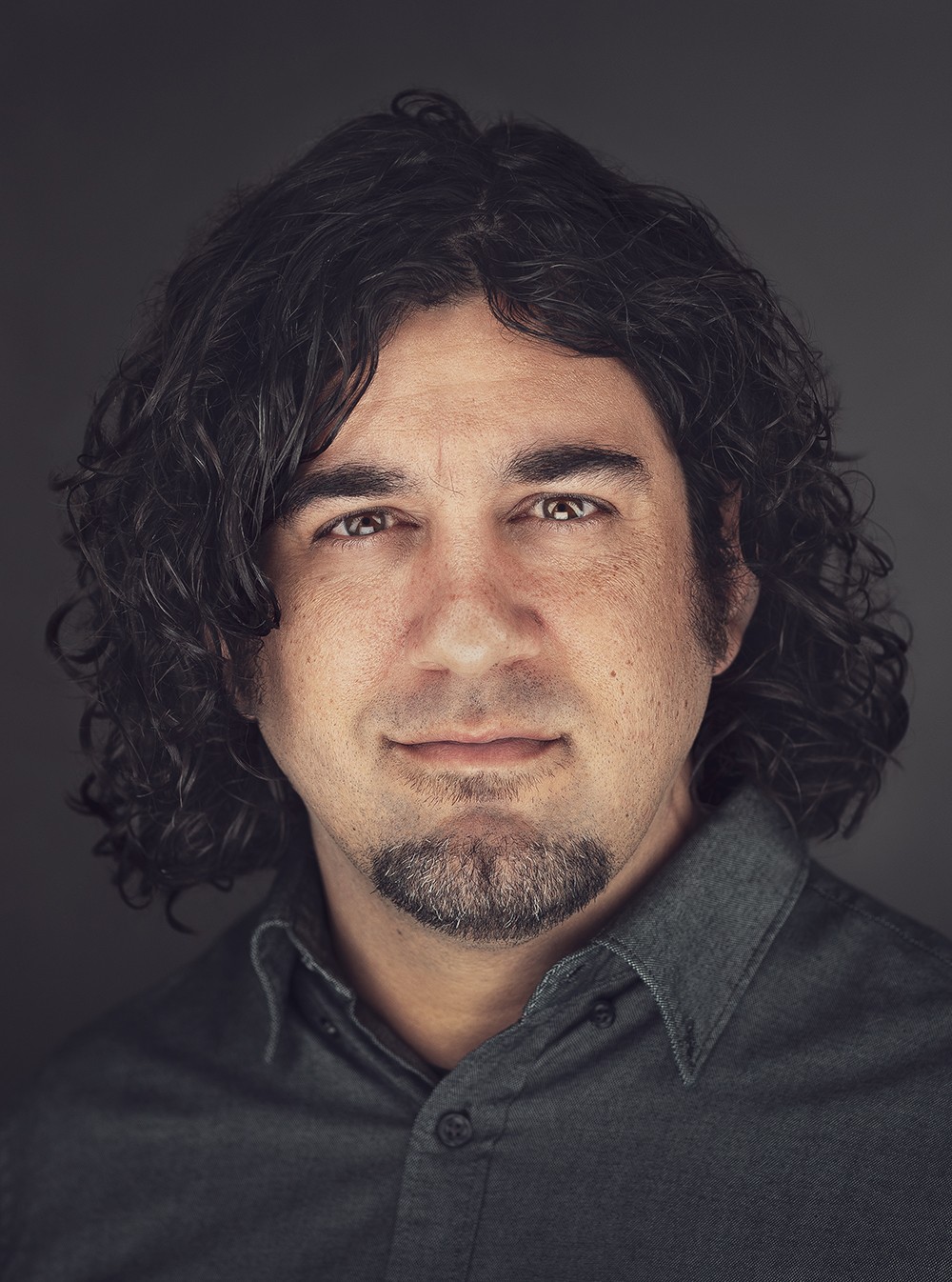
Rick Pidcock
Rick Pidcock is a 2004 graduate of Bob Jones University, with a bachelor of arts degree in Bible. He’s a freelance writer based in South Carolina and a former Clemons Fellow with BNG. He completed a master of arts degree in worship from Northern Seminary. He is a stay-at-home father of five children and is the author of a forthcoming book, Weapons of Worship: How the Songs of Evangelicalism Form the Soundtrack of Extremism. Follow his blog at www.rickpidcock.com.