


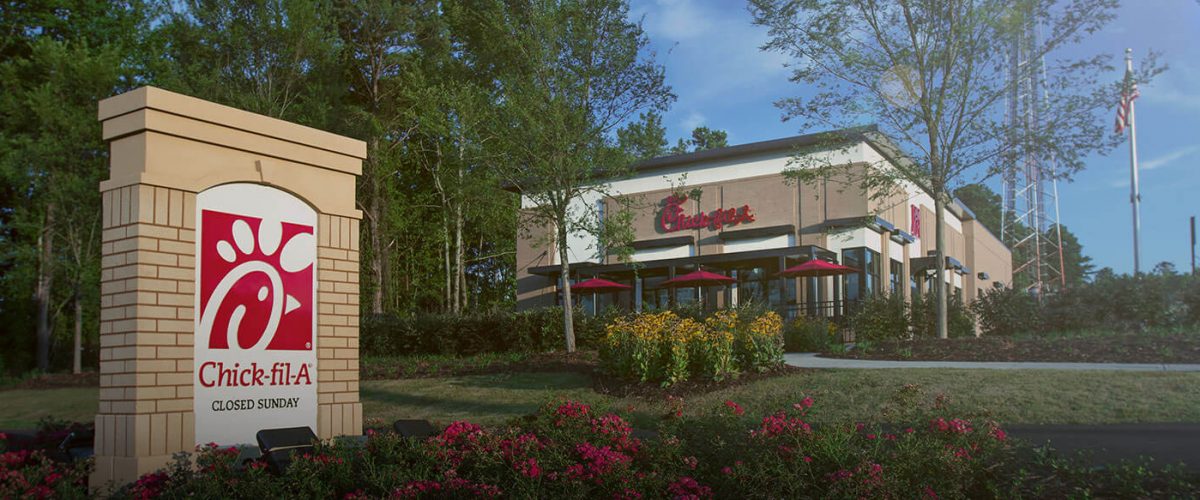
Chick-fil-A’s practice of closing on Sundays did not spare one of its franchisees from being sued for religious discrimination by the federal government.
The U.S. Equal Employment Opportunity Commission announced May 14 it has sued Hatch Trick, a Chick-fil-A franchise operator with multiple locations in Austin, Texas.
The agency alleged the business violated the Civil Rights Act of 1964 by firing an unnamed manager for observing the Saturday Sabbath as required by her membership in the United Church of God. The Cincinnati-based restorationist denomination was founded in 1995 and consists of about 400 congregations.
The chain “violated federal law by refusing to reasonably accommodate an employee’s request to refrain from working on Saturdays in observance of her sabbath day and instead fired her,” EEOC said.
The agency said the employee, who managed a store’s delivery drivers, disclosed during her job interview that she observed the Saturday sabbath and should not be scheduled to work Saturdays.
“Although Hatch Trick initially honored the employee’s request to refrain from Saturday work, after several months the company changed its position and demanded that she work on Saturdays,” the EEOC contends.
“After several months the company changed its position and demanded that she work on Saturdays.”
The employee continued to request Saturdays off and presented company officials with numerous ways she could do her job while adhering to the Saturday sabbath.
“Hatch Trick rejected all options for the employee to remain in her managerial job while abstaining from Saturday work, instead telling her that she must move to a non-managerial delivery driver position which entitled her to lower pay, reduced benefits and fewer hours. When the employee declined to accept the driver position, the company discharged her,” EEOC said.
The complaint alleges Hatch Trick violated Title VII of the Civil Rights Act, said Ronald Phillips, acting regional attorney with the EEOC district office in Dallas. “The duty under federal law to provide reasonable accommodation of religion reflects an acknowledgement by our society of the importance of faith in workers’ everyday lives and an abiding respect for those who observe religious practices as an expression of that faith.”
The lawsuit filed in the U.S. District Court for the Western District of Texas said the act was made for just these kinds of situations, said Norma Guzman, director of the agency’s San Antonio field office.
“Religious discrimination in the workplace is unlawful, and employers must make reasonable accommodations for employees’ sincerely held beliefs,” she said. “Title VII protects employees’ rights to observe their religious beliefs, and no employee’s livelihood should come at the expense of their religious convictions.”
The U.S. Supreme Court ruled on a similar case three years ago. In Groff v. DeJoy, the high court sided with Gerald Groff, a former part-time mail carrier who was unwilling to work on his sabbath. He lost his job after the U.S. Postal Service began delivering packages for Amazon on Sundays.
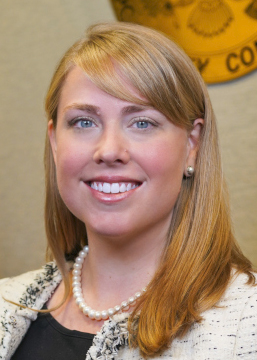
Andrea Lucas
EEOC Chair Andrea Lucas has prioritized religious discrimination — often from a conservative evangelical viewpoint — since her appointment last year. The agency filed 16 such lawsuits from January 2025 to May 2026 and recovered more than $63 million for plaintiffs. Some of those cases involved companies that required masks during the COVID-19 pandemic.
Lucas is a conservative Christian and was a member of the Trump administration’s Task Force to Eradicate Anti-Christian Bias. Last month, the committee published a report heavily biased toward conservative evangelical individuals and organizations that support the president.
Among her priorities at EEOC is the eradication of what she has called “unlawful national origin discrimination,” a phrase in keeping with the administration’s anti-immigrant rhetoric and also in line with conservatives’ claims white evangelicals are the biggest targets of discrimination.
“Unlawful bias against American workers, in violation of Title VII, is a large-scale problem in multiple industries nationwide,” Lucas said in November. “Many employers have policies and practices preferring illegal aliens, migrant workers, or non-immigrant guest workers (guest worker visa holders) over American workers — in direct violation of federal employment law.”