



Jesus had a lot to say about putting new wine in old wineskins, and those words need not to be lost on us as we imagine our way forward in our racial healing work.
It not good enough to put old wine in new wineskins and pretend it is new. In our case, the new wine needs a new bottle.
Wine is the metaphorical representation of a new narrative for racial healing in the United States that I am working very hard to promote. We have been talking about race and trying to tweak the white supremacy system for many decades, and our lack of success is unacceptable.
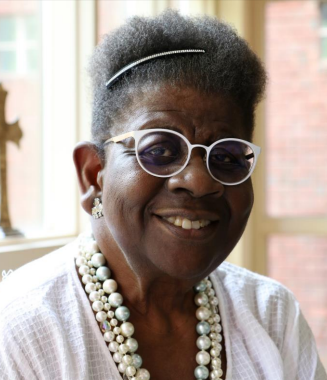
Catherine Meeks
Somehow, we have failed to realize a system of domination is never going to cooperate with processes designed to dismantle it. Audre Lorde quite correctly told us, “You cannot dismantle the master’s house with the master’s tools.”
Unfortunately, we do not believe her, and we continue to work to create a country where all of us are treated as equally deserving citizens with an underlying premise of a hierarchy of human value that asserts some are more deserving than others because of their skin color. There never will be true freedom and liberation for people of color in the United States until this primary premise is dismantled.
All those who benefit everyday from this system of denigration never will stop to reflect upon the negative impact of this system and declare themselves to be wrong and be moved to change. There is no reason to expect that to happen. While people of color have worked to make that happen for many decades, it is clear it is an unachievable goal.
In addition to the impossibility of the white supremacy-inspired system deciding to deconstruct itself there is the construction of a narrative of inferiority regarding people of color in order to justify white people as dominators.
Unfortunately, the narrative of inferiority and white skin privilege proclamations have been successful in undermining the capacity of people of color to organize long-term sustainable collaborative efforts with one another as they work for racial justice. This negative energy has created space for competition instead of cooperation among the major groups of marginalized people of color in the United States — which allows the current system of domination to thrive.
It is time for a new narrative that supports the common threads people of color share with one another and that allows them to forge a path that is inclusive of all who are struggling against oppression — without attempting to quantify who has suffered the most and which group is more deserving of the few concessions the system is willing to make when forced to do so.
The four major marginalized groups that need to join one another — Indigenous, Latino, Asian Americans and African Americans — never will have a secure place at the table of freedom until the current system is revised.
 Bridging The Rivers of Difference, A Proclamation of Unity in Resistance is my new book that engages a conversation about creating a new narrative. It offers a vision of a path forward to begin a new conversation.
Just as it is true that a bright new wine needs a new bottle, this conversation cannot be contained in the boundaries of old ways of seeing and communicating about racial domination. We have to become willing to imagine a new world, and we have to be willing to search for the courage to allow that imagination to assist us in finding the path to construction of that world.
We cannot continue to find ourselves in this situation we have today with voting rights, economic stability, personal safety and security and all other basic rights for people of color being held in contempt by white power brokers who are working diligently to maintain their abusive power. While this is happening, the groups of people of color are continuing to be held hostage by those old threads of competition and suspicion of one another.
If there is going to be sustainable change, a major shift has to be made and hopefully people of color will find the courage to reach out beyond their prejudices against one another and form the collaborative partnerships necessary to foster that change.
Let’s be a half shade braver.
Catherine Meeks was given the President Joseph R. Biden Lifetime Achievement and Service Award in August 2022; was listed by Georgia Trend Magazine as one of the 500 women to watch in Georgia in 2022; retired as the Clara Carter Acree Distinguished Professor of Socio-Cultural Studies at Mercer University; is a community and wellness activist and midwife to the soul; and the author of The Night Is Long, But Light Comes In The Morning, Meditations on Racial Healing, She previously served as founding executive director of Absalom Jones Episcopal Center for Racial Healing and currently serves as founder and executive director of the Turquoise and Lavender Institute for Transformation and Healing. She lives in Atlanta.