

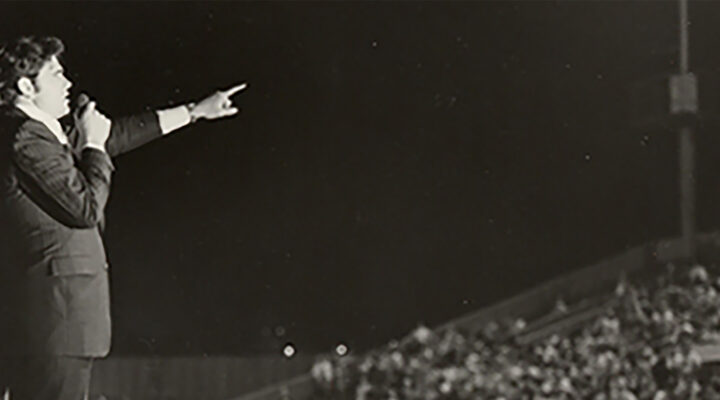
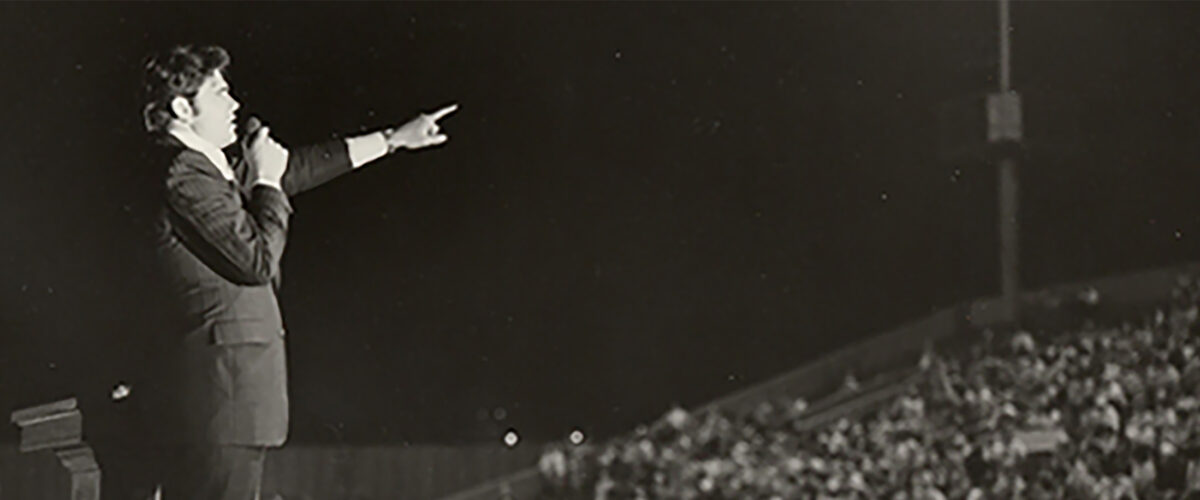
News of James Robison’s death reminded me of one of the most powerful transitions in my life.
When I was growing up in Texas back in the ’70s, Robison was a larger-than-life regional evangelist. He developed quite a reputation for packing in huge revival crowds, mesmerizing them with his fiery sermons and toting up huge numbers of converts.
Of course, he prompted lots of folks — preachers included — to predict, “James might be the next Billy Graham.”
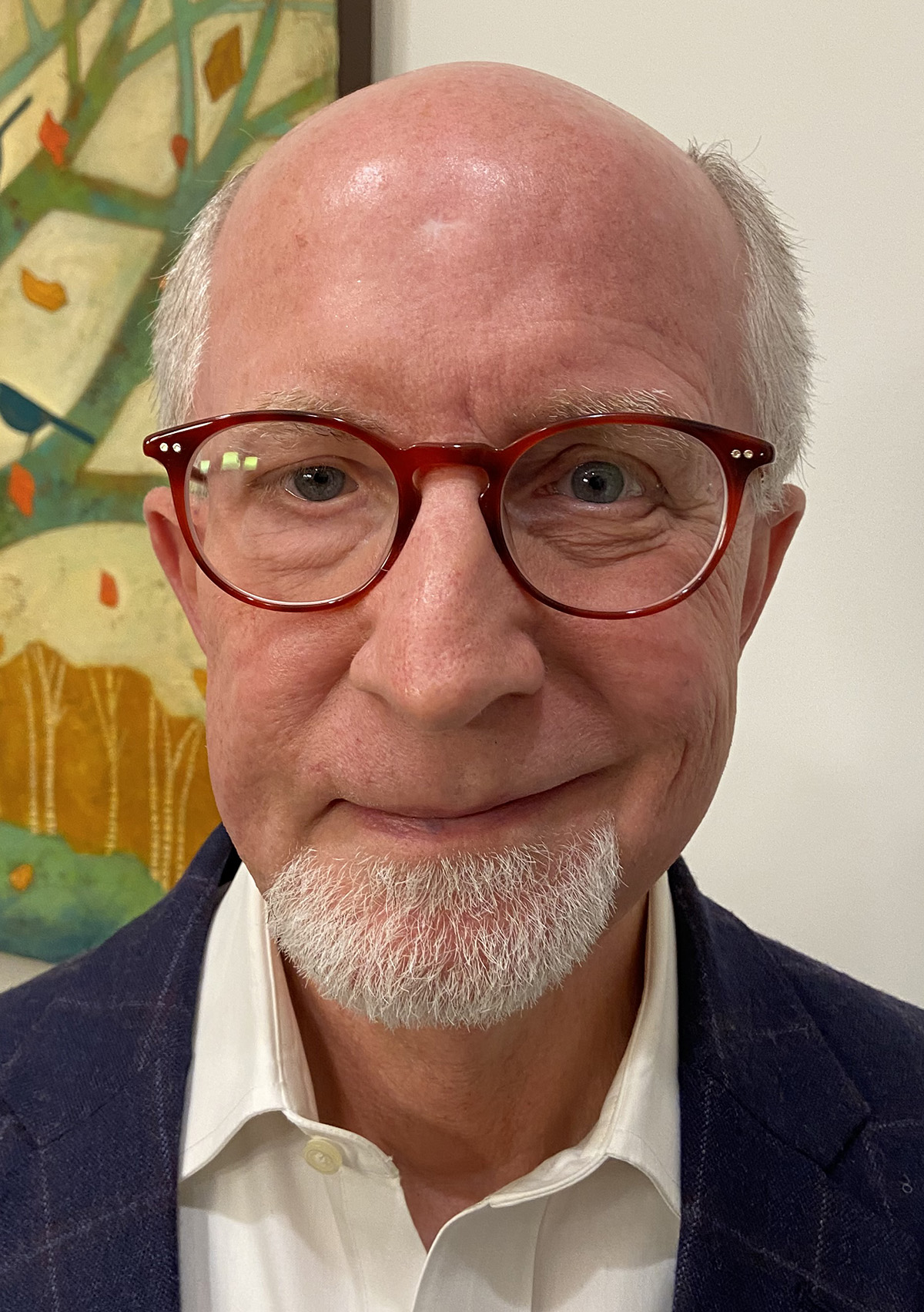
Marv Knox
So, our church was all-in when Robison planned a citywide evangelistic meeting, scheduled for the height of summer in our local football field. This was Wichita Falls, Texas, the summer before my senior year in high school.
Folks from our church joined throngs from across the city every night of the big Robison revival. I don’t remember if he preached on hell, but he definitely should have. The weather gets really hot in Wichita Falls in the height of summer. If he preached on hell, everybody there could have related intensely.
I clearly remember the final night of that summertime revival. Robison was “drawing the net,” as the preachers used to describe itinerant evangelists’ impassioned pleas for sinners to repent and walk the aisle. I’m sure many evangelists sincerely desired souls to be saved. I’m also sure many evangelists sincerely desired to chalk up impressive numbers of converts. Call it a revivalistic win-win.
Across more than 50 years, I still can see and hear Robison delivering the line that hooked me: “If you have ever doubted, you’re probably not saved.”
“I was almost 18 years old, prime age for doubting just about everything.”
Those words pierced my heart. I was almost 18 years old, prime age for doubting just about everything. If you had told me the sky was blue, I’d no doubt respond: “Really? You sure?”
Before I go on, a little background: My parents allowed me to walk the aisle of the little church where my father was pastor in the summer of 1962, when I was not quite 6 years old. I didn’t know a lot of theology, but I knew I loved Jesus and Jesus loved me and I wanted to keep on loving Jesus.
A dozen years later, I still didn’t know tons of theology. But I understood a lot more about the privileges and costs of following Jesus, the temptations that confront everybody, the consequences of decisions and more. I also was a curious teenager, and doubting/exploring came naturally.
So, Robison distressed me to no end when he questioned my salvation because I happened to doubt from time to time.
The music played, and the choir sang. Every head might or might not have been bowed, and every eye might or might not have been closed. But I walked the aisle.
Fortunately for me, I walked past the volunteer “counselors” who stood in front of the podium. Instead, I walked to the back of the risers, where all the local preachers sat in their dark suits and sunglasses, and I tugged on the bottom of my father’s jacket. By this time, I was crying. No, bawling. My father turned and looked into my bloodshot, watery eyes.
“Daddy, I’m a doubter,” I said, gasping for breath. “You heard what Brother Robison said about doubting, and I doubt all kinds of things about God and the world. I’m afraid I’m not saved.”
“Daddy, I’m a doubter,” I said.
My father knelt down on the riser so he could look me in the face, and he talked me through my life. He reminded me how I’d always loved Jesus. He acknowledged I was not perfect, but God loves imperfect people who love and follow God. He told me God knows me better than I know myself, and God uses my questioning and doubt and curiosity to show me things I was not ready to see before and to teach me lessons I could not have understood before.
This happened years before I read a sentence from Frederick Buechner that always has resonated with my spirit: “Doubt is the ants in the pants of faith.”
So, God used Robison’s line about doubt to disturb my spirit and to enable me to re-encounter my faith from a more experienced perspective. I look upon that night as one of the great transitional moments in my life. It was the moment the simple longing of my childhood transitioned into faith that could endure — even thrive because of — doubt. And disappointment, hardship and grief.
When the Holy Spirit redeemed a challenge — particularly one brought on by human brokenness, and especially by a preacher — my father used to say, “God can hit a mighty lick with a crooked stick.”
That’s what happened that night. God used a manipulative line — that might have been sincere but certainly was spoken to convince souls to walk the aisle, whether they needed to or not — to rekindle my faith and to set me on a firmer foundation.
Or, to paraphrase what the Old Testament hero Joseph told his formerly vengeful bothers: “James Robison intended it to rack up numbers, but God used it for good.”
Marv Knox retired as the founder of Fellowship Southwest (now FaithWorks), a role he took on after a storied career in Baptist journalism, including tenures as editor of the Kentucky Western Recorder and the Texas Baptist Standard. He was a founding board member of Associated Baptist Press, predecessor to BNG. He lives in Durham, N.C.