


Virginia voters said yes. That is what makes this moment so revealing.
In April, Virginians narrowly voted on and approved a constitutional amendment that would have allowed lawmakers to redraw the state’s congressional maps ahead of the 2026 midterm elections. Supporters, including Gov. Abigail Spanberger and Democratic leaders in the General Assembly, argued the move was necessary in the wake of aggressive Republican-led gerrymandering efforts unfolding across the country and recent court decisions weakening protections against racial vote dilution.
The proposal was controversial from the beginning. Democrats believed new maps could better reflect Virginia’s changing demographics and potentially expand representation for communities too often fractured, diluted or minimized through gerrymandered districts. Republicans argued the effort was a partisan power grab designed to help Democrats gain congressional seats.
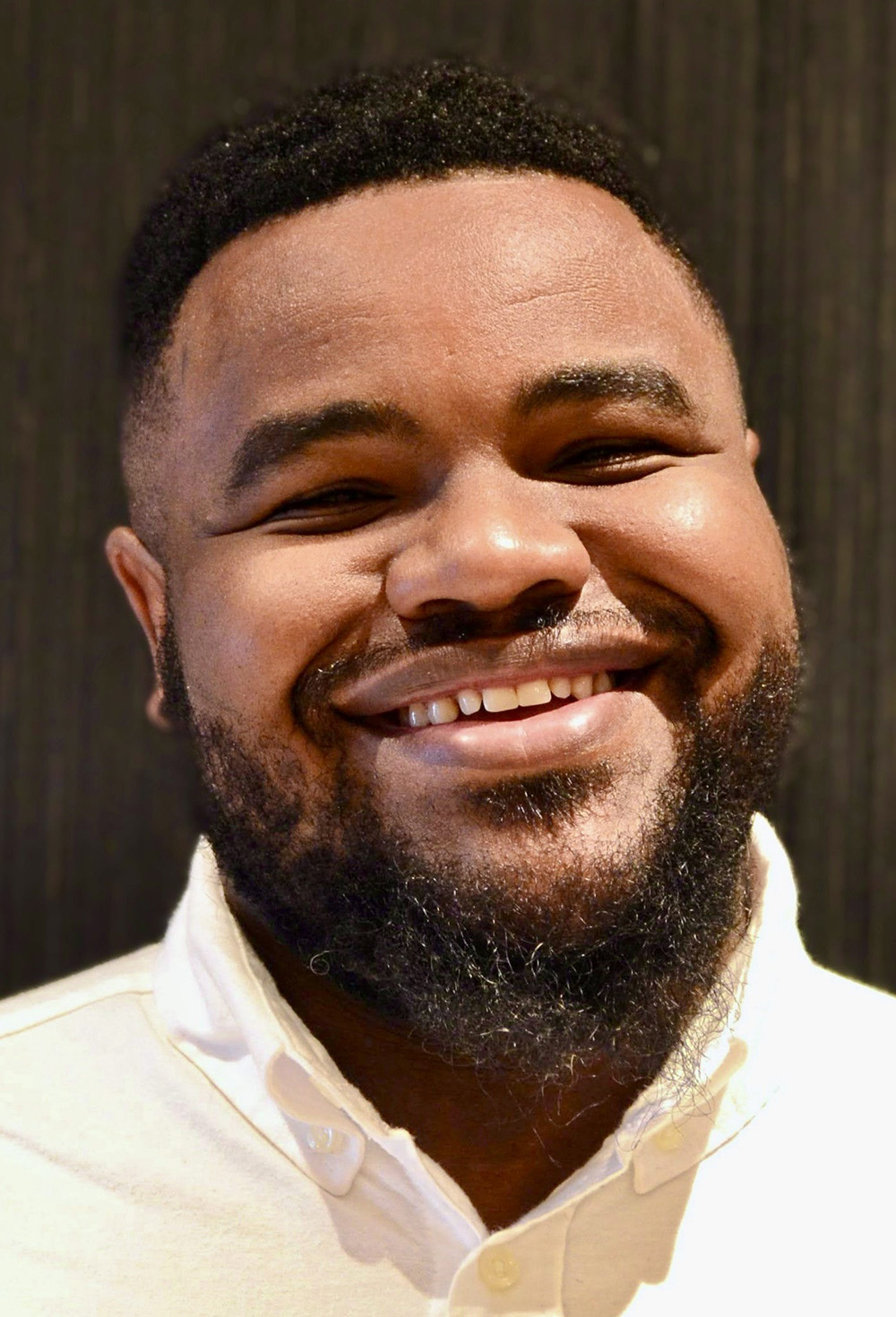
Braxton Wade
Virginians voted, and then the courts intervened.
In a narrow 4-3 ruling, the Supreme Court of Virginia struck down the voter-approved amendment, arguing lawmakers violated constitutional procedure because the amendment moved through the General Assembly after early voting already had begun in the 2025 elections. The majority opinion held that voters were denied a full and fair opportunity to evaluate candidates based on their support or opposition to the amendment before casting ballots.
Democratic leaders led by Virginia’s Attorney General Jay Jones appealed to the United States Supreme Court, arguing the Virginia court had effectively nullified the will of millions of voters. But the U.S. Supreme Court declined to intervene, leaving the current congressional maps in place for the remainder of the decade.
And while legal experts, politicians and pundits will spend months debating constitutional procedure and electoral fairness, the deeper question underneath all this remains painfully familiar: Who gets protected by the system? Who gets sacrificed to preserve it? Because redistricting never has simply been about maps; it always has been about power. Who has it, who keeps it and who gets erased in the process.
For many Americans, redistricting feels technical and distant — a debate reserved for lawyers, consultants and cable news panels. But communities of color know better because if we are honest maps are never just maps.
Maps determine whose schools receive investment and whose schools are ignored. They determine which neighborhoods receive political attention and which neighborhoods become invisible. They determine whether communities already carrying generations of disenfranchisement have the collective power to advocate for themselves.
As the American Civil Liberties Union recently explained in public educational materials surrounding voting rights litigation, redistricting is the process of drawing electoral district lines after population changes reflected in the U.S. Census. Gerrymandering occurs when those lines are manipulated to predetermine outcomes and preserve political power. Vote dilution happens when communities — particularly communities of color — are fractured across multiple districts or packed into singular districts in ways that weaken their collective political influence.
In theory, redistricting exists because democracy should adapt to changing populations. In practice, gerrymandering has been called “redistricting,” and it often has become another tool used to preserve power, especially in the South and without a doubt in Virginia.
In practice, gerrymandering has been called “redistricting,” and it often has become another tool used to preserve power.
Virginia knows something about systems designed to maintain hierarchy. This is the commonwealth that helped establish American slavery while simultaneously calling itself the cradle of democracy. This is the state that gave us both Thomas Jefferson and Massive Resistance. This is the state where public schools were closed rather than integrated. This is the state where Confederate monuments towered over Black neighborhoods not merely as statues, but as declarations about who belonged and who did not.
Many of those systems never disappeared, they simply became more sophisticated and we became more numb to them.
White supremacy rarely announces itself loudly anymore. It does not always arrive in white hoods or burning crosses. Sometimes it arrives in legal language. Sometimes it arrives in court opinions. Sometimes it sits on the pews with us. Sometimes it arrives wrapped in conversations about “constitutionality,” “states’ rights,” “election integrity” or “protecting tradition.”
Yet too often, many white Christians remain more comfortable discussing reconciliation than confronting the systems that make reconciliation necessary in the first place. This is the tension sitting underneath this current moment.
The Supreme Court may frame these decisions as constitutional interpretation. Politicians may frame them as partisan strategy. But communities on the margins experience them differently. They experience them as another reminder that even when progress feels possible, the system often recalibrates itself to maintain the same distribution of power.
And the church cannot afford to look away from that reality. Particularly white churches. Because silence never has been neutral. Often when the conversation shifts from symbolism toward power, policy, systems and representation, suddenly many churches grow quiet. Suddenly the gospel of Jesus Christ becomes “apolitical.”
But refusing to see your neighbor and confront injustice is itself a political decision. Unfortunately, throughout history silence almost always has sided with the powerful.
The gospel does not give us permission to disengage from systems harming our neighbors. Scripture consistently asks who is being pushed to the margins and whether the people of God are willing to see them fully. This question matters now more than ever.
Because underneath all the legal arguments and political maneuvering sits a deeper spiritual crisis: America still struggles to imagine all people as fully worthy of dignity, representation and belonging. And Christians should be the first to challenge that failure of imagination.
America still struggles to imagine all people as fully worthy of dignity, representation and belonging.
After all, the story of Jesus is fundamentally a story about redrawing lines. The Supreme Court of Virginia may have declared these efforts unconstitutional. The maps may remain unchanged for now. The systems may once again protect themselves.
But Christians should remember: God has always been in the business of redrawing lines. When Jesus touched lepers, he was redrawing lines. When he spoke with Samaritans, he was redrawing lines. When he centered women in a world determined to silence them, he was redrawing lines. When he dined with tax collectors and sinners, he was redrawing lines. When he proclaimed good news to the poor and liberty to the oppressed, he was redrawing lines.
Again and again, Jesus disrupted the boundaries empire, religion and society constructed around who belonged and who did not. He consistently crossed lines respectable people told him not to cross. Not to preserve power, but to restore dignity. Not to protect systems, but to reveal neighbors.
And perhaps that is the deeper question facing both the church and the country right now: Who still exists outside the boundaries of our moral imagination? If our theology only redraws lines around people who already look like us, vote like us, worship like us or live near us, then we are not following Jesus, we are simply baptizing exclusion and never leaving the waters transformed.
Christ invites us to redraw our imagination of who counts as neighbor in the first place.
And once you truly see your neighbor, it becomes much harder to tolerate systems designed to diminish them.
That is why this moment demands more from white Christians than passive agreement. It demands courage. It demands honesty. It demands we stop pretending voting rights, representation and justice are someone else’s concern.
Because democracy is not merely a political project. At its best, it is a moral one.
Braxton Wade is a Clemons Fellow with BNG. He is a graduate of the University of Richmond and Chicago Theological Seminary and lives in Richmond, Va.